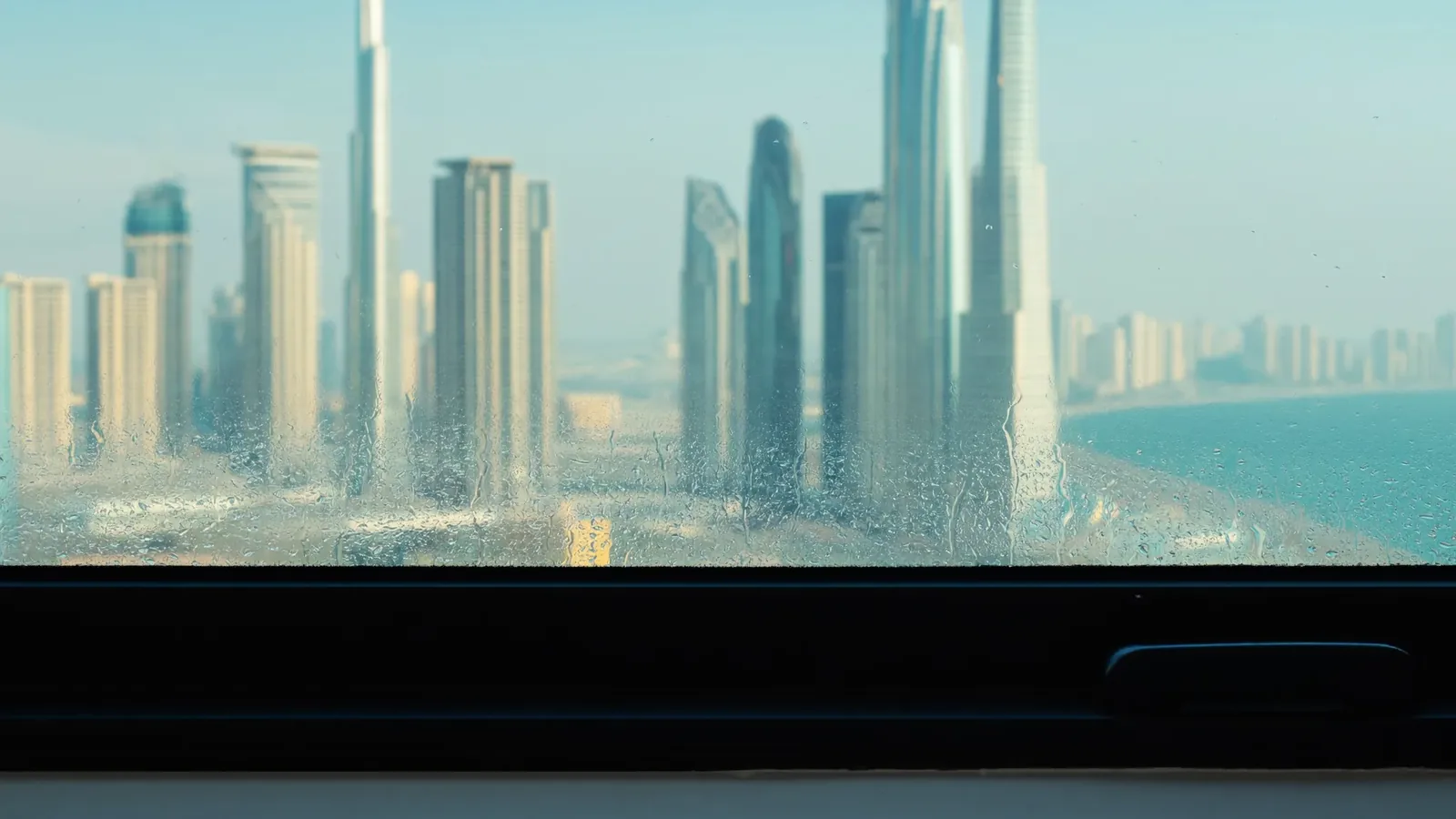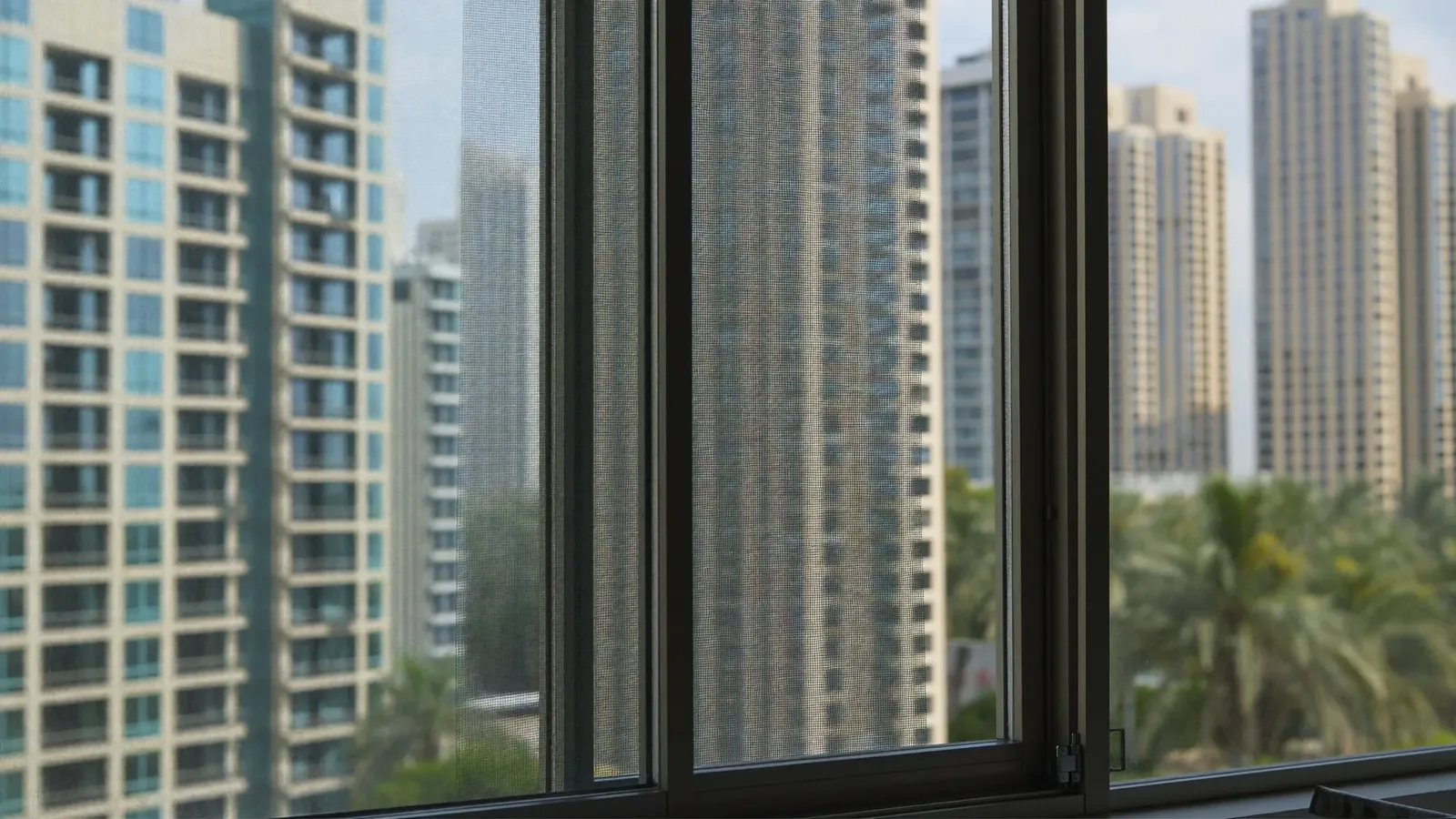





Condensation on a Dubai window is warm, humid air meeting cold glass, and where it forms tells you everything about the fix. If the water sits on the room-facing surface, the one you can wipe with your finger, it is a humidity and ventilation problem, and often a tired seal letting outside air leak in. If the mist is sealed between two panes of glass and no wipe touches it, the sealed unit has blown and the glass needs replacing. Those two faults look similar from across the room and need completely different work, so the first job is to find out which one you have.
Dubai makes the room-side version common. Outdoor humidity runs high for much of the year, air conditioning keeps the glass cold, and everyday living adds moisture to the air inside. When that moist indoor air touches a cold pane, it gives up its water as droplets, exactly the way a cold drink sweats on a summer afternoon. The between-pane version is a separate, more mechanical failure, and this guide walks through both so you know what you are looking at before anyone quotes you.
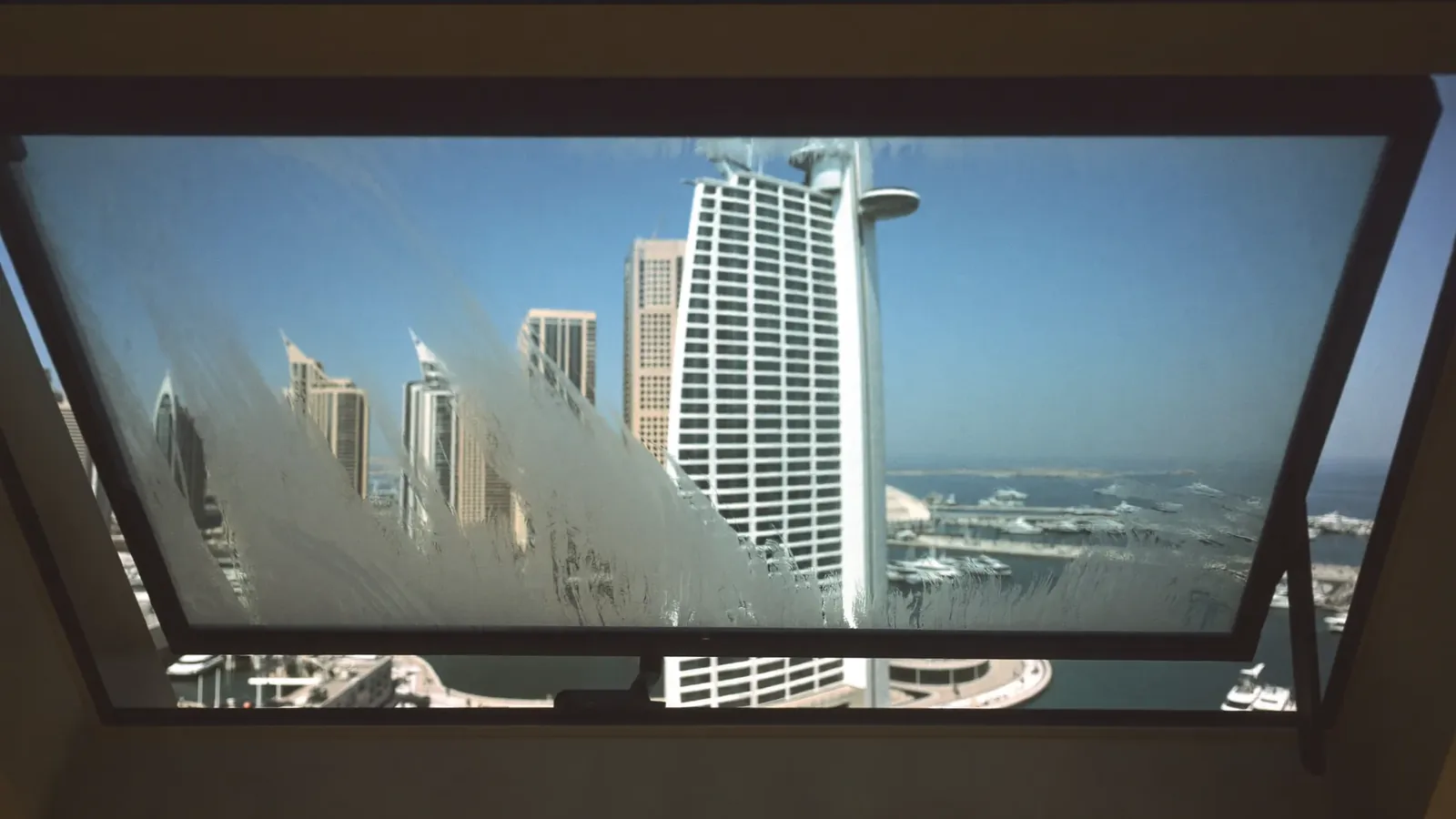
Condensation on the room-facing glass
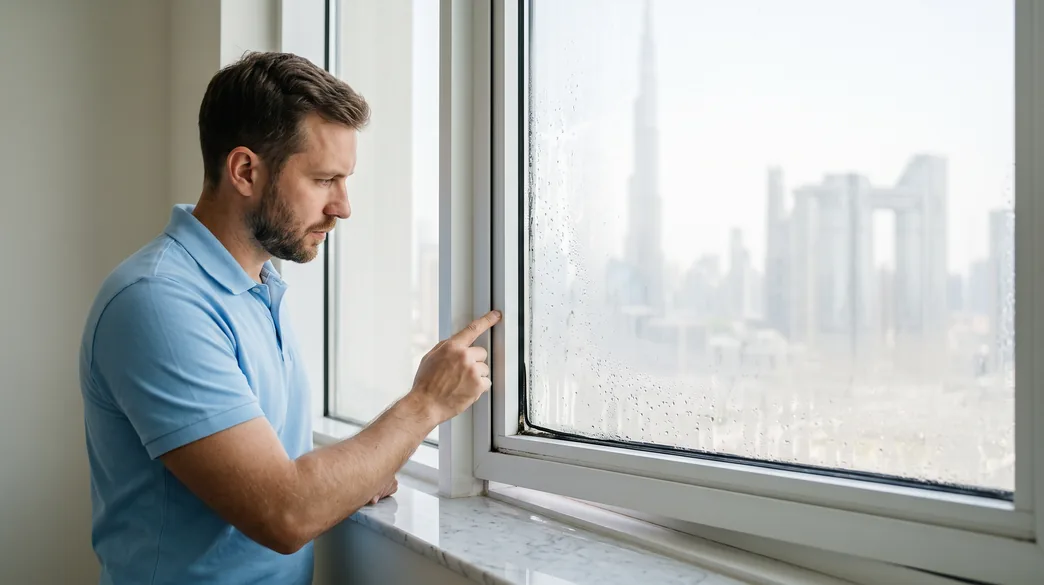
This is the water you can reach and wipe away. It shows up on the inside surface of the pane, usually in the mornings, often heaviest along the bottom edge and corners of the glass. Wipe it and the cloth comes away wet, which is the quick test that tells you the moisture is in your room rather than trapped inside the glass.
It forms when humid indoor air meets a chilled surface. In a Dubai apartment several things push it along at once. The air conditioning holds the glass and frame cold. Cooking, showering, drying laundry indoors, and even breathing release water vapour into the air. Sealed-up rooms with little fresh airflow let that vapour build with nowhere to go. The colder the glass and the more humid the room, the more water lands on the pane. On a bad morning you can get puddles on the sill and damp patches on the wall below.
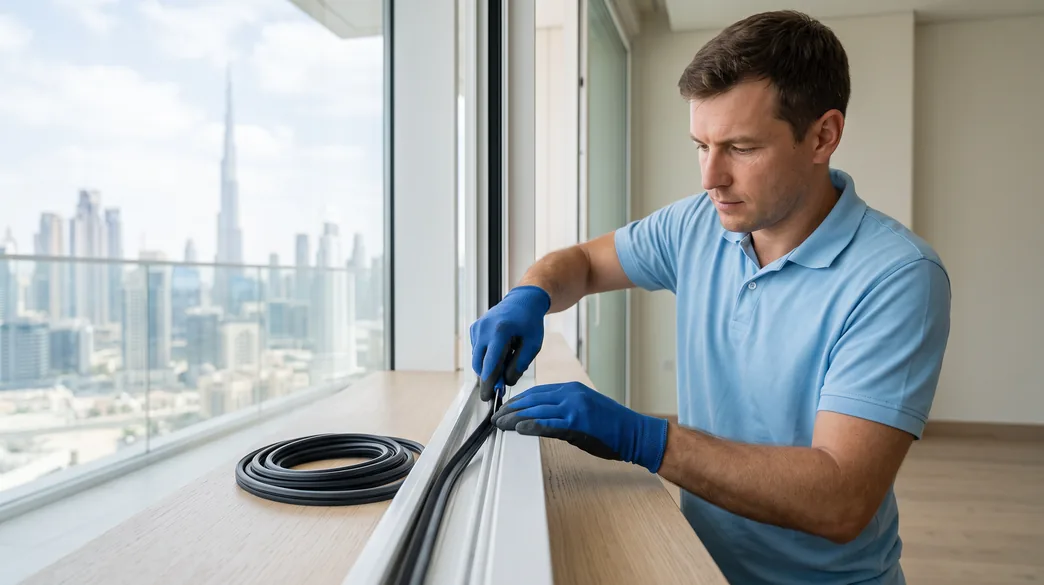
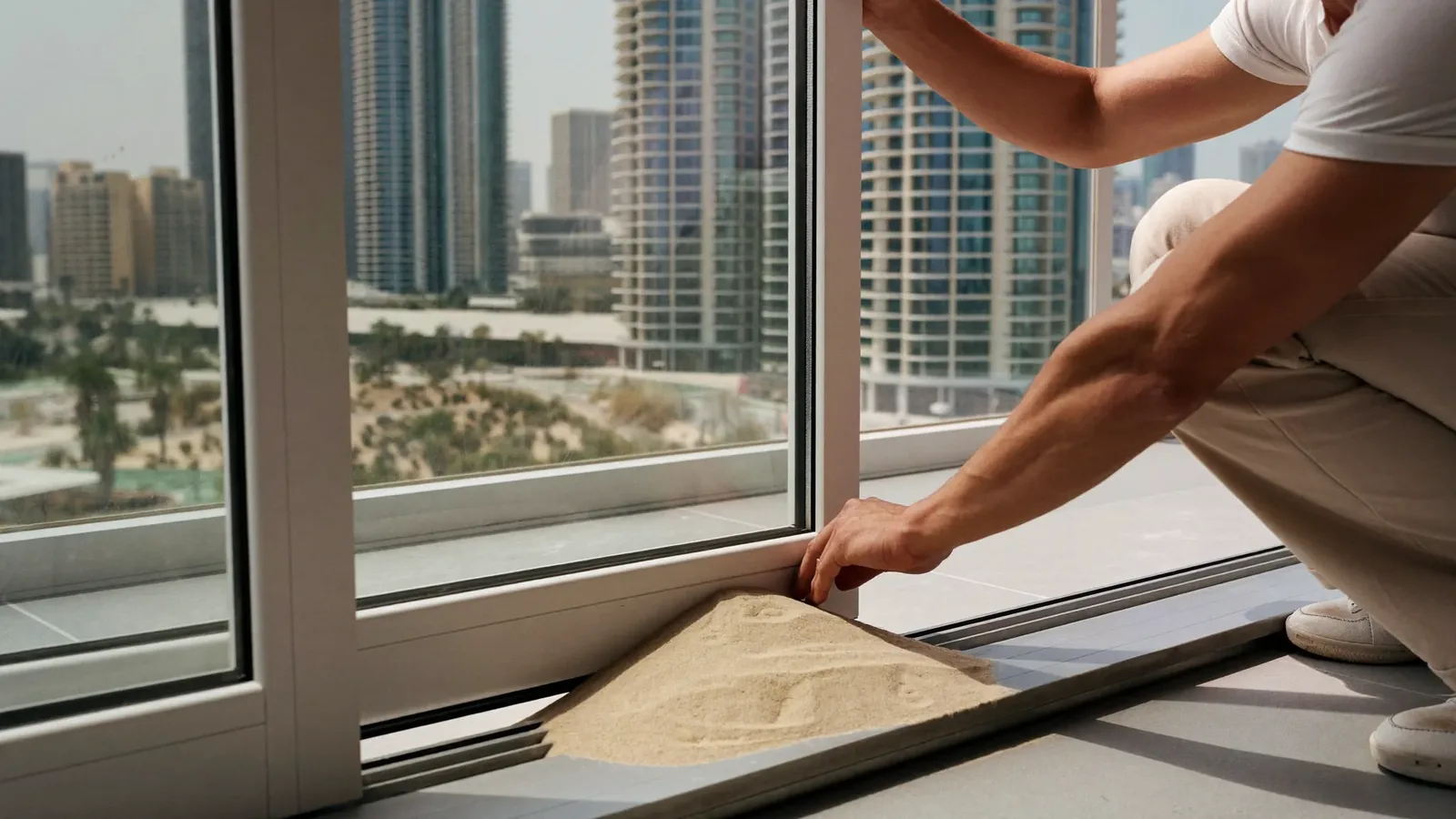
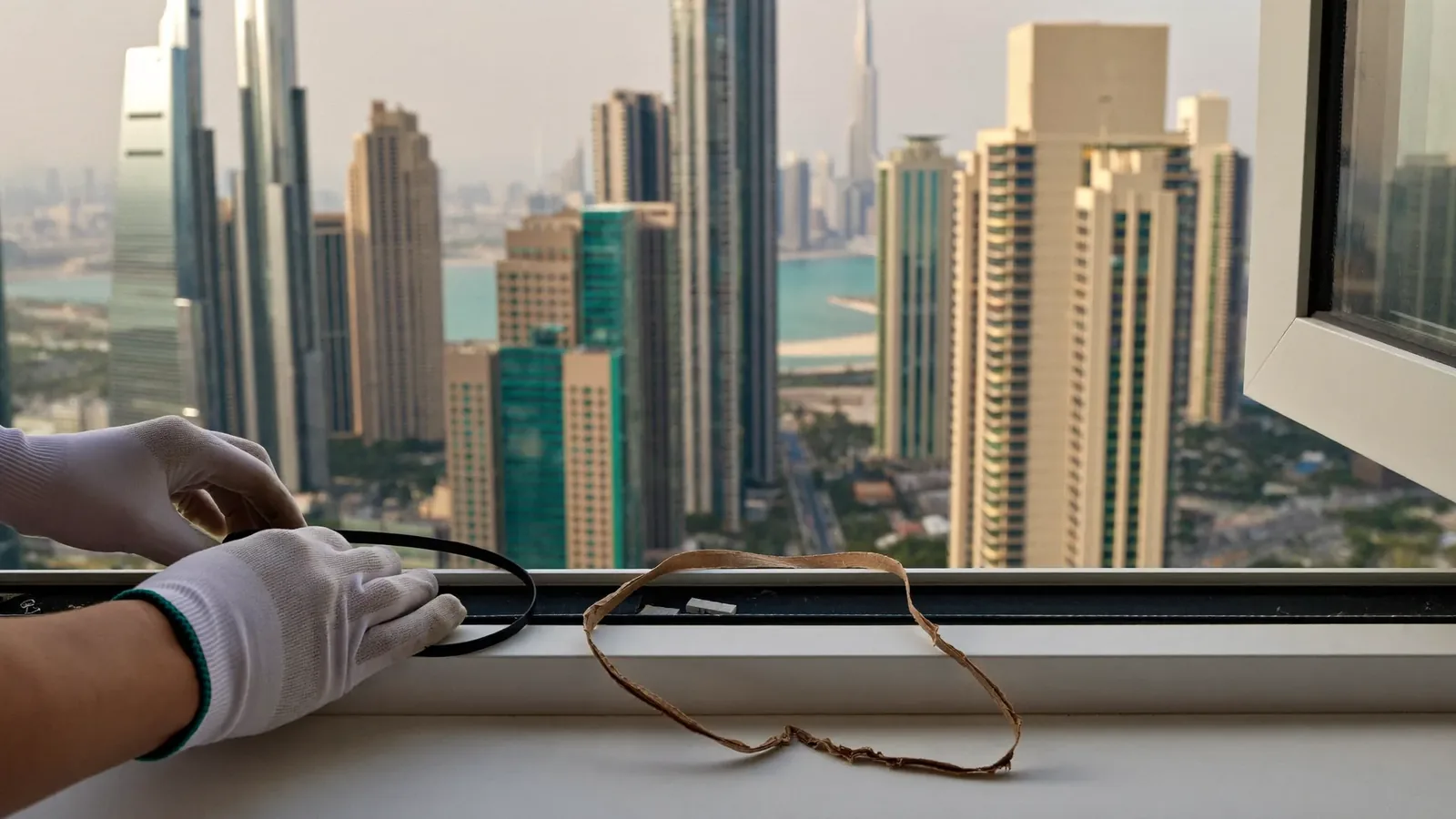
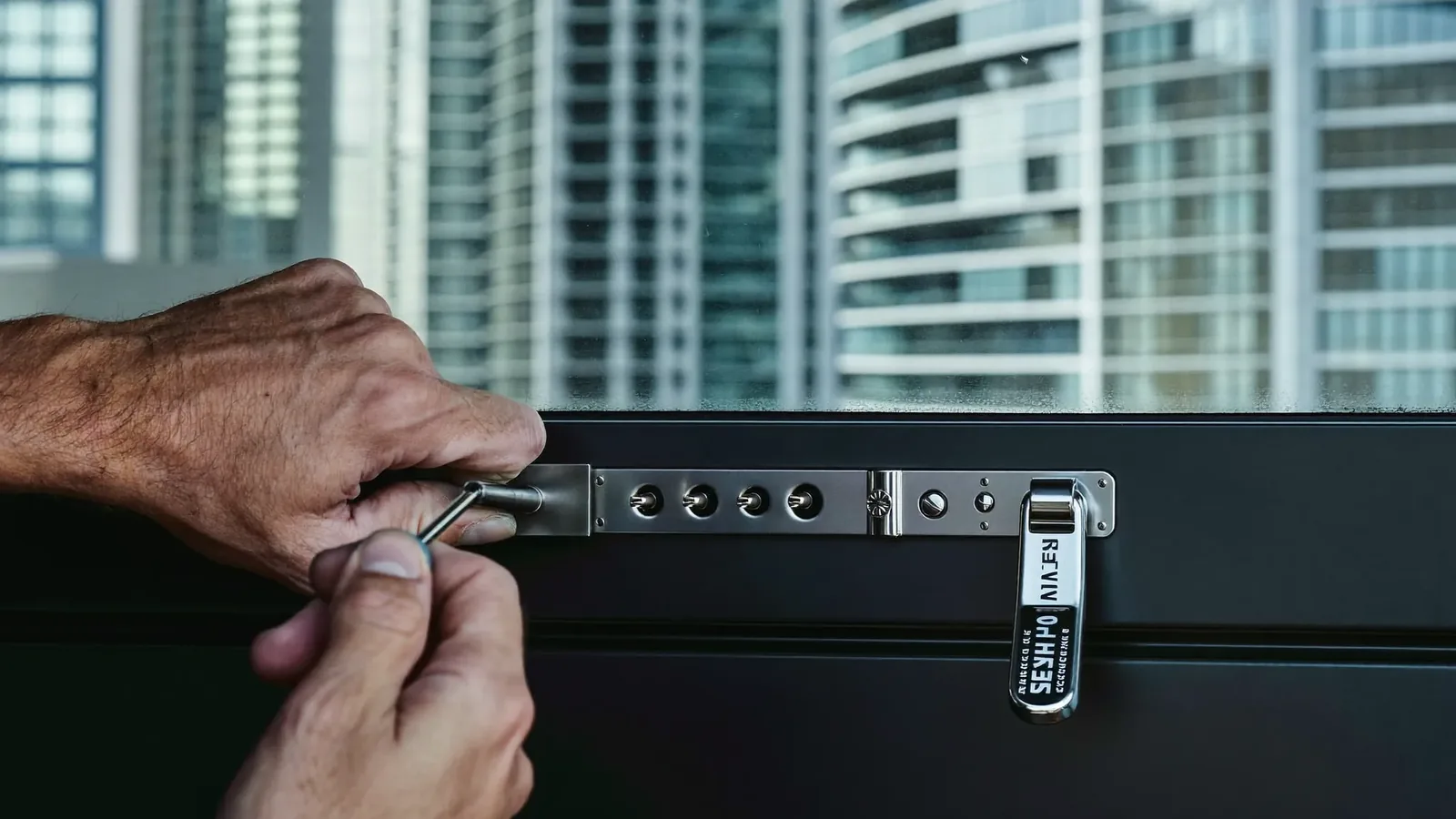
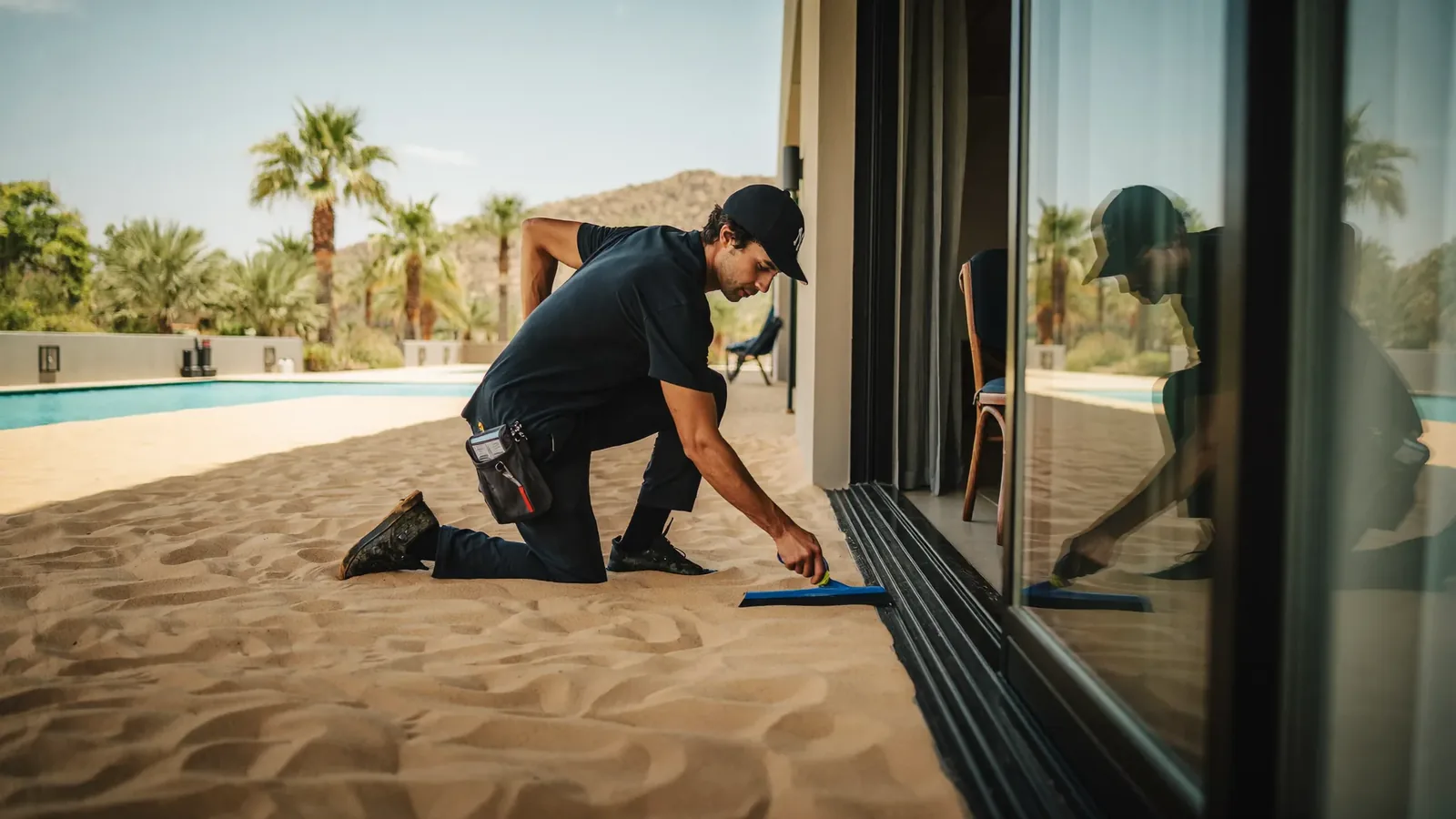
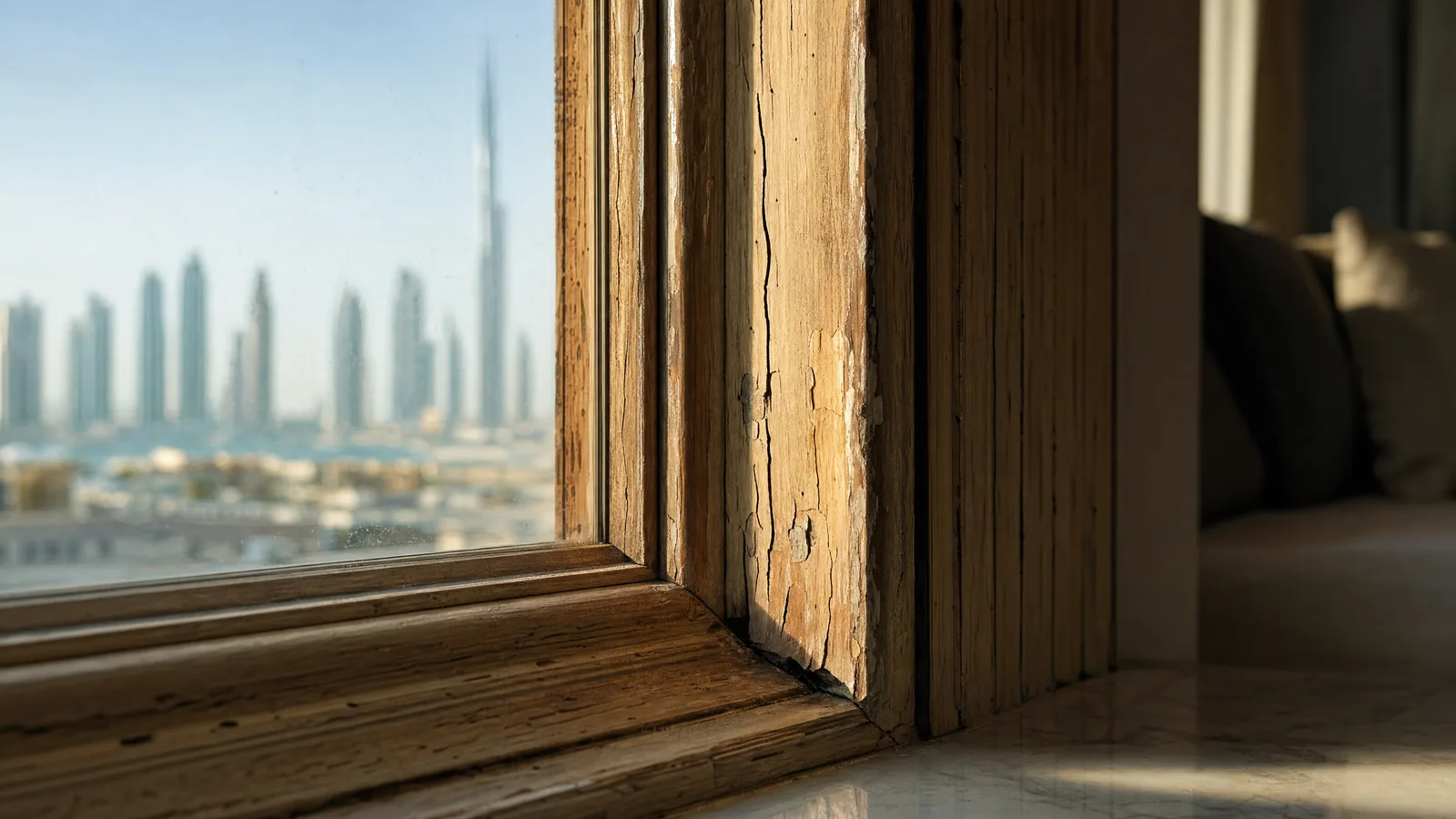
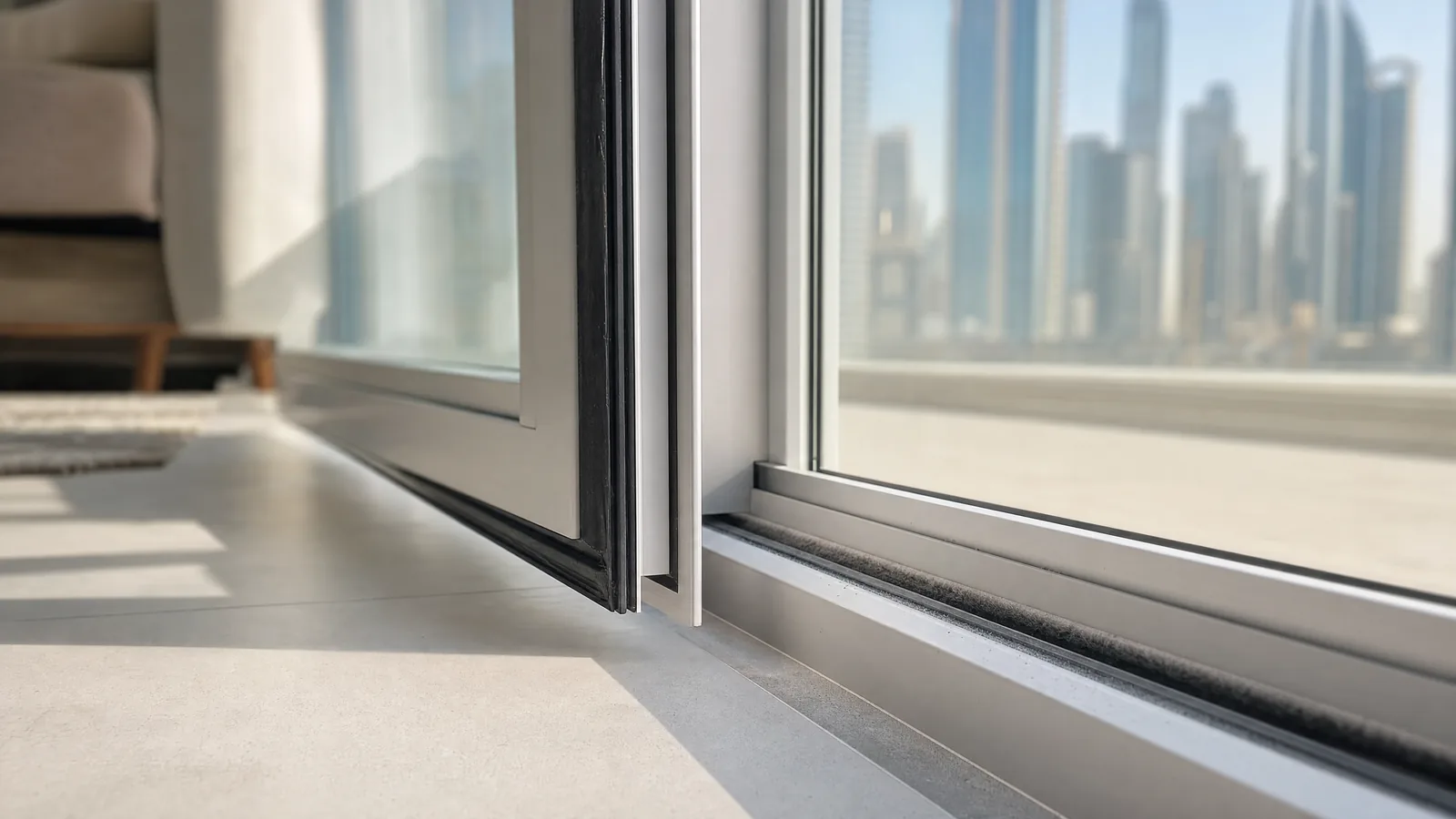
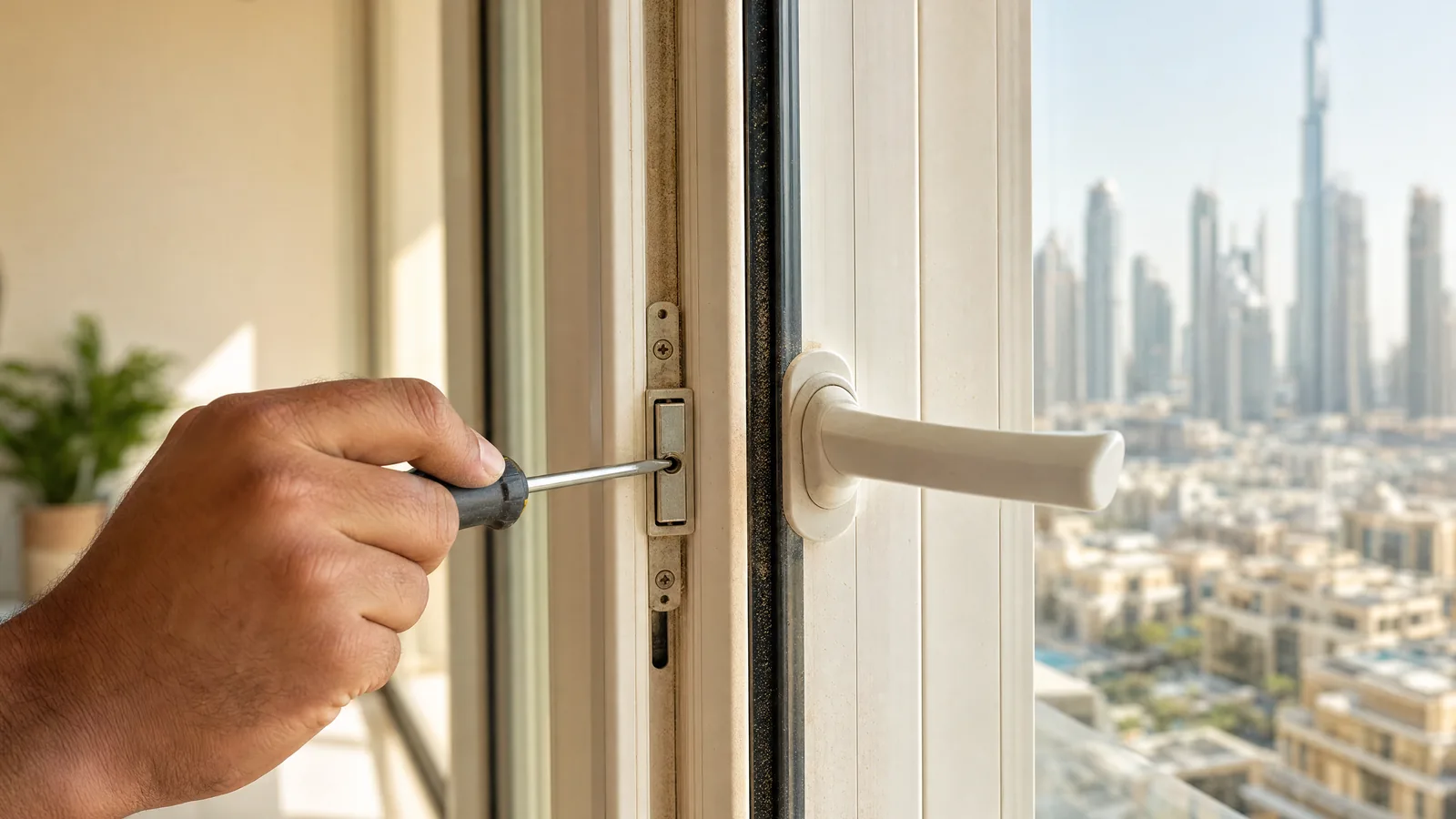
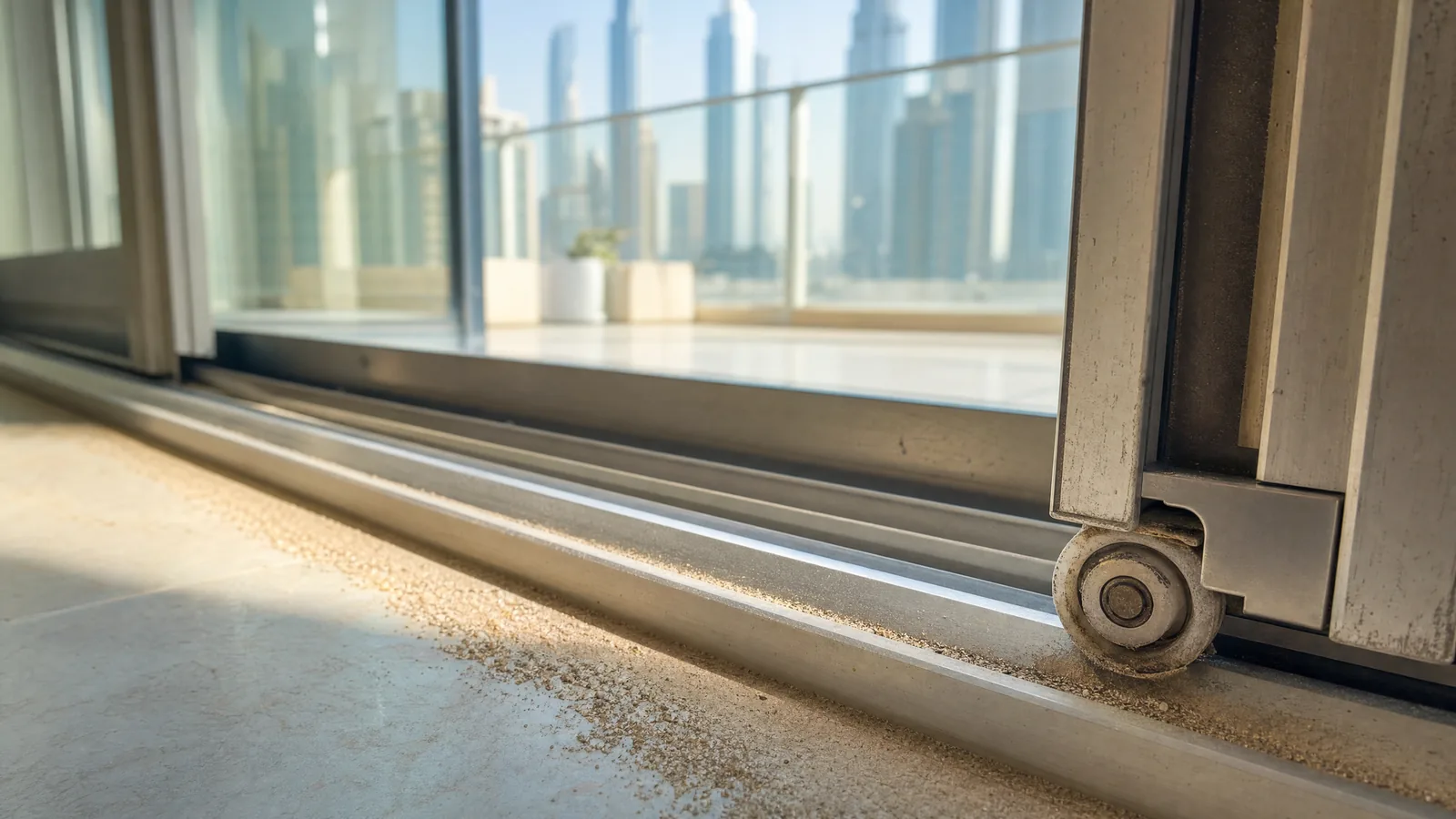
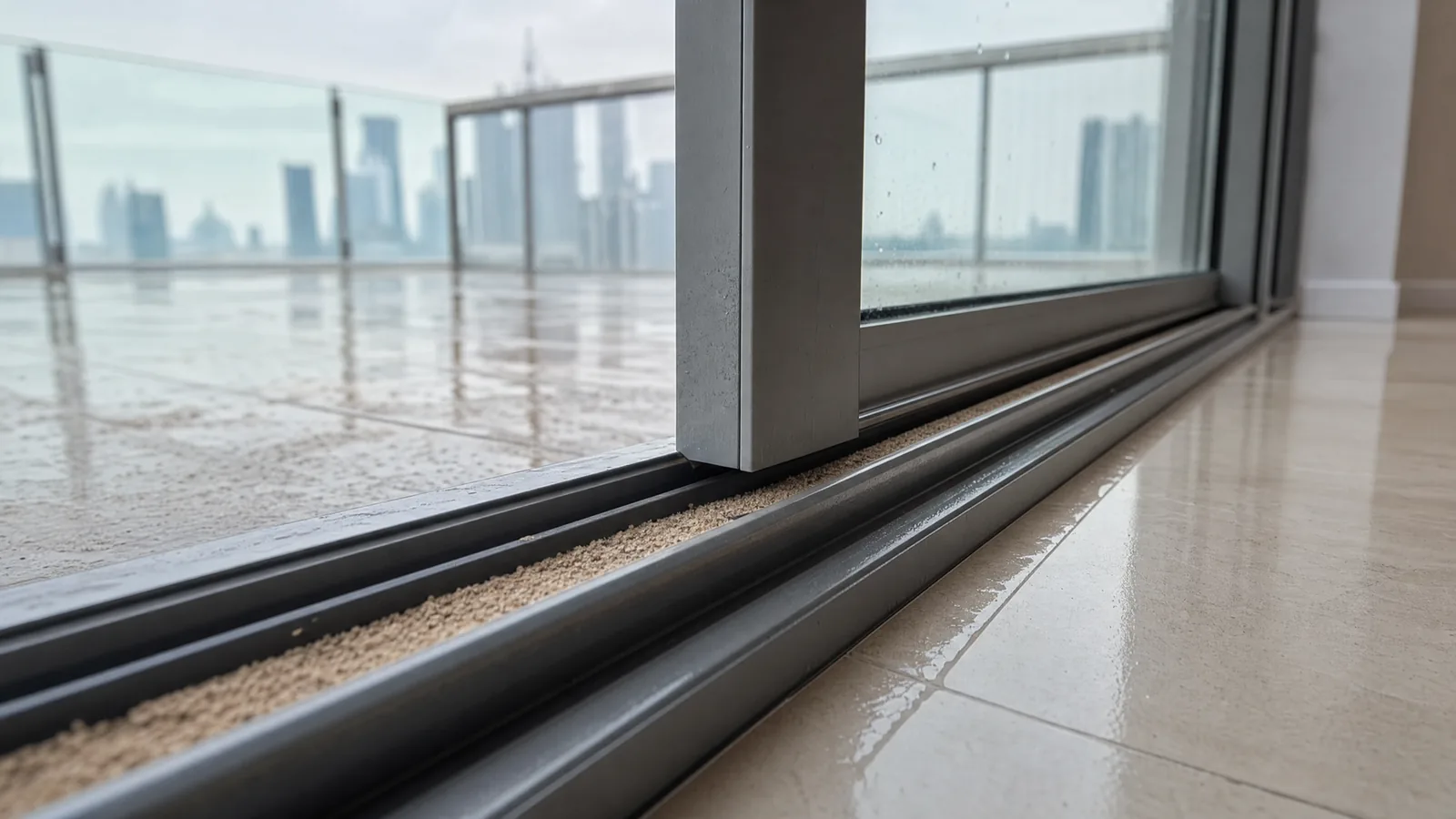
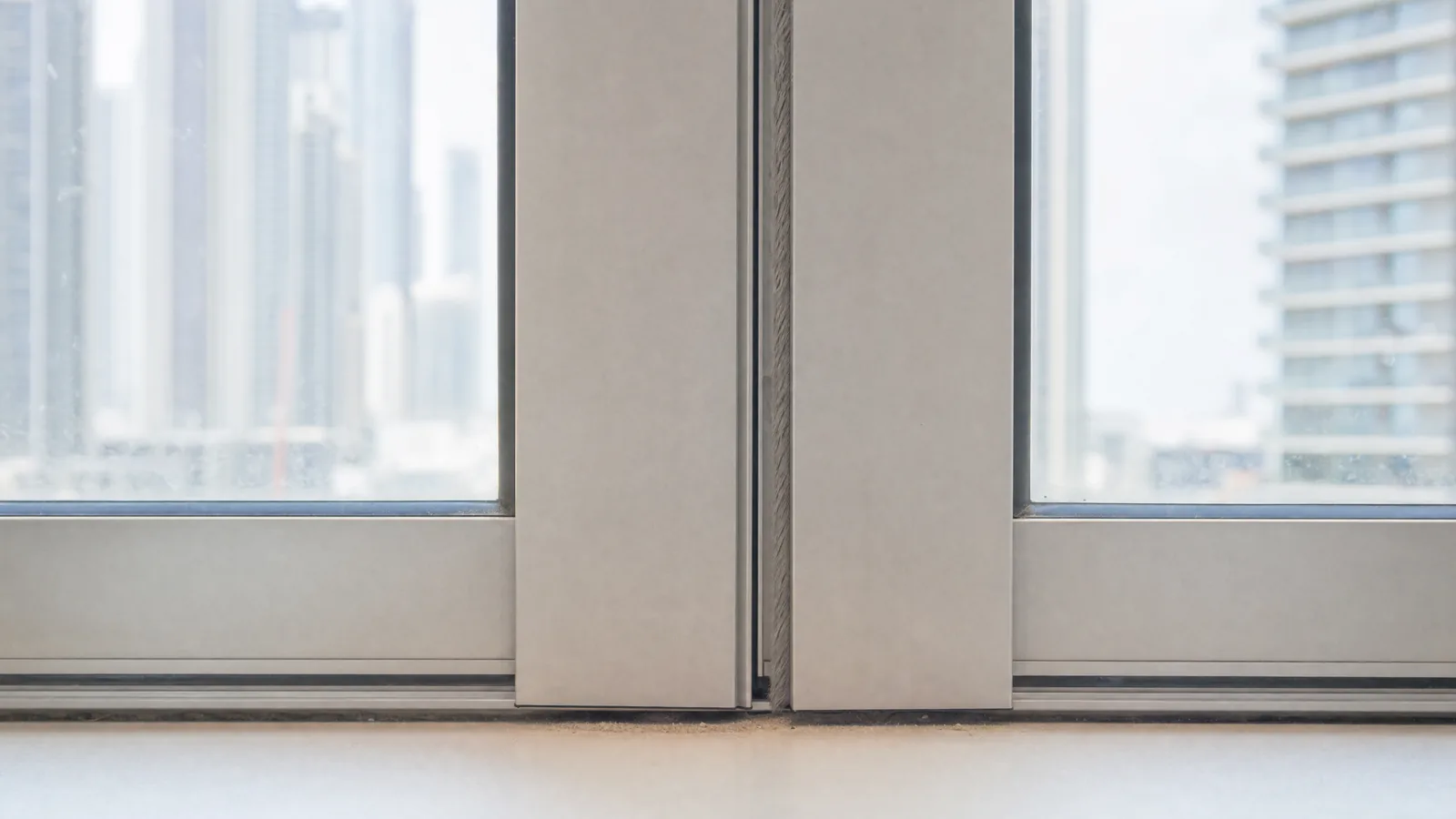
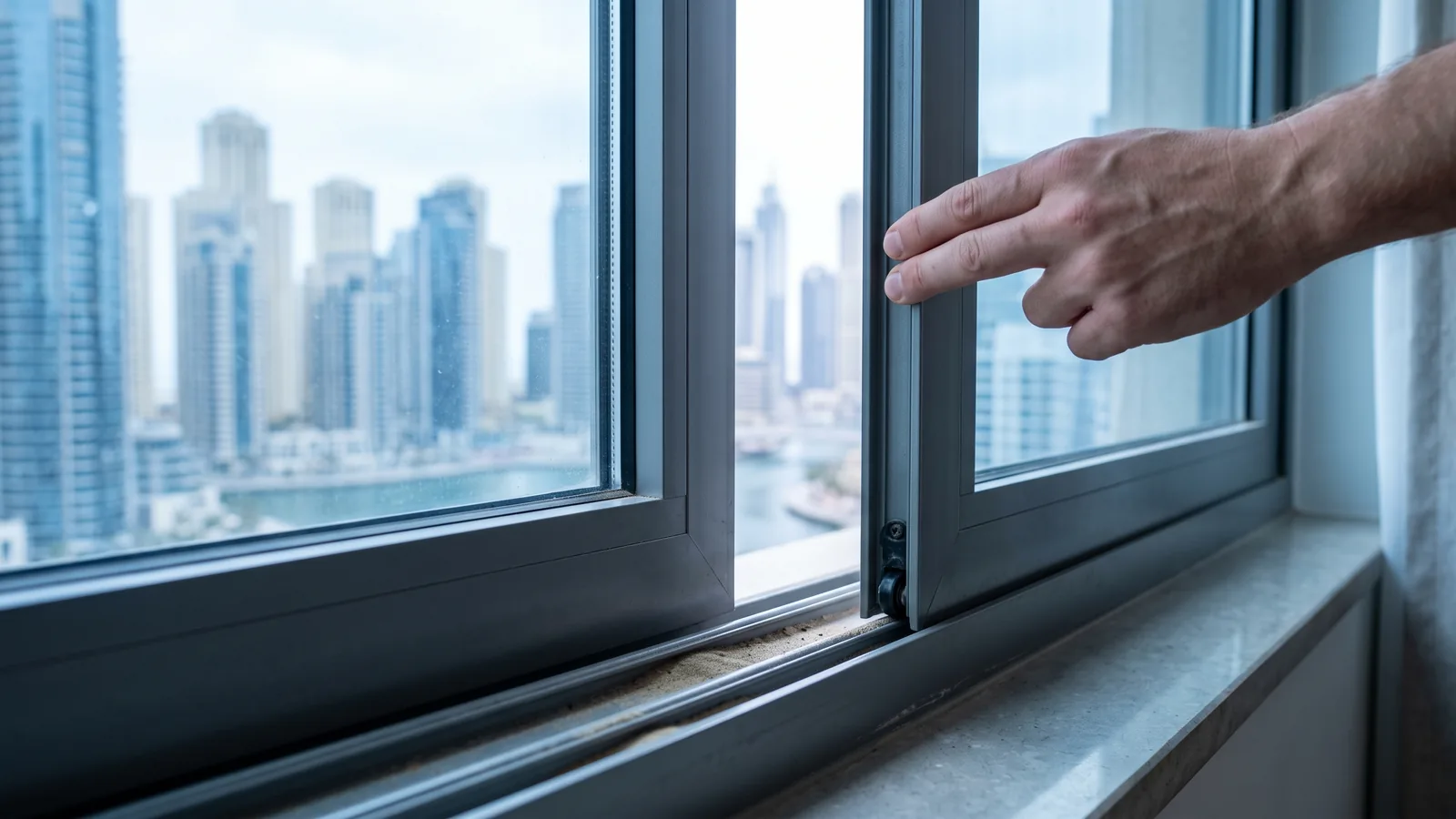
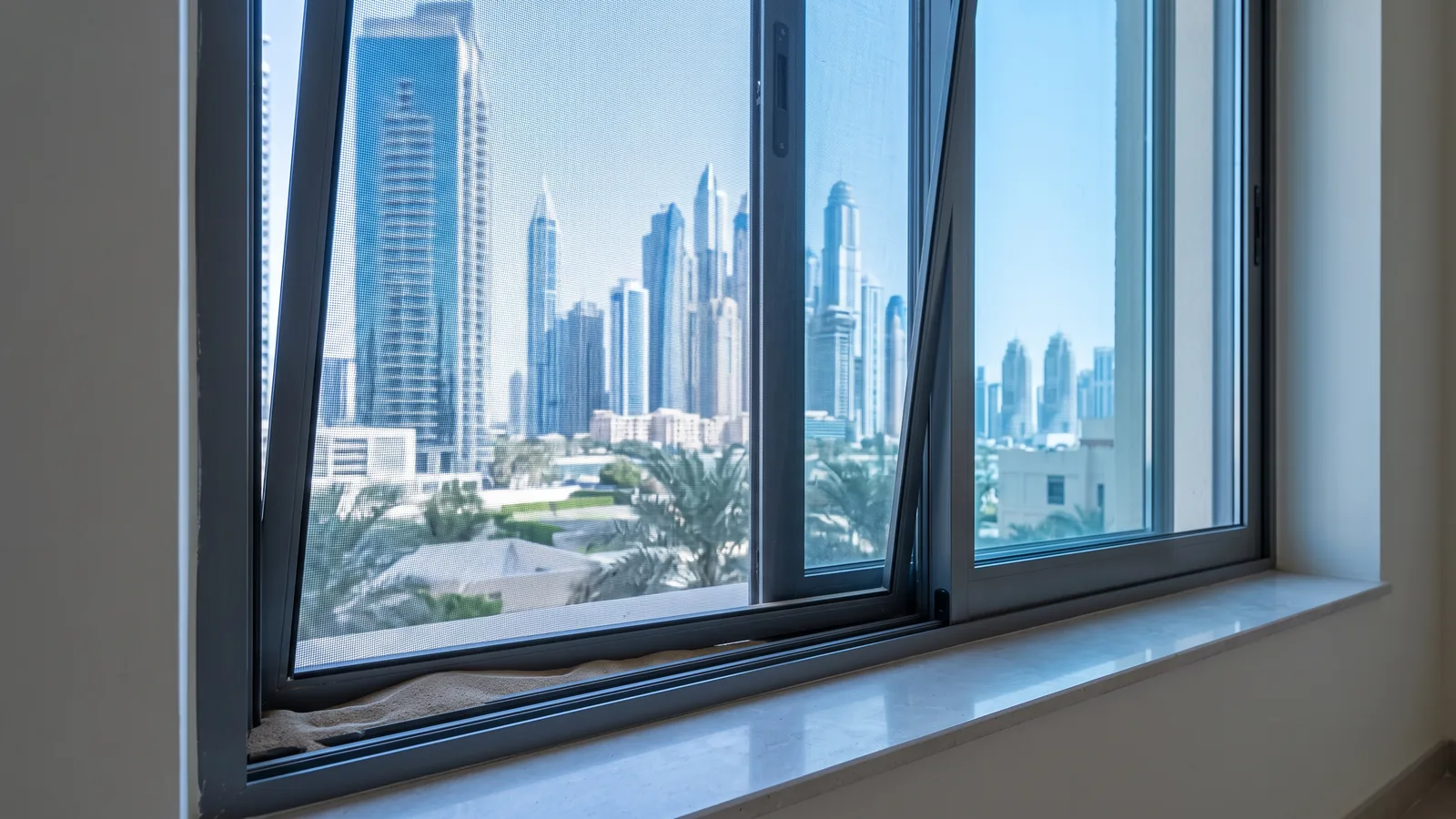
There is also a hidden culprit that is very Dubai specific. When the rubber gaskets and brush seals around a window harden, crack, or clog with fine desert dust, warm humid outdoor air leaks straight onto the cold inner frame and glass, and condenses there. So a window that never used to sweat can start doing it as the seals age. That part is fixable without touching the glass, which is where sealing and draught-proofing comes in.
Moisture trapped between the panes
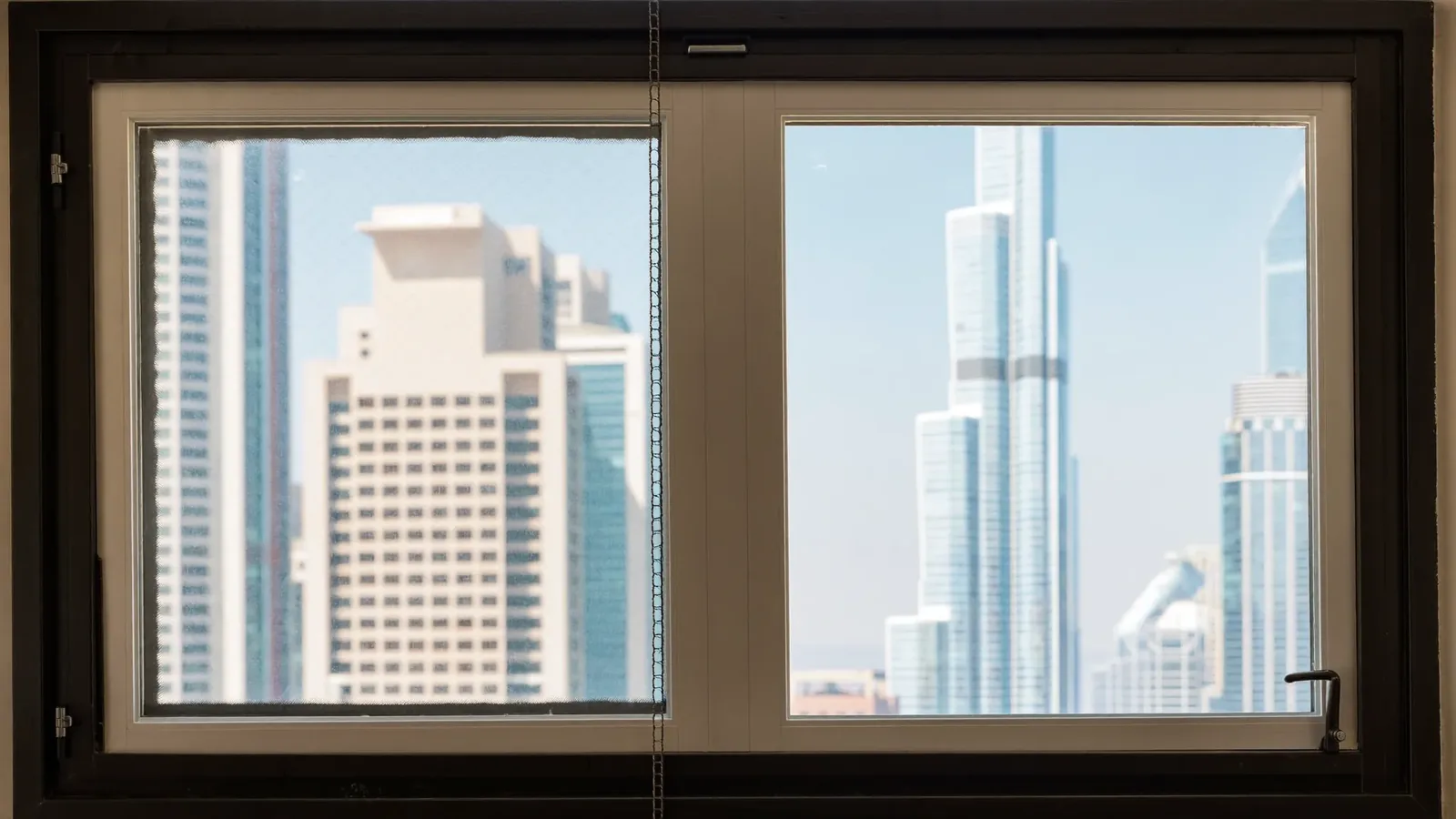
This is the fault you cannot wipe, because the water is not on any surface you can touch. A double glazed pane is two sheets of glass with a sealed, dry cavity between them. When the perimeter seal fails, humid air works its way into that cavity, the drying agent inside gives up, and moisture condenses on the inner glass faces where you can see it but never reach it.
The tell-tale signs are a permanent haze or cloudy film between the panes, misting that comes and goes with the temperature, and sometimes water droplets or dried streaks locked in the middle of the glass. No spray, no cloth, and no home trick clears it, because the surfaces you can reach are not the ones holding the water. In Dubai the daily swing from fierce daytime heat to cooler nights flexes the sealed unit constantly, and over years that is what tires the seal until it breaches.
A blown sealed unit is not a cleaning job or a ventilation job. The glass unit itself has to be replaced, though almost always the existing frame stays and only the sealed glass is swapped. If the fog is sealed inside the glass, our double glazing repair in Dubai page explains how that unit swap works and why you rarely need a whole new window.
How to tell which type you have
The test takes ten seconds. Run a dry finger or a cloth across the misted glass on the room side. If the water smears and the cloth comes away damp, the condensation is on the room-facing surface and it is a humidity, ventilation, or seal issue. If the glass stays dry to the touch and the haze sits stubbornly out of reach, the moisture is between the panes and the sealed unit has failed.
A few more clues help. Room-side condensation is usually worse in the early morning, clears through the day as the room warms, and shows up on several windows at once, especially in bathrooms, kitchens, and bedrooms where humidity is highest. A blown unit tends to affect one specific pane, does not fully clear no matter the time of day, and often leaves a faint white or rainbow residue where old moisture has dried. Get the diagnosis right first and you avoid paying for glass you did not need, or for sealing that will never touch a between-pane fog.
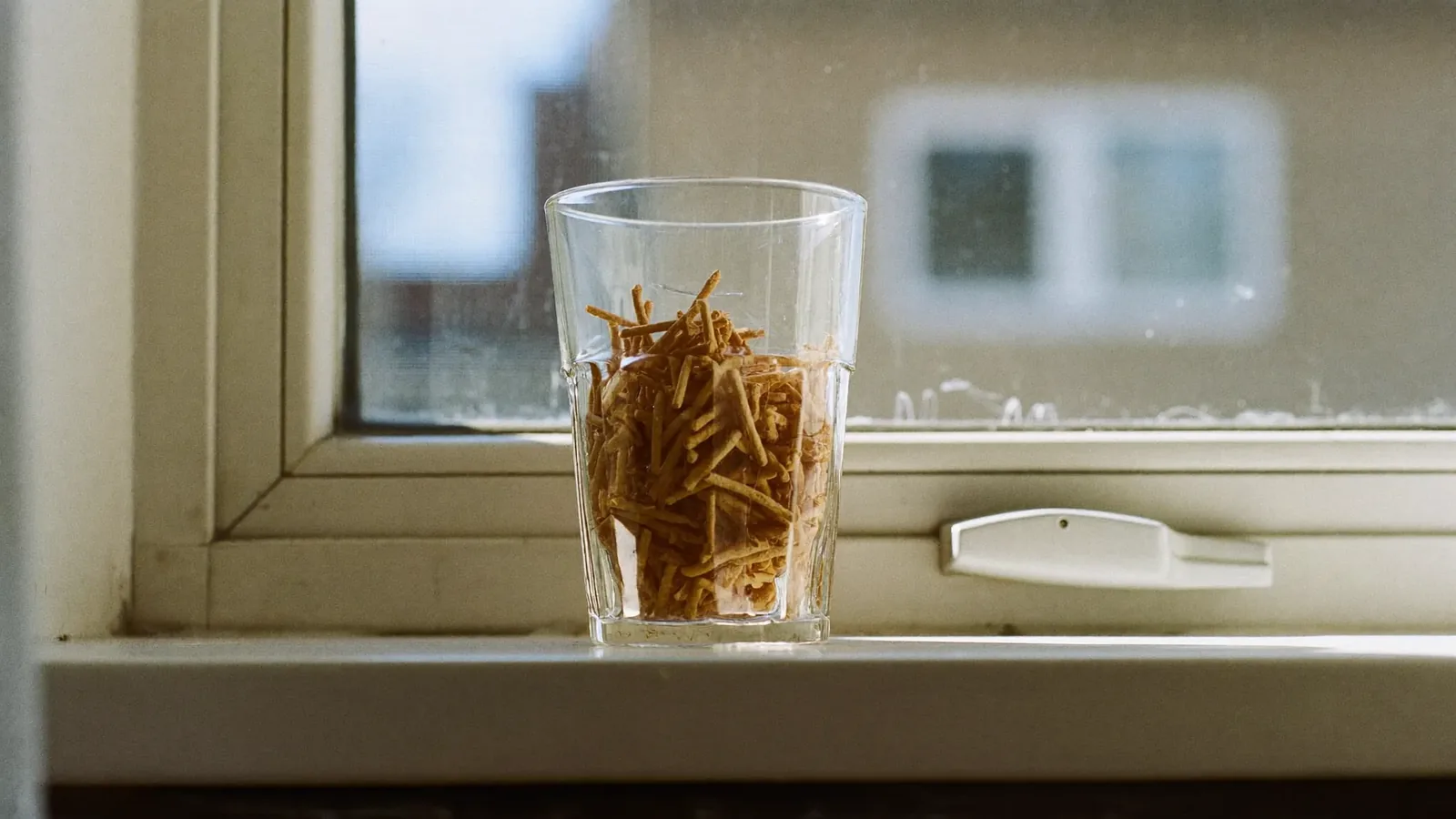
What a Dubai resident can do first
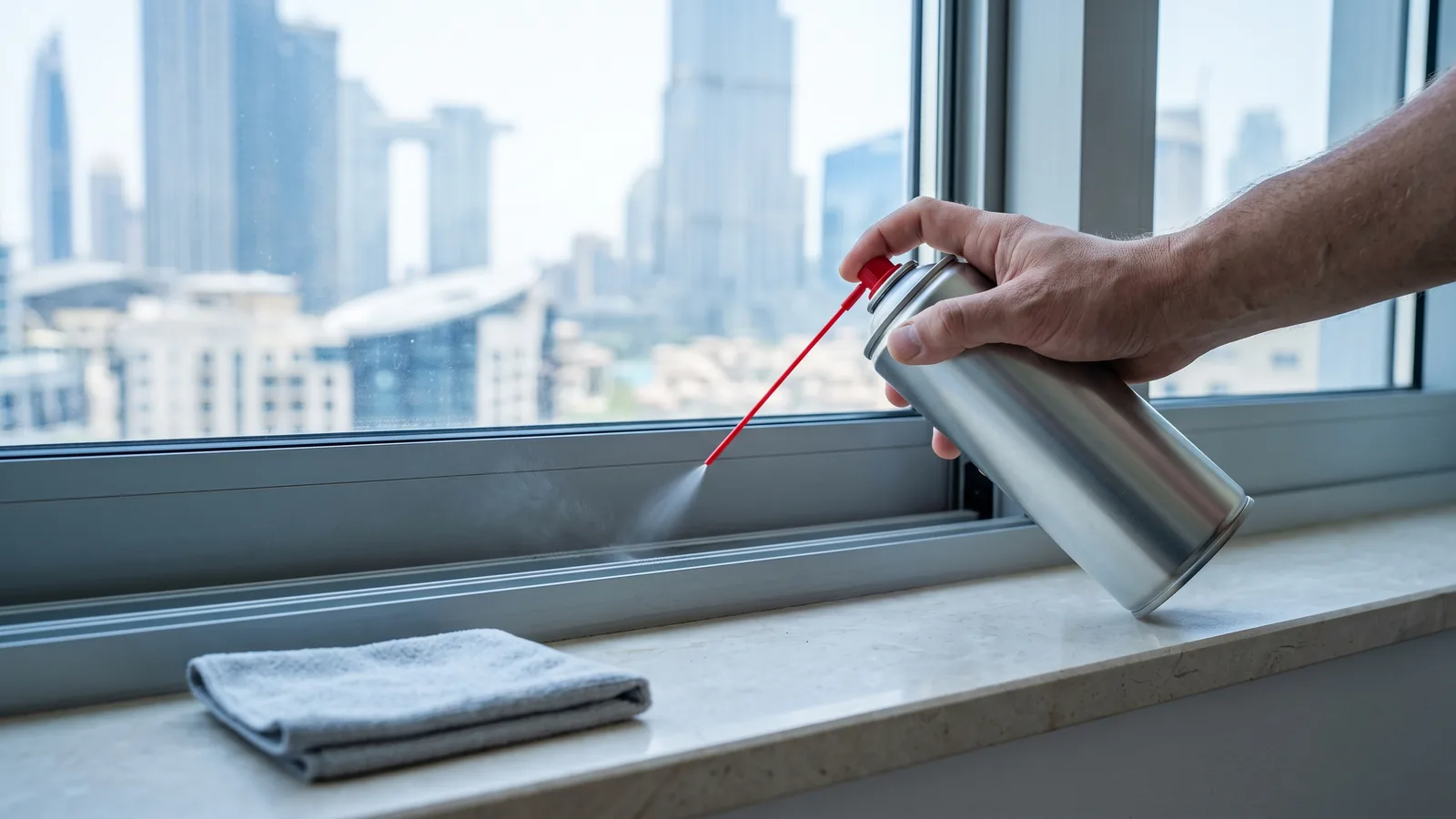
For room-side condensation, you can make real progress yourself before calling anyone. Run the bathroom and kitchen extractor fans while showering and cooking, and for a few minutes afterwards. Avoid drying laundry indoors where you can, since wet clothes dump a lot of water into the air. Crack a window or run the AC fan to move stale, humid air rather than letting it sit against cold glass. Wipe the sills each morning so trapped water does not soak into frames and walls and start mould. Keep furniture and curtains slightly off the glass so air can circulate.
If you have done all that and the windows still stream, or if you can feel outside air leaking around the frame, the seals have likely gone and it is time for a professional look. For moisture trapped between the panes, there is no home fix at all, so the useful step is confirming the diagnosis with the wipe test and then booking a measure-up.
When to call a professional
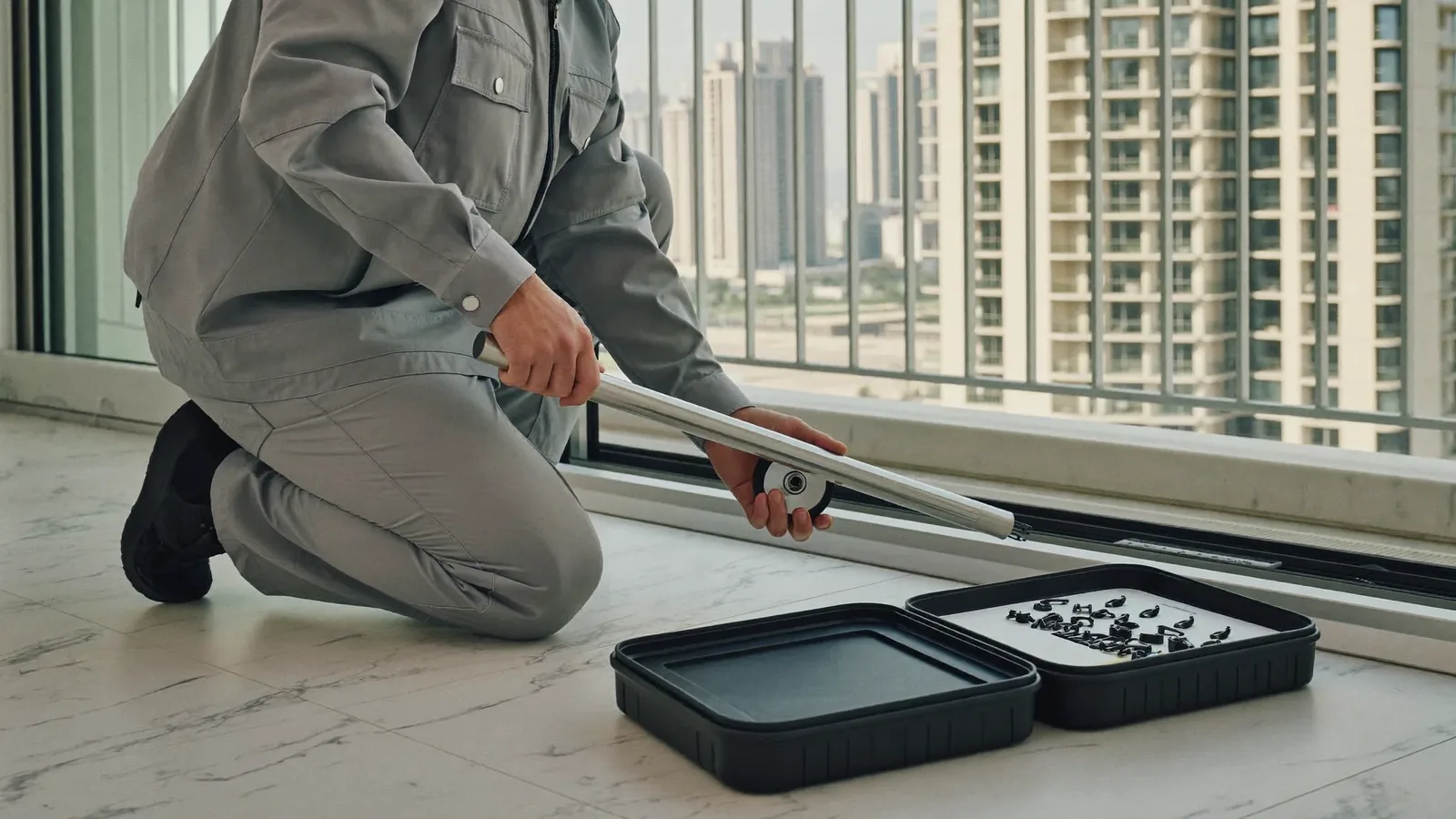
Call when the basics have not fixed it, when you can feel a draught or dust coming through the frame, or when the mist is sealed inside the glass and no wiping helps. Failing rubber seals and brush strips that let humid air and dust leak in are a sealing job, and our window sealing and draught-proofing in Dubai service replaces the worn gaskets so the frame closes tight against the outside air again. A blown double glazed unit is a glass job, covered by our double glazing repair in Dubai service.
We come to you, find out which fault you actually have, and give a free fixed quote on site before any work starts. Al Barsha is central, so we reach most of Dubai in around 30 minutes, and every repair carries our 2-year warranty. We have handled Dubai windows since 2014 and our emergency line runs 24/7 on +971 50 220 6918, or you can reach us through the contact page. For more window guides, browse the blog.