




The film you need depends on the one job you want it to do. Frosted film gives privacy in bathrooms and glass partitions. Solar tint cuts heat and stops furniture fading. Security film holds shattered glass together. Blackout film makes a bedroom properly dark. No single film does all four jobs well, so the honest way to choose is to name your main problem first and match the film to it, rather than picking a film and hoping it covers everything.
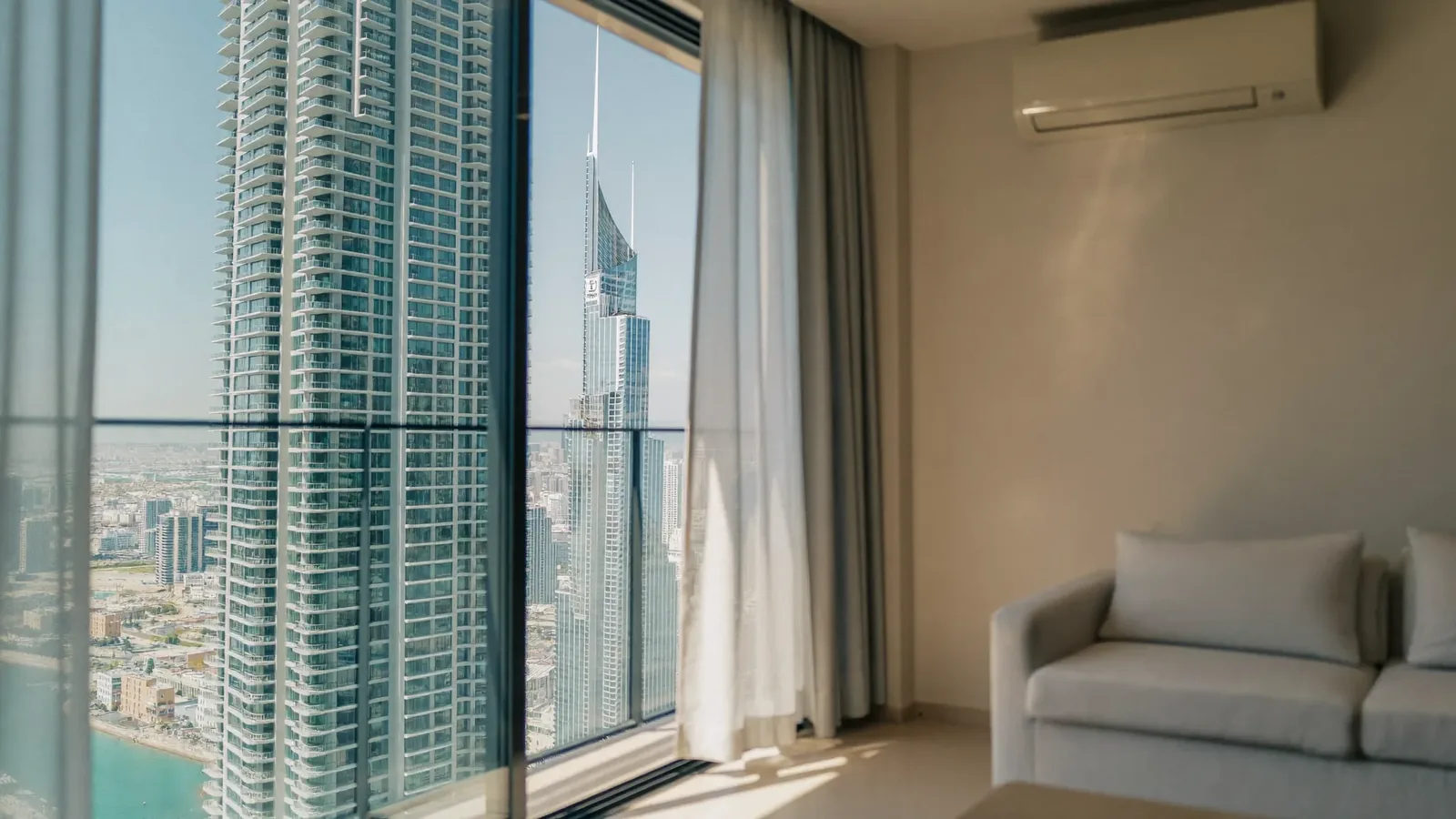
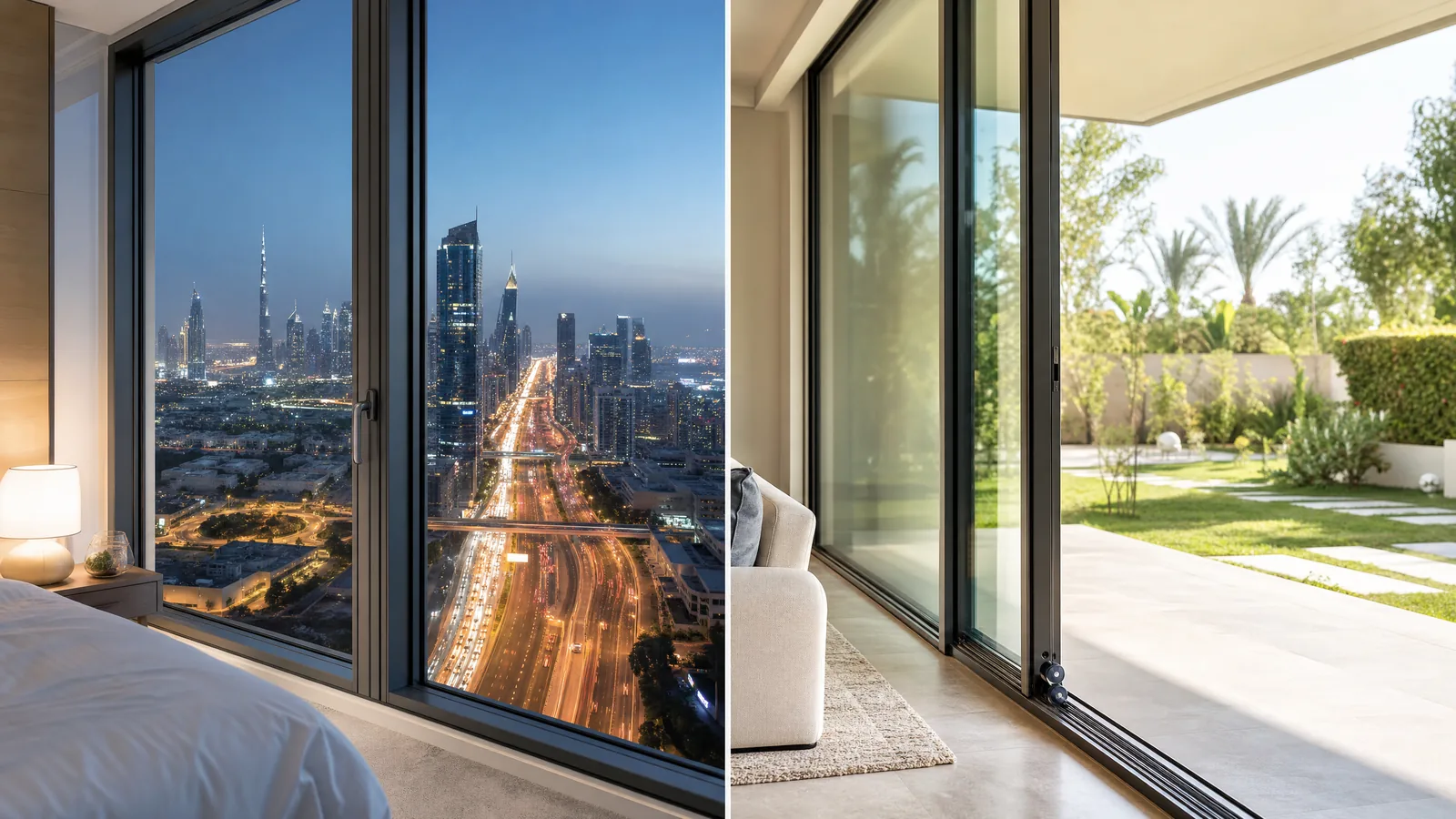
The question matters in Dubai because the glass is enormous and the demands on it pull in different directions: the same floor-to-ceiling pane faces a neighbouring tower, takes the full afternoon sun, and stands behind a sofa that is slowly losing its colour. Film is fitted to the glass you already own, with no change to the frame, so each pane can be treated separately: one film for the bathroom, another for the living room, a third for the bedroom. This guide takes the four motives one by one, then covers what film honestly cannot do.
Frosted film for bathrooms and partitions
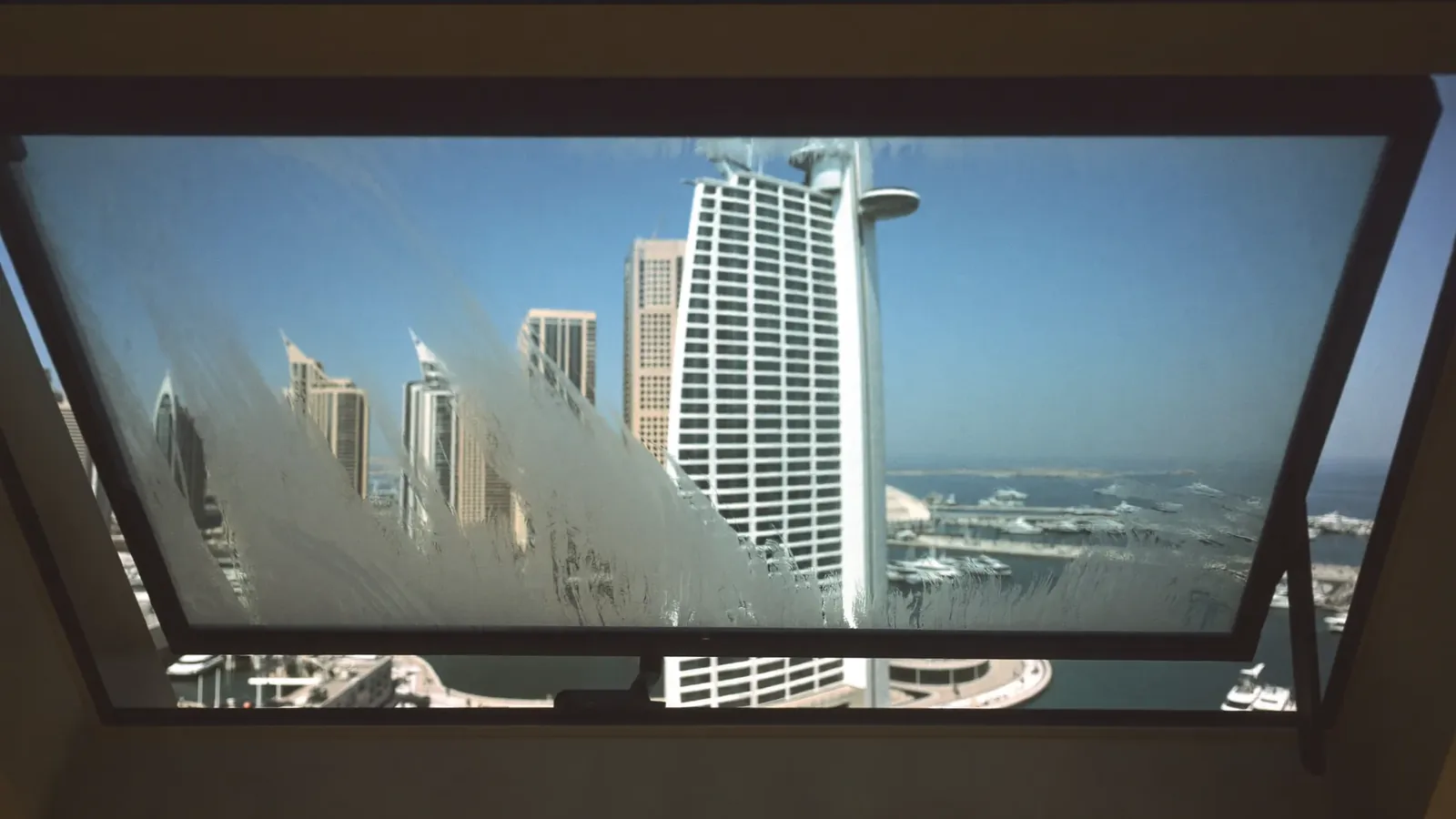
Frosted film turns clear glass into a translucent surface. Daylight still comes through, but the image does not: nobody can make out shapes or movement from either side, by day or by night. That makes it the default answer for bathroom windows, shower screens, glass office partitions, ground-floor glazing on a walkway, and any pane where you want light without eyes. The trade-off is symmetrical: you lose the view out just as the world loses the view in, so frosted belongs on glass you look at, not glass you look through.
One honest warning about the popular alternative. Mirror-style one-way privacy films only look opaque from the brighter side. By day the outside is brighter, so the street sees a mirror and you see out. After dark the roles swap: with your lights on, the film works in reverse, and passers-by see straight into your lit room while you see your own reflection. If privacy after sunset matters, choose frosted film or plan on closing the curtains at night.
Solar tint against heat and fading
Solar control tint is the film most people mean when they say tinting. It reflects and absorbs a large share of the sun's energy before it passes through the glass, so the room heats up more slowly, the air conditioning holds its temperature with less effort, and the glare on screens and pale floors softens. It also filters the ultraviolet light that does most of the damage to interiors. If the sofa has a pale stripe where the sun lands, or the curtains and wooden floor have lost their colour on one side of the room, that is the sun working through clear glass, and tint is the fix, most obviously on large west- and south-facing panes.
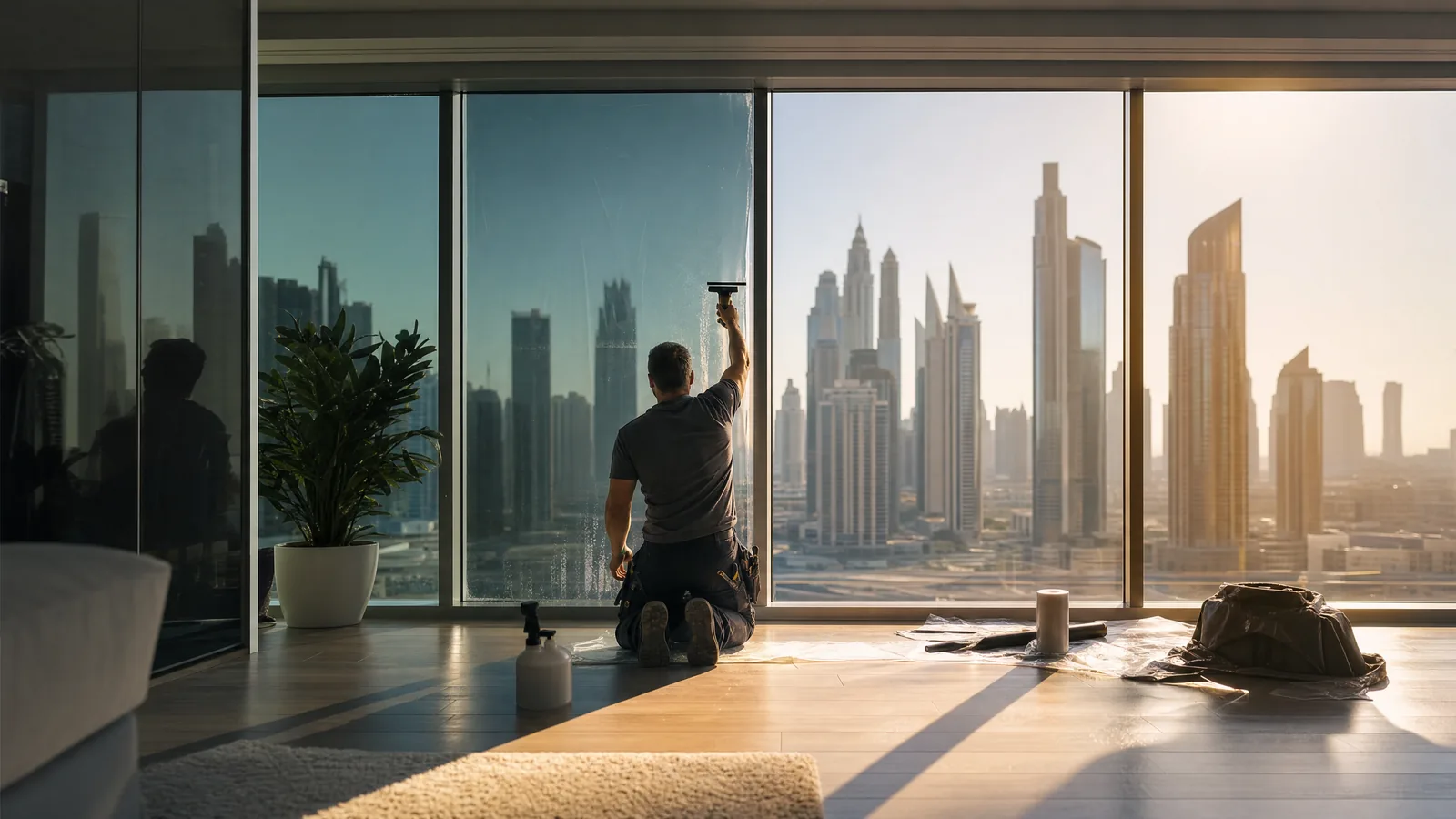
The price is straightforward: tinting costs 250 AED per square metre on our price list, applied to your existing glass, which makes it one of the cheapest comfort upgrades a Dubai home can get. The frame stays, the glass stays, only the film is added. Our window tinting and film in Dubai service carries the full range of shades, from barely visible to dark.
Security film that holds the shards
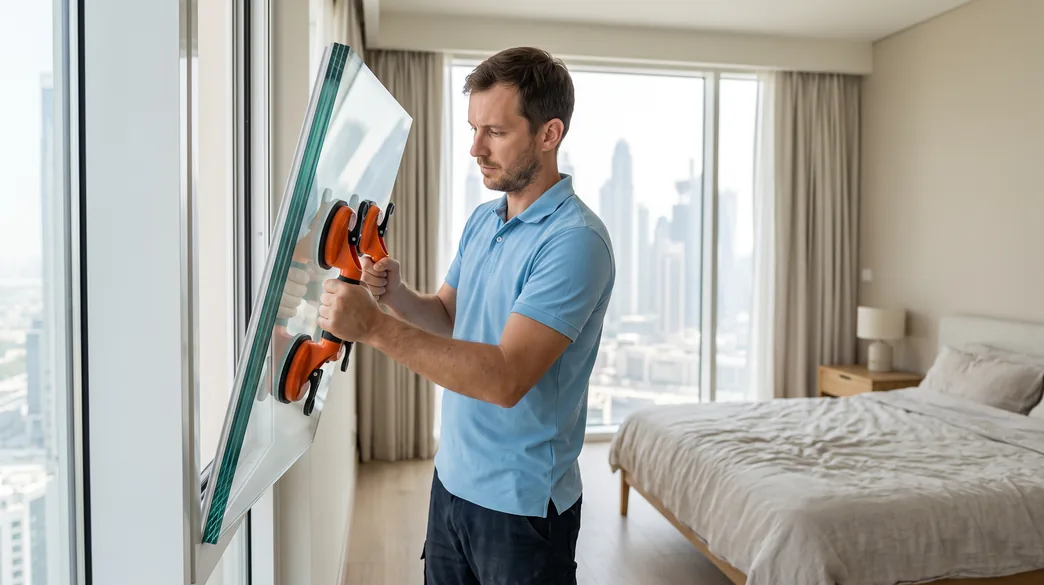
Security film is a thick, optically clear layer bonded hard to the glass. It does not stop the glass breaking; it changes what happens after the break. Instead of shards flying across the room or dropping out of the frame, the broken pane hangs together on the film as one crazed sheet. That matters in three situations: full-height glazing where a child or a stumble could put someone through the pane, glass doors and low panes that take everyday knocks, and break-in attempts, where an intruder expecting one blow and an open hole instead meets a sheet that holds, makes noise, and costs time. Because the film is clear, the window looks unchanged.
Blackout film for bedrooms
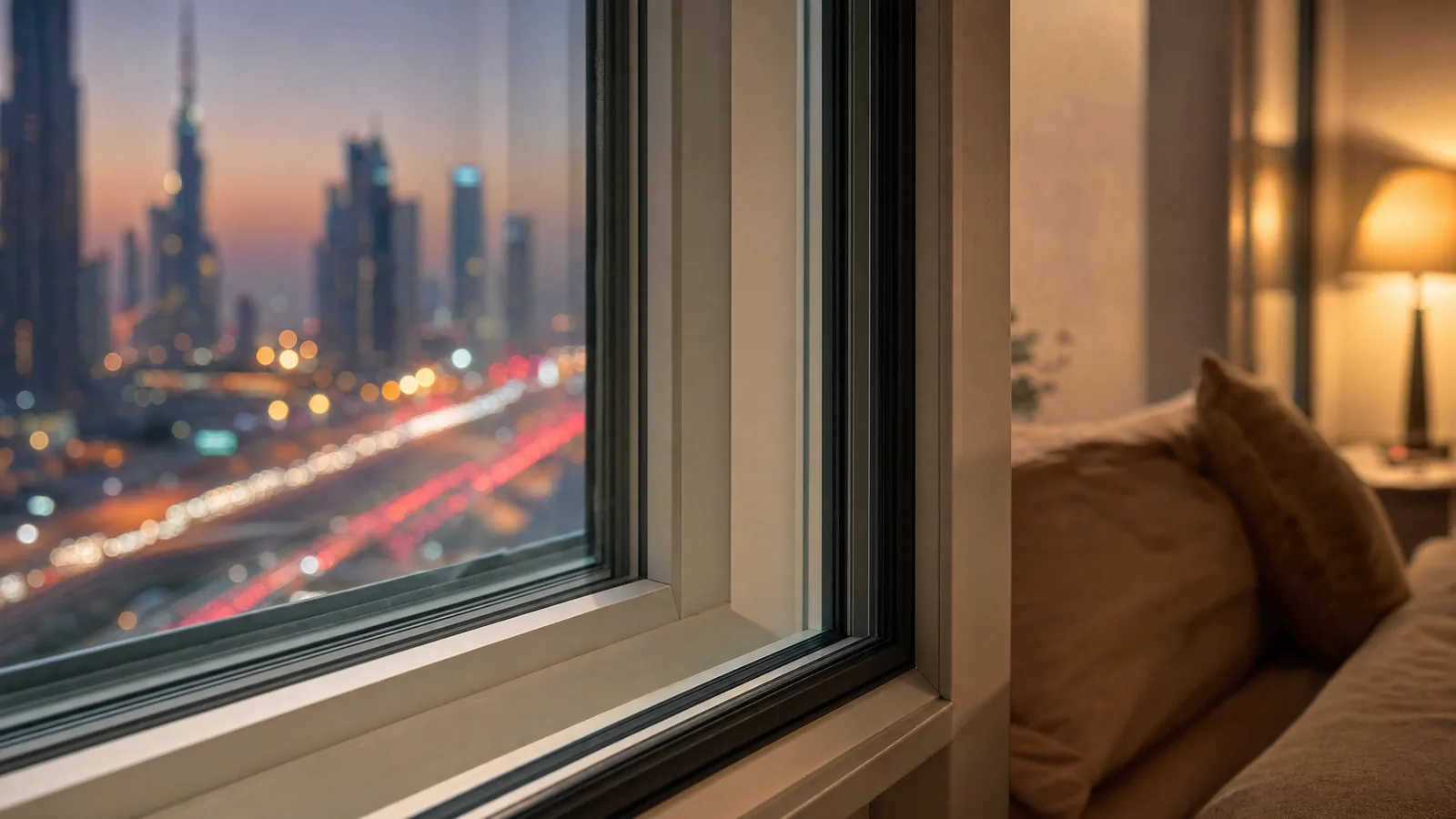
Blackout film does not dim the light, it blocks it completely. It is the answer for night-shift workers sleeping through a Dubai afternoon, for children's nap rooms, for home cinemas, and for bedrooms facing façade lighting that never switches off. Unlike curtains and blinds, which leak light around their edges, film sits flush on the glass and leaks nothing. The trade-off is permanence: that pane gives up its daylight and its view entirely, so blackout usually goes on the one bedroom pane that needs it, not across the whole flat.
What film will not do
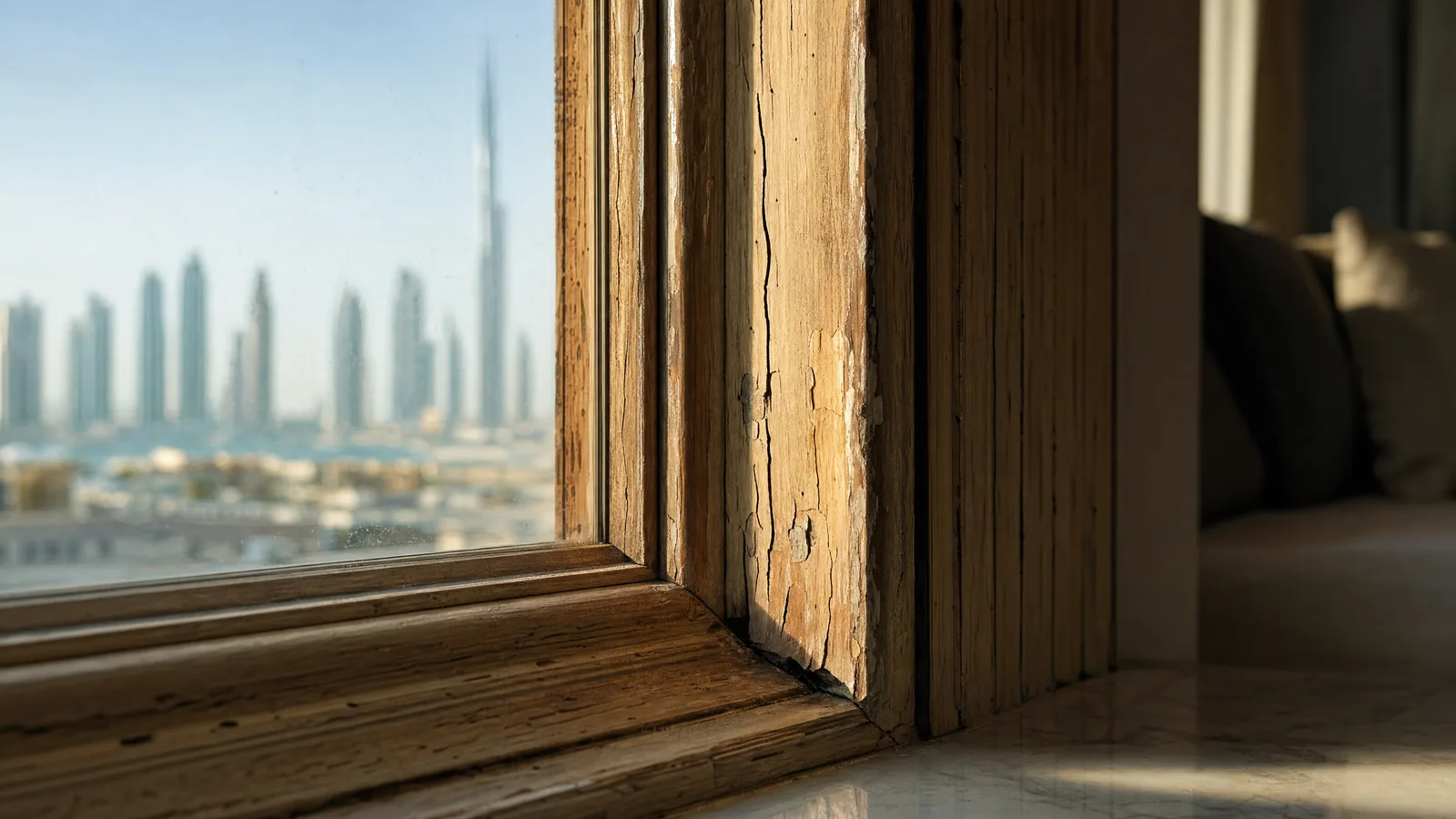
Film will not soundproof a room. Traffic and construction noise pass through a window because of the mass of the glass, the tightness of the seals, and the build of the glazed unit, and a layer a fraction of a millimetre thick changes none of them. If noise is the real problem, that is different work, and our window soundproofing in Dubai page explains what actually moves the needle. Film also does not repair glass: a cracked pane or a fogged, blown sealed unit needs fixing first, because film is applied to healthy glass and will only preserve a fault underneath it.
Choosing is easier in person. We come to you, look at each room and each pane, and often recommend a mix, frosted in the bathroom, tint on the sun side, security film on the glass door, with a free fixed quote on site before any work starts. We have worked on Dubai windows since 2014, reach most of the city from Al Barsha in around 30 minutes, back every job with a 2-year warranty, and answer 24/7 on +971 50 220 6918. Get a free quote, or browse more guides on the blog.