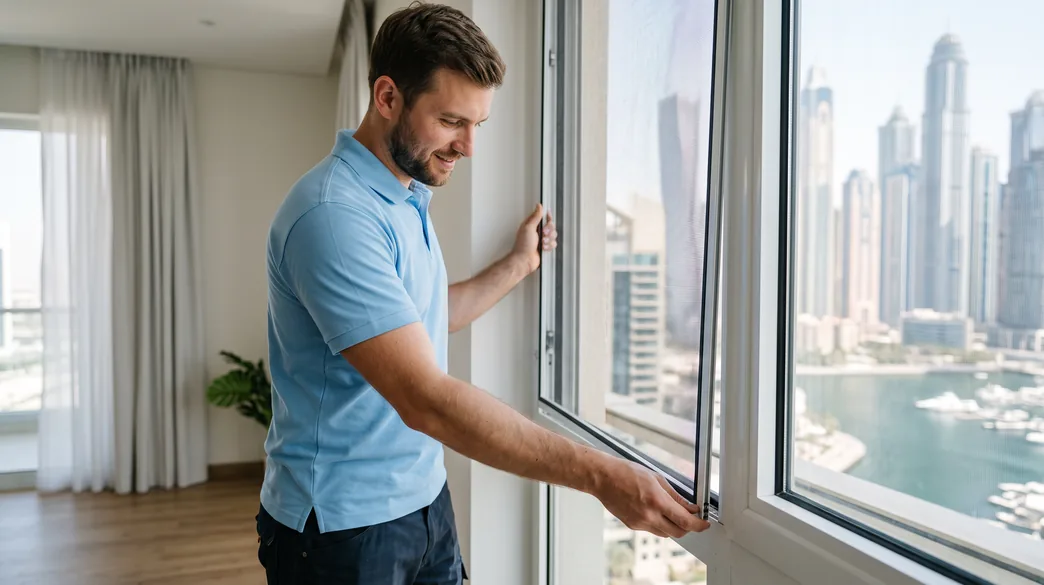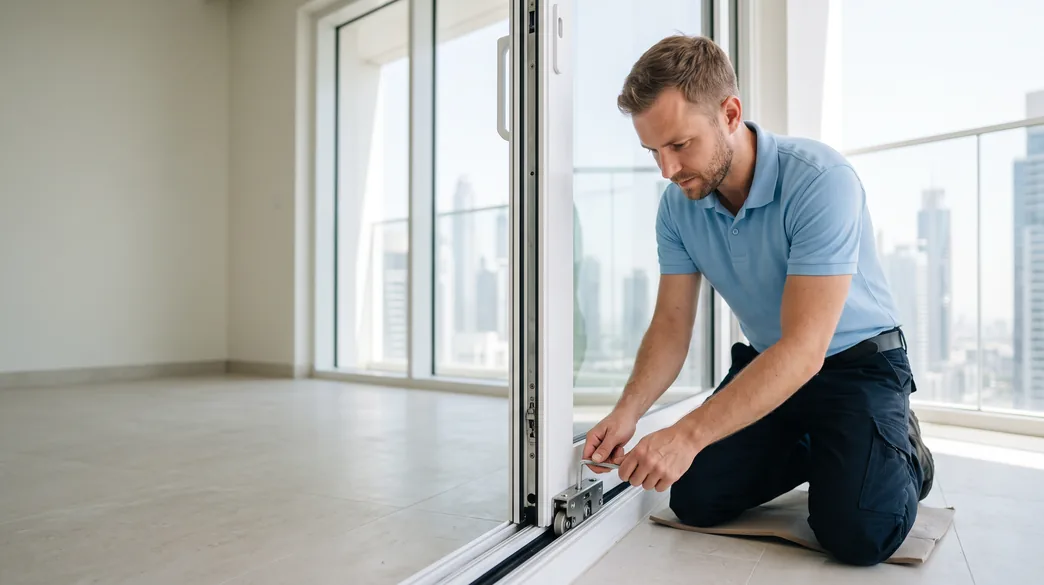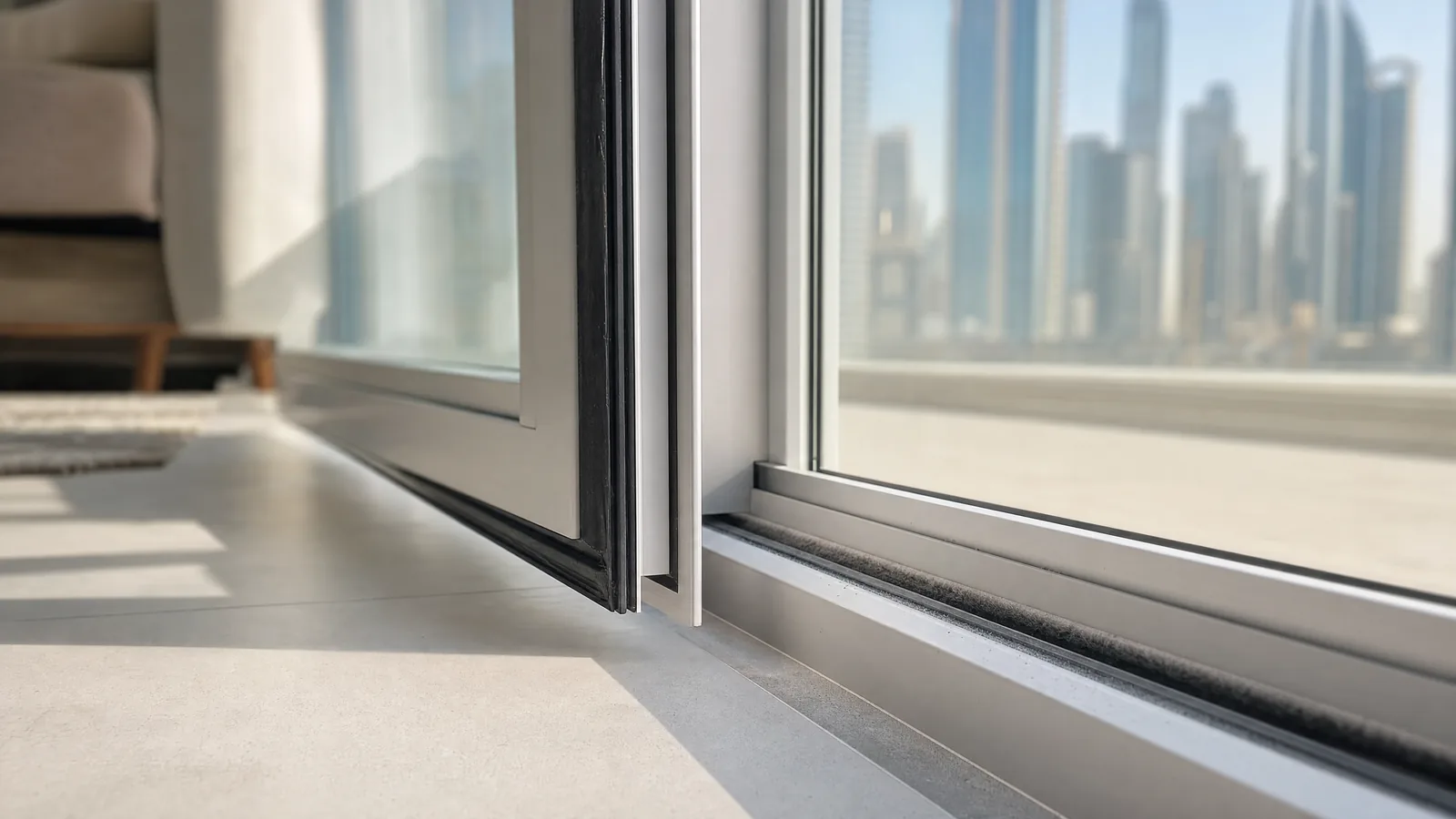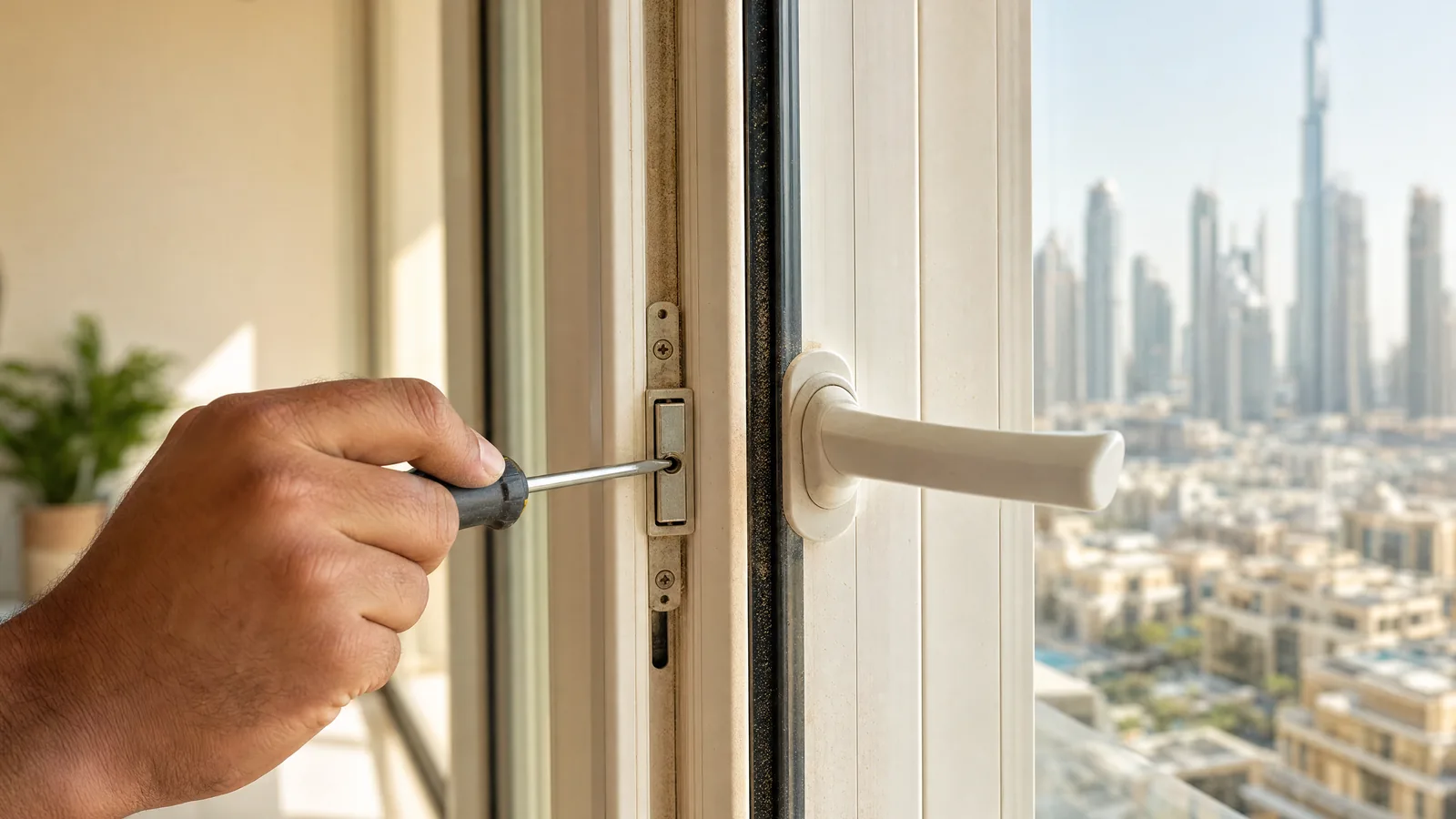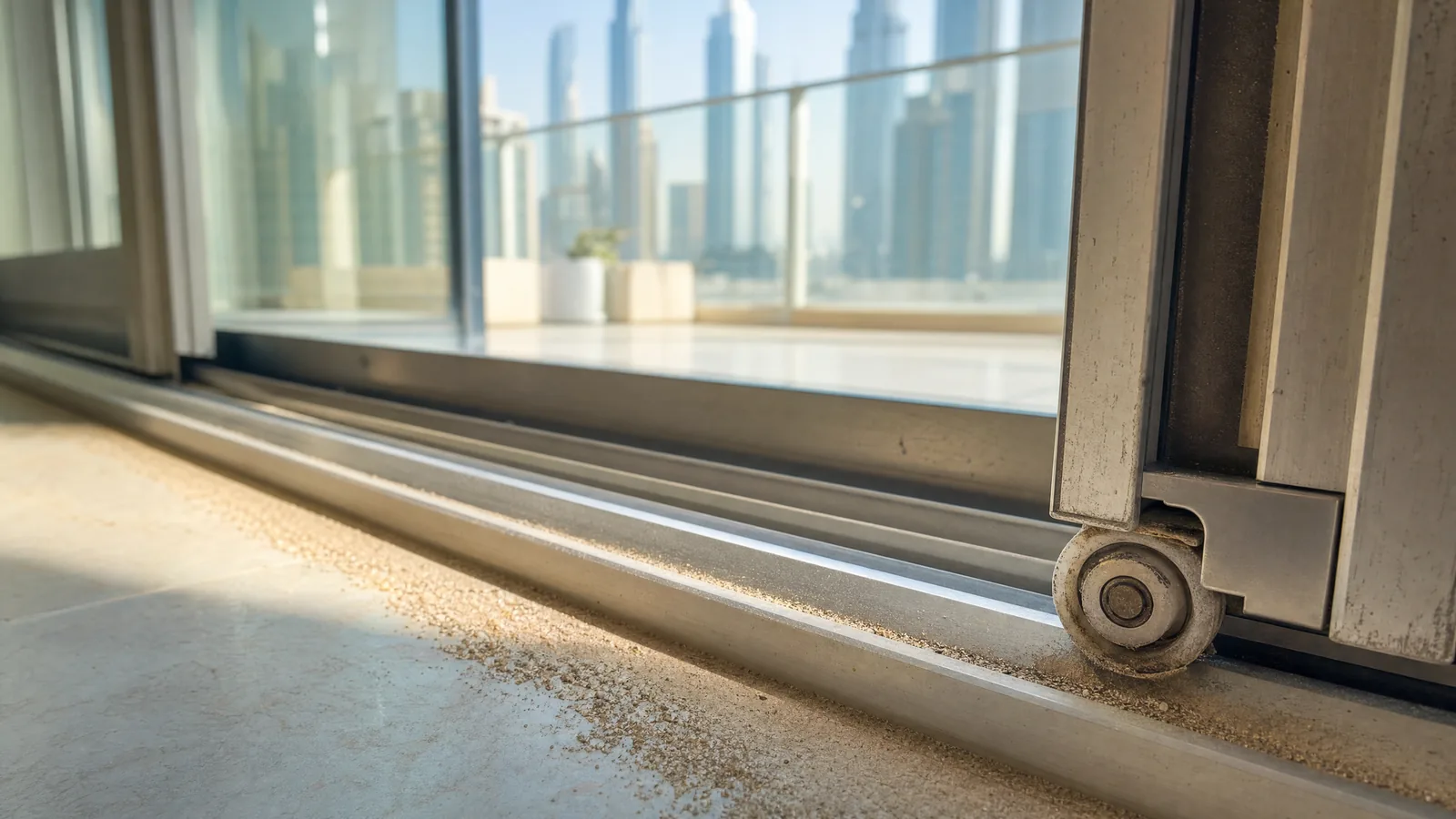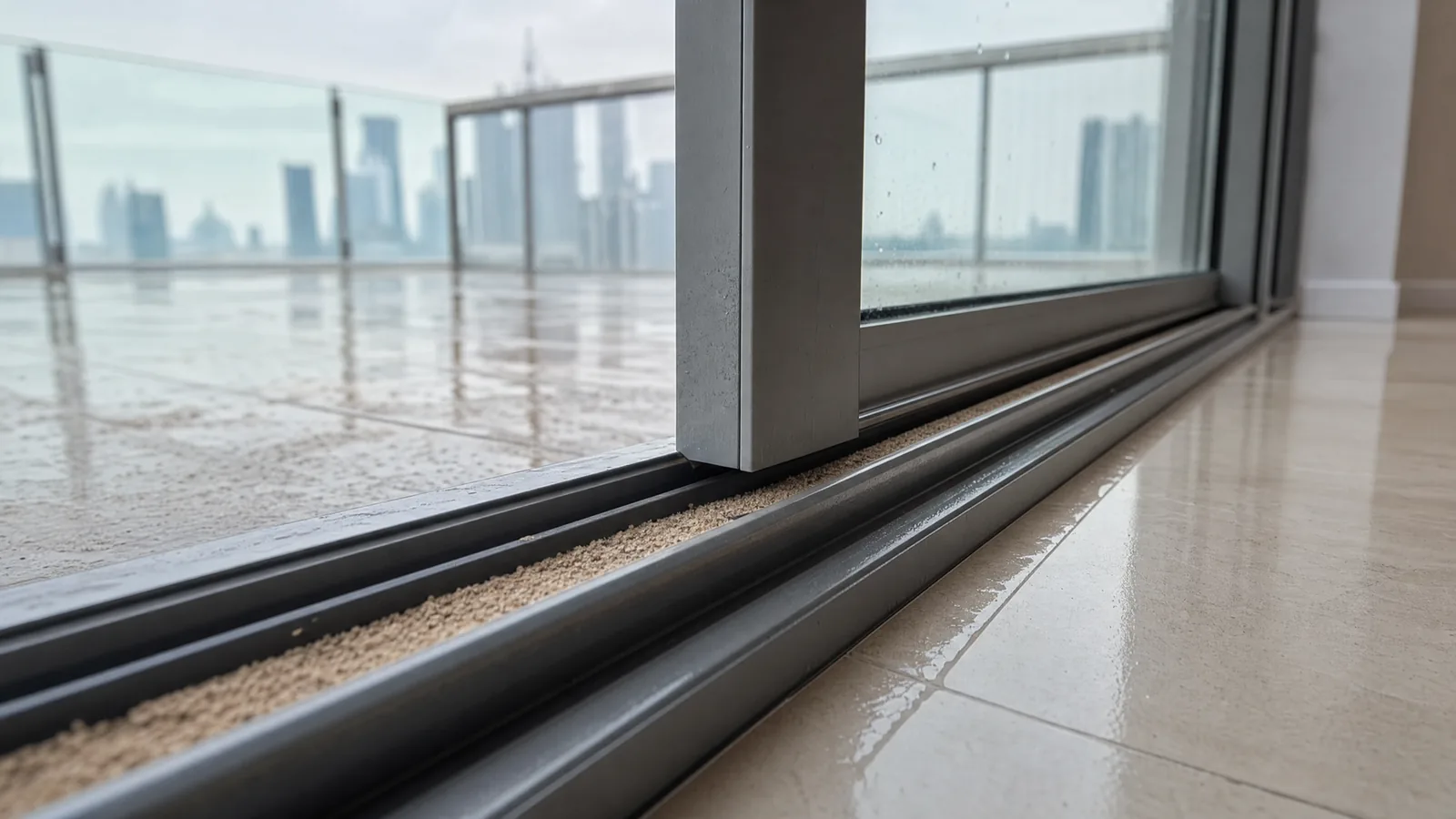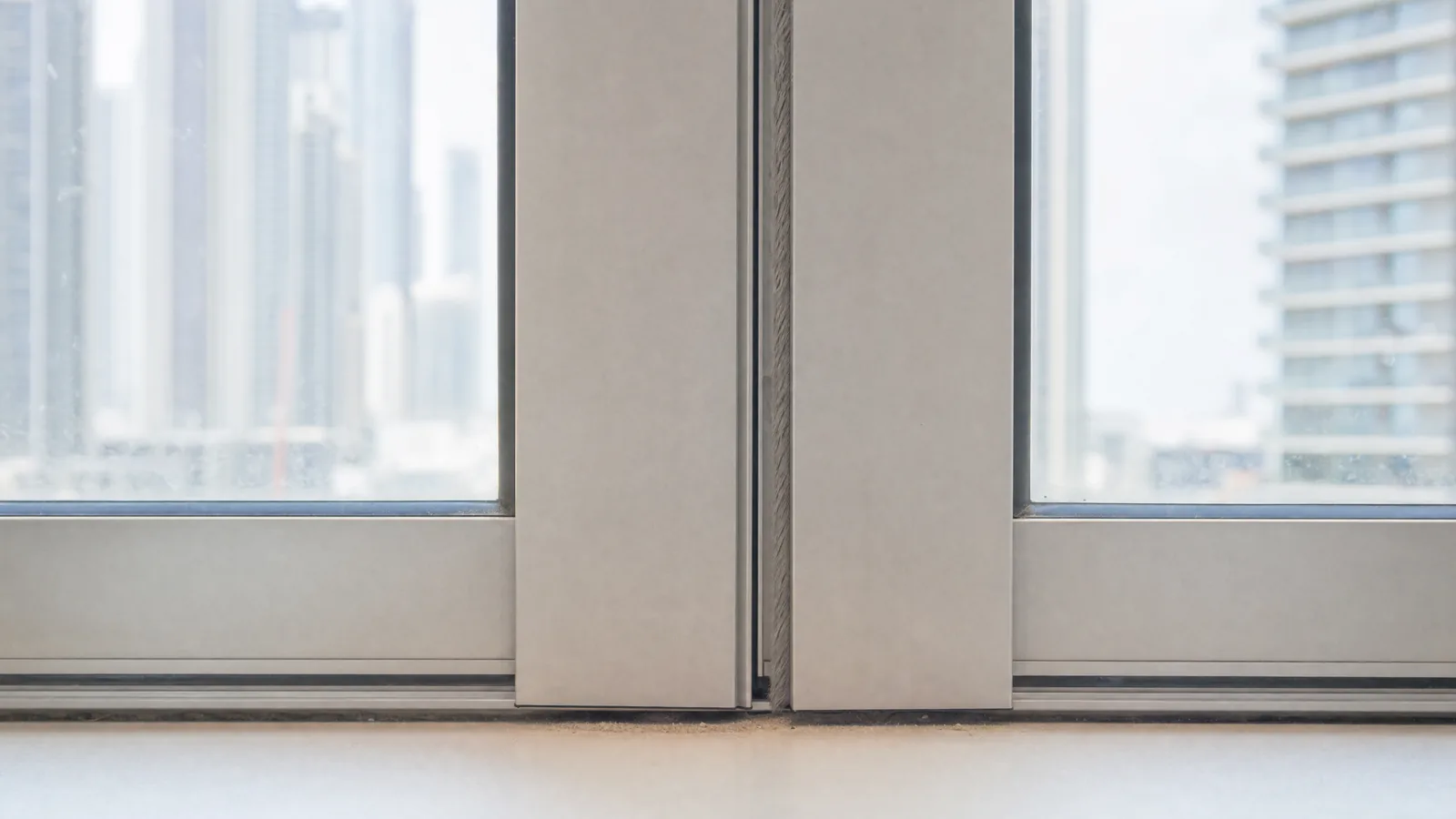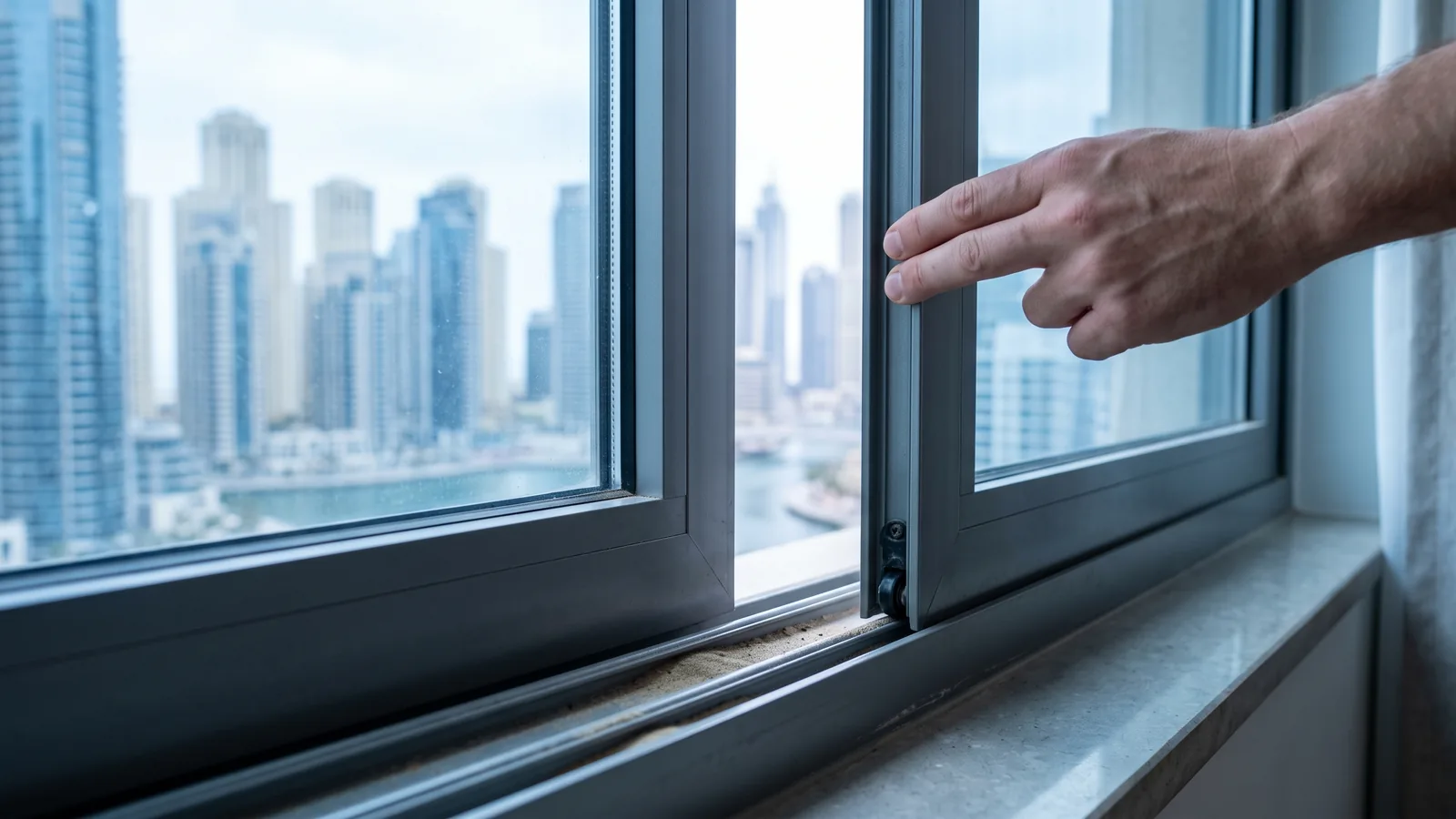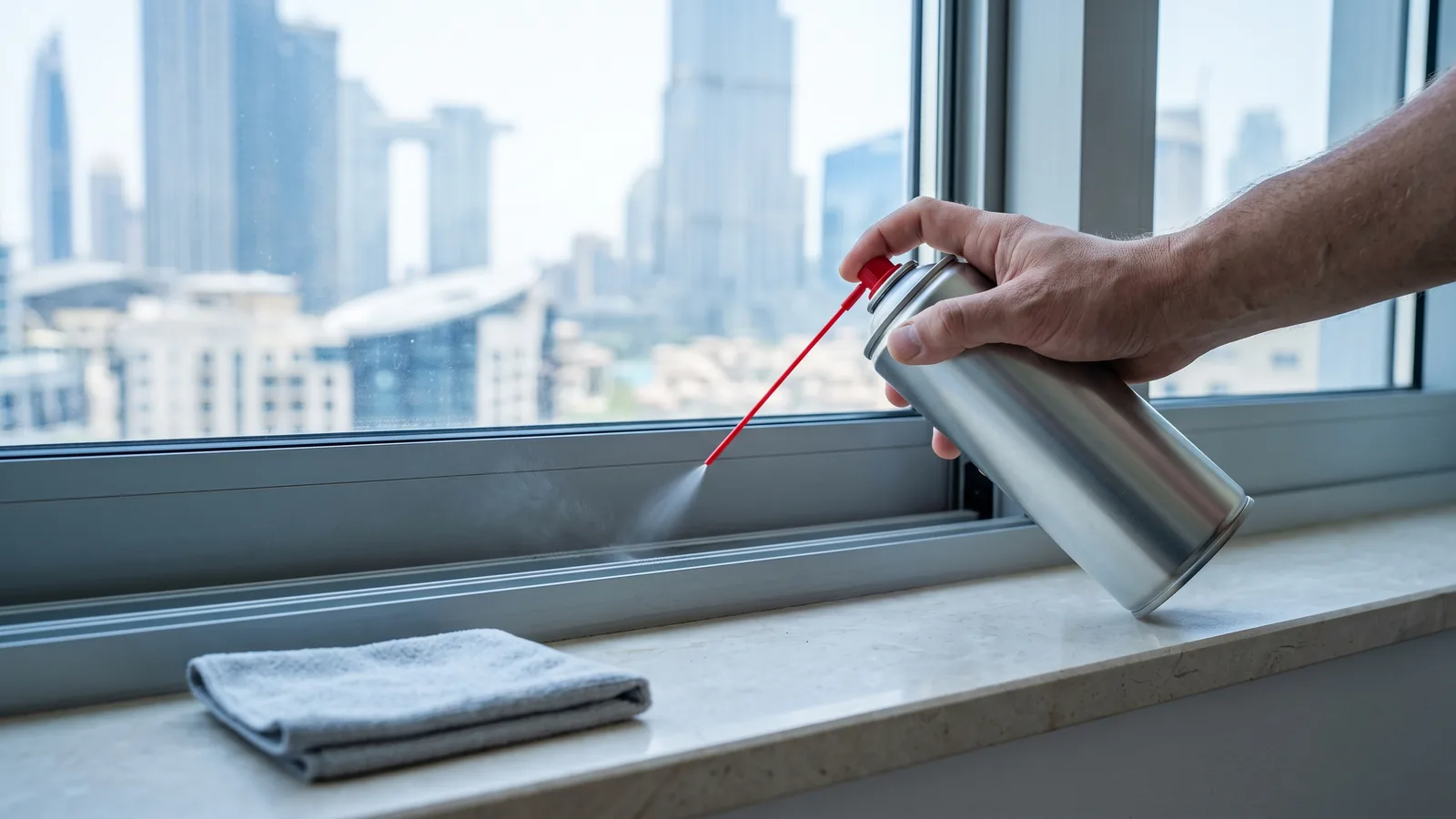





A screen that has seized is rarely a mesh problem. The mesh is intact, and what has gone wrong sits under it: sand packed level with the shallow outer channel, a roller worn flat, a frame that has lost its right angles. All of it is visible while the panel stands still. Two minutes of looking tell you more than another shove.
That matters more here than on the glass sash beside it, because the screen is the part of the set that breaks from being forced. Thin aluminium, small wheels, mitred corners held by pressed-in keys rather than welds. So this guide reads the panel with you: four checks with the window closed, a table that turns each mark into a cause, and the line where the job stops being yours.
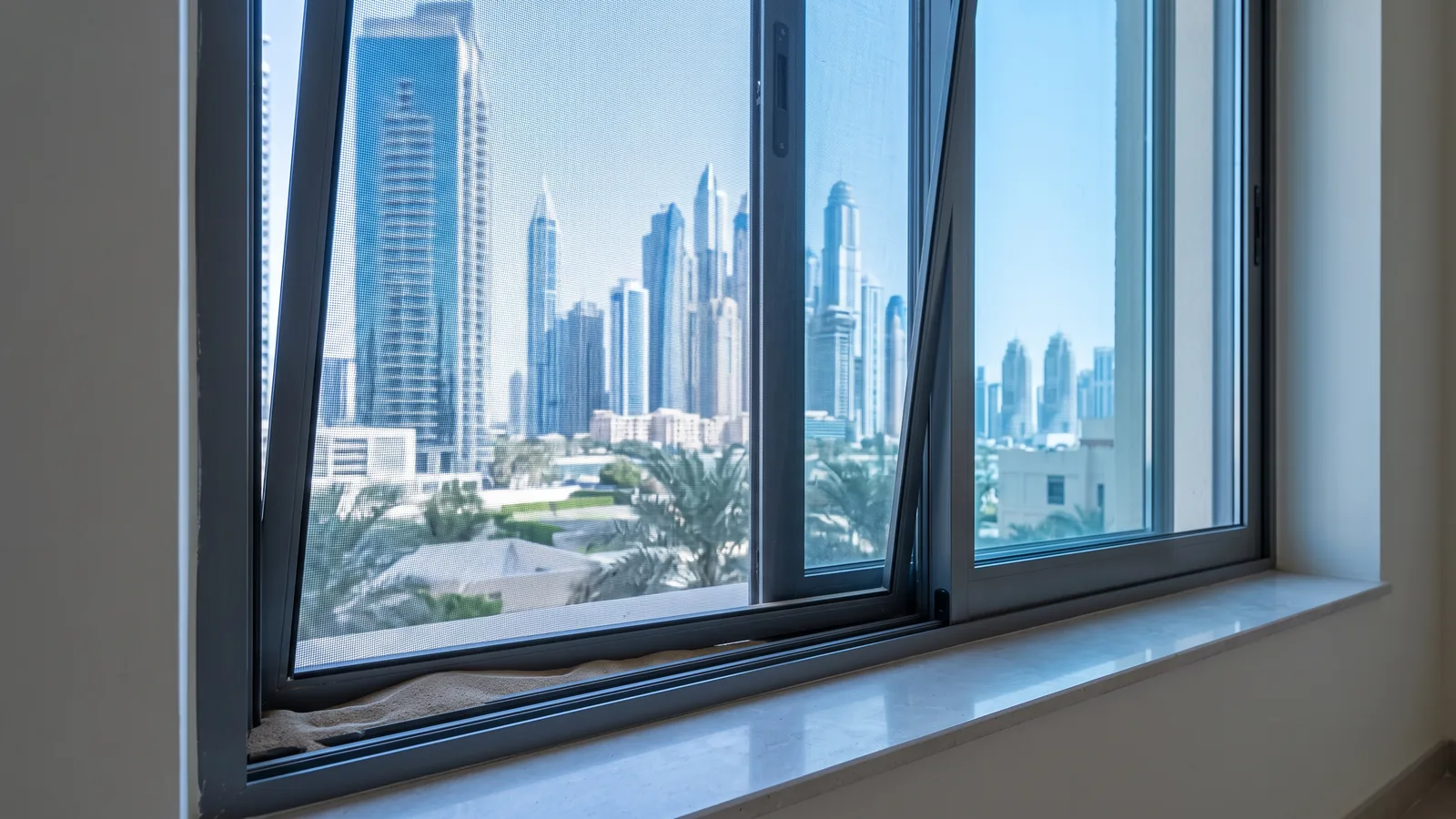
Is it really the screen?
Reach past the glass and move the screen on its own, with no hand on the sash. If the screen is the heavy one, you are in the right article. If the glass resists while the screen runs freely, the fault sits elsewhere in the window: three tests for a sliding window that is hard to open will place it in about five minutes. Everything below assumes the screen is the part that has stopped.
Why the screen seizes long before the glass does
Why a screen frame is more exposed than the sash next to it, with its thin section, its shallow outer channel and its lighter wheels, is already covered in that guide. What decides whether a screen actually jams is something else, and it reads like an advantage: the panel weighs almost nothing.
Weight is what keeps a channel working. A glazed sash bears down on whatever it rolls over, so a ridge of sand under it gets crushed and ploughed aside. Under a screen there is no such force. The wheels climb the ridge instead of pushing through it, the panel rides a fraction above the guide it should sit in, and from that moment it runs on sand rather than on aluminium. The lightness that lets you move a screen with one finger is what lifts it out of its channel.
Nothing sweeps that channel, either. The sash grooves get a rough clean whenever somebody opens the window; the screen runs in the outermost groove, open to the weather, and the only thing that passes along it is the screen itself, which through the hot months, when nobody opens anything, does not move at all. Then there is the sun: a thin frame in direct afternoon light expands and bows, and a panel that was merely tight in the morning is properly stuck by mid-afternoon.
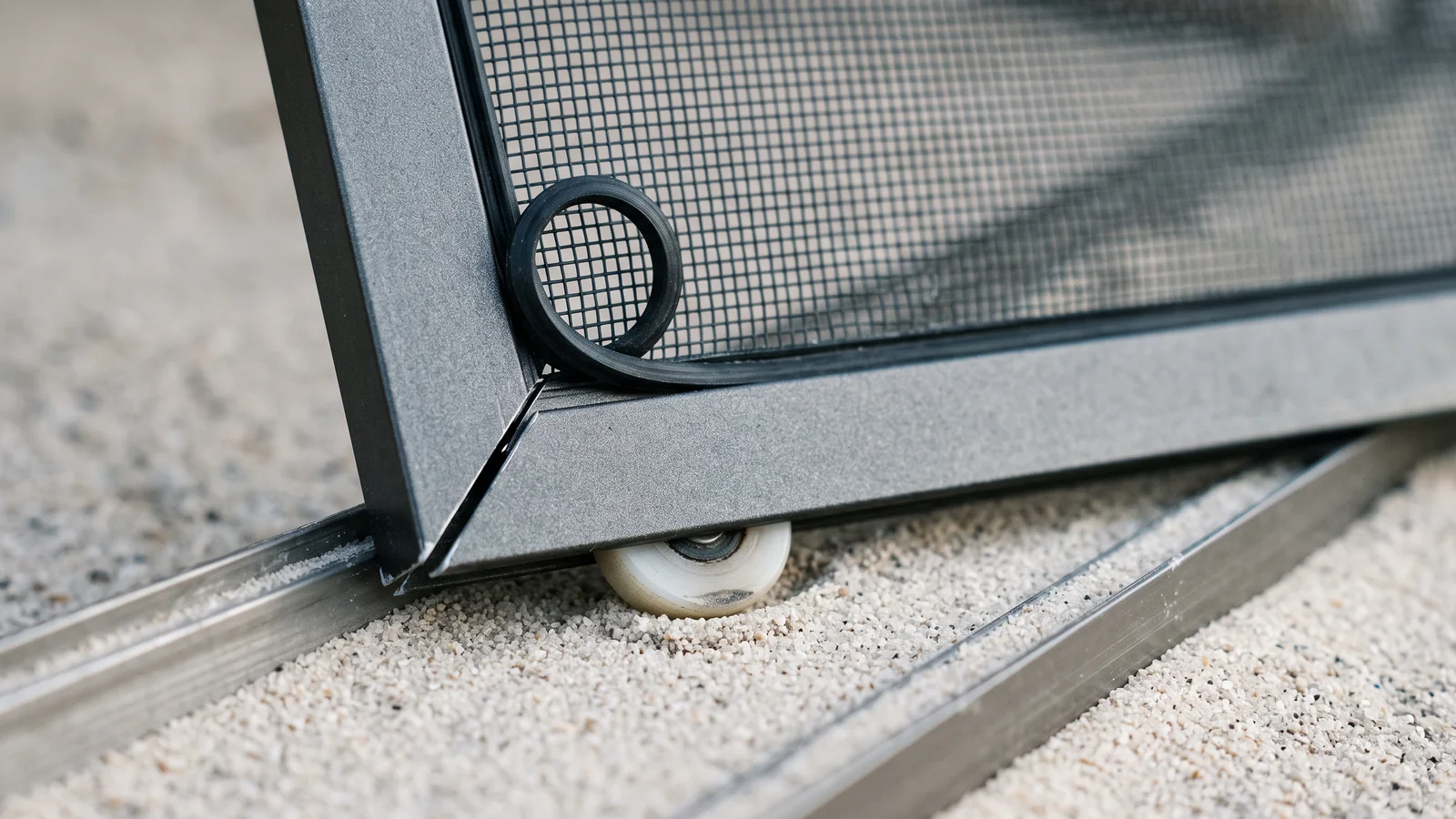
Read the panel before you push it again
Four checks, all with the window closed and neither hand on the panel. You are looking for marks, not for movement. A screen that has been dragged for a long time leaves its evidence in the same four places every time.
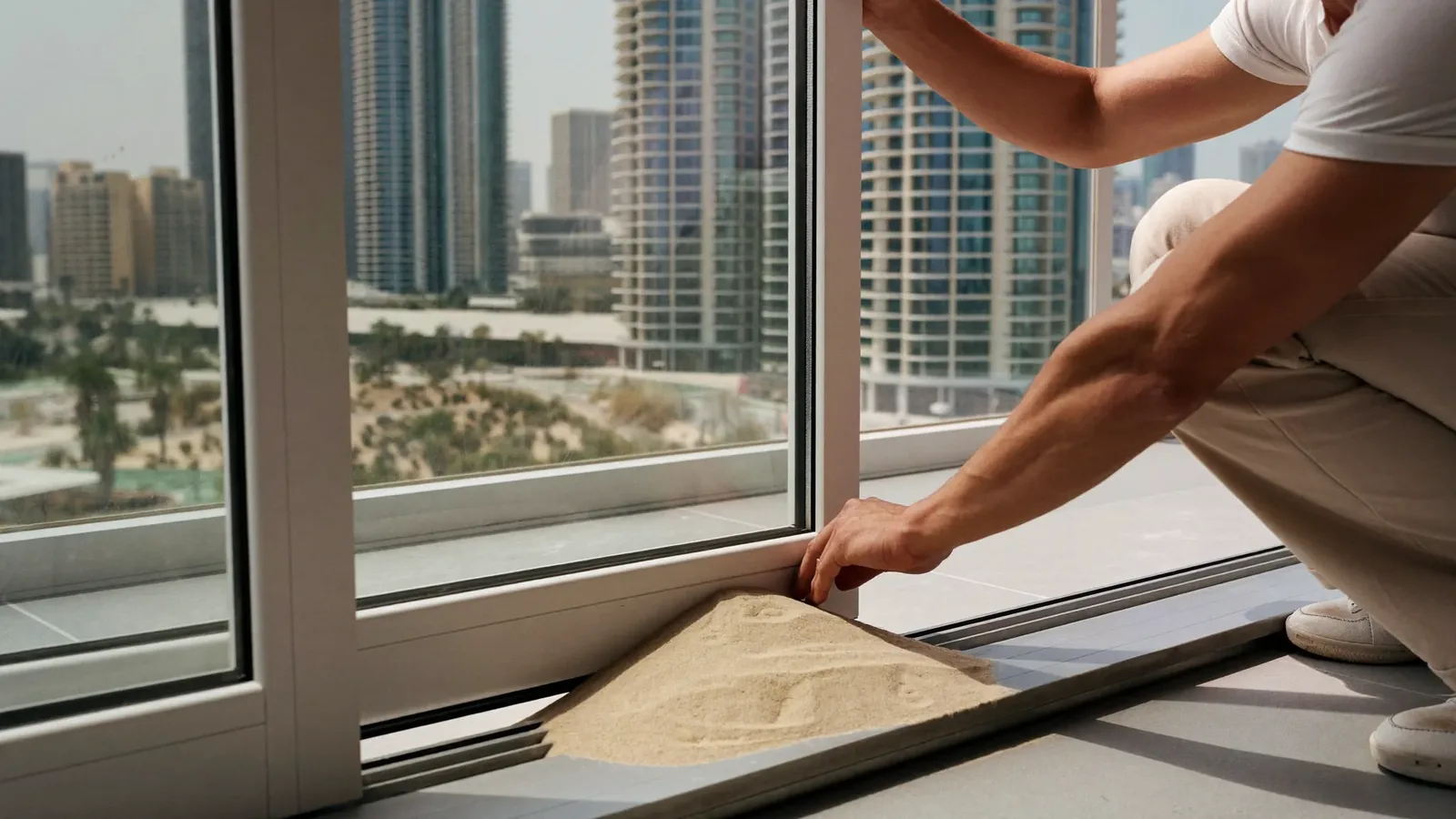
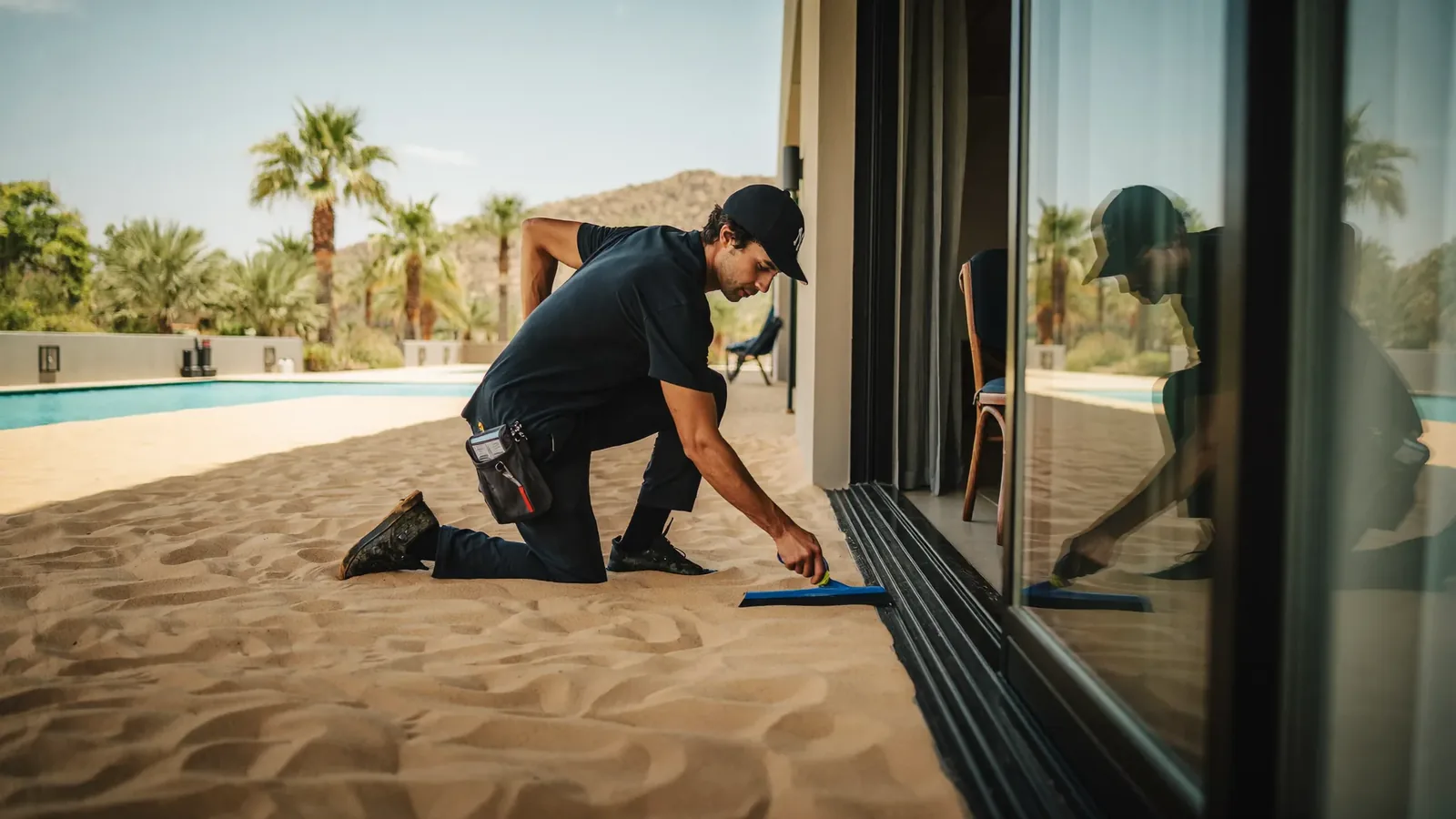
- The bottom edge and the channel under it. Crouch to floor level and look along the edge. It should sit inside the groove for its whole length. If part of it rides on a pale bank of sand, or stands beside the groove instead of in it, stop there: the rest of the checks will only confirm what you have.
- The groove itself, end to end. A step where loose dust turns into packed crust, a screw, a chip of grout dropped during balcony work. Anything standing proud of the aluminium is a stopping point, and it usually sits at the exact spot where the panel refuses.
- The corners and the gap up the vertical. A frame out of square shows as a wedge: the gap between panel and jamb is wider at the top than at the bottom, or the other way round. Look at the mitres too. A joint you can slip a fingernail into means the corner has opened.
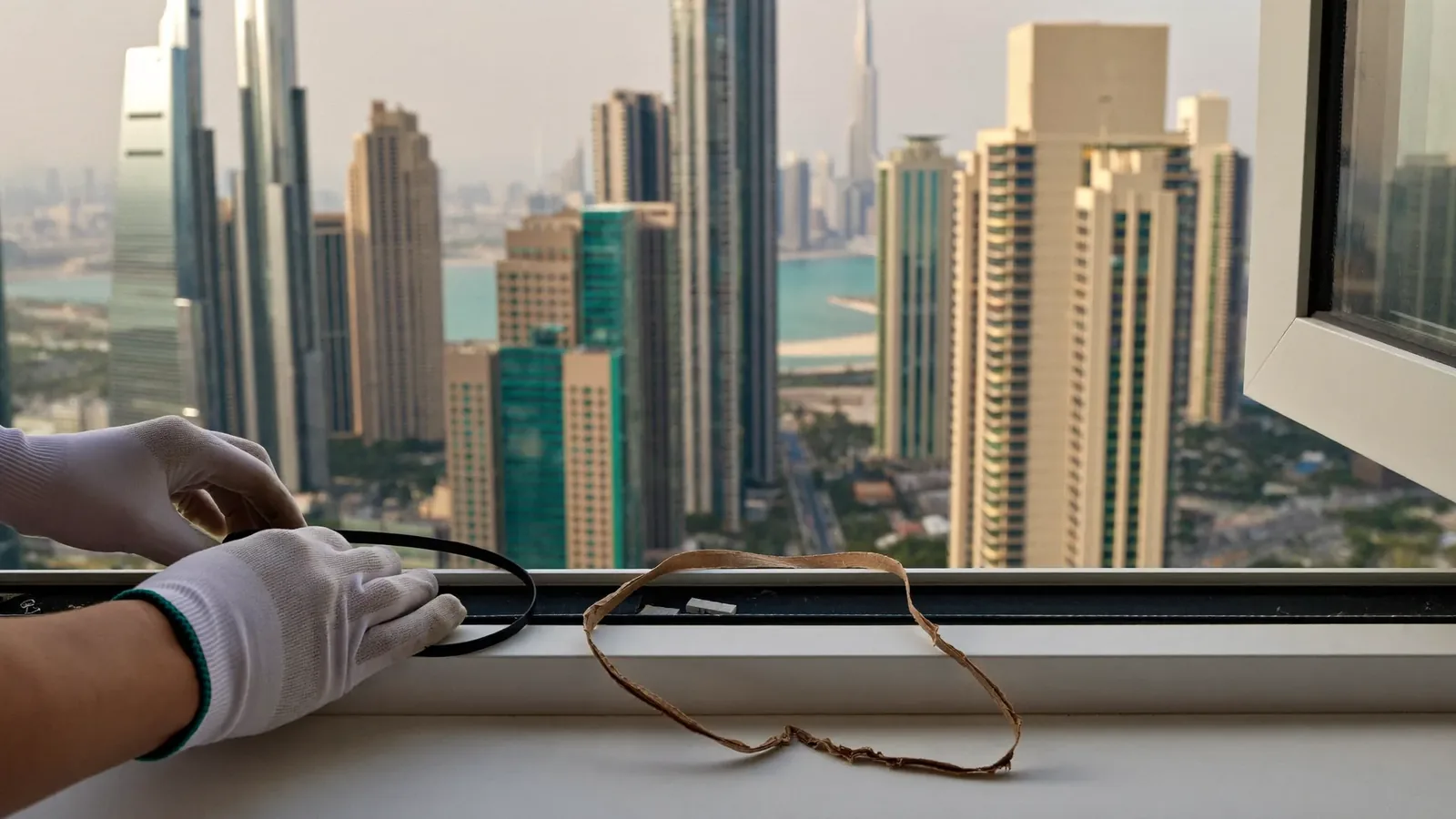
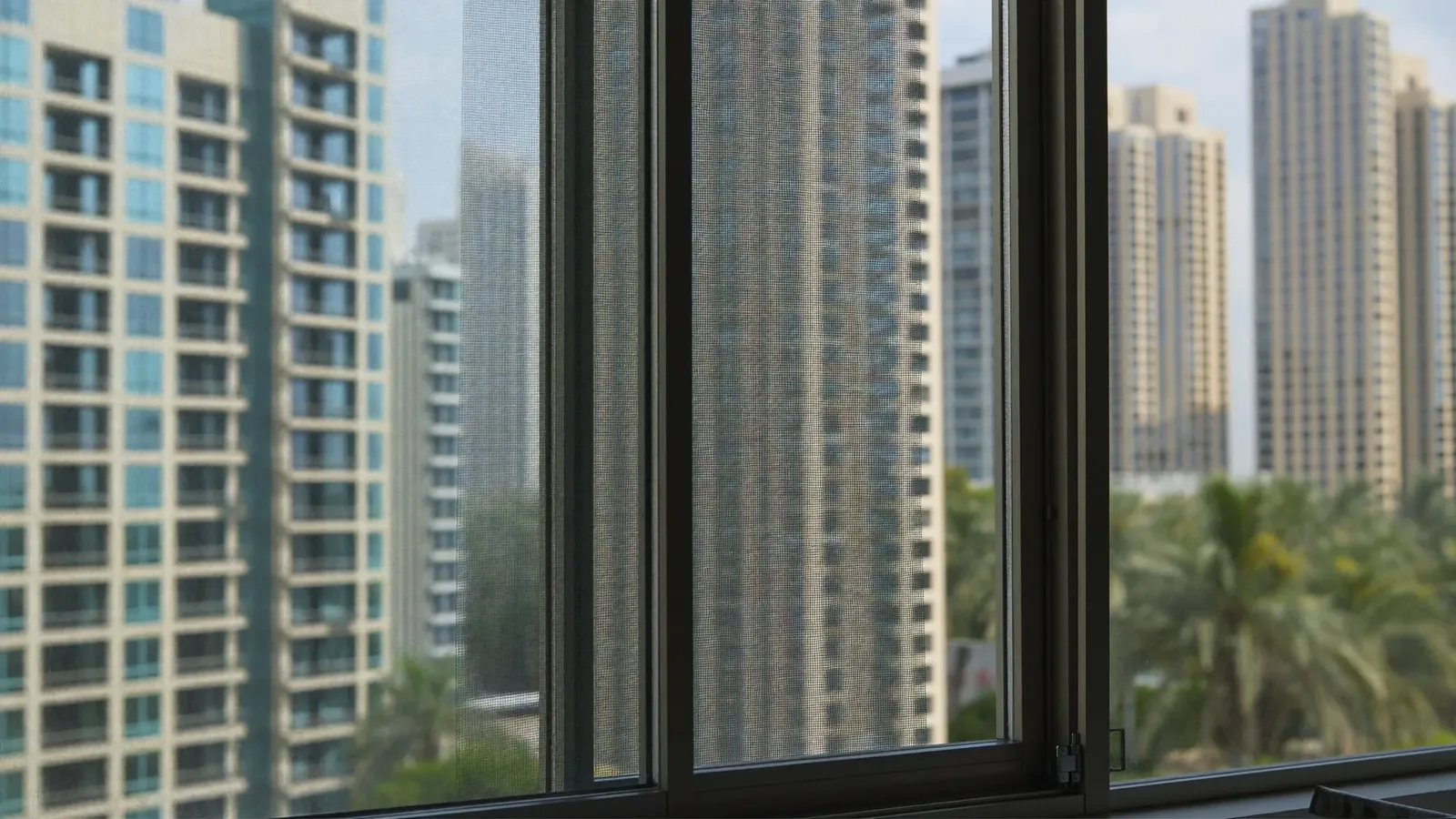
- The mesh edge and the spline groove. Trace the rubber spline that presses the mesh into the frame. A loop of it lifted out of its groove catches on every pass and feels, through your hand, exactly like sand in the channel. Cleaning will never cure that one.
None of it needs the panel removed, and none of it needs a ladder: five of the six signs in the table below can be read standing on the floor. The sixth you diagnose by the clock rather than by eye.
What each mark means
| Sign | Cause | Who fixes |
|---|---|---|
| Pale sand level with the channel edge, panel sitting on it | Compacted drift in the shallowest channel | You: vacuum and brush |
| Panel sagging and dragging, a roller with a flat worn spot under it | Rollers flattened or packed with sand | Technician |
| Bottom edge standing beside the channel rather than in it | Panel has come off its channel | Technician (do not touch at height) |
| A loop of rubber spline lifted out of the groove along the mesh edge | Spline out of its seat, catching the frame | Technician |
| Wedge-shaped gap up the vertical, corner joint open | Frame out of square, corners loose | Technician |
| Binds in the hottest hours, runs freely by evening | Thin frame bowing in the sun | Technician (adjustment) |
Only the first row is yours to close. The other five point at the running gear, which is the ordinary outcome for a sliding screen rather than a revelation. The four checks are not there to discover that rollers wear out; they show which of these your panel has done, and what went with it.
Three moves that help, five that make it worse
If the panel stands on a packed channel and everything else looked right, with the edge in its groove, the corners closed and the spline seated, cleaning may be the entire repair. Work in this order and give it time. The crust in a screen channel is closer to mortar than to dust.
- Vacuum in halves, with a crevice nozzle. If the panel still moves, ease it to one end of its travel, vacuum the length you have exposed, then swap ends. Half a channel at a time is the whole trick. If it does not move, take what you can reach and stop.
- Break the crust with a stiff narrow brush. A vacuum rides over compacted sand without lifting any of it. An old toothbrush gets down into a groove this shallow and loosens the layer for the vacuum to take away. Several light passes beat one hard one.
- Wipe with a barely damp cloth over something thin and blunt. A plastic spatula or a wooden stirrer, cloth wrapped round it. Not a screwdriver: it scores the aluminium and raises burrs that catch the panel on every pass afterwards.
The other five turn a channel clean into a replacement. Worth reading even if your screen is on the ground floor.
- Never work a screen loose at height or over a balcony. The outer channel opens onto a drop, and a panel this light will leave the frame while you lean into it. Going over the rail of a Marina tower makes it an incident, not a repair.
- Never pull on the mesh. It is not a handle. The spline holds the mesh, and hauling on the mesh drags the spline out of its groove, which turns a running-gear job into a re-mesh you caused yourself.
- Never take a run at it. A short hard shove is what flattens rollers and opens mitred corners. Most of the broken corners we see were made after the panel jammed, not before it.
- Never lever it with a screwdriver or a knife. Aluminium this thin dents where you press, and a dent inside the channel becomes a permanent stopping point that no cleaning removes.
- Never press a panel back into its channel beside an open opening. If it has already come out, leave it standing, keep children away from the gap, and call. Refitting means holding it clear of the guide for a second, and that is the second in which it goes.
Rollers, channel, mesh: what actually gets replaced
The dividing line is the mesh. On a jammed screen it is normally intact and nobody touches it, which is why a stuck screen and a torn screen are two different jobs with two different answers. If yours is torn as well, the choice between re-meshing and a new panel is laid out in our guide to mosquito nets, and that is a different conversation.
Where the four checks lead, most of the time, is the running gear: new rollers plus a channel cleaned back to bare aluminium, and often some geometry with them, meaning corners pulled back up, the frame squared, the spline reseated. They go together on purpose. New rollers dropped into a channel that is still packed feel excellent at first and not for long, and a panel that has been forced repeatedly is rarely out in only one respect.
Re-meshing enters the picture only if the mesh has torn or stretched as well, usually because somebody pulled on it or because it caught when the panel came out. That is done in the same visit, and the price for it is quoted on site, before the work starts, as part of the same free fixed quote. A whole new panel is the last resort: a frame bent, cracked, or come apart at the corners. Lubricant plays no part until the channel is clean and dry, and the wrong product turns settling dust into grinding paste.
Getting a stuck screen sorted in Dubai
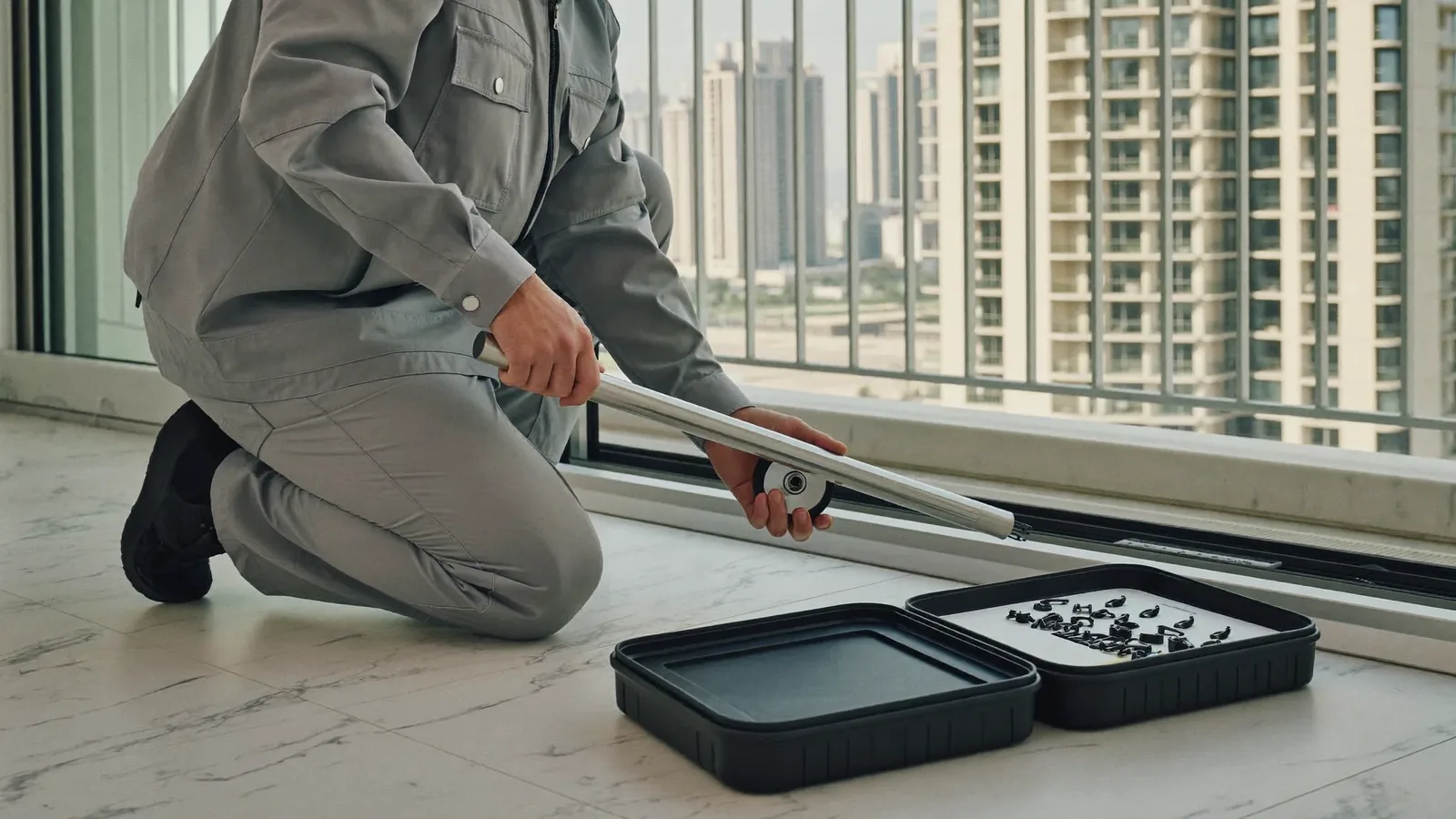
On site the technician works through the running system as a whole rather than the one part you noticed: rollers, channel, alignment, corner joints, spline. The reason is the one above. A panel dragged for a long time usually has more than one thing out, and taking them one at a time means a second appointment. That is the work covered by mosquito net repair in Dubai, from a single kitchen screen in Al Furjan to every opening in a Mirdif villa.
If the screen sits in a balcony-door opening and the door beside it has gone heavy too, say so when you book. Same channels, same sand, usually the same visit: the door side of it is balcony door repair.
We have been repairing windows, doors and screens across Dubai since 2014, we are based in Al Barsha, and we reach most of the city in around 30 minutes. The line answers 24/7 on +971 50 220 6918. The on-site quote is free and fixed before anything is touched, and the work carries our 2-year warranty. More guides are in the blog, or send a photo of the stuck panel through the contact page.