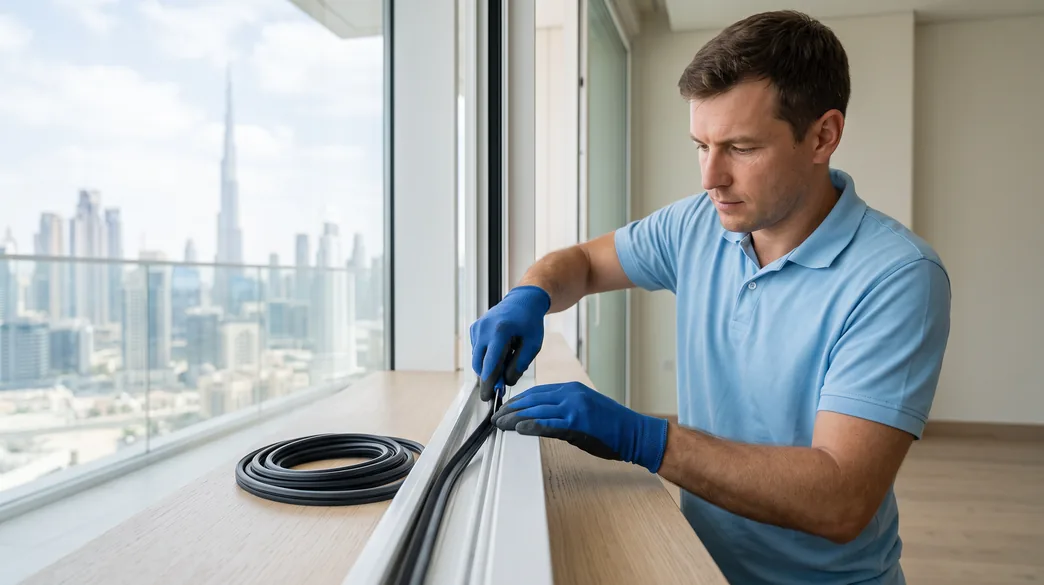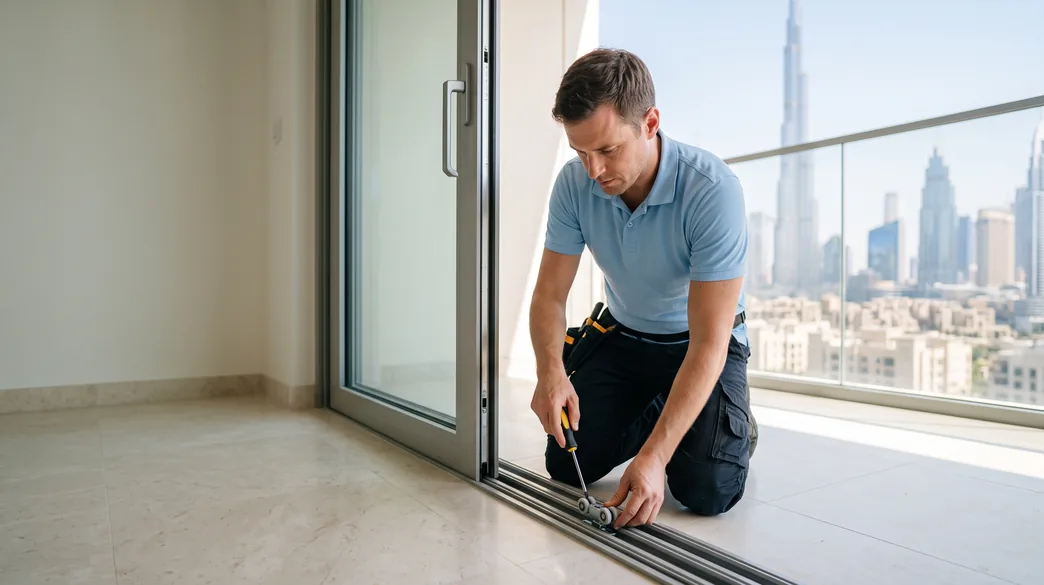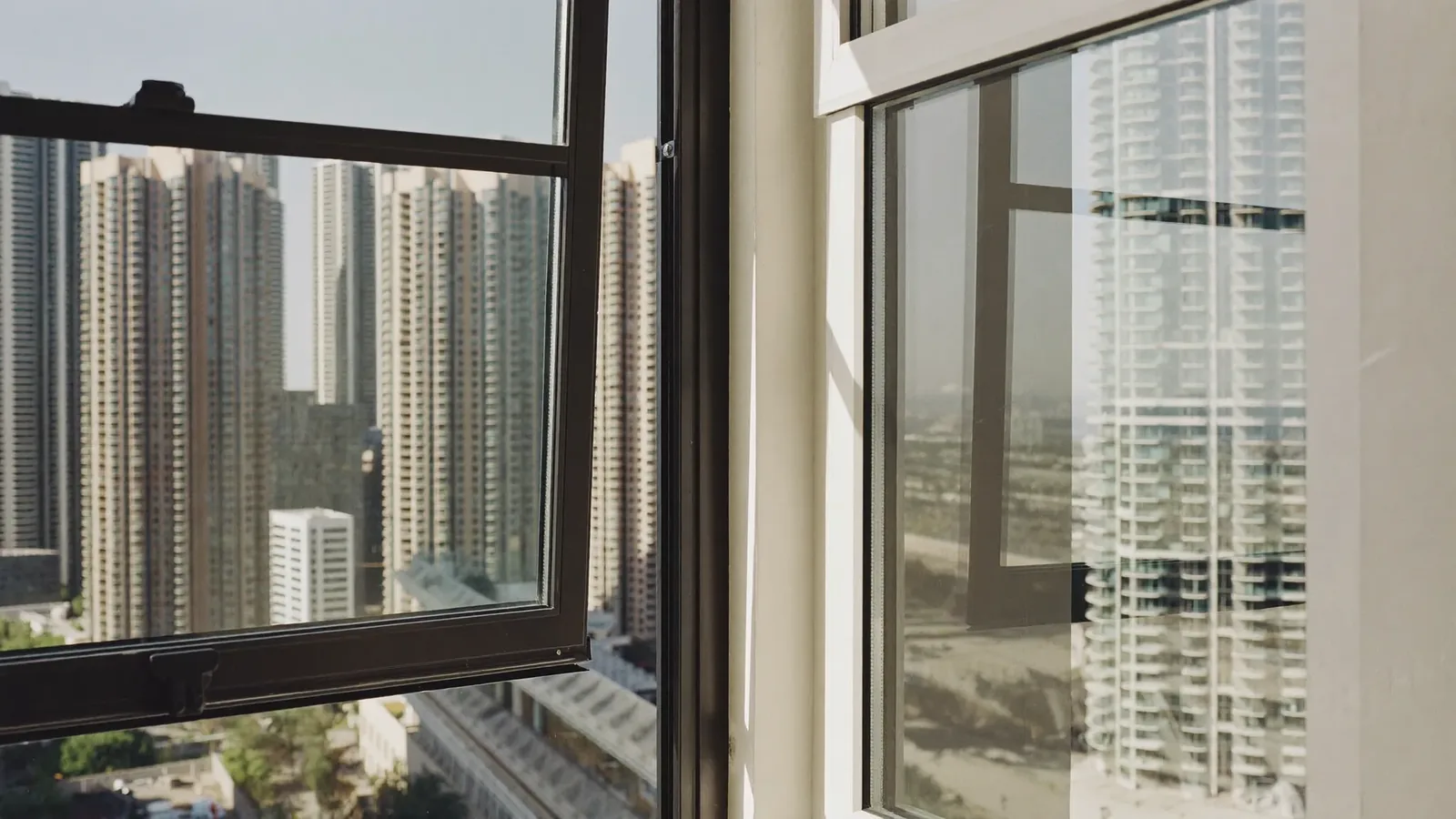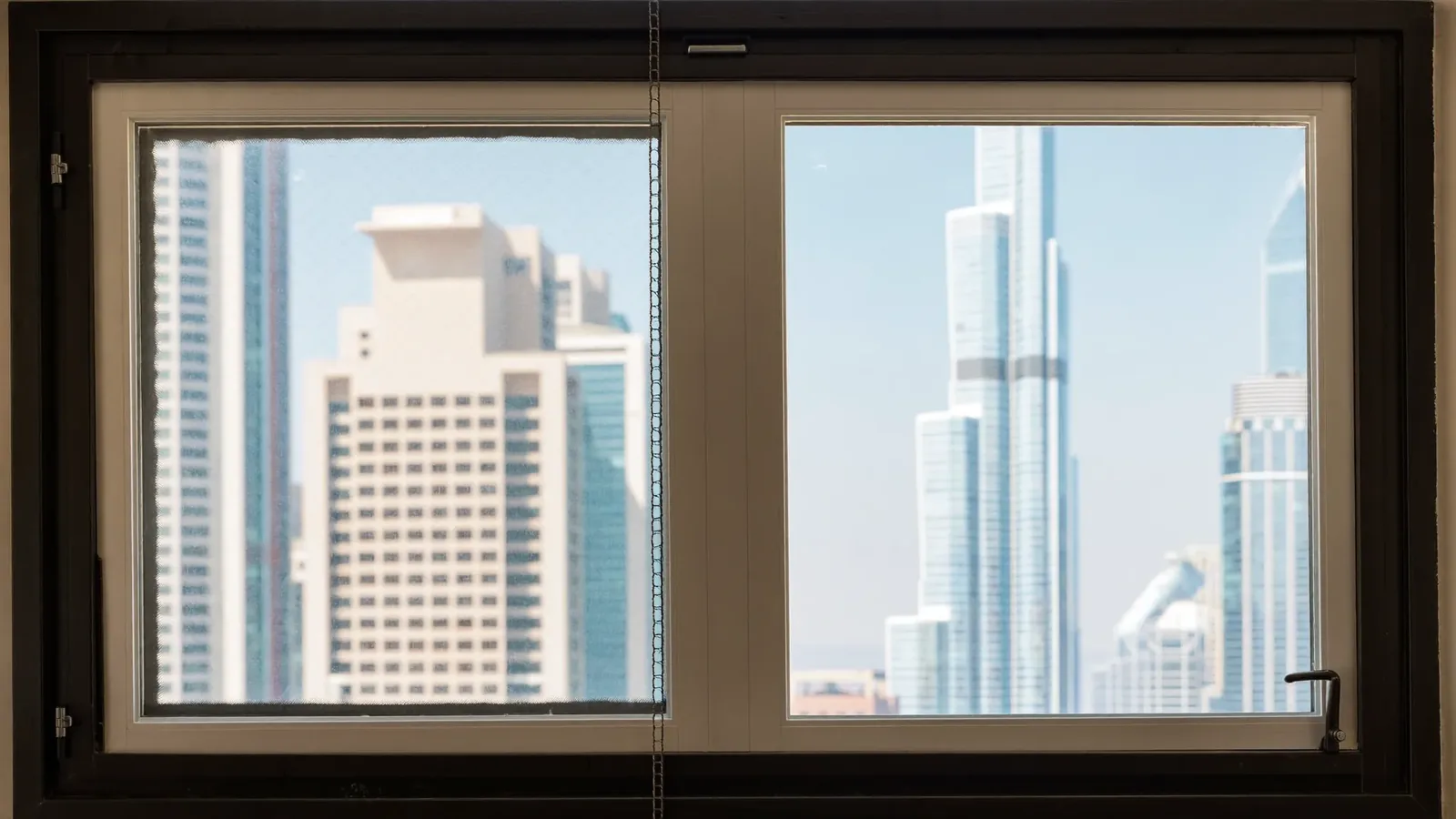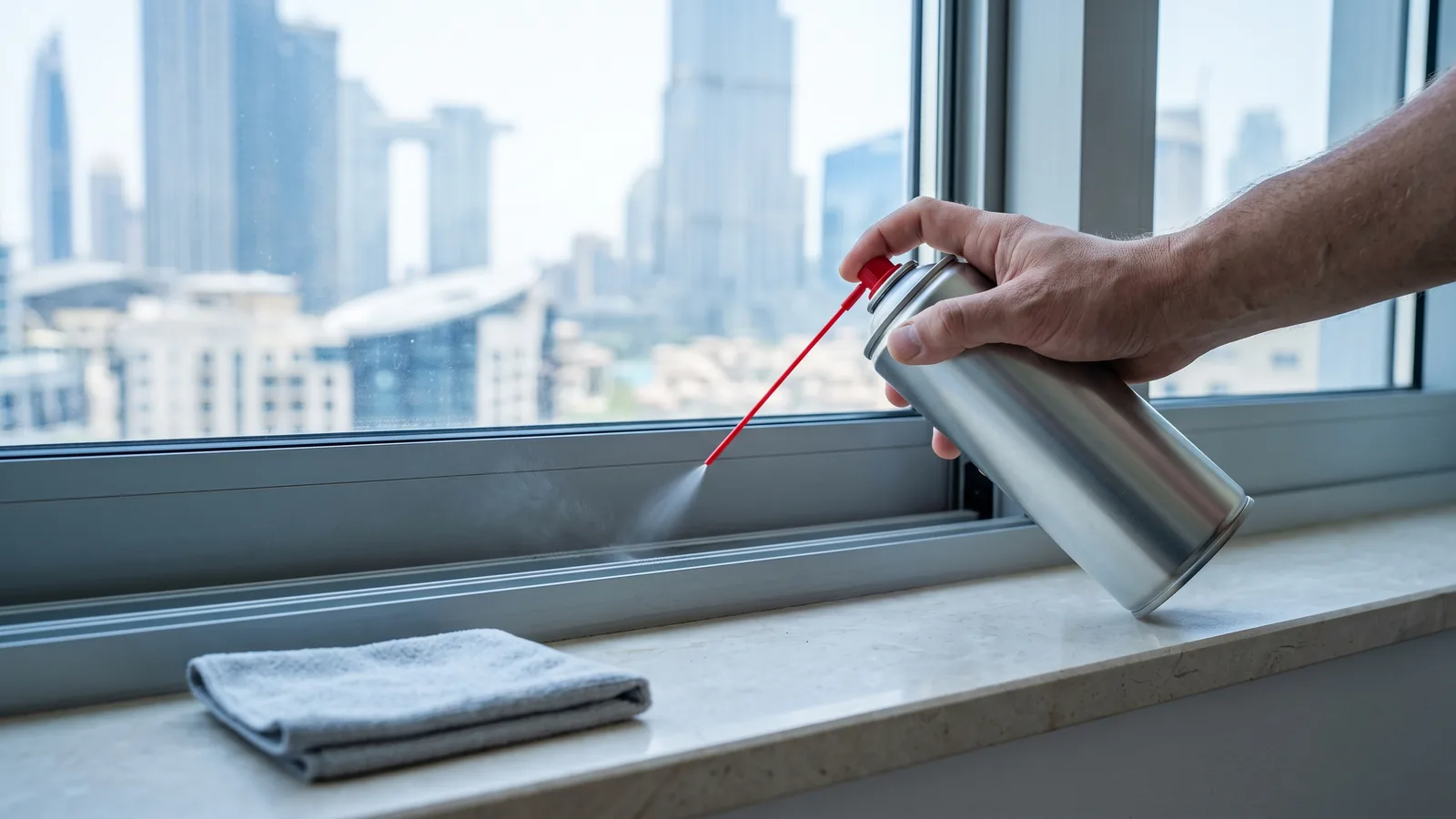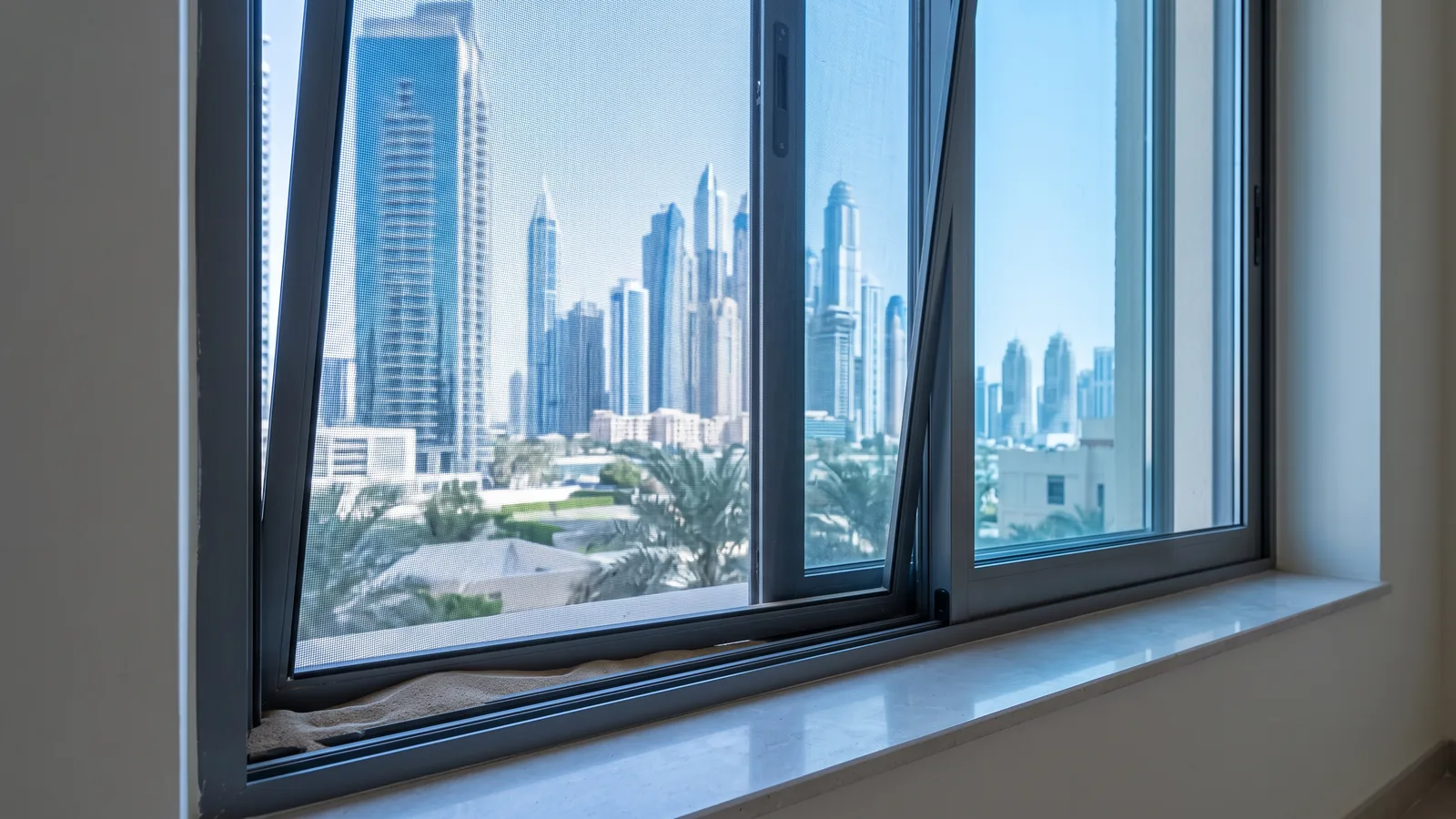





The fastest way to tell is to look at where the seal lives. A rubber seal is a smooth, solid gasket that runs around the perimeter of the opening sash on aluminium and uPVC windows and presses against the frame when the window shuts; in Dubai heat it fails by hardening, cracking, and shrinking back at the corners. A felt seal, also sold as a brush or pile strip, is a fuzzy band set into the tracks of sliding windows and balcony doors and along the sashes of older wooden windows; it fails by wearing flat, matting down with dust, and shedding until the moving panel rattles in its track. In short, hinged windows carry rubber, sliding systems carry felt, and many sliding units carry both at once.
Knowing which material you are looking at matters, because the two do not wear the same way and are not repaired the same way. Dubai sun, heat, and fine desert dust age both faster than almost any climate in the world, and the symptoms they produce, dust on the sill, a warm draught, extra noise, overlap enough to confuse anyone. This guide is about telling them apart, so the right part gets changed the first time.
Rubber seals: the gasket around the sash
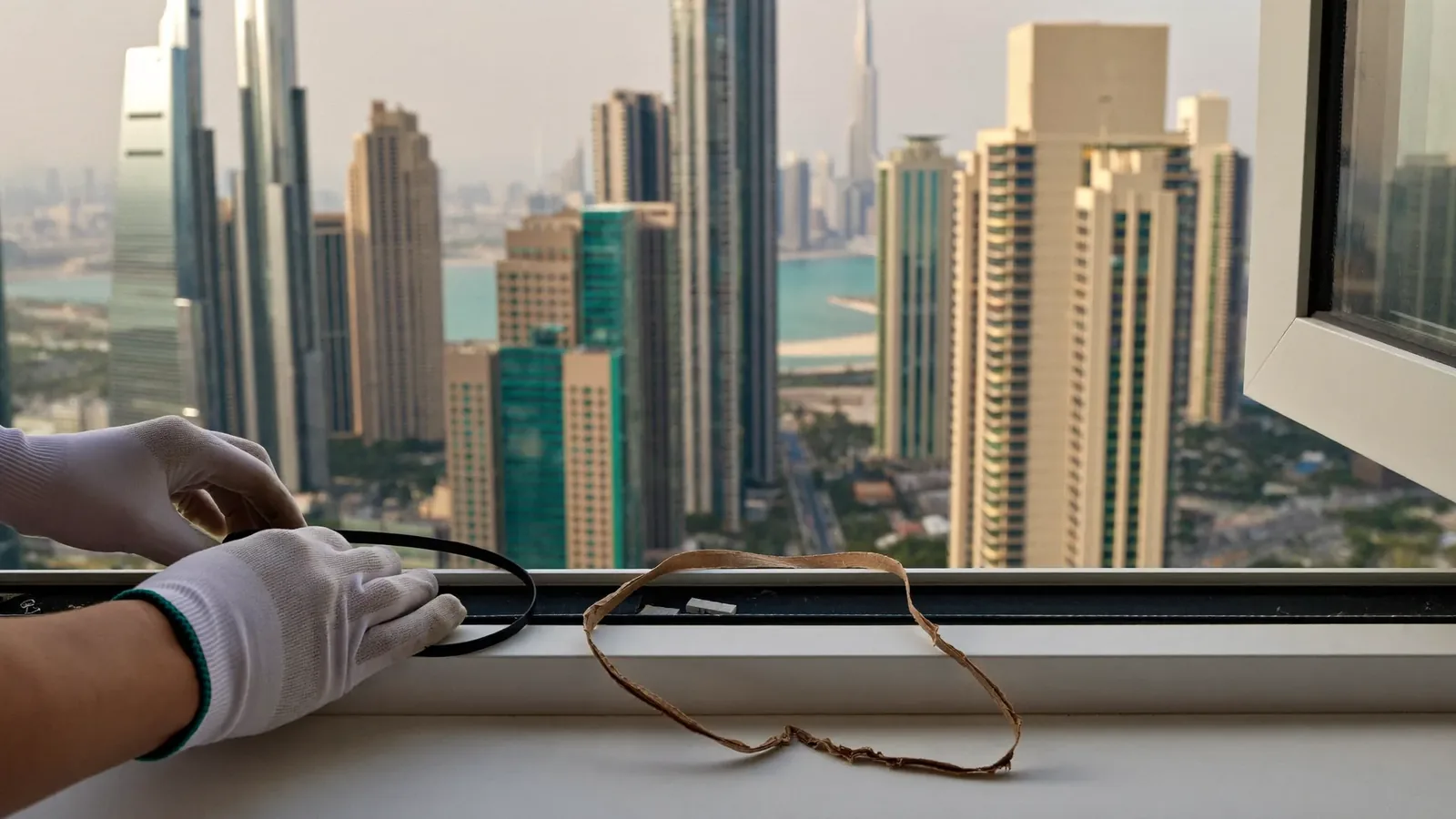
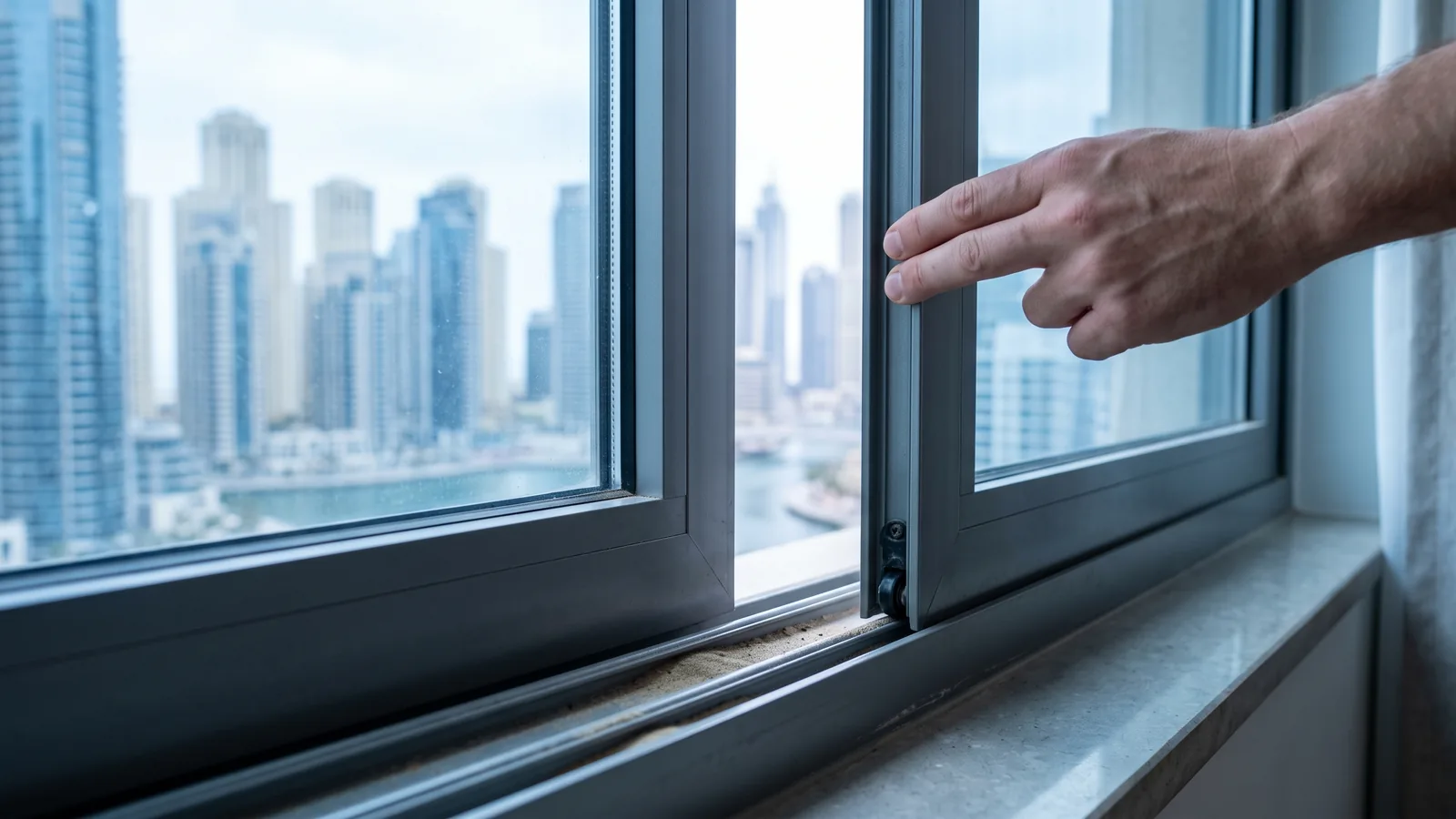
Rubber gaskets are the standard seal on aluminium and uPVC windows, hinged casements, tilt-and-turn sashes, and around fixed glass. Healthy rubber is elastic: press it with a fingernail and it springs back, which is exactly how it grips the frame each time the window closes.
Dubai's ultraviolet light and heat strip that elasticity out. The rubber dries, goes hard and glossy, then cracks and crumbles, and the daily cycle of fierce daytime heat and cooler nights shrinks it until gaps open at the corners. A failed rubber seal feels like plastic, stays dented when pressed, or flakes when rubbed.
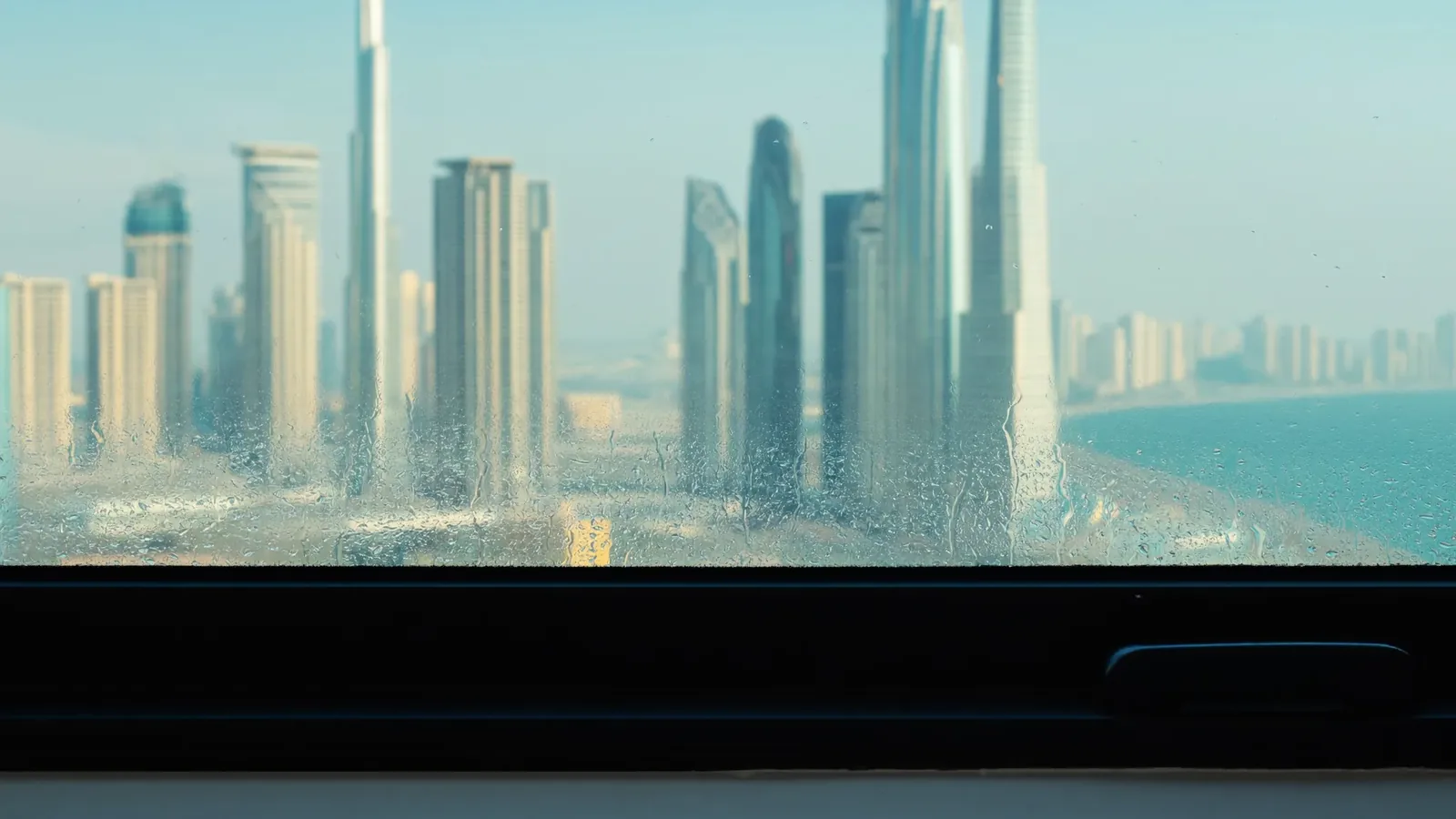
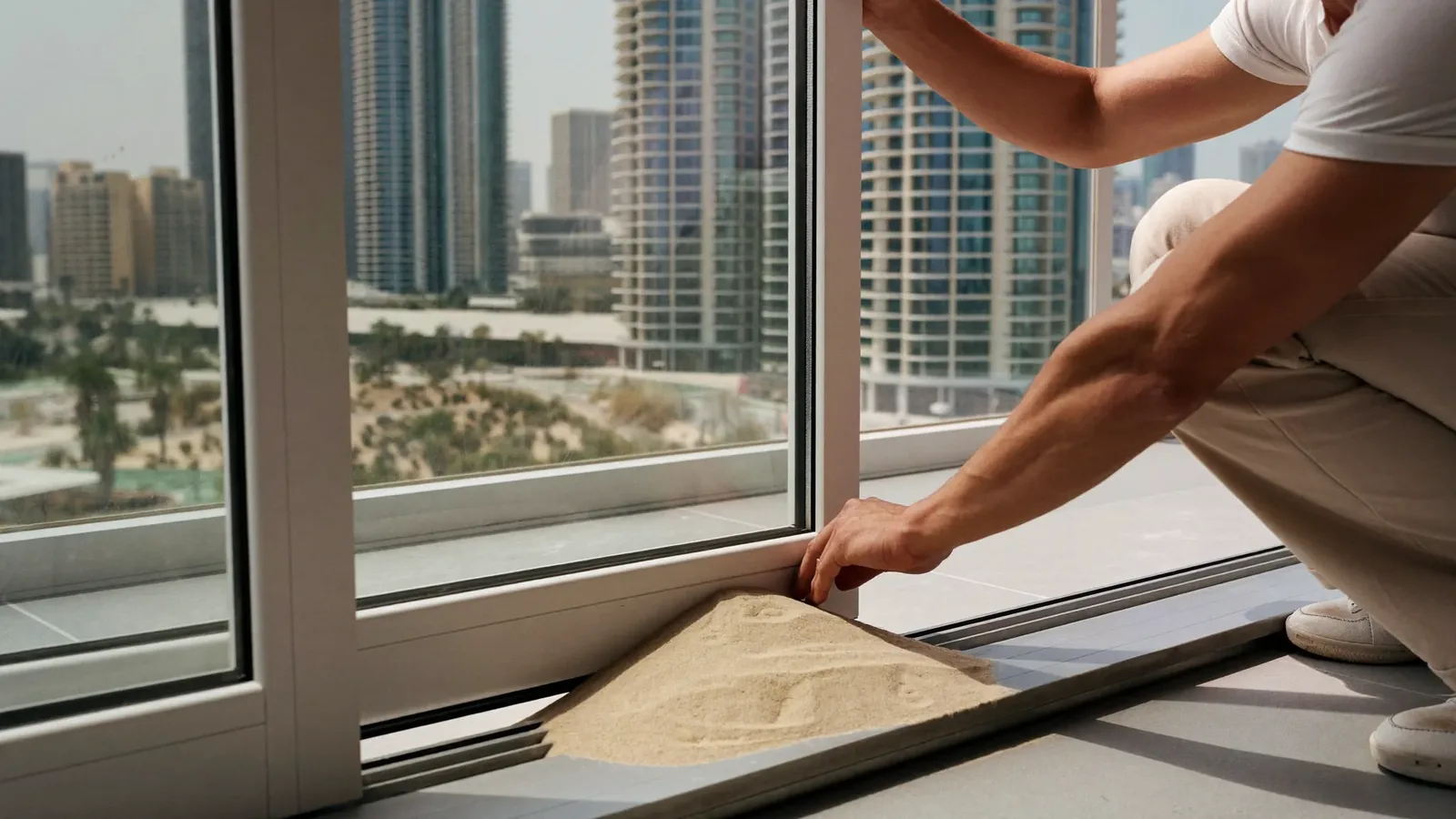
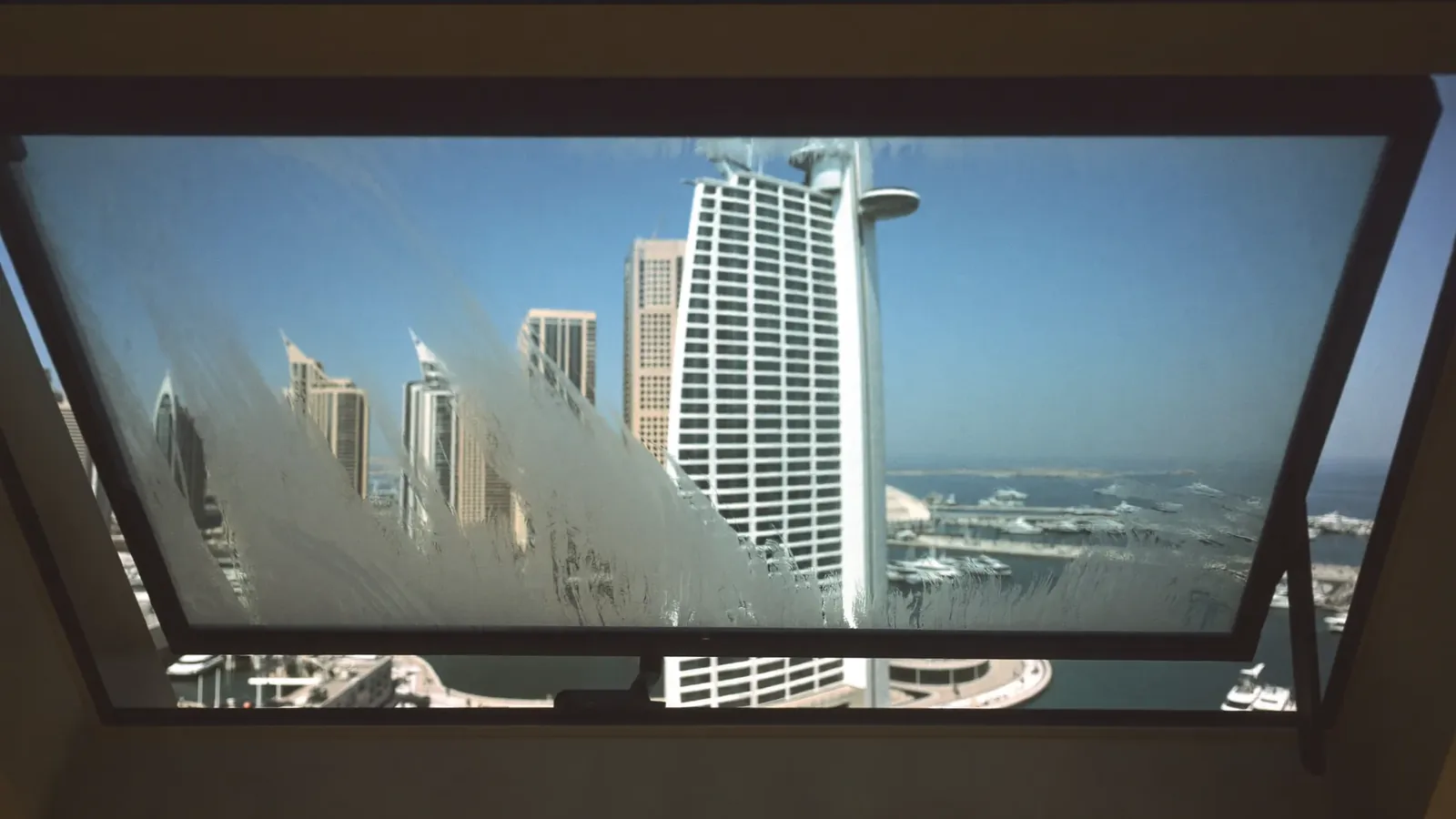
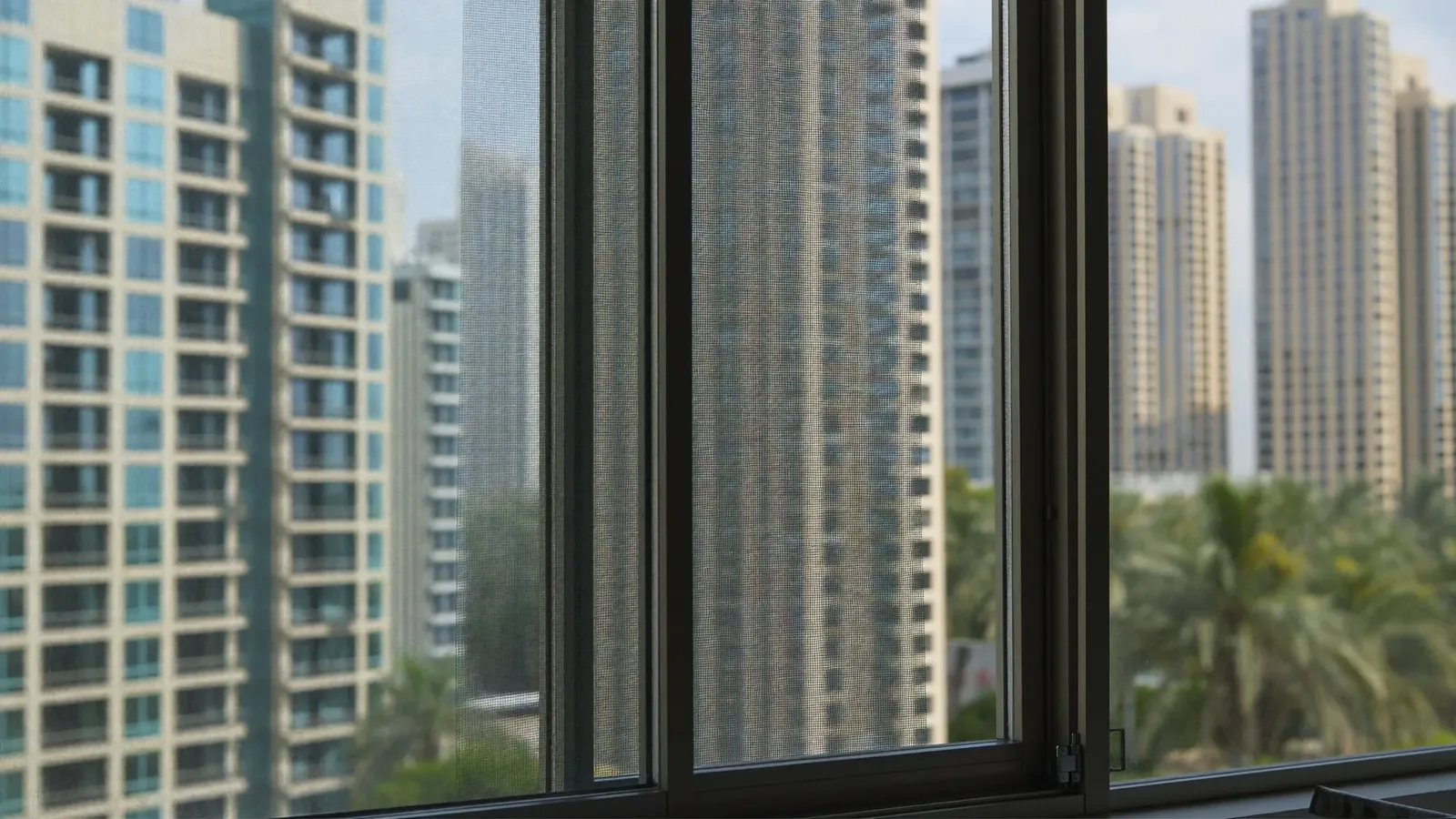
The tell-tale symptoms are a thin film of fine dust on the sill beside a window that was shut all day, a strip of warm air you can feel along one edge, more street noise than the window used to let through, and sometimes water creeping in after rain or a facade wash. The window still opens and closes normally, which is why hardened rubber goes unnoticed for years.
Felt seals: the pile strip in the track
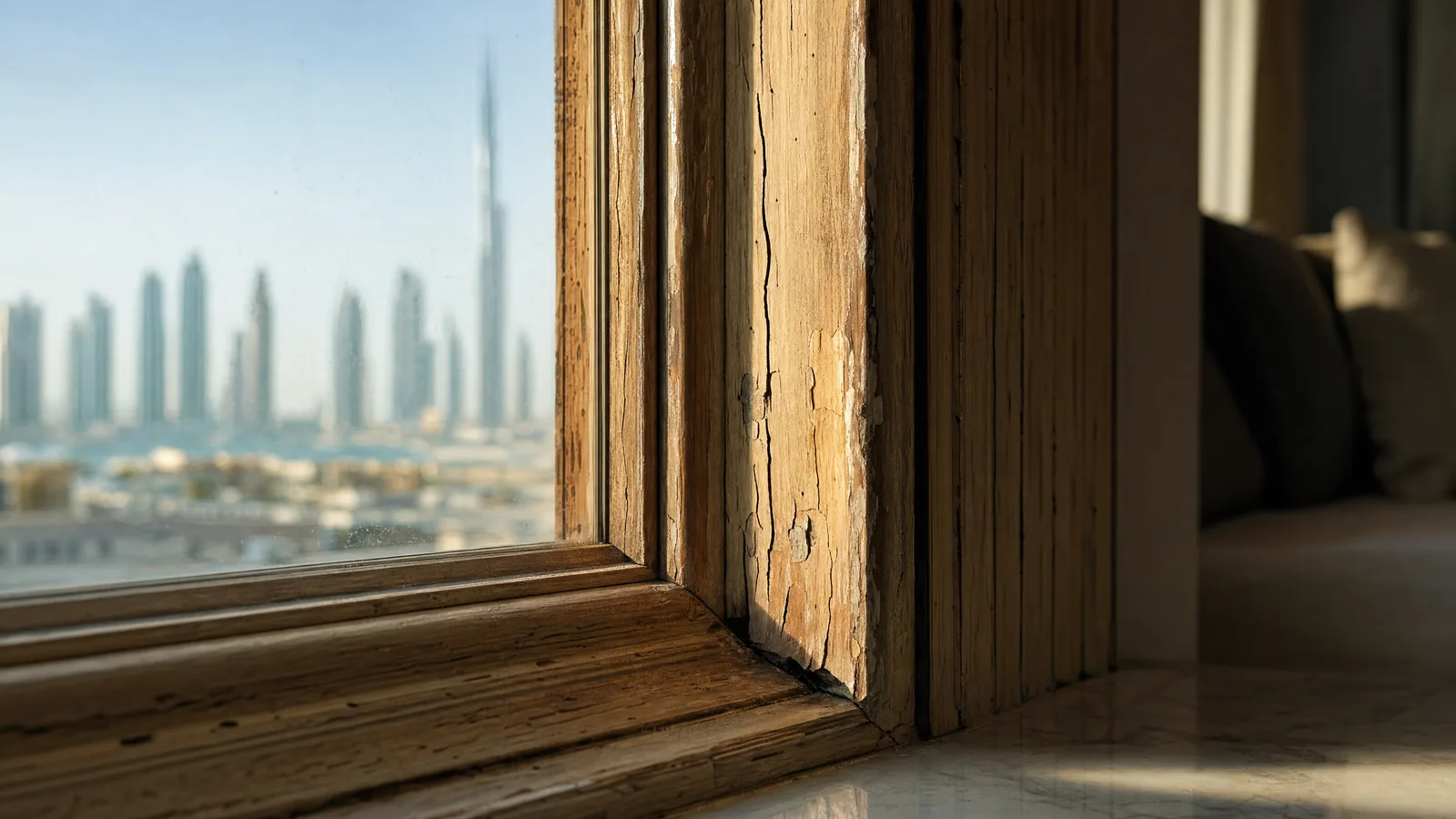
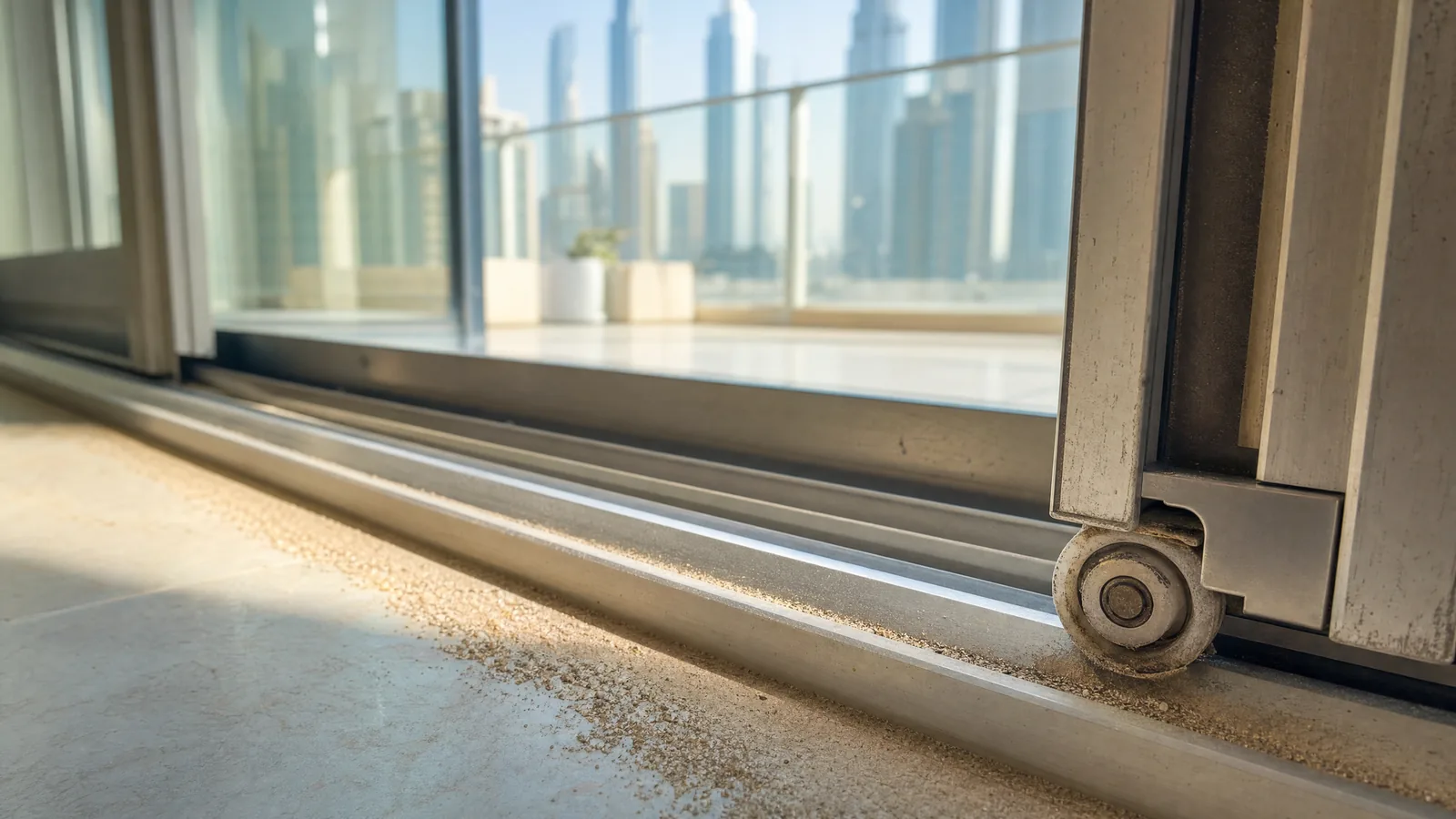
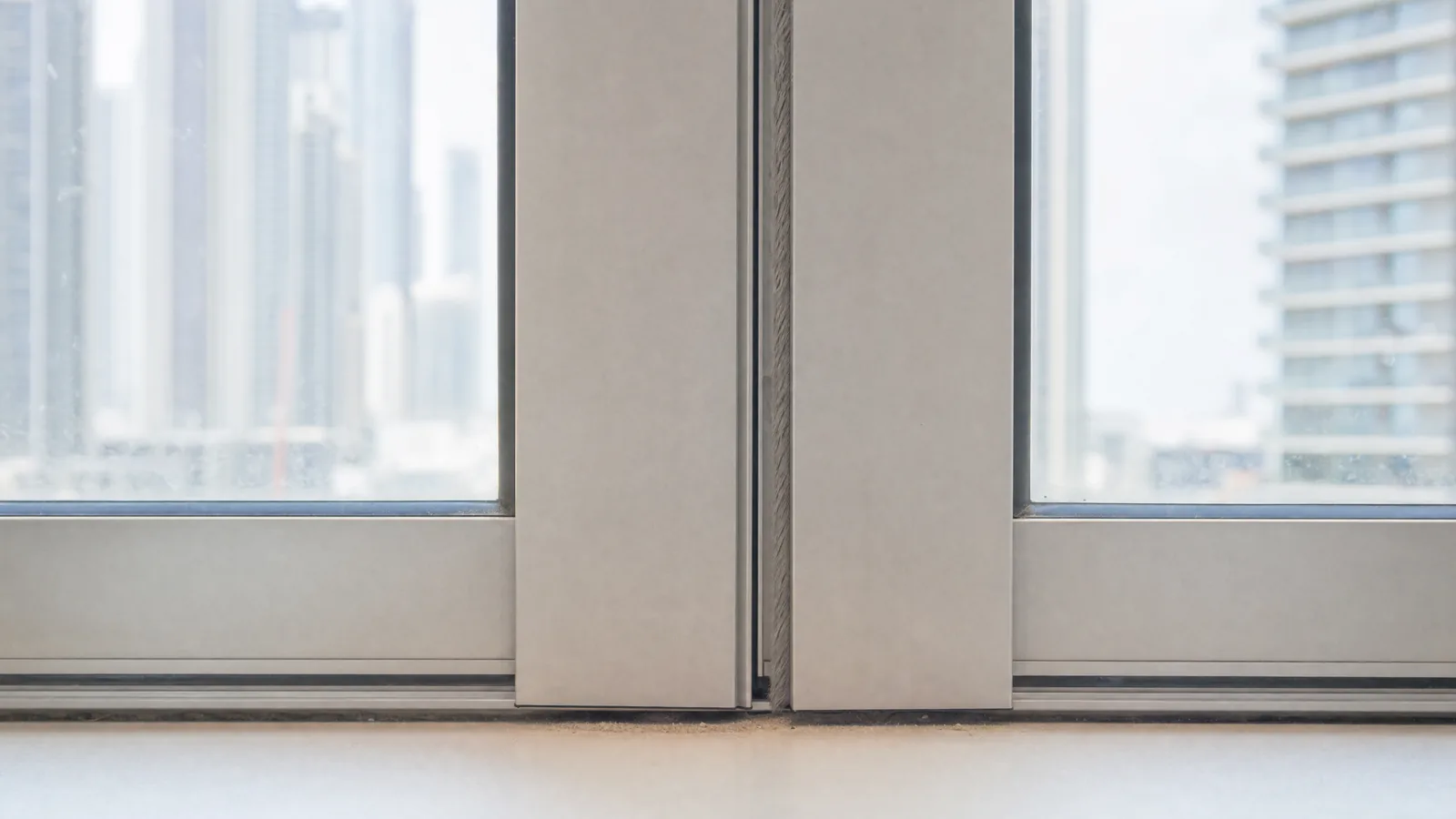
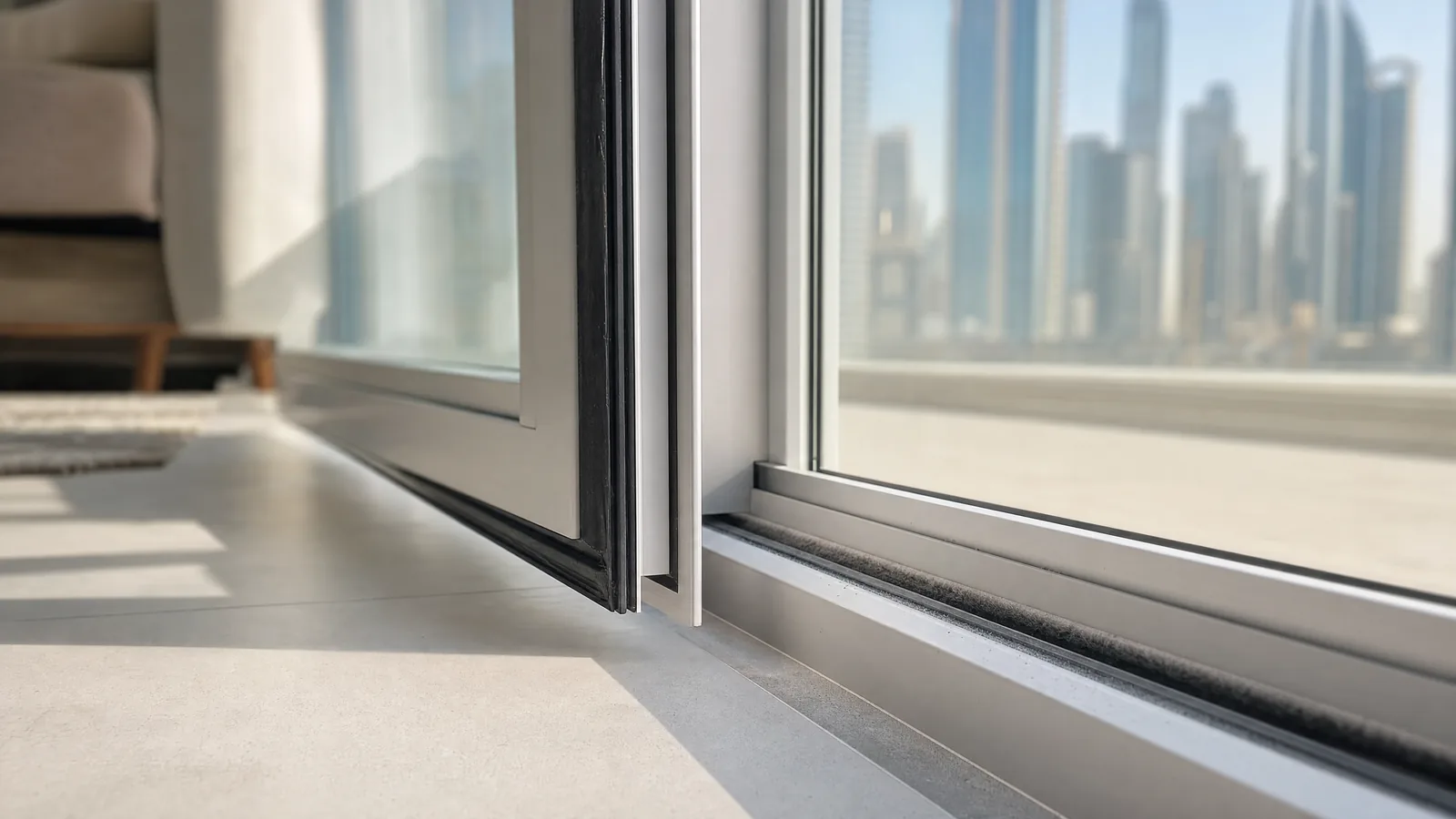
Felt, brush, or pile strips are the seal of sliding systems. Look along the track of a sliding window or balcony door and you will see a soft, fuzzy band fitted to the moving panel and often to the frame as well; older wooden windows use similar strips along the sash. Because a sliding panel has to glide, it cannot press against a rubber gasket the way a hinged sash does, so the pile brushes the gap closed instead.
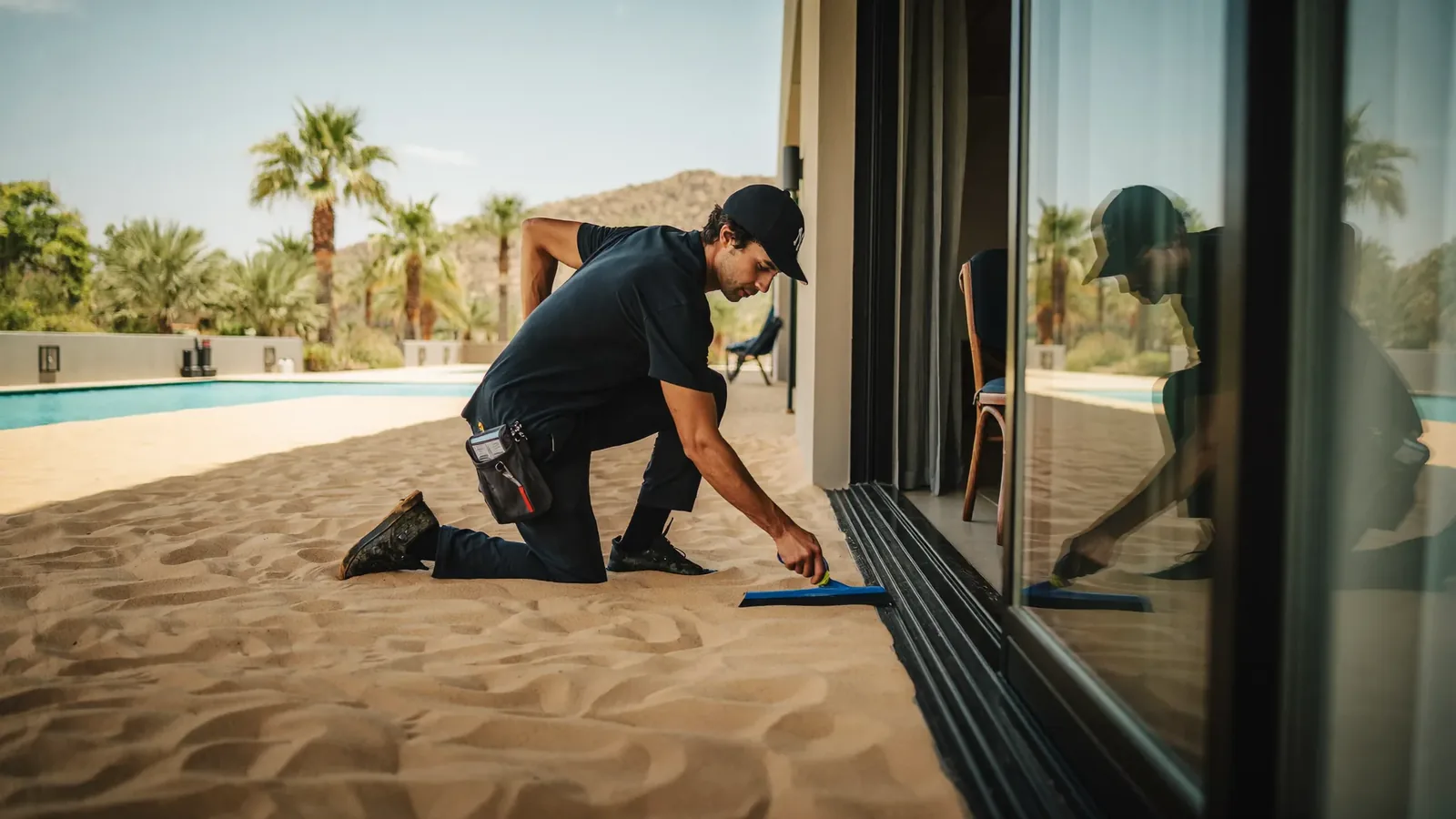
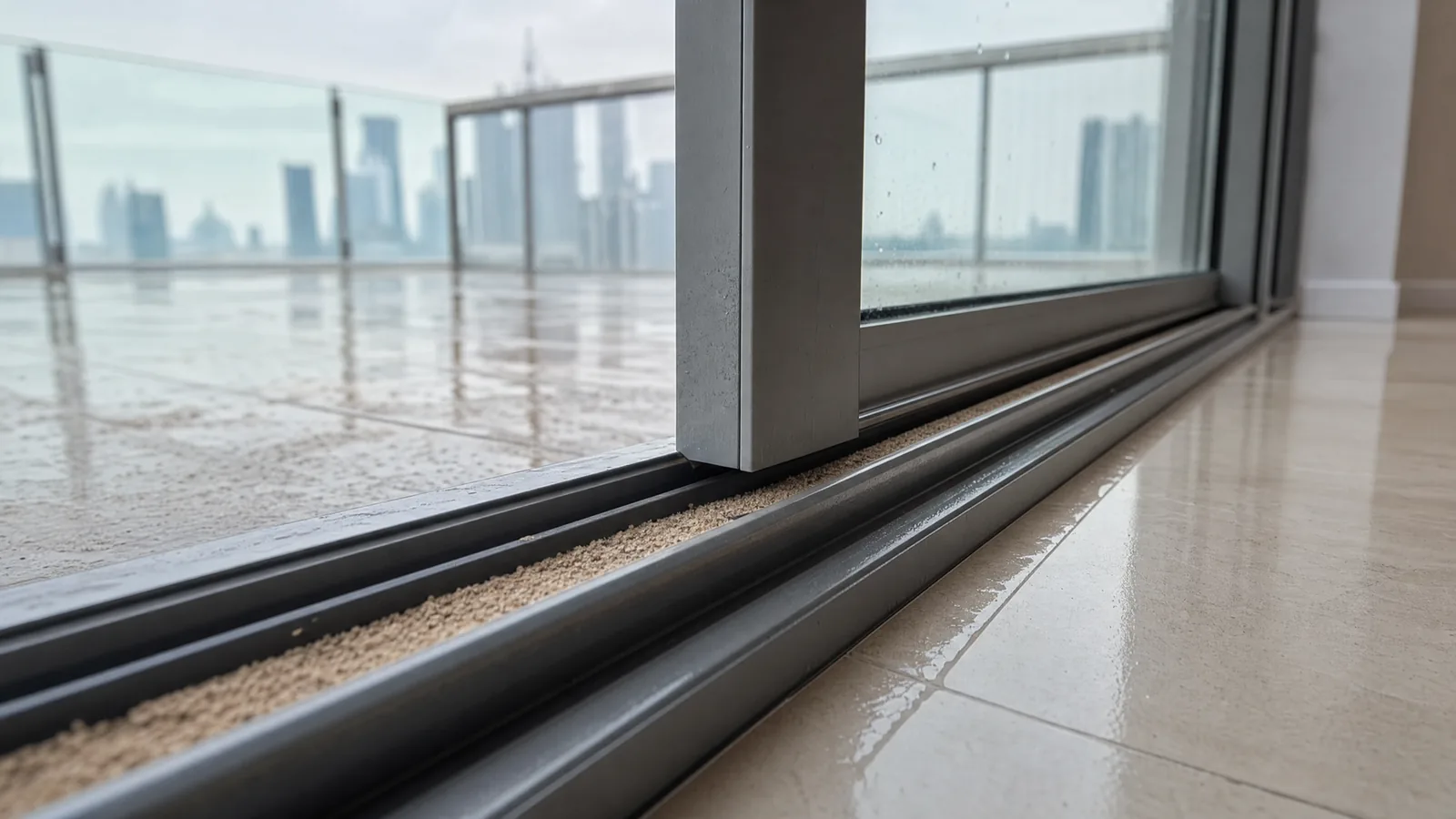
Felt does not crack the way rubber does; it fades quietly. The fibres wear flat where the panel rubs, mat together with desert dust, and shed in tufts, and grit sitting in the track works like sandpaper on the pile every time the door moves. The signs are a panel that rattles in the wind, a whistle through the closed slider, visible daylight past the edge of the panel, dust lines inside the track, and a door that feels gritty or heavier to slide than it used to.
Why the two are not repaired the same way
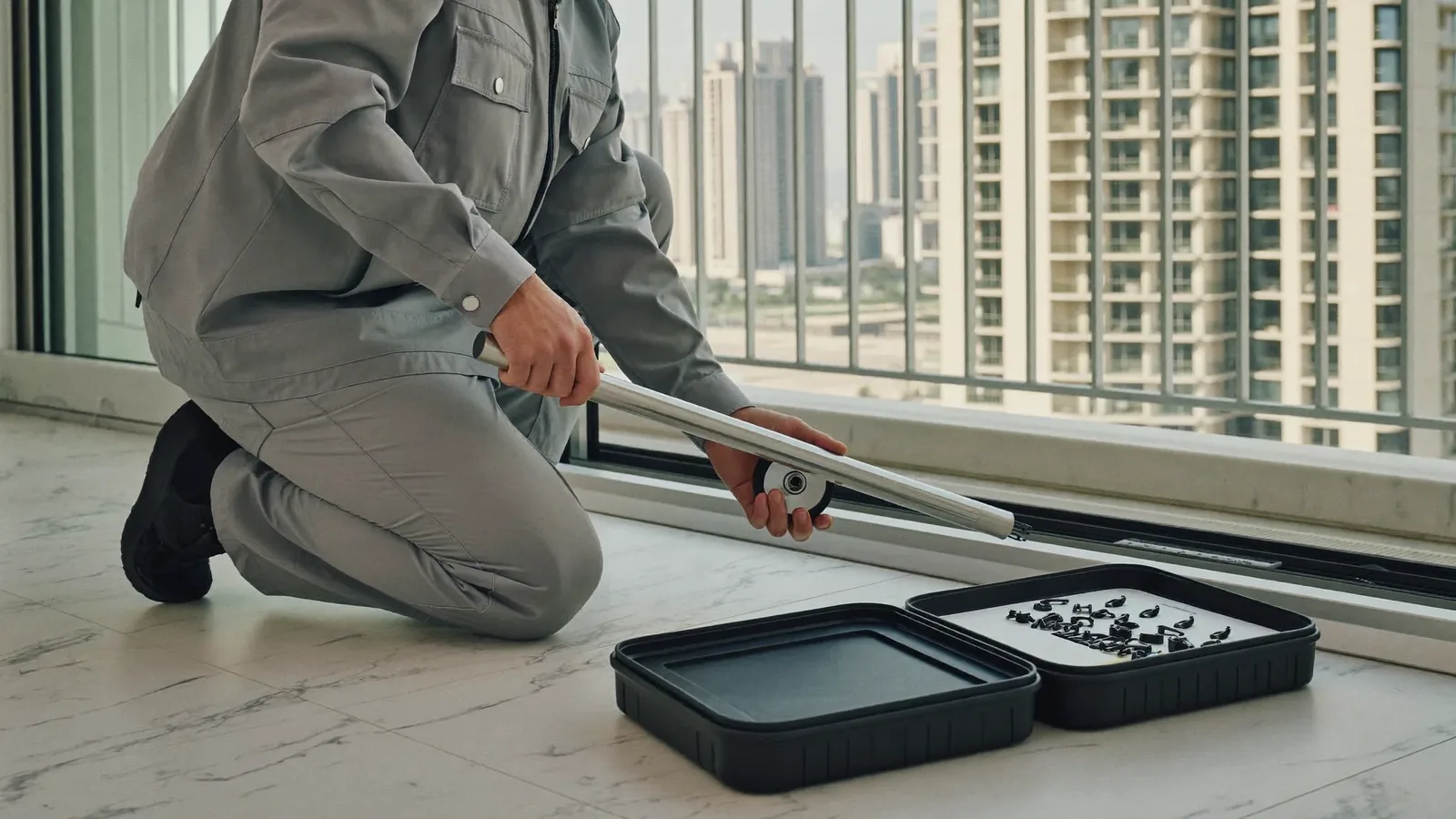
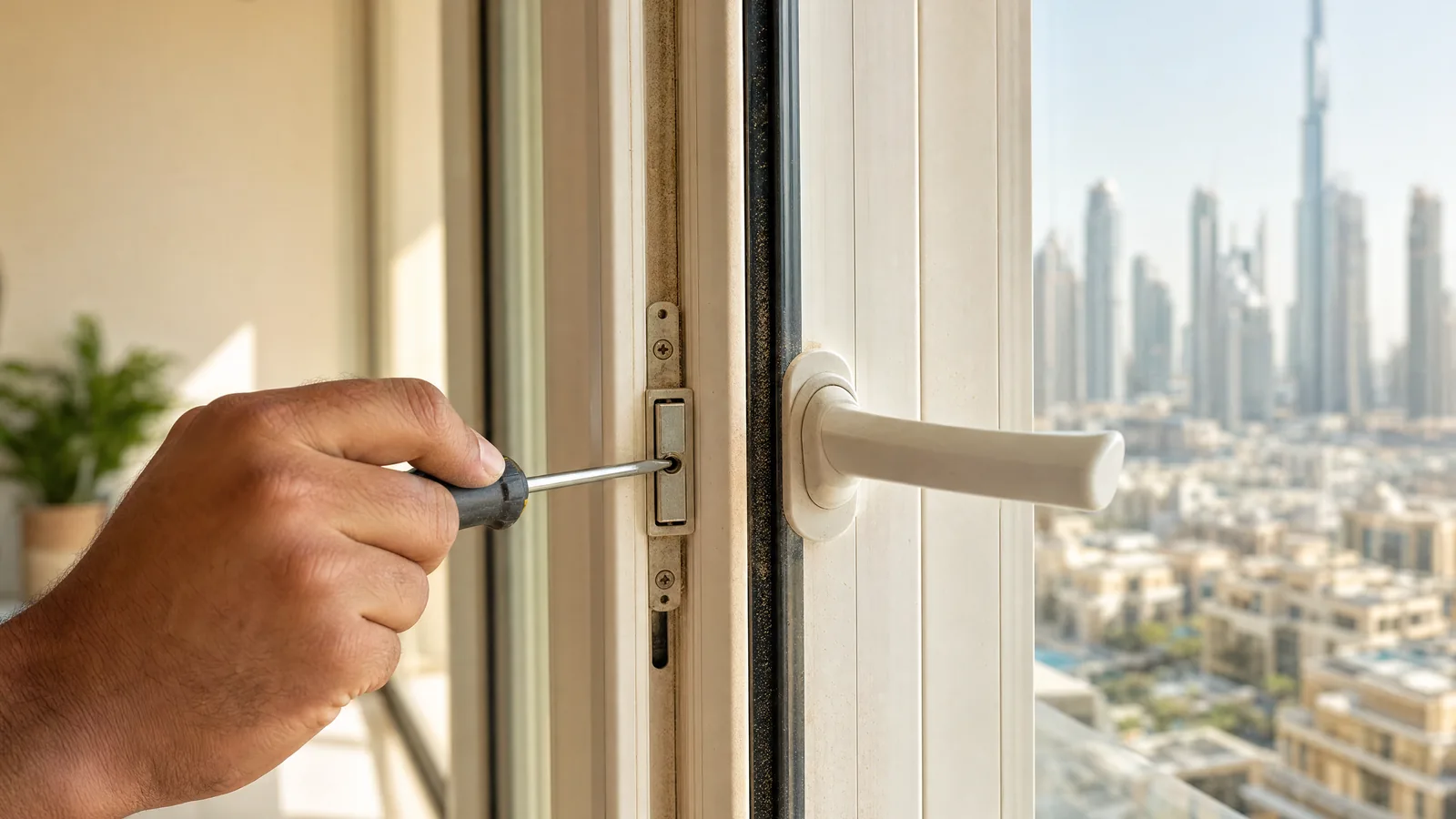
A rubber gasket is matched by profile. It is pressed into a groove in the sash and has to compress evenly against the frame all the way round, so the replacement must fit that groove exactly, which is the core of our window sealing and draught-proofing in Dubai service. A pile strip is matched by height and width instead: it has a backing that slides into a carrier channel, and a strip that is too short leaves the gap open while one too tall jams the panel.
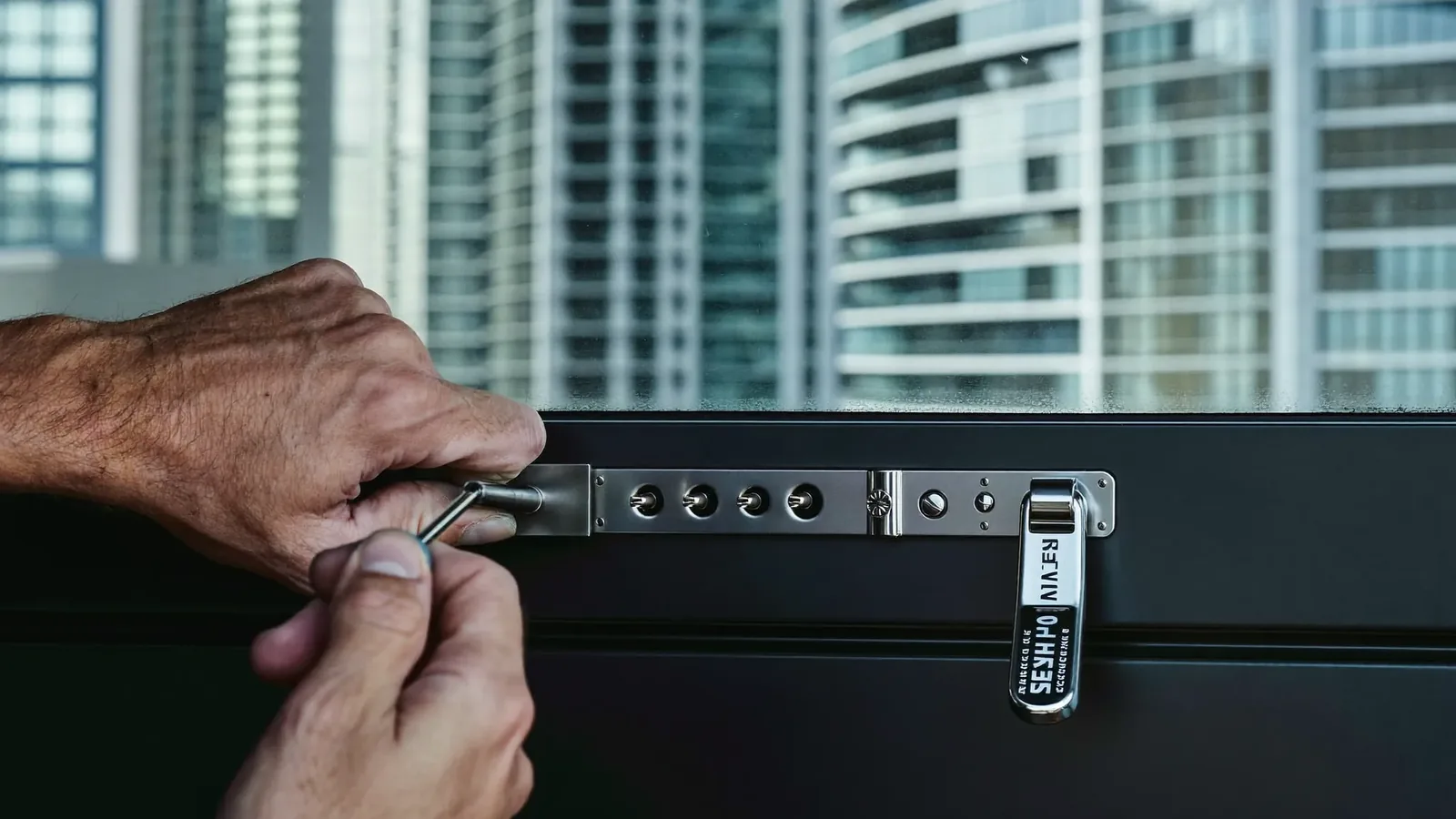
Swapping one material for the other does not work. Rubber fitted in a sliding track drags and stops the panel; pile fitted around a hinged sash never compresses airtight. And on sliding systems, worn pile rarely travels alone: the rollers and track that ground the felt down usually need attention too, which is why our sliding door and window repair in Dubai service checks the pile, rollers, and track as one job.
When to replace both, and what it costs
The same sun ages every seal on the window, so if one has failed, the rest of the same vintage are close behind, and a sliding unit often carries rubber around the fixed glass and felt on the moving panel at the same time. The economical move is to renew them in one visit rather than call twice in the same year.
On price, our list has Seal Restoration at 20 AED per square metre and Window Sealing at 100 AED per window. The price list does not split rubber from felt, so the exact material, profile, and quantity are confirmed at the free on-site measure, and you get a fixed quote before any work starts. We have repaired Dubai windows since 2014, reach most of the city from Al Barsha in around 30 minutes, and back every repair with a 2-year warranty. The line runs 24/7 on +971 50 220 6918, or Get a free quote. More window guides live on the blog.