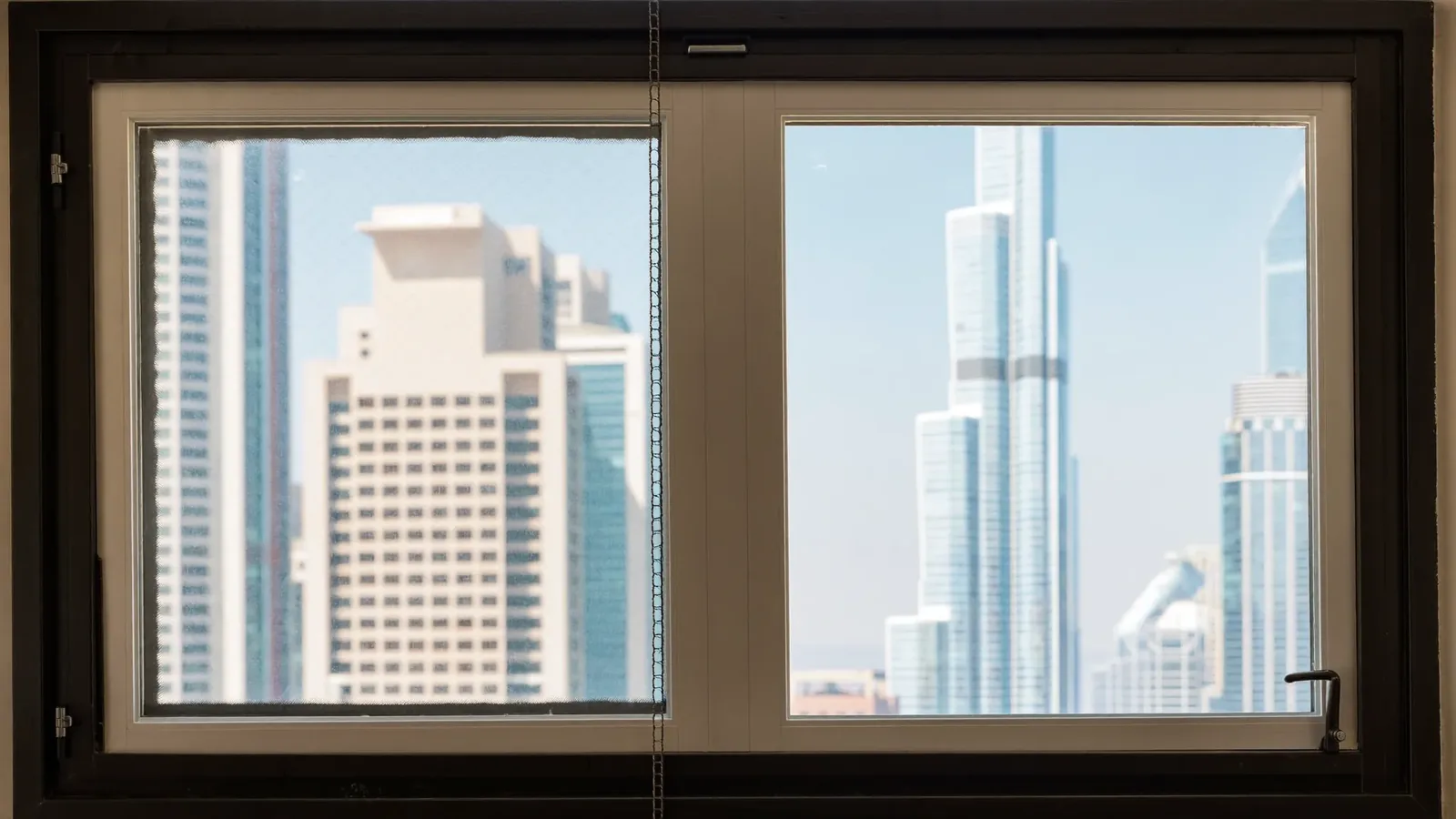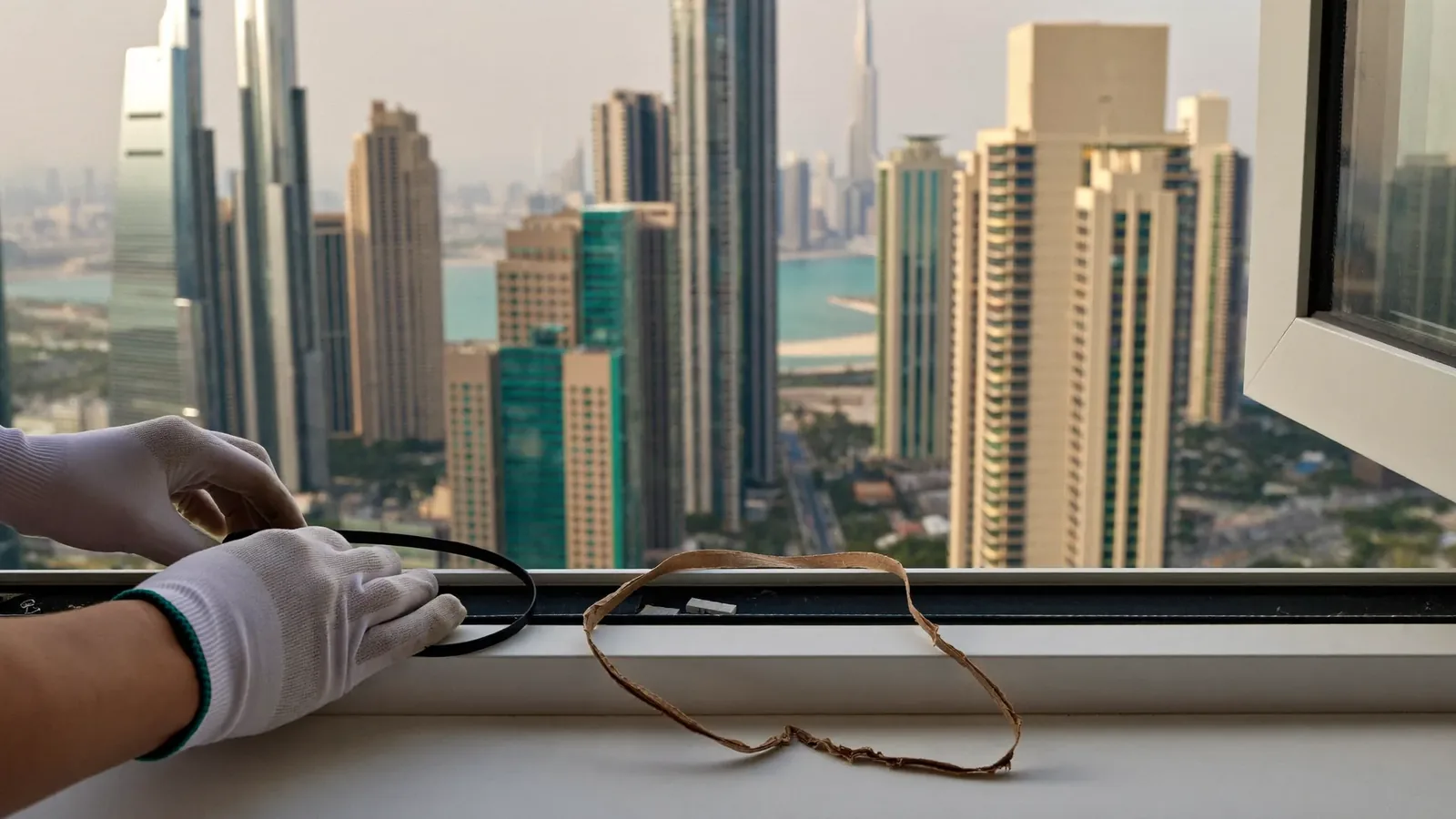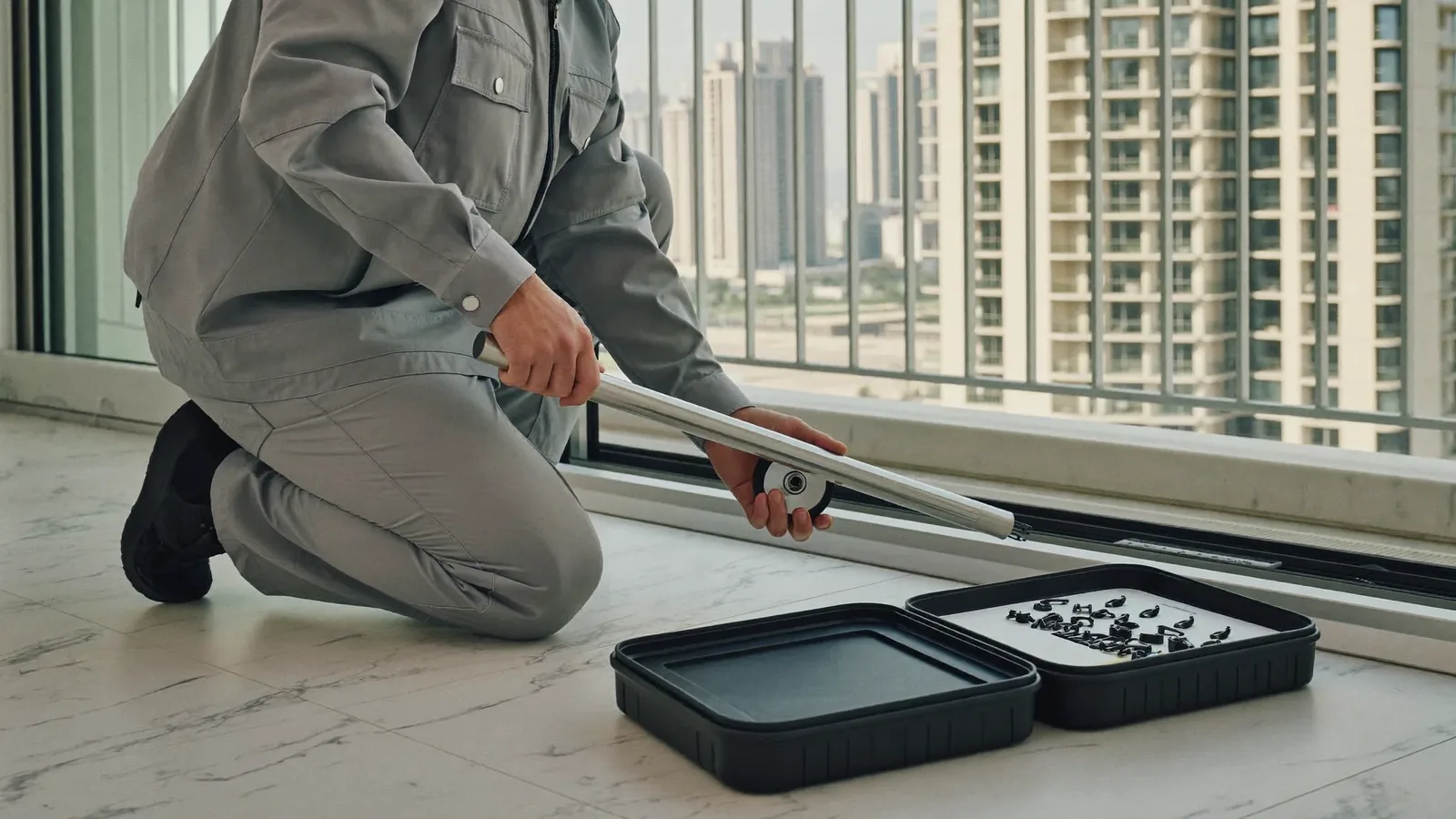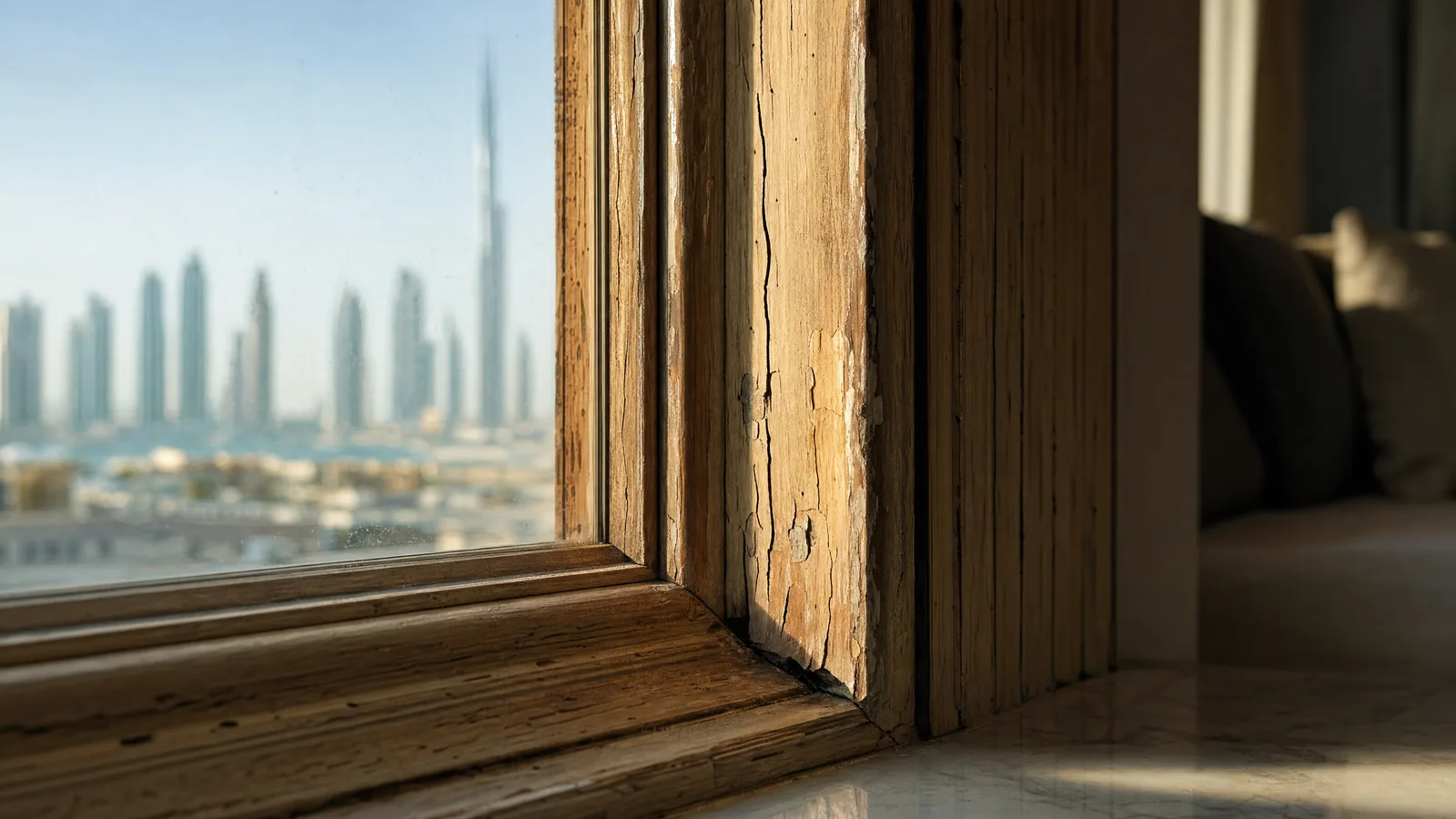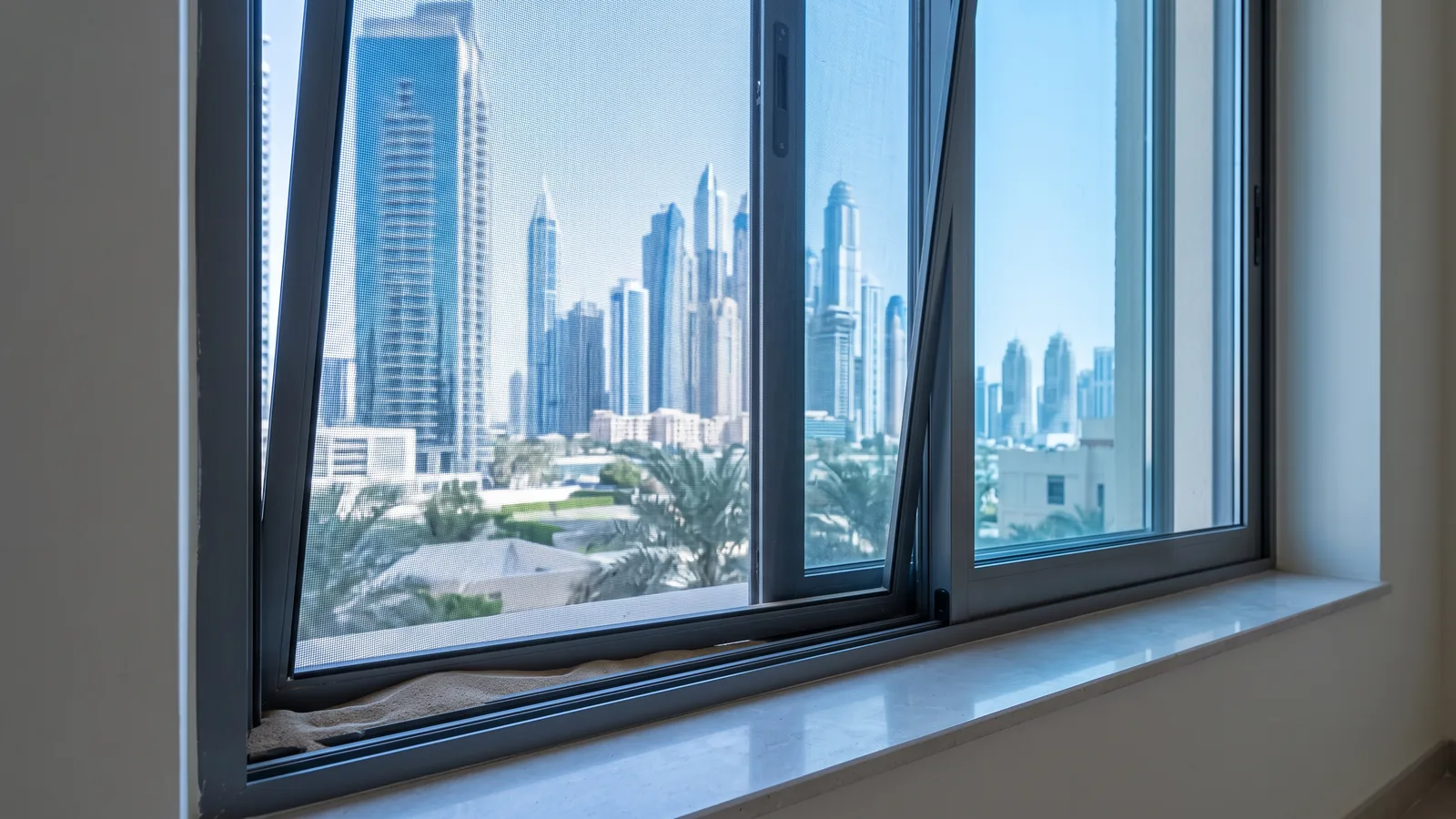





When a window sticks, spins, or will not lock, the glass and the frame are usually fine. What has failed is a small moving part, a handle, a lock strip, a hinge, a roller, or a keep, and that part can almost always be replaced on its own. This guide runs through the common symptoms one by one and points to the part behind each, so you can tell a two-minute fix from a real problem before anyone visits. Almost every fault below is a mechanism swap, not a new window.
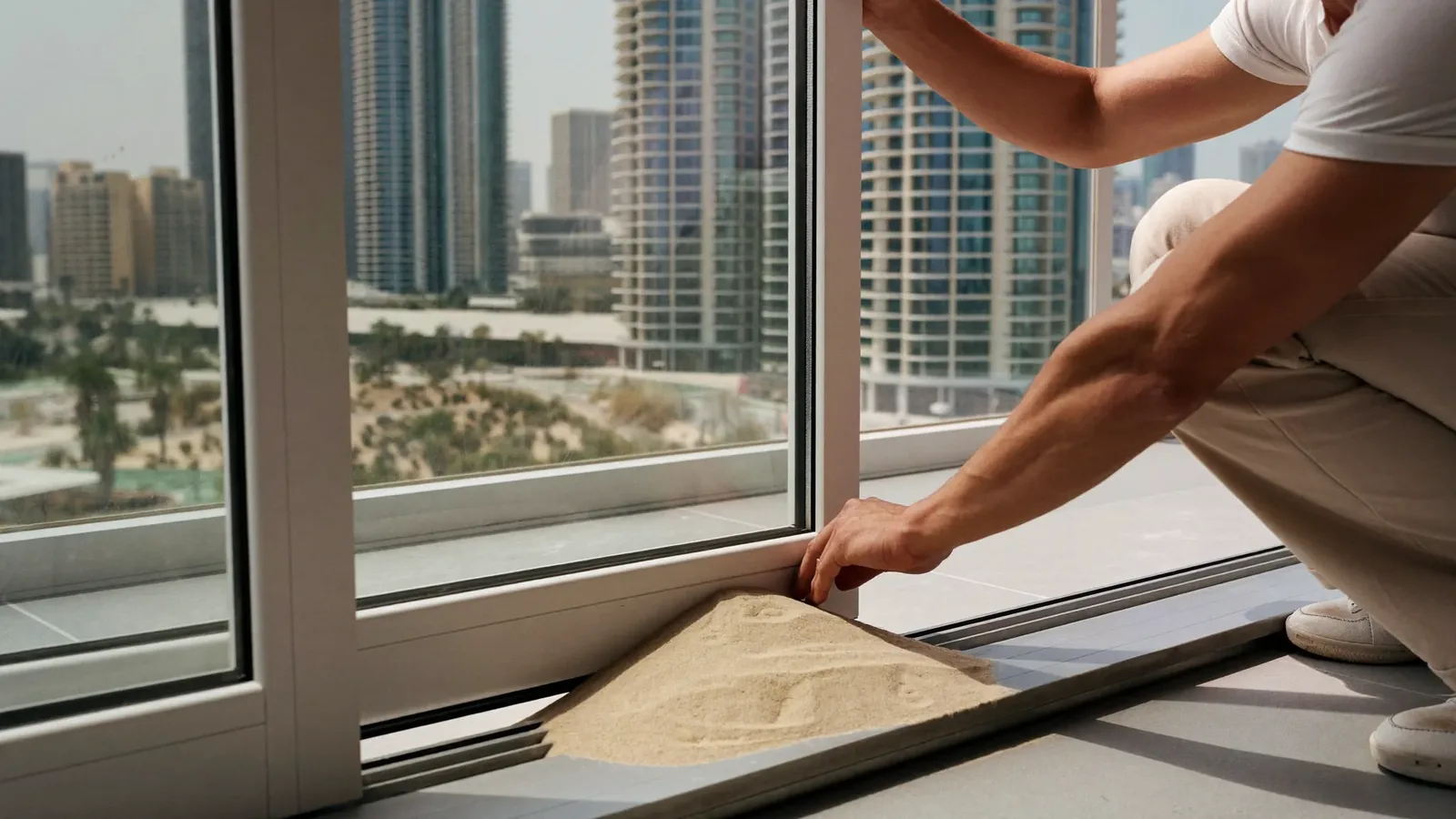
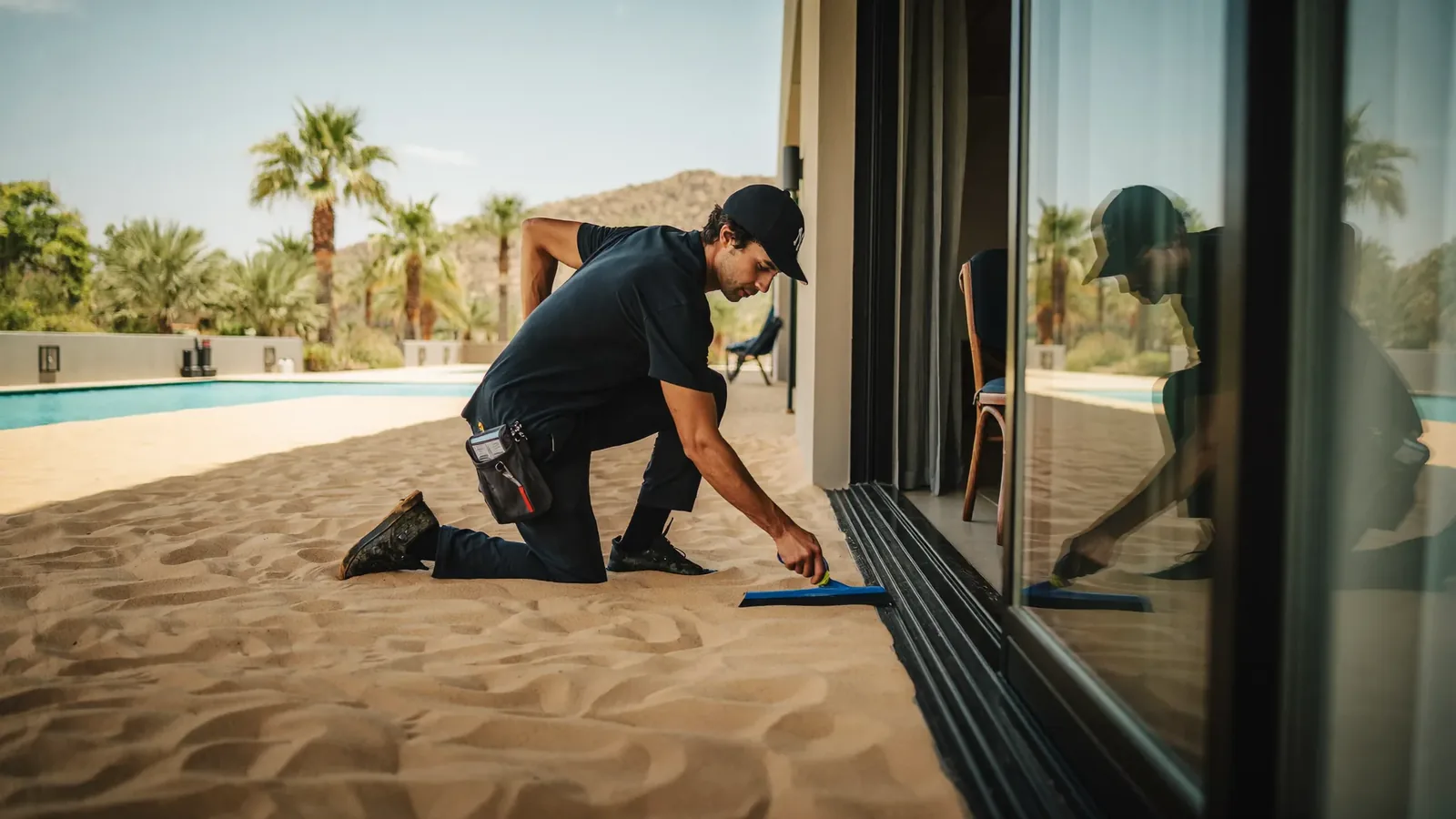
Dubai is hard on window hardware in a specific way. Fine desert dust gets into every track, hinge, and lock strip and works like a grinding paste on the moving parts, while the heat expands the metal, dries out the grease, and lets the dust bite deeper. A handle or roller that might last a decade in a cool climate wears out faster here, and it does it quietly until the day it seizes. None of that means your windows are failing. It means the hardware is a wear item, and renewing it is routine.
Handles that spin, snap, or feel loose
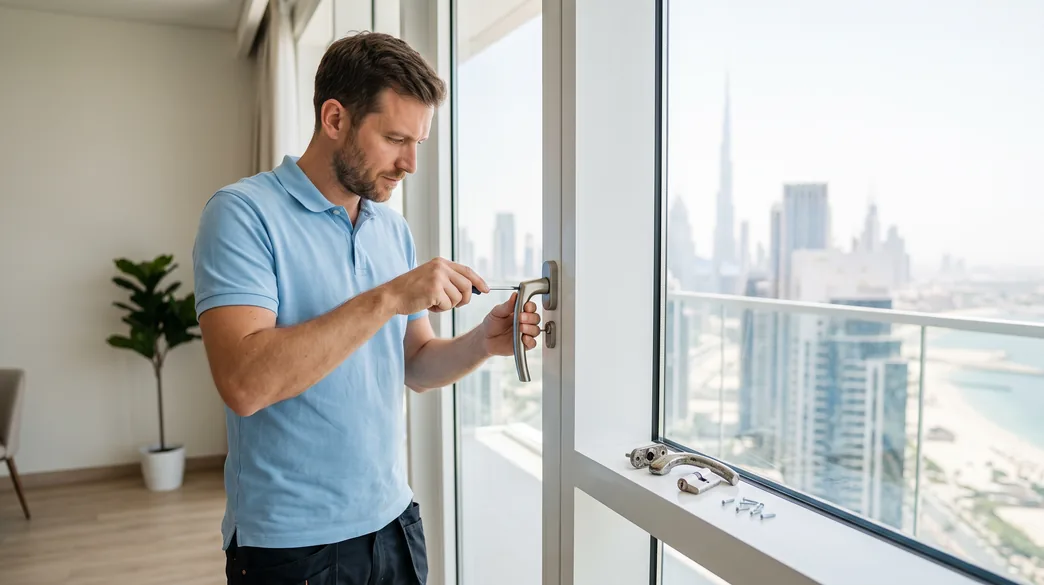
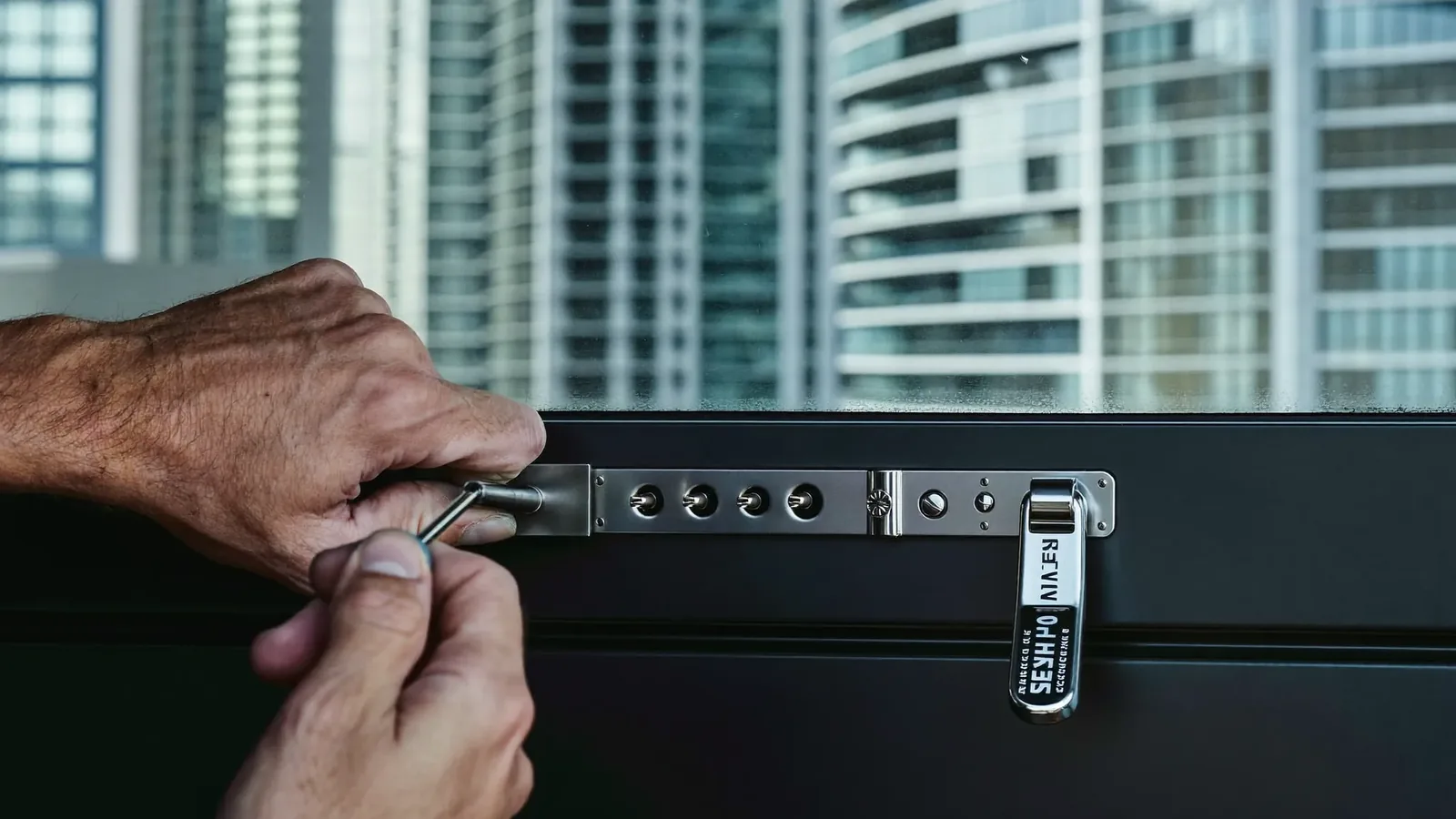
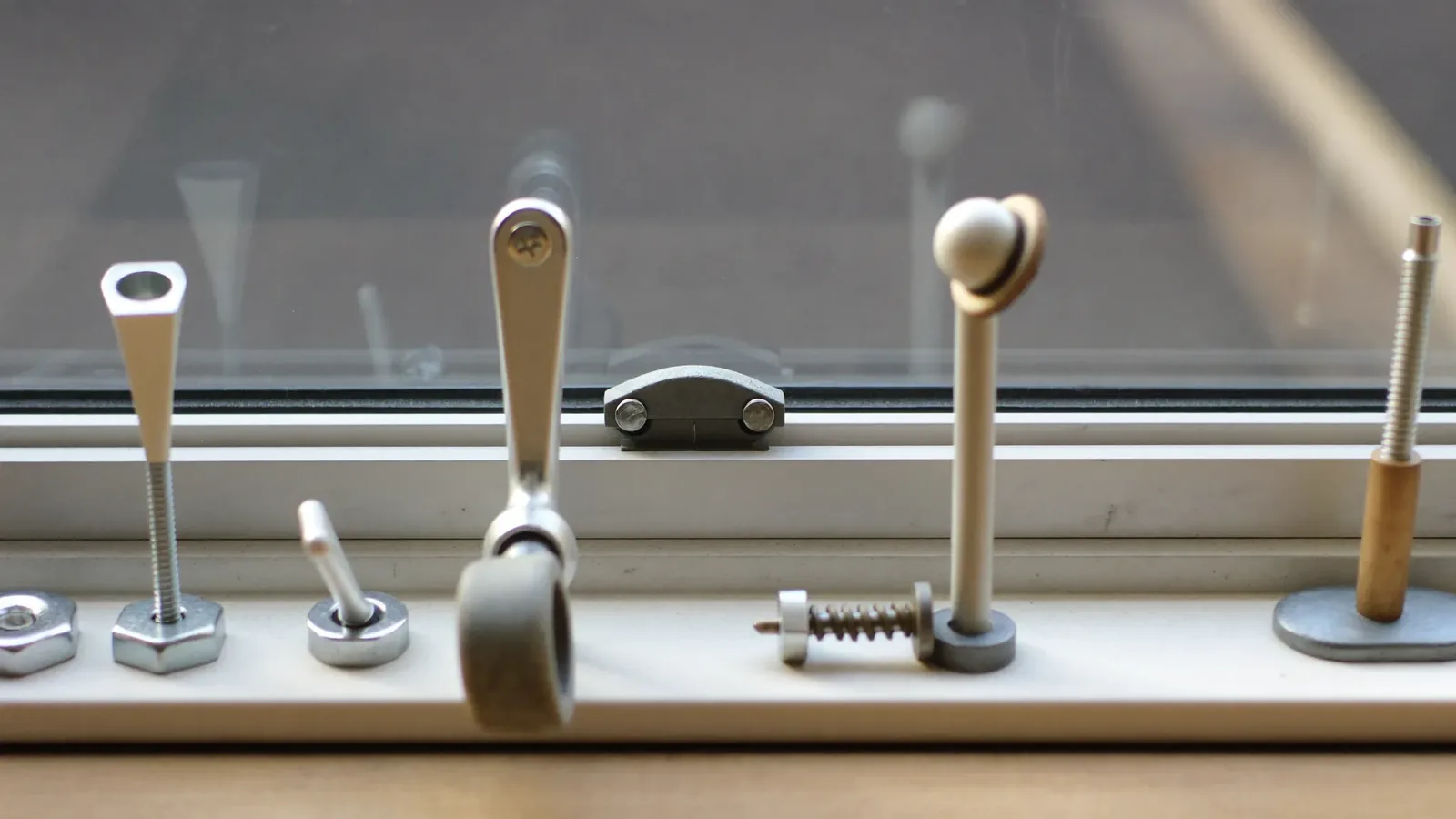
The handle is the part you touch most, so it is usually the first to go. A handle that spins all the way round without moving anything has lost its connection to the lock, normally a snapped spindle or a stripped internal gear, so your turning motion no longer reaches the mechanism. A handle that has broken off in your hand is the same story, just further along. A handle that still works but wobbles on its base has a worn spindle or a loosened, stripped screw boss underneath. The fix in each case is to match the handle type and refit it so it locates the cam and drives the lock cleanly again. The window itself does not need touching.
Multi-point and espagnolette locks that will not throw
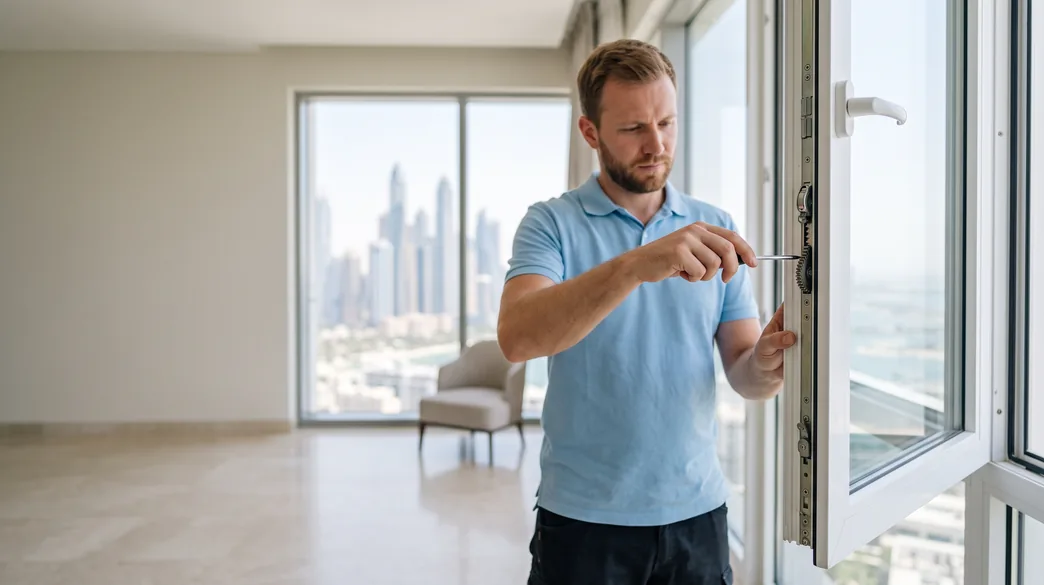
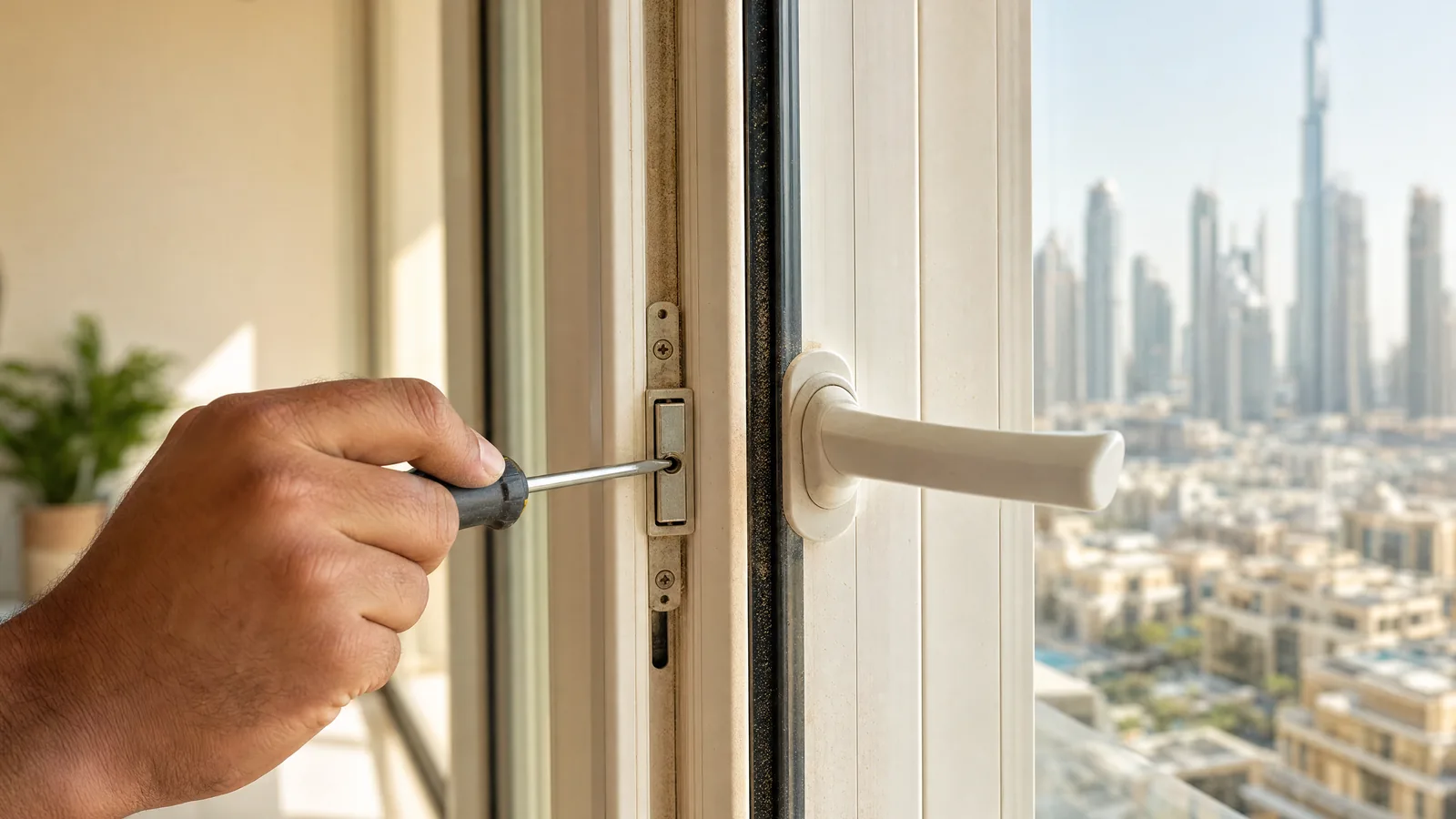
If the handle turns but the window will not lock, the fault is in the locking mechanism, not the key or the glass. Many modern windows run an espagnolette bar, a long strip down the edge of the sash with several locking points driven together by the one handle. When one cam, roller, or the central gearbox on that strip fails, the whole window can jam half locked or refuse to throw at all. A lock that has gone stiff rather than dead is often the gearbox drying out and binding, which dust and heat bring on early here. The repair is to find the failed section of the strip, replace it, and re-time the handle so every point engages together again.
Friction hinges and stays that sag or will not stay open
A casement window that drops at its opening edge, catches on the frame, or scrapes as it swings has worn friction hinges, also called friction stays. These are the sprung arms along the top and bottom of the sash that carry its weight and hold it at any open angle. As they wear, the sash sags out of square, and the same window that used to hold steady in a breeze now either slams shut or drifts. Replacing the hinge pair sets the sash back square and restores the friction that lets it stay put where you leave it. If your window will not hold open, that is a hinge, not a glass fault.
Sliding rollers that feel heavy or grind
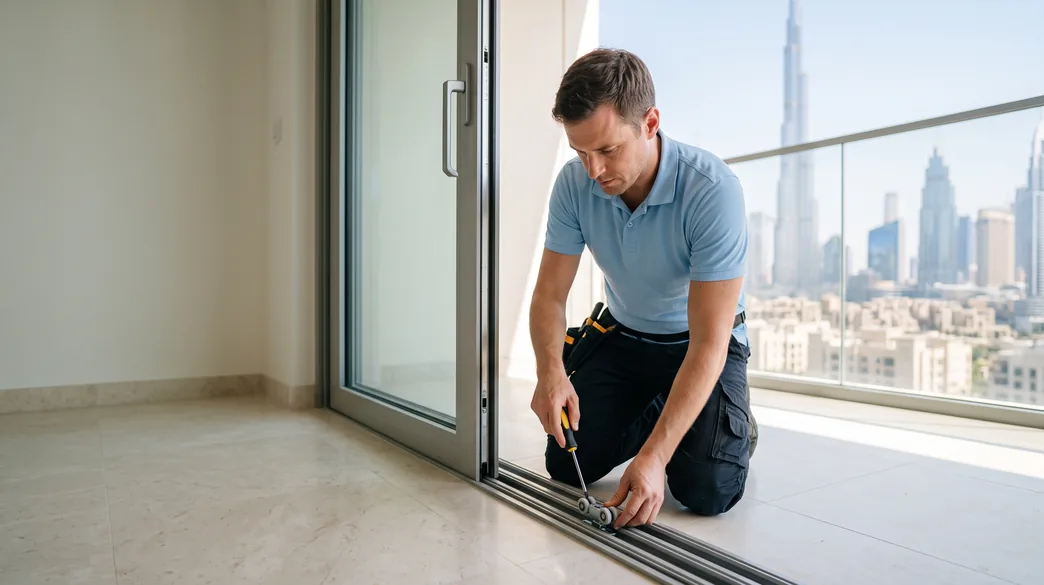
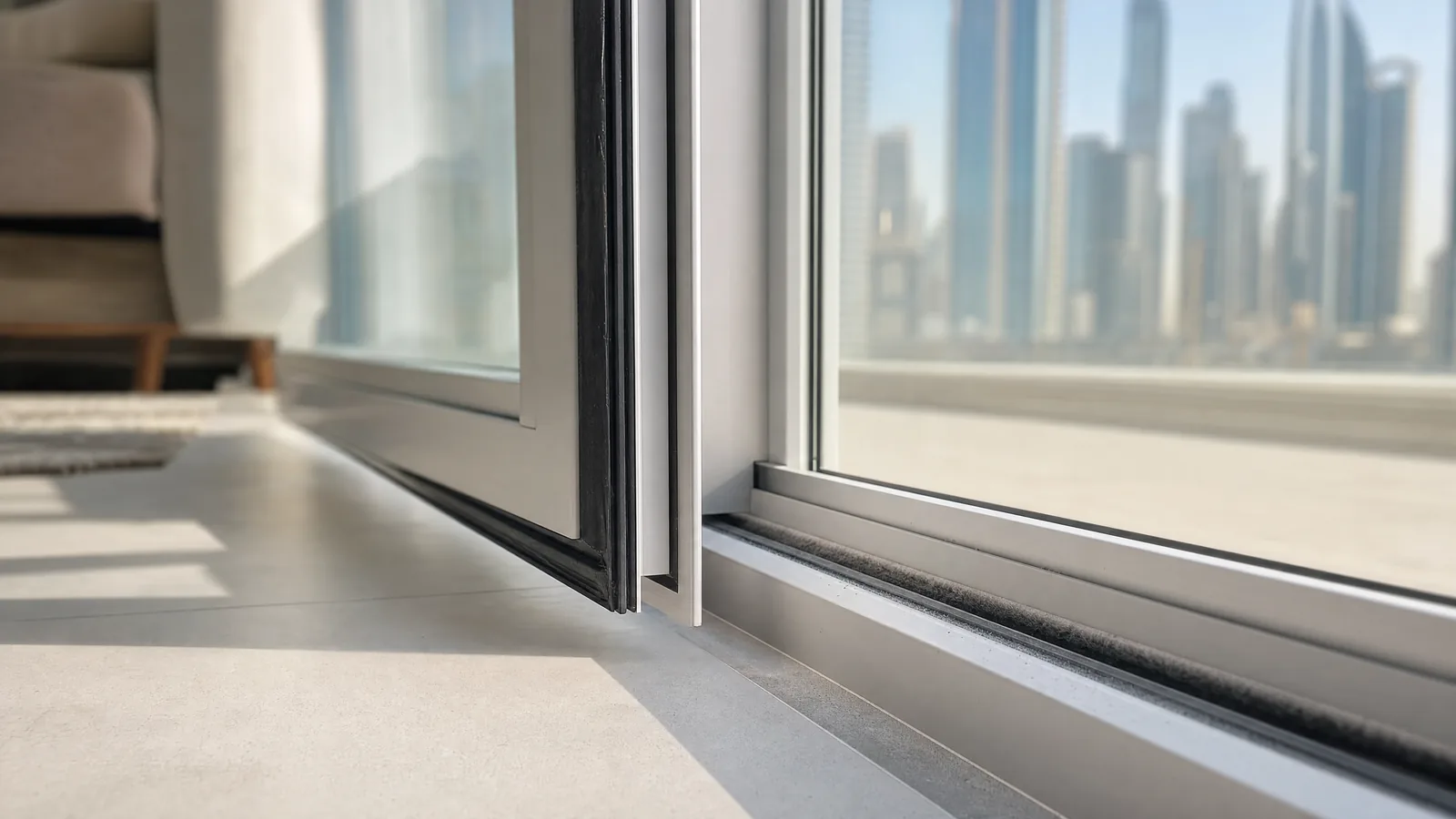
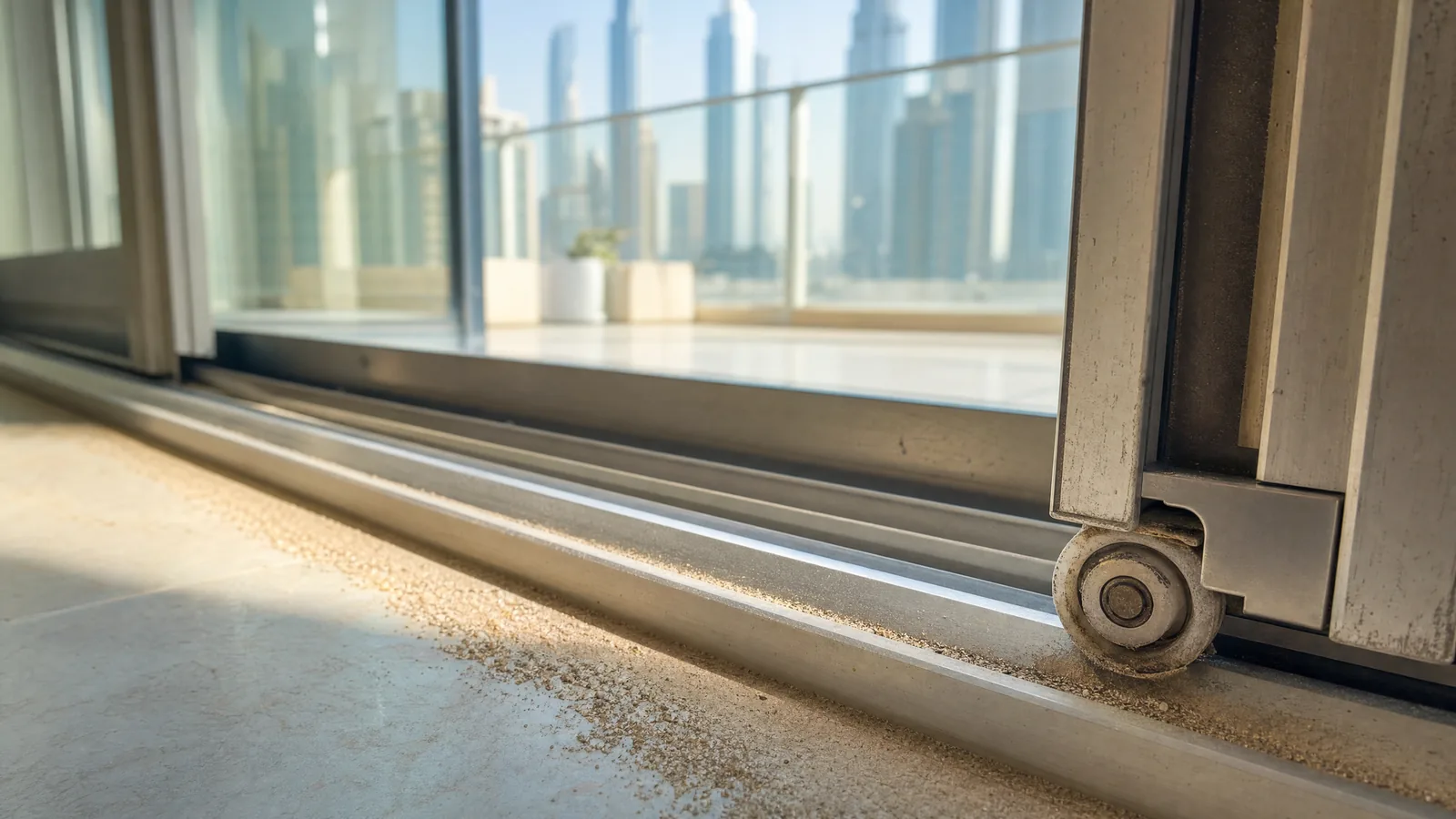
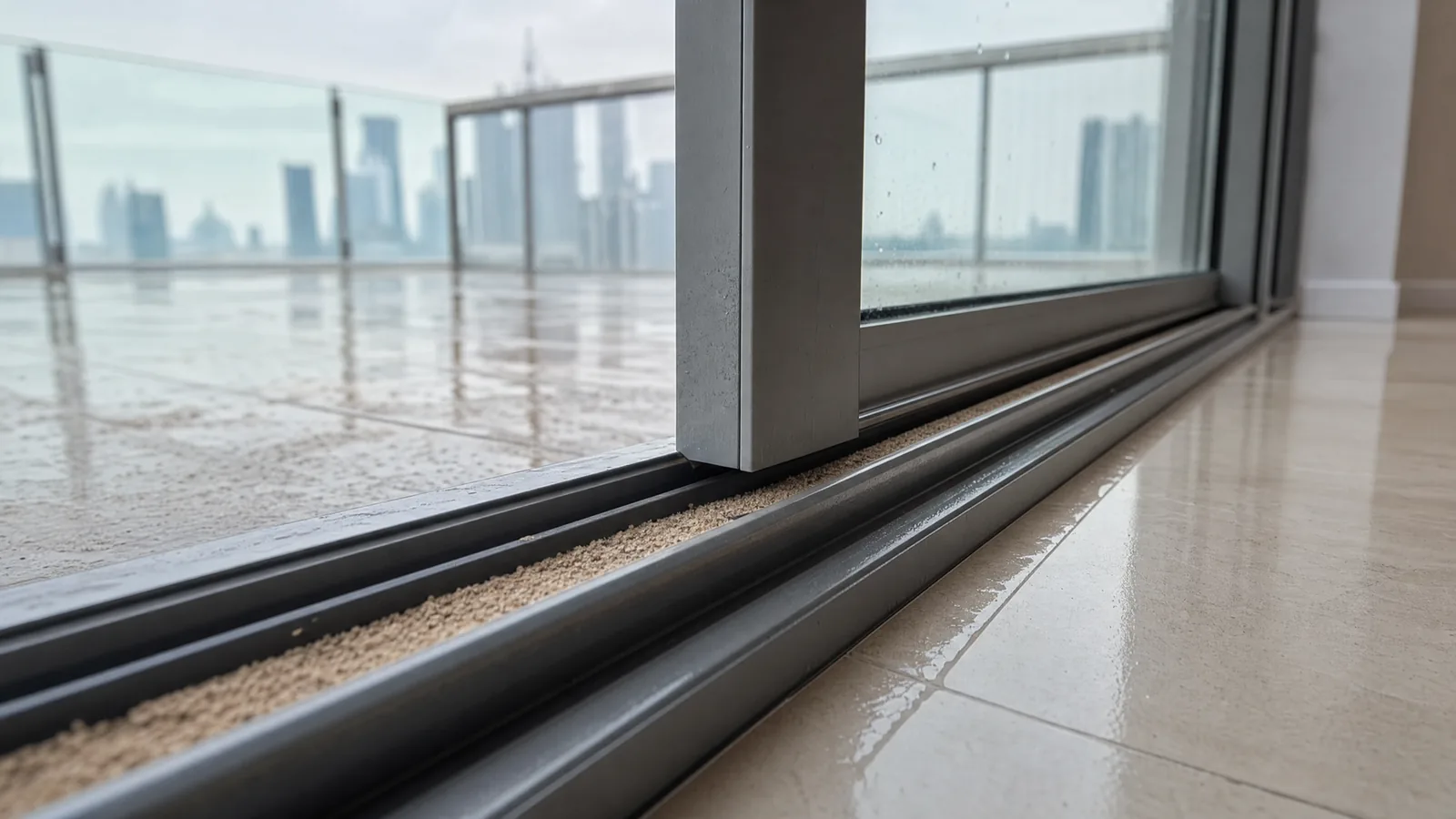
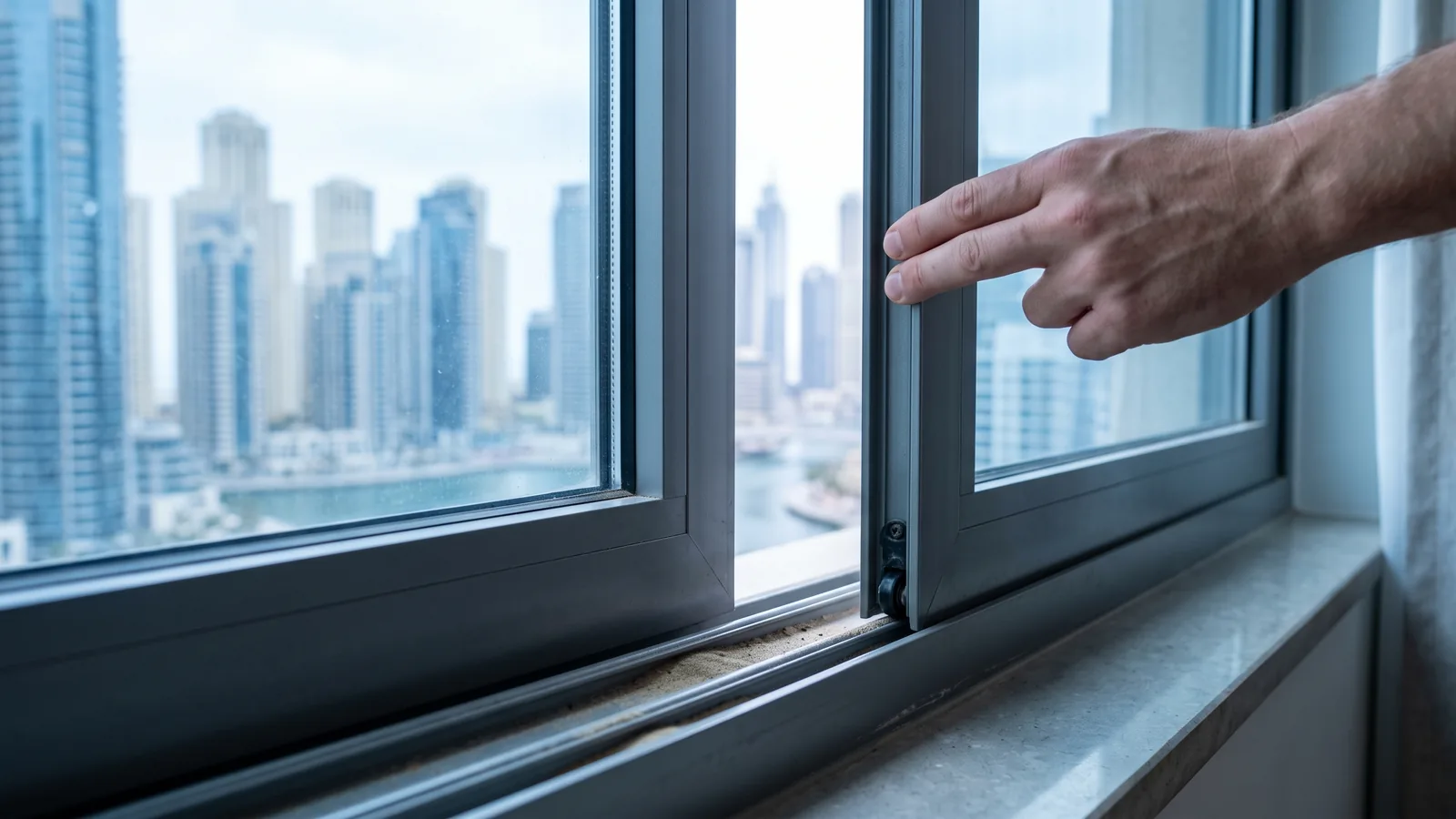
A sliding window or door that needs two hands, judders as it moves, or grinds along its run has worn rollers. The rollers are the small wheels under the sliding panel that carry it along the track, and they are directly in the path of every bit of dust that blows in. Grit packs into the bearings, the wheels flatten or seize, and the panel starts dragging on the track instead of rolling. New roller carriages and a height adjustment bring the glide back to one finger. Because large sliding panels are heavy and their gear takes more of a beating, our guide to sliding door and window repair in Dubai covers that heavier work in more detail.
Tracks that are dust-packed or bent
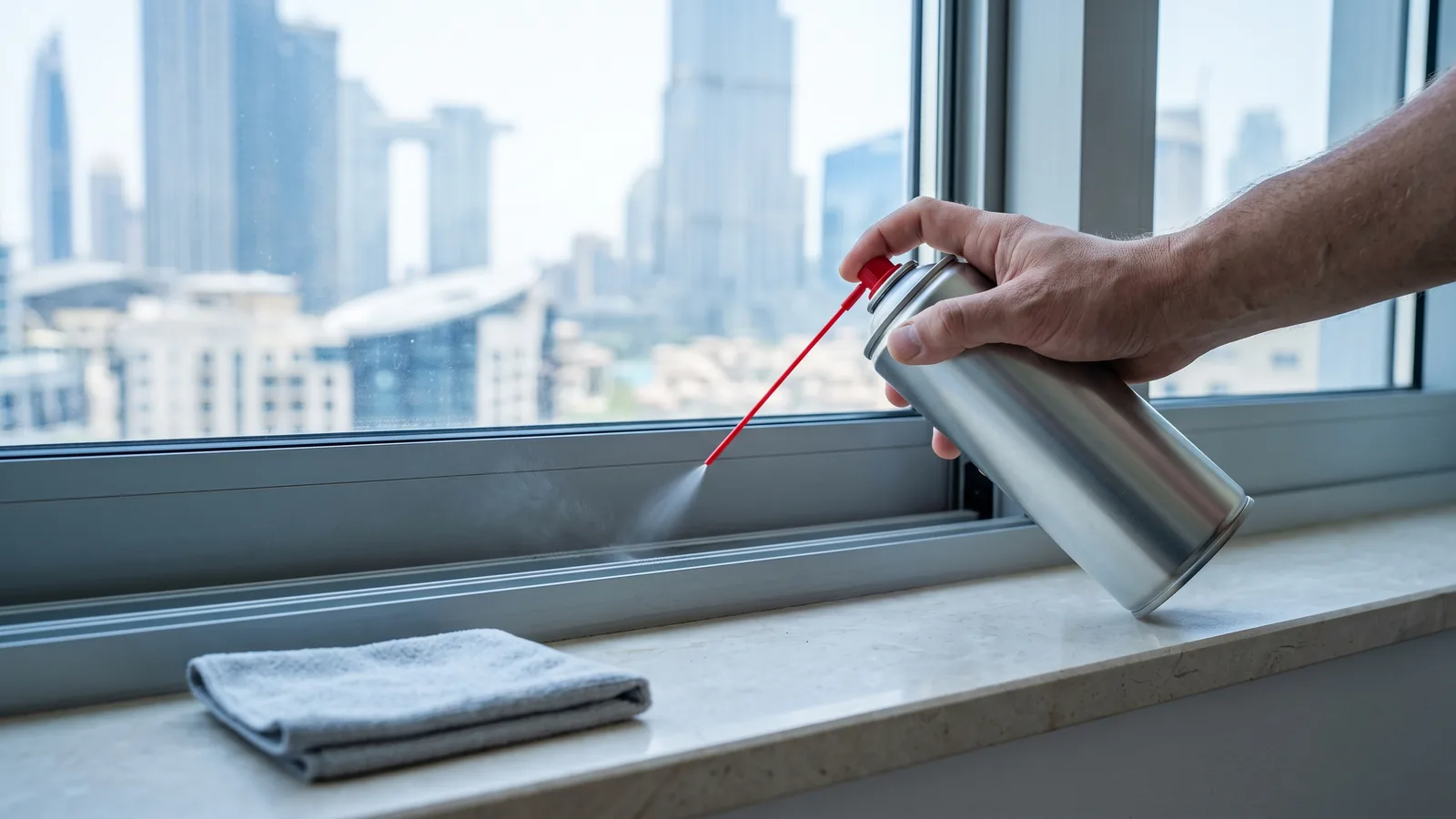
The track is the channel the rollers run in, and it fails in two ways. The common one is simply that it fills with compacted dust and grit until the sliding panel crunches and sticks, which in Dubai can happen within a season on a balcony door. A clean-out and re-lubrication often transforms how the door feels on its own. The harder failure is a track that has been bent or crushed, usually at one end where a panel has been forced, so the rollers climb and drop as they pass the damaged spot. A bent track can sometimes be trued, and where it cannot, the running section is replaced so the rollers have a straight, clean path again.
Keeps and strike plates that have drifted out of line
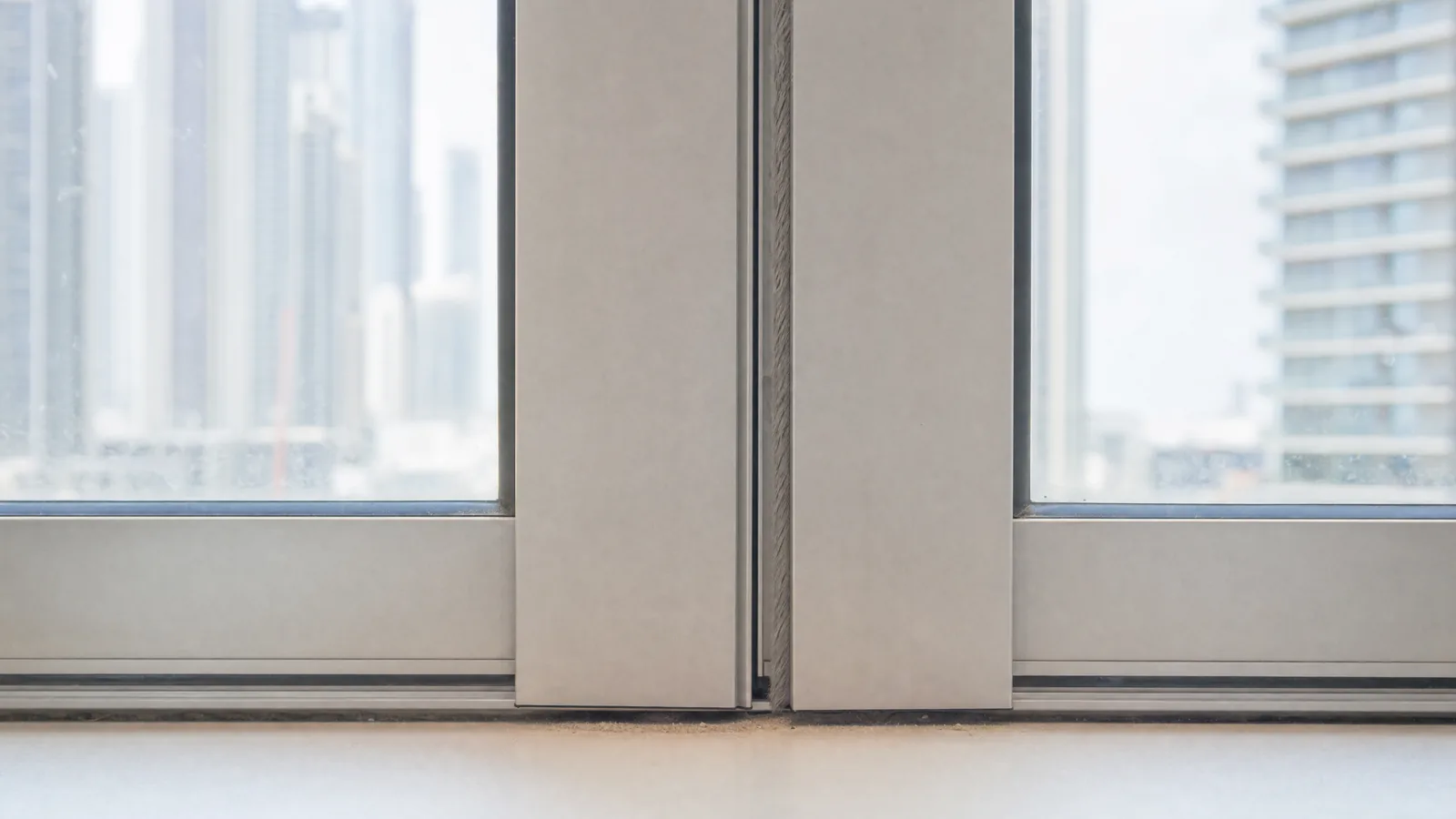
The keep, or strike plate, is the metal catch fixed to the frame that the lock bolt shoots into. When a lock suddenly feels stiff, will not quite catch, or needs you to lift or push the window to lock it, the keeps have often drifted a few millimetres out of alignment, so the bolt is fighting the edge of the catch instead of dropping into it. Heat movement in the frame and a slowly sagging sash both nudge the keeps off line over time. Realigning or replacing the keeps so the bolt meets them square usually restores a clean, positive lock without touching the mechanism at all.
Child-safety restrictors that jam or fail
A restrictor is the small device that limits how far a window opens, which matters in towers and family homes across Dubai. When one jams, the window either will not open past a crack or will not close because the restrictor has caught, and a failed one lets the window swing wider than it should. These are safety parts, so they are worth fixing promptly rather than removing. The repair is to free or replace the restrictor and check it engages and releases as it is meant to, so the window opens for air but stops where it is set to stop.
Getting window hardware fixed in Dubai
Every fault above comes back to a replaceable part, which is exactly what our window hardware and lock repair in Dubai service handles, keeping your existing frame and glass. uPVC windows in particular rely on gearboxes, keeps, and cylinders that wear in this climate, covered on our uPVC window repair page. We are based in Al Barsha and reach most of Dubai in around 30 minutes, and we have been fixing this hardware since 2014. You get a free on-site fixed quote before any work, and every repair carries our 2-year warranty. The emergency line runs 24/7 on +971 50 220 6918, or reach us through the contact page. For more window guides, see the blog.