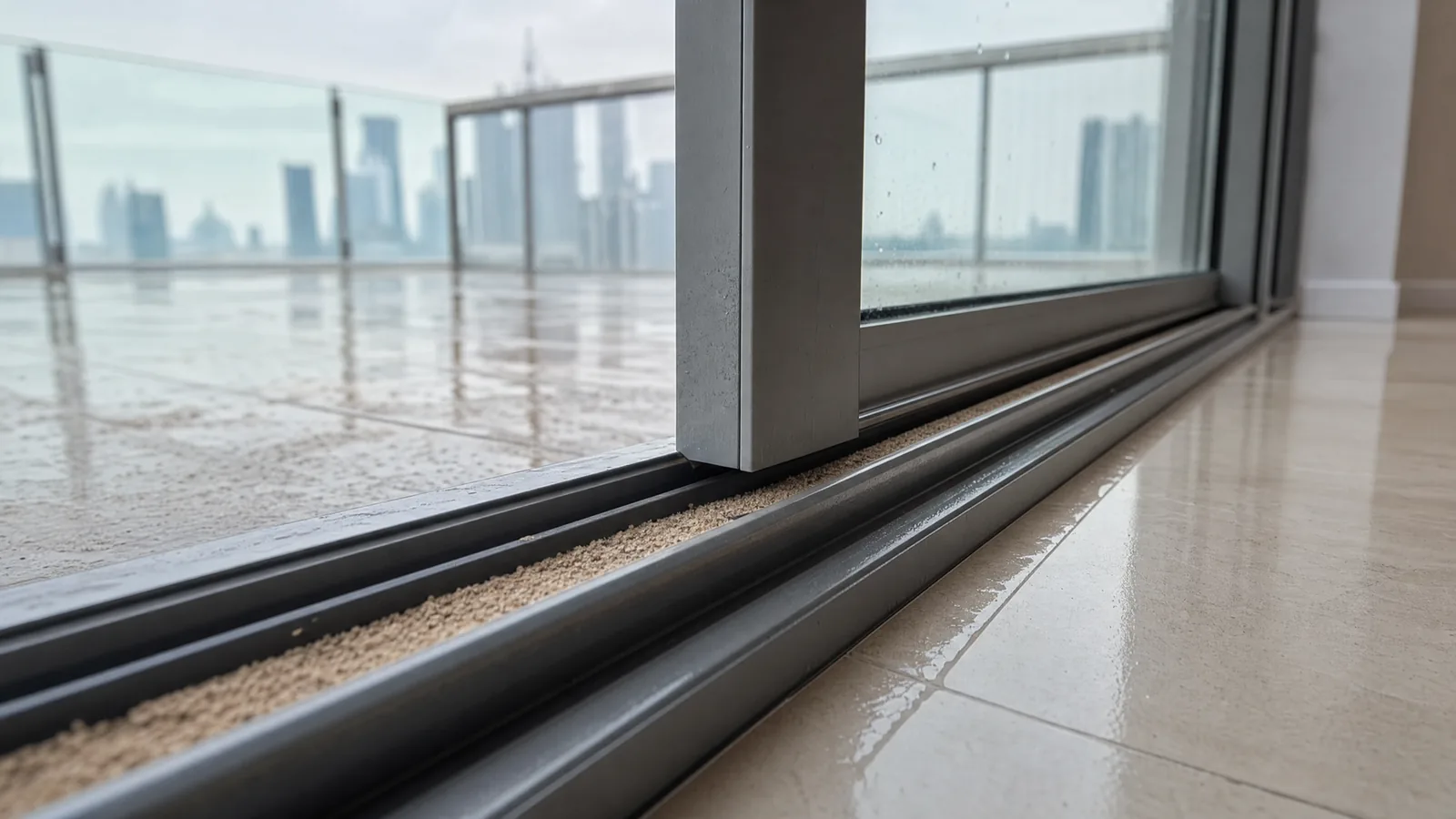





A dry silicone spray, laid thinly on a channel that is already clean and dry, is the right answer for almost every sliding window in this city. The tins that spoil the job are the ones people reach for first: household oil, thick grease, and the penetrating spray in the toolbox drawer. All three leave a film that never quite stops being wet, and a wet film here has one career ahead of it.
If the window has gone stiff and you do not yet know why, hold the can. Start with the three tests for a stiff sliding window, and if what you hear is grinding rather than drag, read what that noise means. From here on this page is only about what goes into the channel and what stays out.
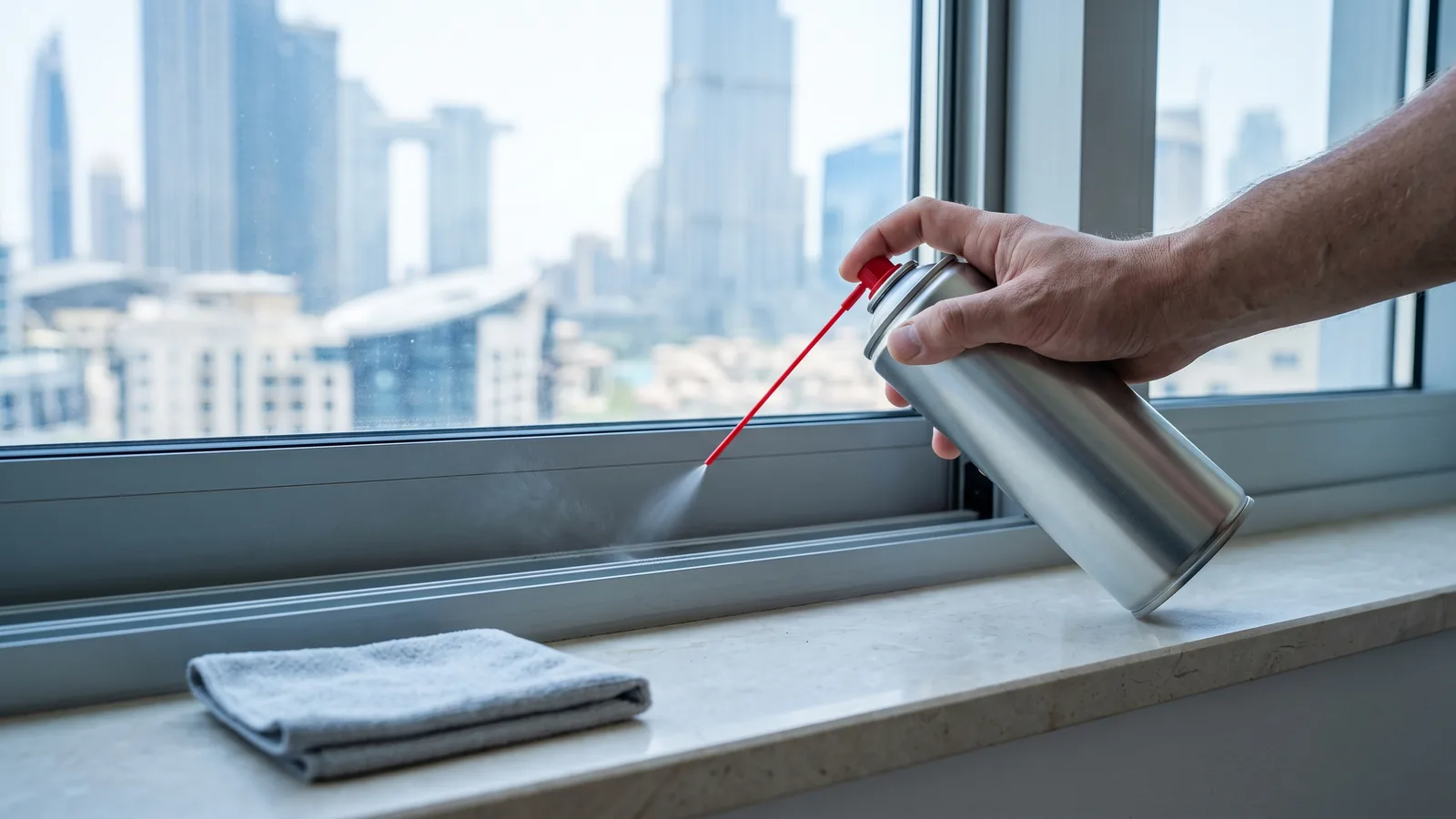
Why the sand decides, not the slipperiness
Comparing labels in the aisle means comparing the wrong property. Everything sold as a lubricant is slippery, and through a sash the differences are too small to feel. What separates one can from another is the state of the film an hour later.
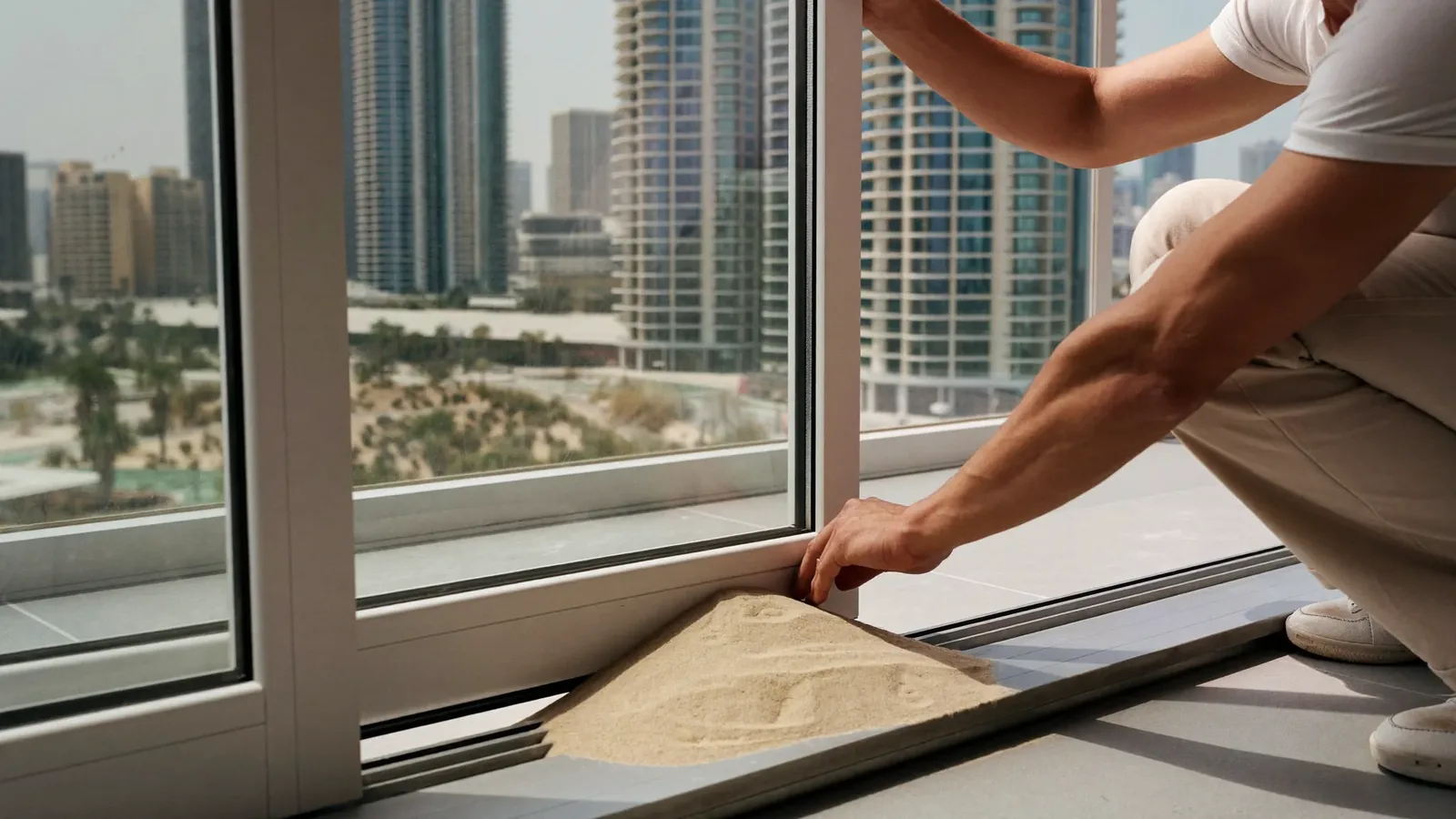
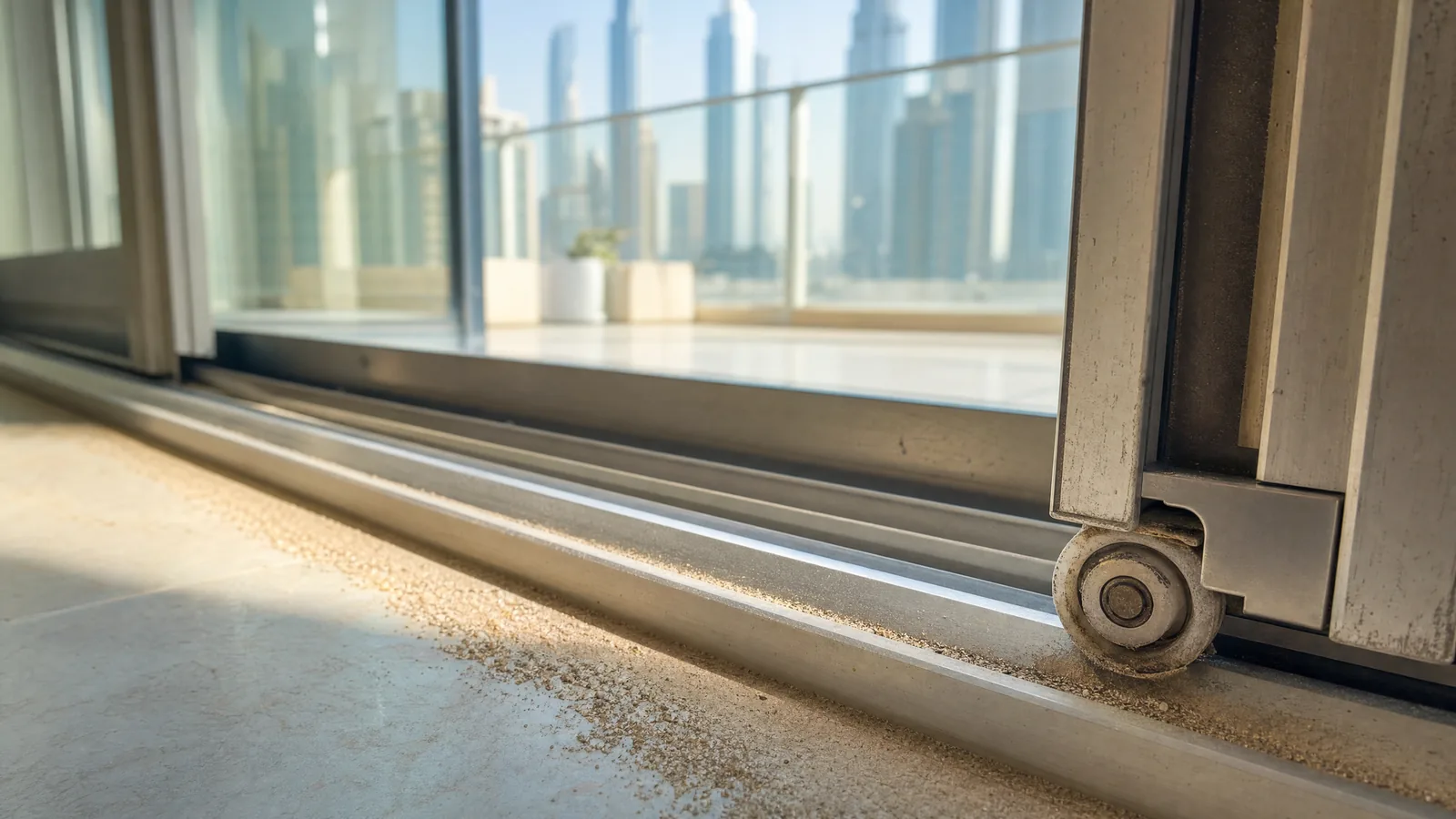
A compound whose carrier evaporates leaves a dry, non-tacky layer: sand lands on it, sits loose, and the next pass of the sash sweeps most of it out. One that stays wet behaves like tape laid sticky side up. It catches the dust of every shamal, holds it against the rail, and the roller presses that mixture flat and grinds through it. The lubricant is no longer protecting the wheel — it is manufacturing an abrasive and feeding it to the wheel.
So the question is not which product is best, but whether this can dries — and two minutes settle it, without knowing a single brand. Put a drop on the back of your hand, wait until the solvent smell fades, then press the spot against a dusty sill. Dust that lifts and clings to skin is dust the channel will hold just as willingly. Powder that brushes straight off means the film has dried the way a window needs.
Six kinds of lubricant and what sand does to each
The middle column is the one that matters: it describes the channel a fortnight later, not while you are still holding the can.
| Compound | With sand | Verdict |
|---|---|---|
| Dry silicone spray | Carrier evaporates, film dries non-tacky, sand rolls off | Works, on channels and rails |
| Dry PTFE film | Sets into a hard dry layer that holds nothing | Fine, applied just as thinly |
| Graphite, powder or paste | Dry, but black: marks aluminium, mesh and hands, and blows out of an open channel | Not for a sliding window |
| Lithium grease | Thick and tacky, takes on sand, goes to paste in the heat | No |
| Multi-purpose penetrating spray | Leaves a wet film, flushes grease out of bearings, pulls dust in | No |
| Oil, any household kind | Never dries, runs onto the gasket and the sill, binds sand at once | No |
Where lubricant belongs, and where it must never go
Any film attracts something, so where you put it matters more than which can you bought.
Where it belongs:
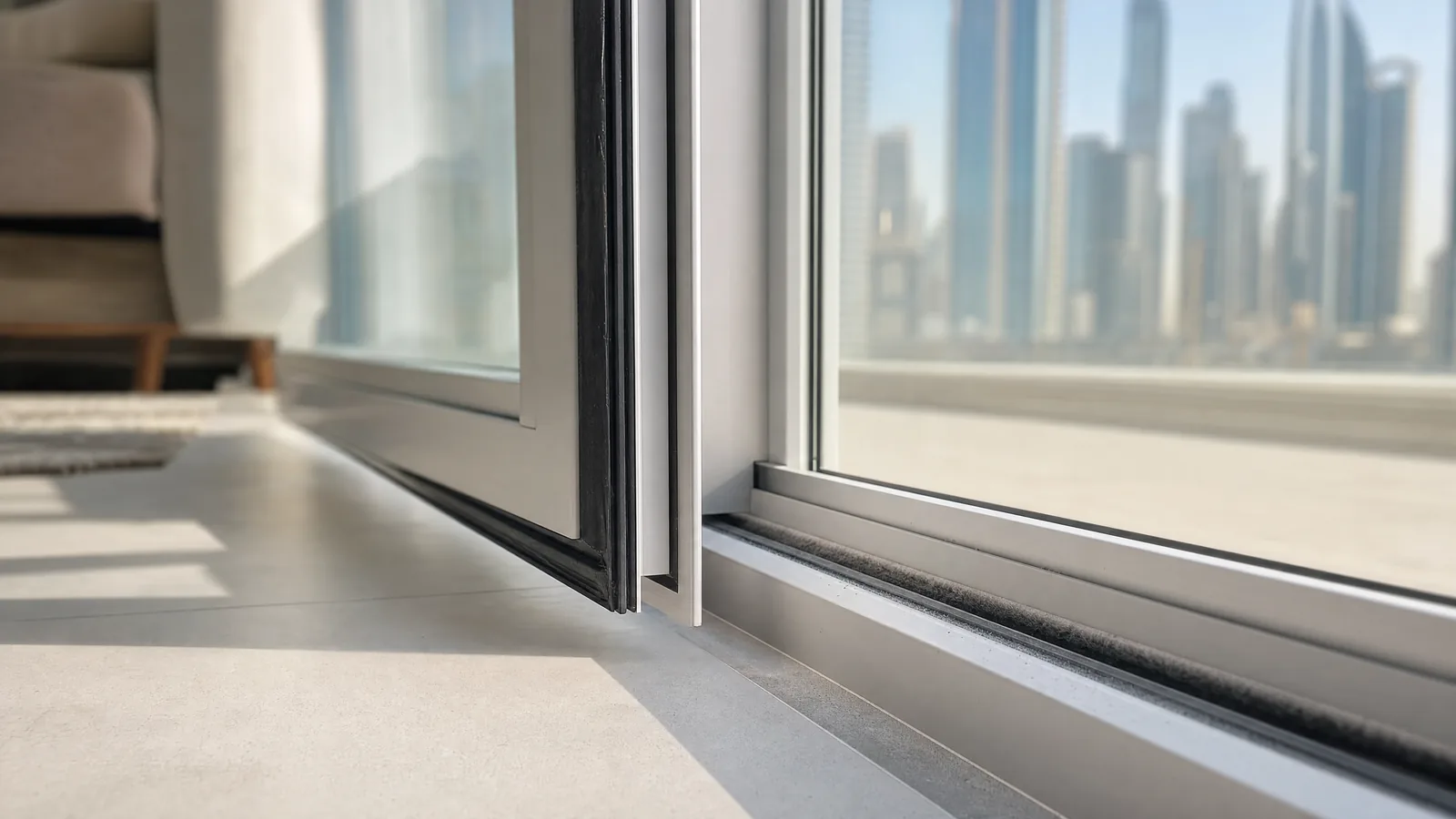
- The bottom channel, once clean and dry — a thin pass along the stretch the rollers travel.
- The head channel, the narrow one that keeps a light sash straight. Dusty in every apartment, and nobody thinks to touch it.
- Hinges on the casement sash beside the slider, which takes lubricant gladly.
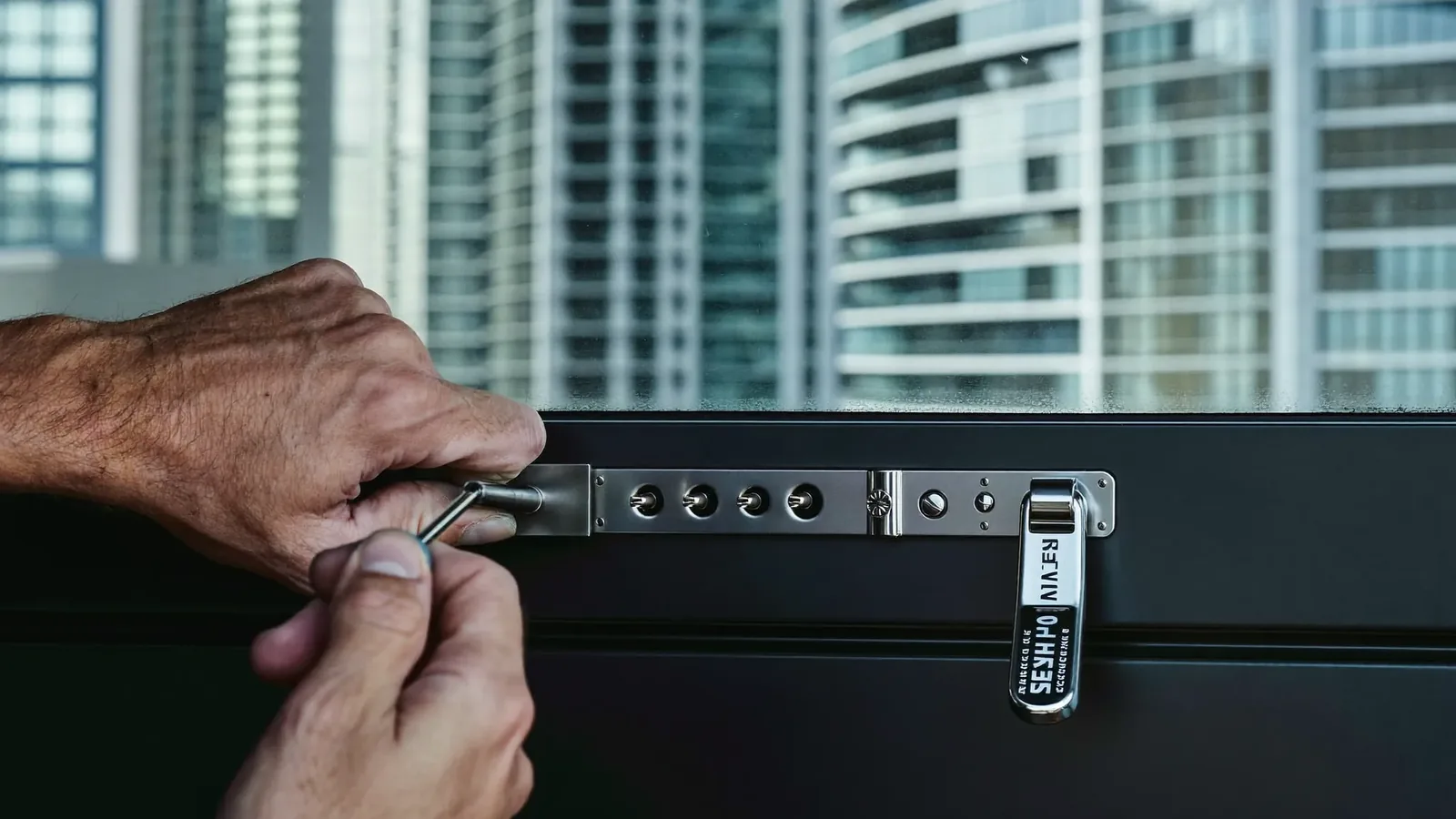
- The latch tongue and keeper plate — a trace on a cloth, wiped back after a few closings.
Where it must never go:
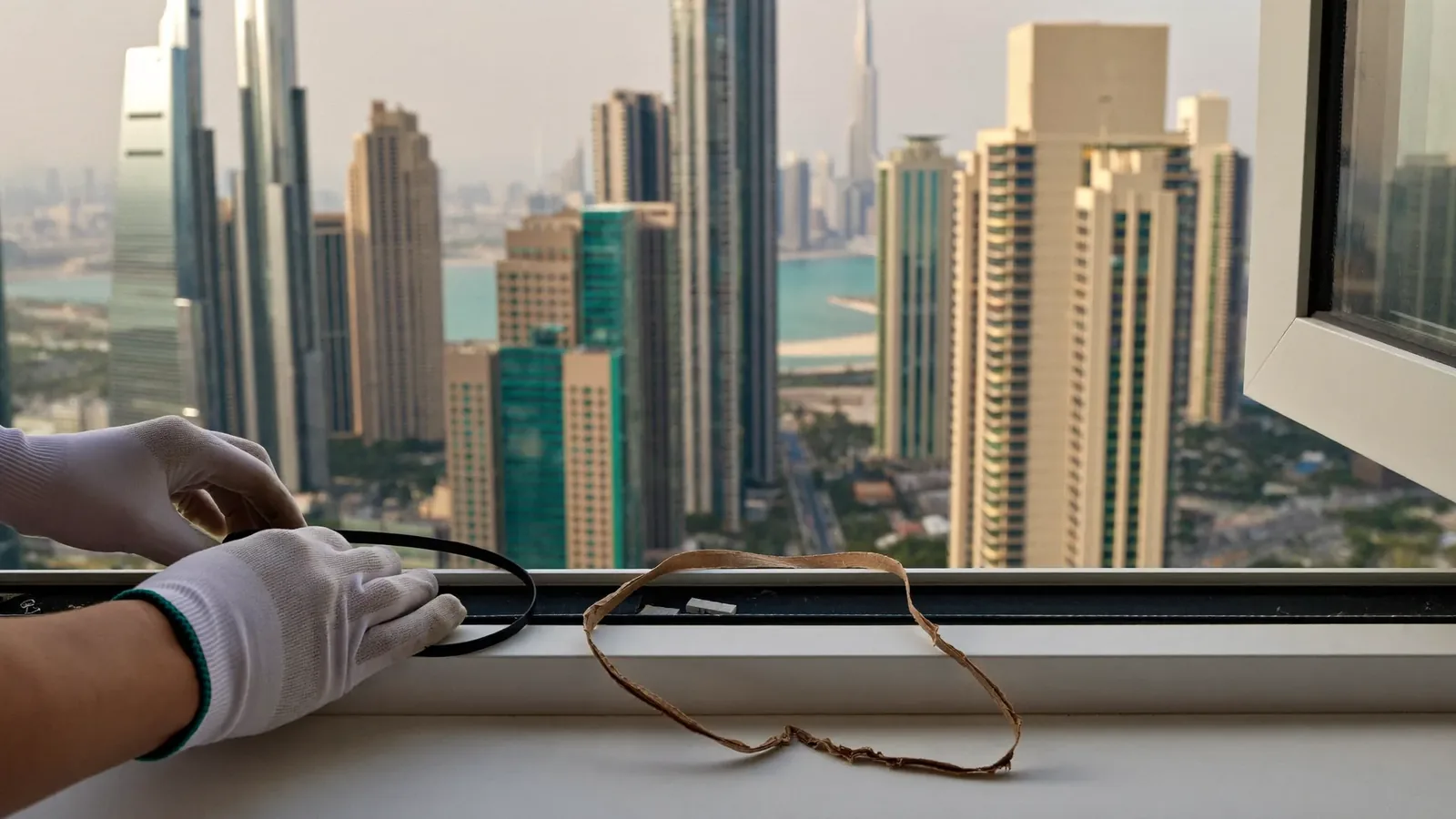
- The rubber gasket. Lubricant does not restore a seal, and oils and penetrating sprays soften rubber over time. A gasket gone hard and flat needs replacing, not spraying.
- The mesh of a mosquito screen. The frame slides, not the fabric, and a film on mesh makes a dust trap you cannot wash. A stiff screen is mosquito net repair.
- The lock cylinder — the wrong compound gums it up, the right one will not save a worn one, and that is hardware and lock repair.
- Sealed roller bearings — penetrating spray washes out the grease sealed in at the factory, and the roller runs dry from then on.
- The glass and the visible frame — runs, smears and a dust magnet where your eye lands.
Clean first, dry second, thin third
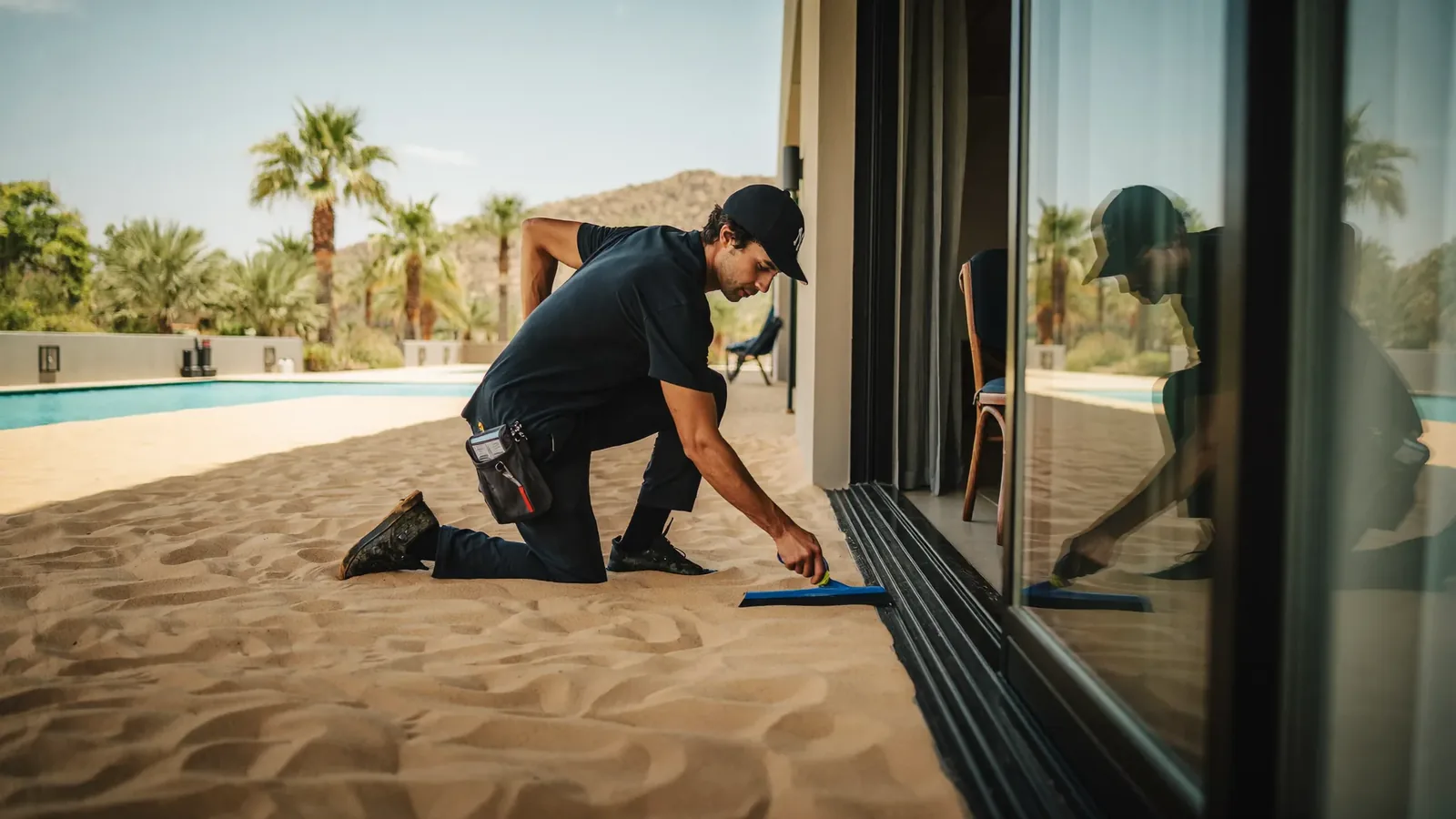
Lubricating a dirty channel is worse than leaving it alone. The sand in there is still loose, and the sash sweeps some of it out on every pass; a fresh film binds it in place and seals it under a layer it cannot escape. That is not a lubricated window — that is paste, mixed in place.
Cleaning is its own short job — vacuum, stiff narrow brush, barely damp cloth — and it is set out step by step in the stiff-window guide. What matters here is what comes after.
- Wait until the channel is genuinely dry. In an air-conditioned room that takes longer than the ten minutes you feel like giving it.
- Do not fill the channel from the can. Spray onto a folded cloth or a small brush and work from there; that little is the whole dose.
- Treat the rail and the wheel path, not the whole trough. Lubricant pooled in the corners only waits for dust.
- Run the sash its full travel two or three times, so the film spreads instead of sitting in a stripe.
- Wipe the surplus off with a dry cloth. If a fingertip comes away shiny, too much is still in there.
Frequency follows the dust, not the calendar: vacuum the tracks every few weeks, and keep the fuller round — seals checked, tracks lubricated — to a few times a year. A villa in Arabian Ranches with six sets of patio doors gets there sooner than a flat on the sheltered side of a JLT tower.
If the wrong thing is already in the channel
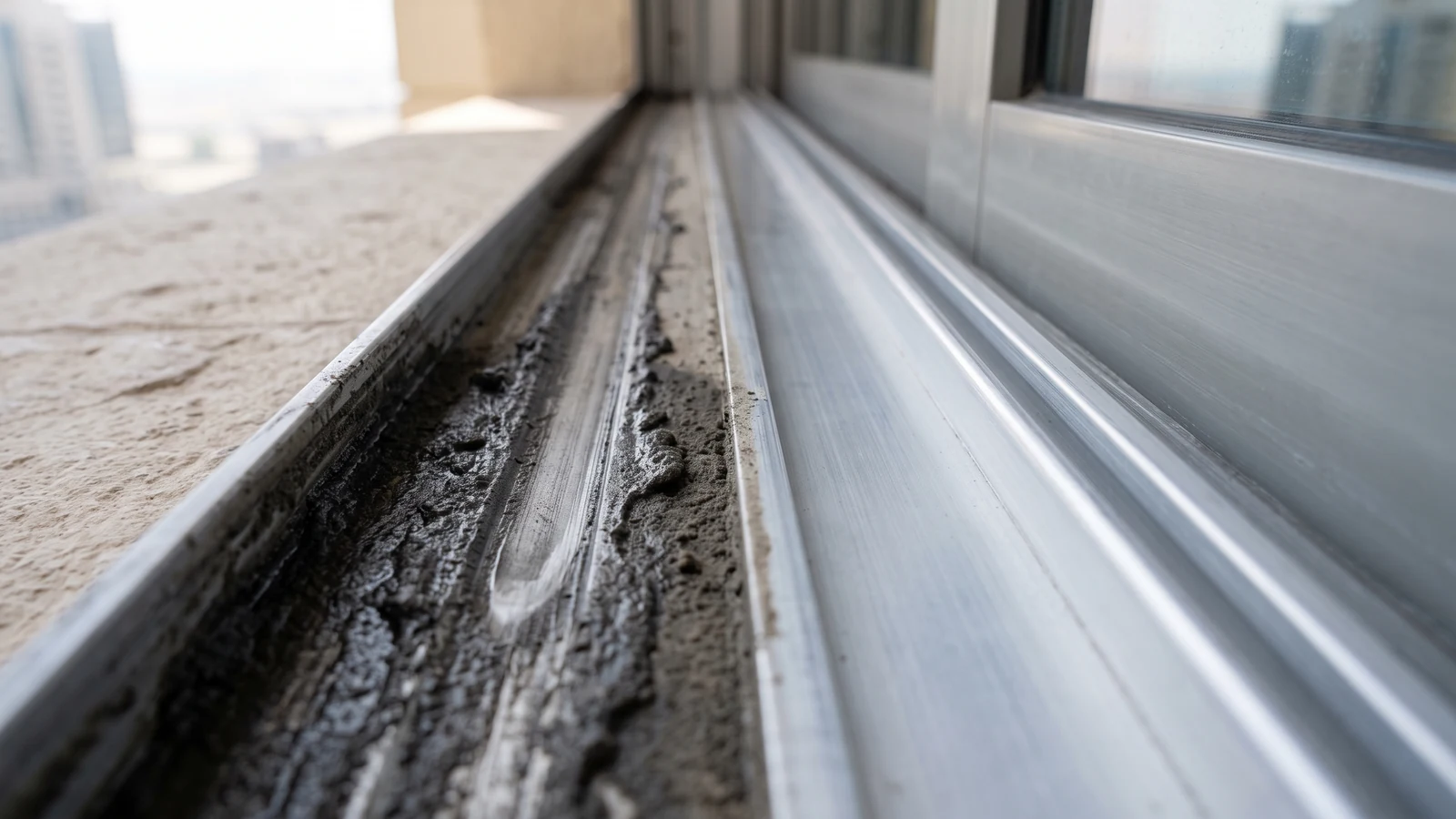
Say the oil went in last winter, or a previous tenant emptied half a can into the track, and a dark gritty paste now lines the run. A correct product on top changes nothing: the new film sits on the old, and the abrasive stays where it was.
Lift the mass out mechanically first. A plastic spatula, a wooden stirrer or an old plastic card takes it away in strips; a screwdriver blade scores soft aluminium, and every scratch becomes somewhere for the next sand to settle. Then warm water with ordinary washing-up liquid and a rag, several passes, changing the rag as it loads. Corners and drain holes come out with a cotton bud, and those holes are why the channel is never flushed with water in any volume.
Skip the solvents: thinners and degreasers attack rubber, powder coating and anodising, and creep into places you cannot inspect, the roller bearing among them. Old paste will not dissolve in fresh lubricant either. When the metal is bare and completely dry, the thin dry film goes on — not before.
When no lubricant will help
A window that runs beautifully for two days and then goes heavy again is not a failure of technique. It is the window telling you the drag was never in the channel.
- The weight comes back within days of every clean and lubricate.
- The sash drops or lifts at the same point in its travel, which points at the rail.
- The sash sits crooked and the latch misses its keeper unless you press it home.
- A roller is visibly flattened or split.
- The mosquito screen frame will not run on its own.
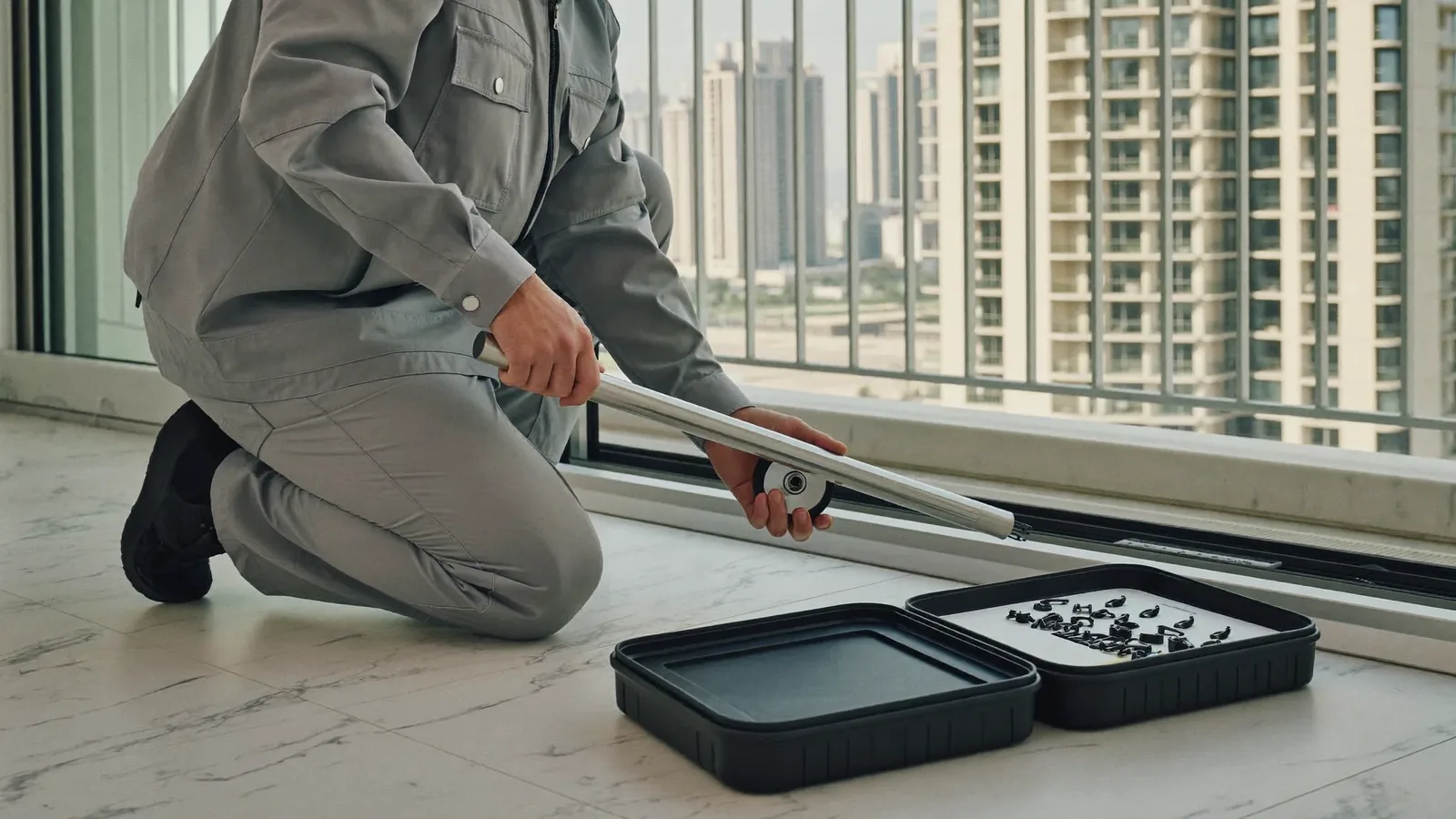
Any of those is hardware, and the visit is short because there is nothing left to guess at. We have repaired sliding systems across Dubai since 2014, we work out of Al Barsha and reach most of the city in around 30 minutes, and the line answers 24/7 on +971 50 220 6918. The quote on site is free and fixed before a tool comes out, and every repair carries our 2-year warranty. The service page is sliding door and window repair in Dubai; more guides sit on the blog, and your window's details can go through the contact page.