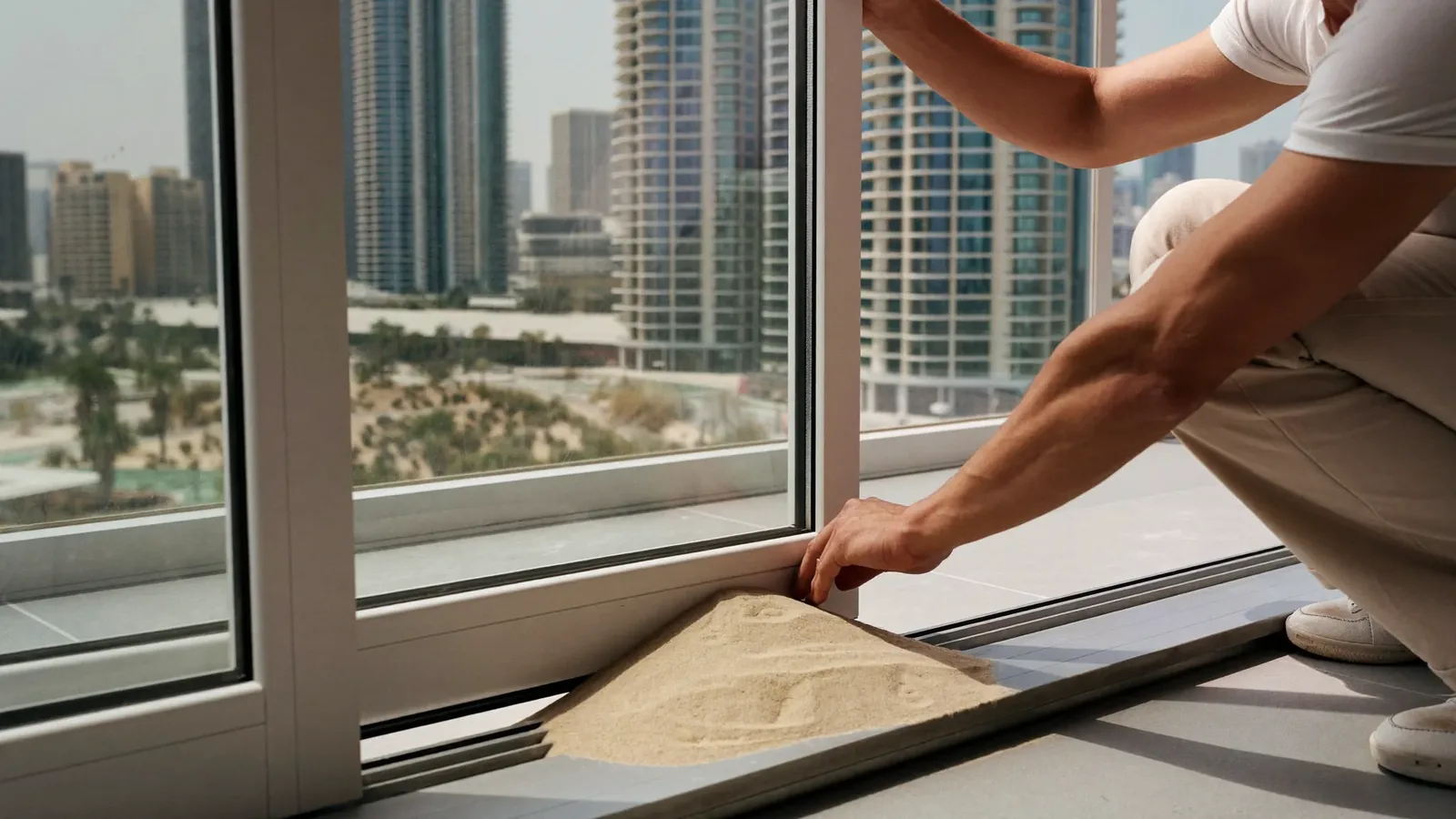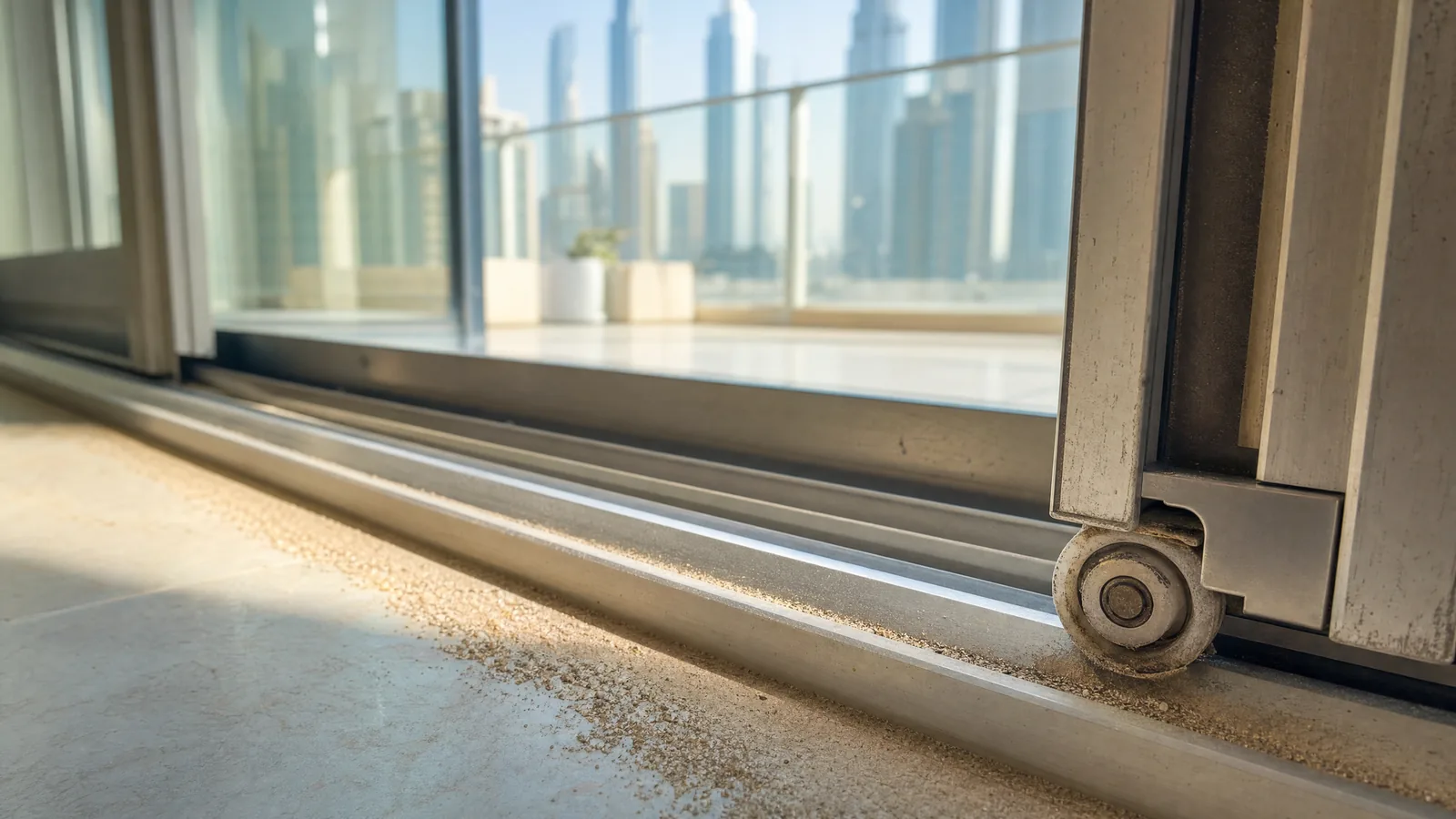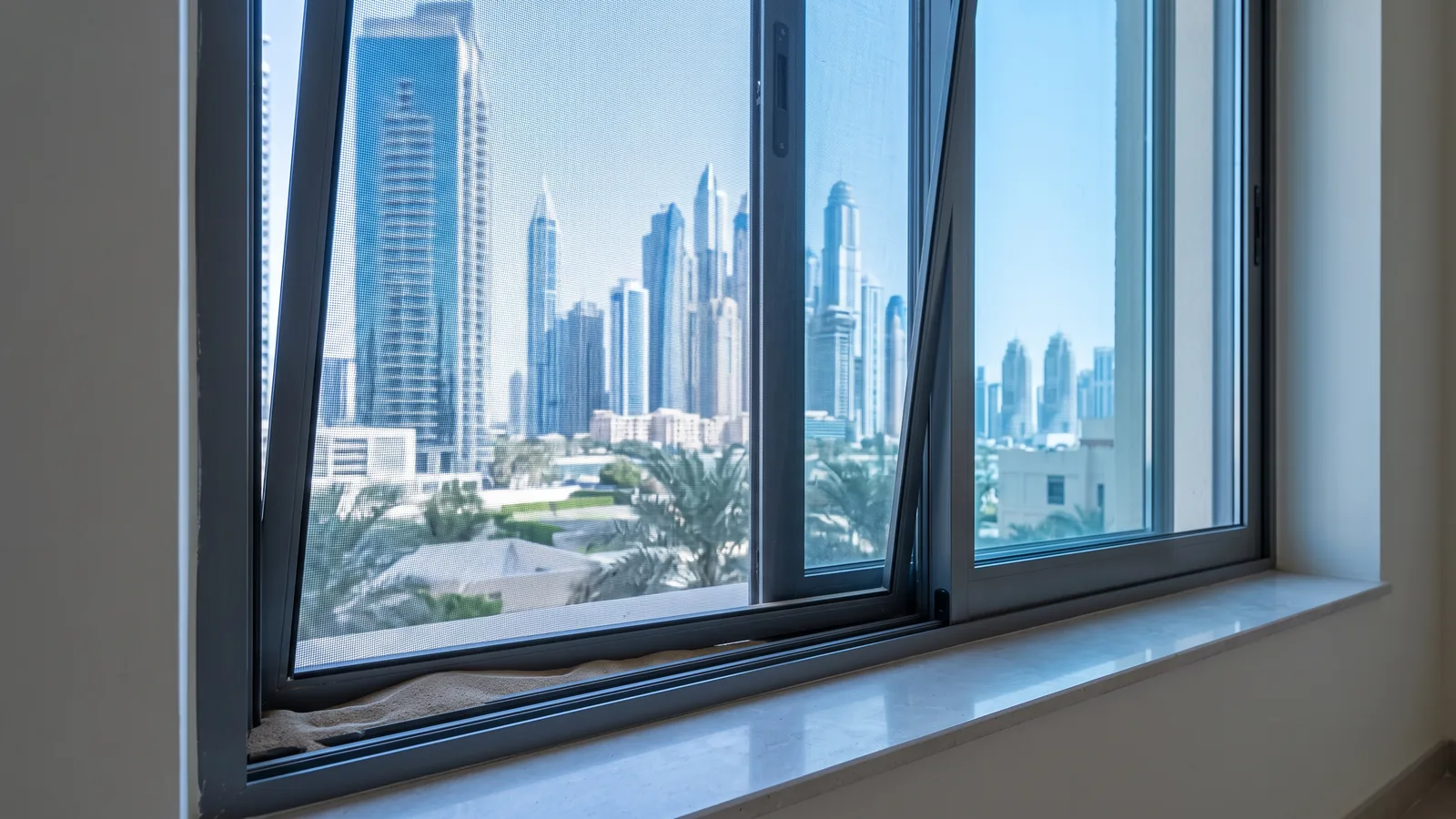





Water coming in at the threshold of a sliding door in Dubai is nearly always blocked drainage in the bottom track. The track is built to catch a little rain and let it out through small weep holes on its outside face; when sand packs those holes, the track fills like a bath and tips over the inner lip into the room. The next most likely cause is a dead threshold seal, the rubber or brush strip the panel closes against at the bottom. Third is a panel that has dropped on worn rollers, so it presses unevenly and leaves a gap at one end. Only rarely is it the external sealing between frame and floor. Check them in that order: the common fixes are cheap, and none of them means a new door.
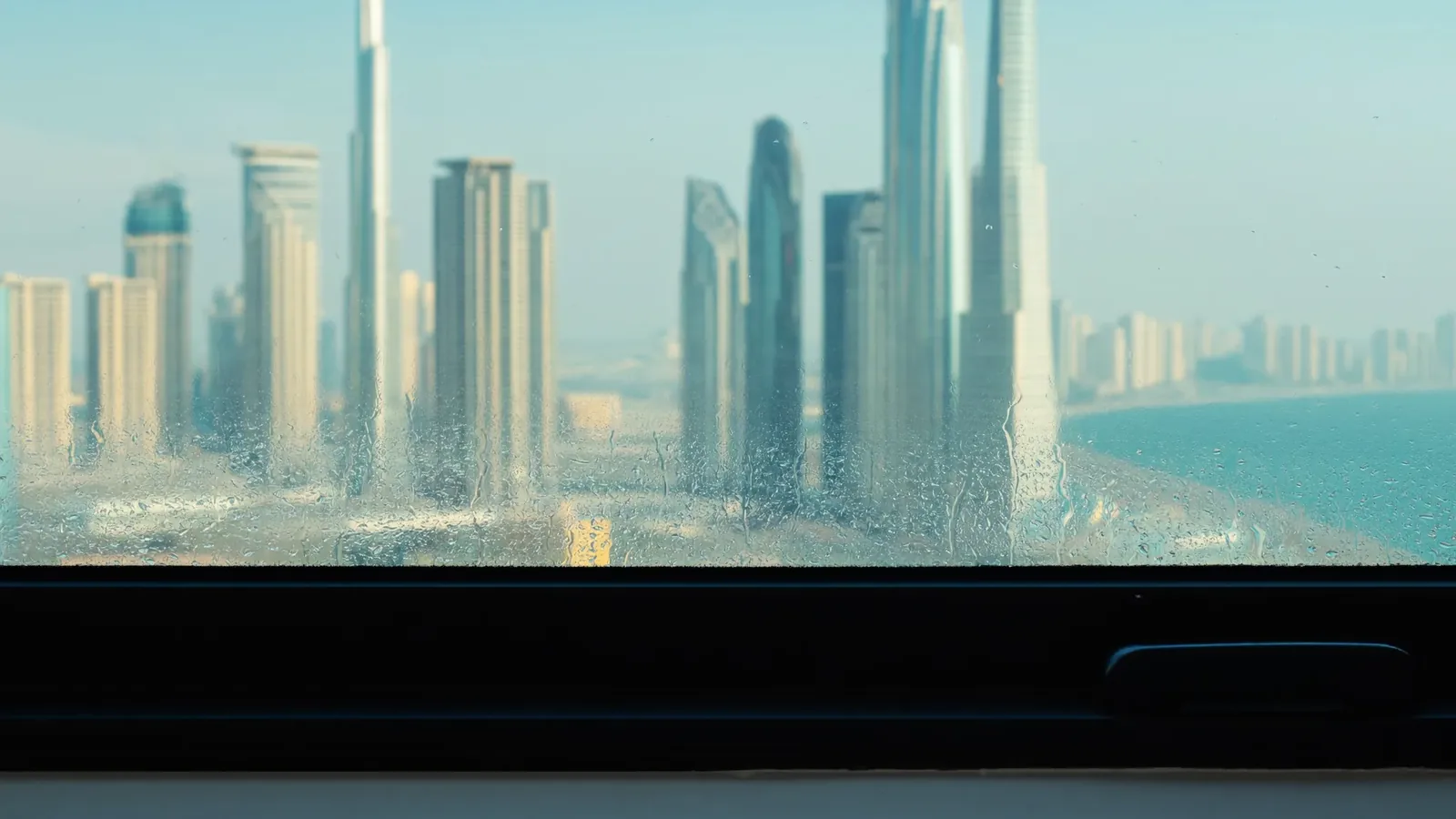
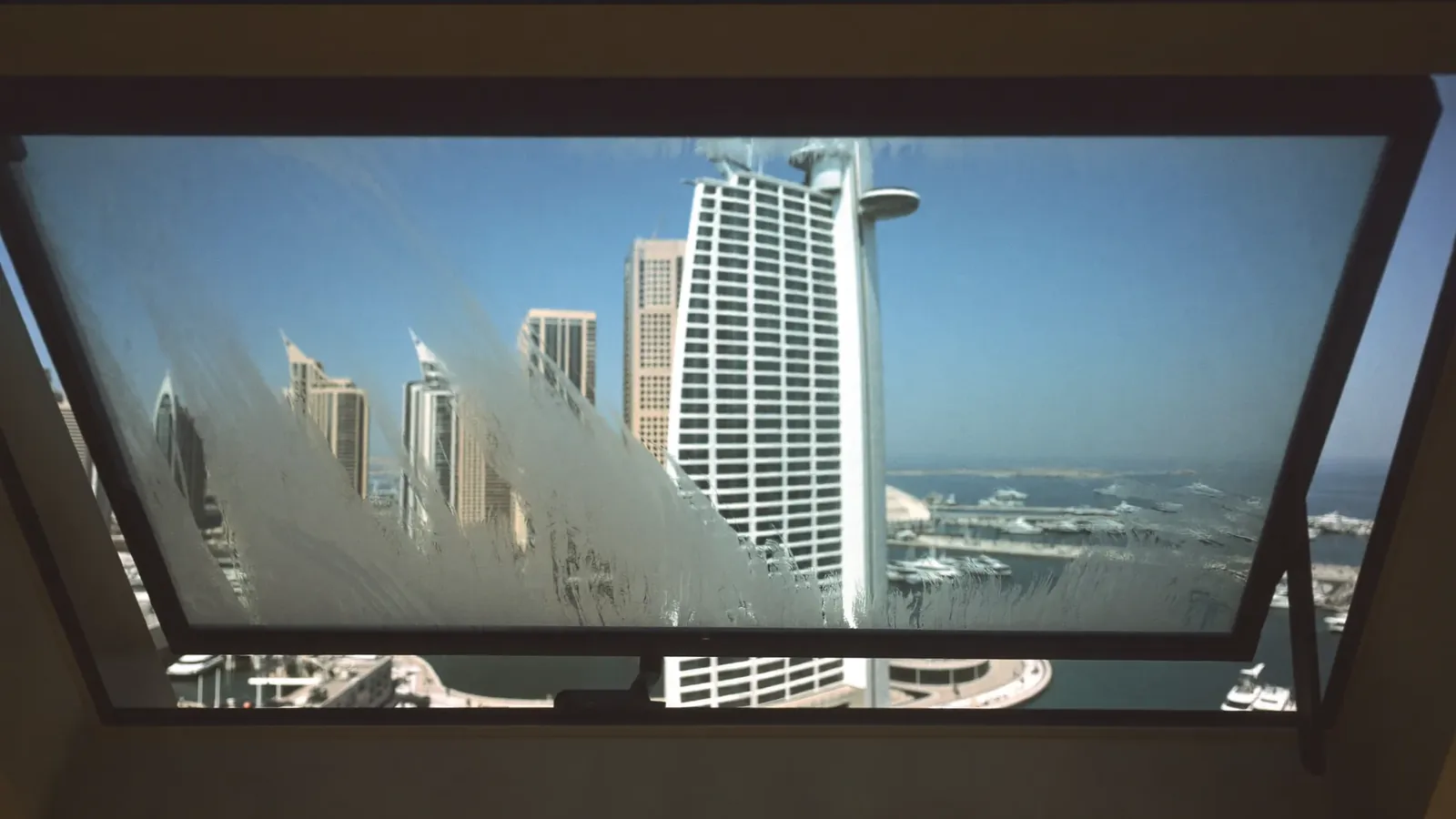
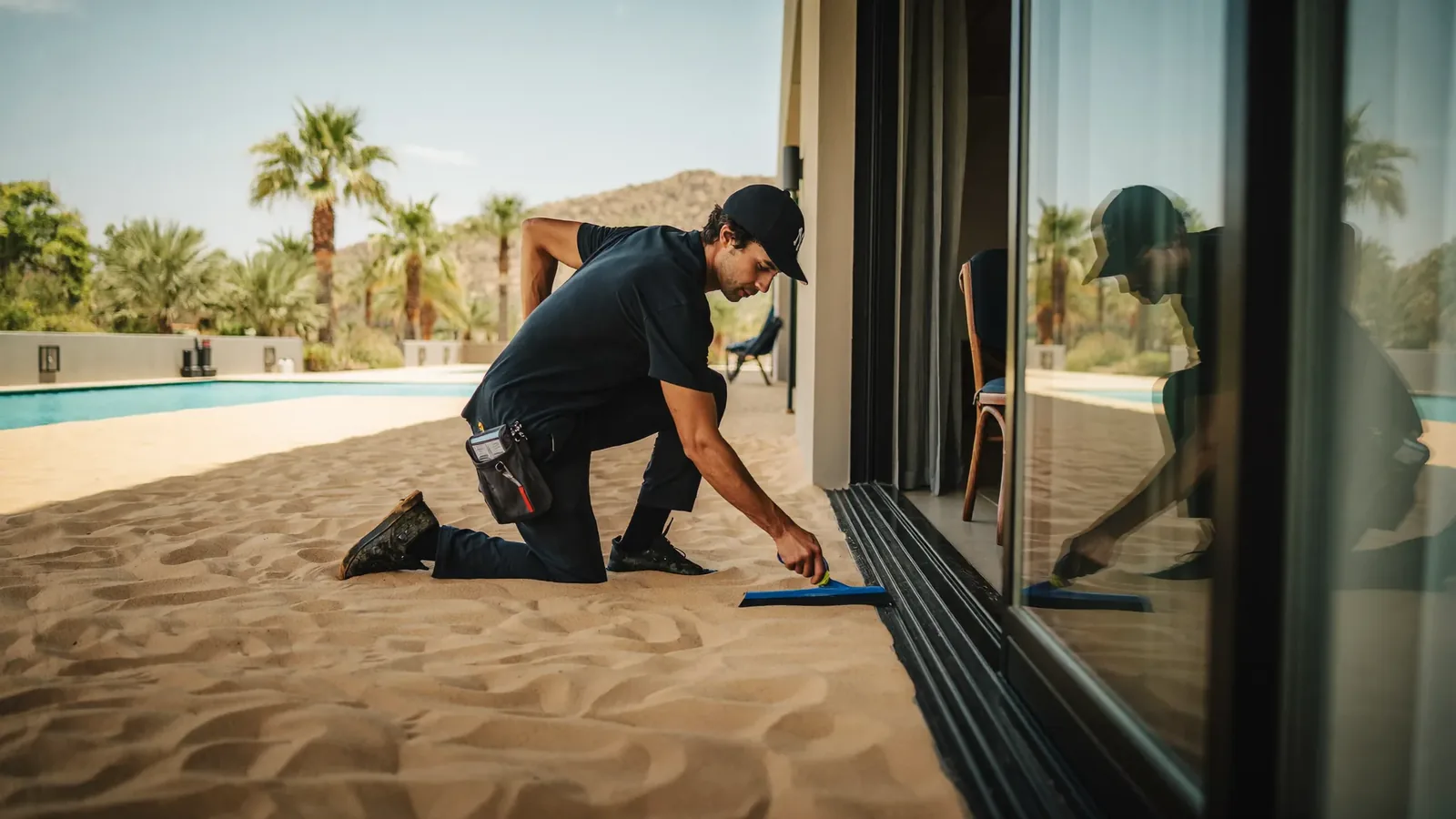
Dubai makes this a once-a-year surprise. Months pass without rain while the open track at floor level collects fine desert sand and balcony dust. Then the first heavy winter storm arrives, often wind-driven, and drainage nobody has looked at for a year has to work all at once. Our sliding door section puts it in one line: water enters at the threshold, blocked drainage in the bottom track.
How a sliding door threshold is meant to shed water
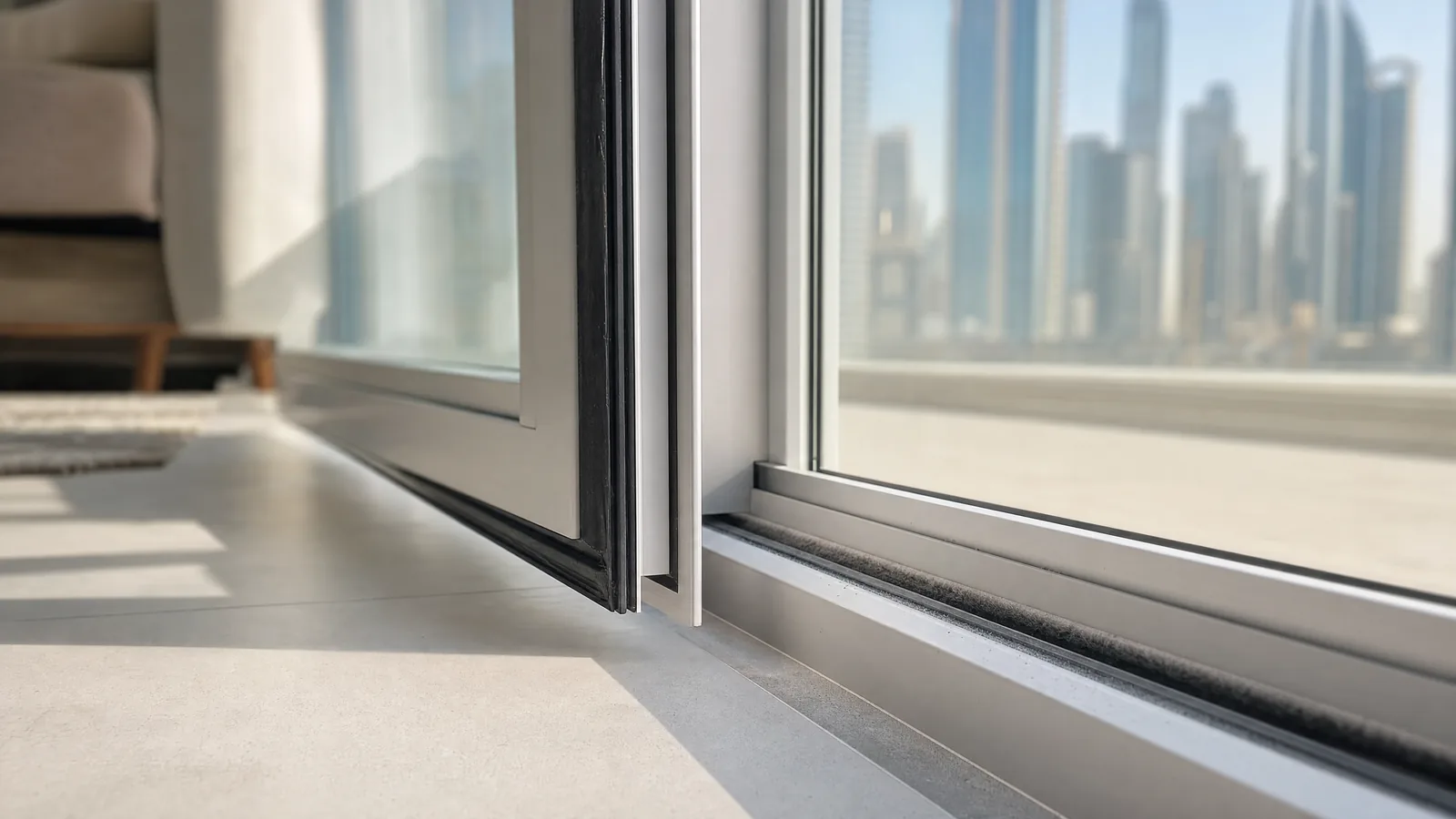
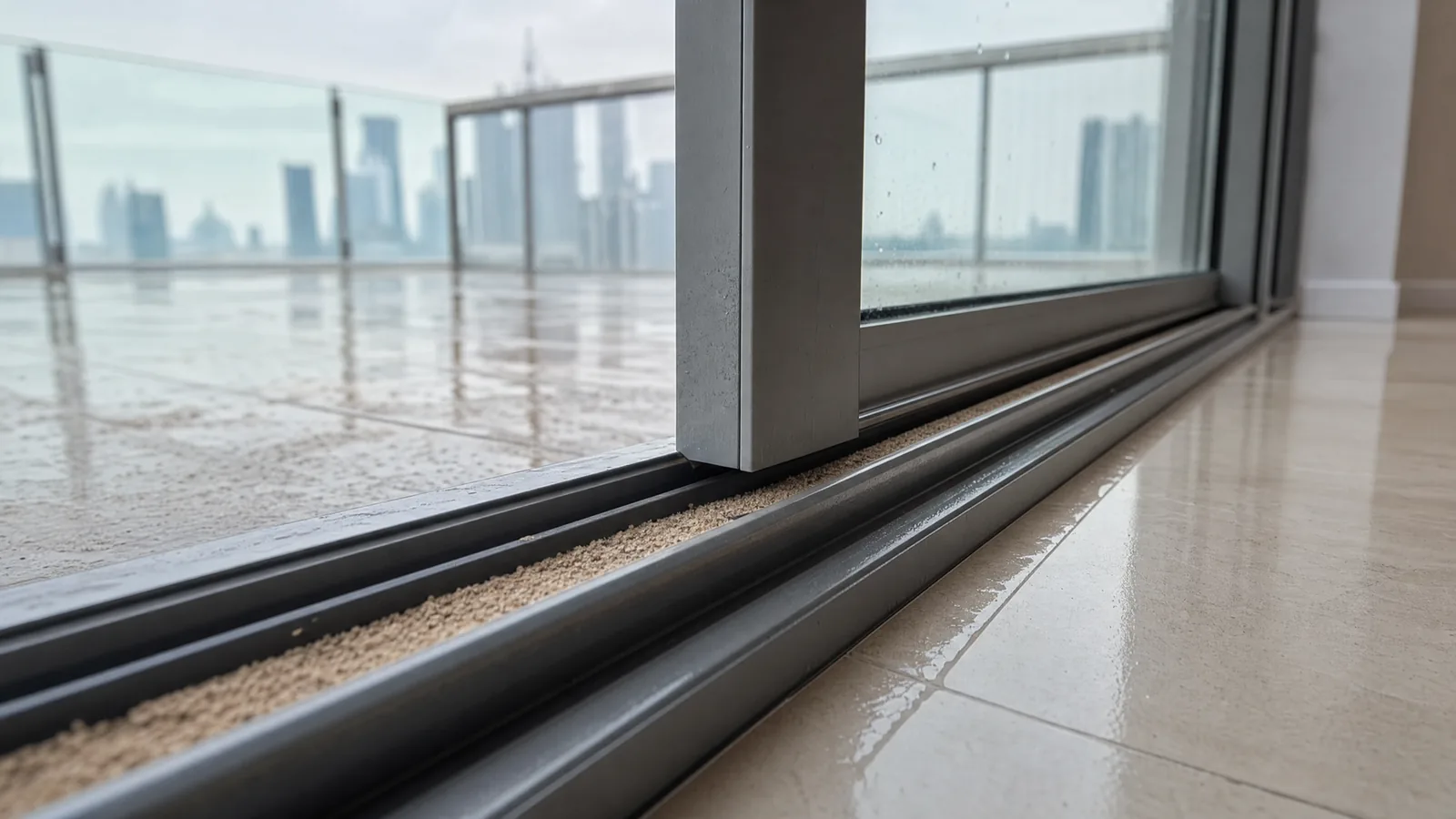
The bottom track of an aluminium or uPVC sliding door is a shallow channel with two or three ridges, and the panel rides on the inner one. Rain that blows under the panel lands in the outer part of the channel and runs along it to the weep holes, small slots through the outer wall of the track that let it out onto the balcony. A sound threshold does let water in; it simply sends it straight back out.
Those slots are a few millimetres wide and sit at the lowest point of a channel that fills with grit, so they clog first. Once they do, the water has nowhere to go but up, over the ridge and past the inner lip onto the floor.
The four causes, from most to least likely
Blocked weep holes. Sand and dust pack the outer channel and the drainage slots. The tell-tale is water standing in the track after rain instead of draining within a minute. In Dubai this is the answer more often than all the others together.
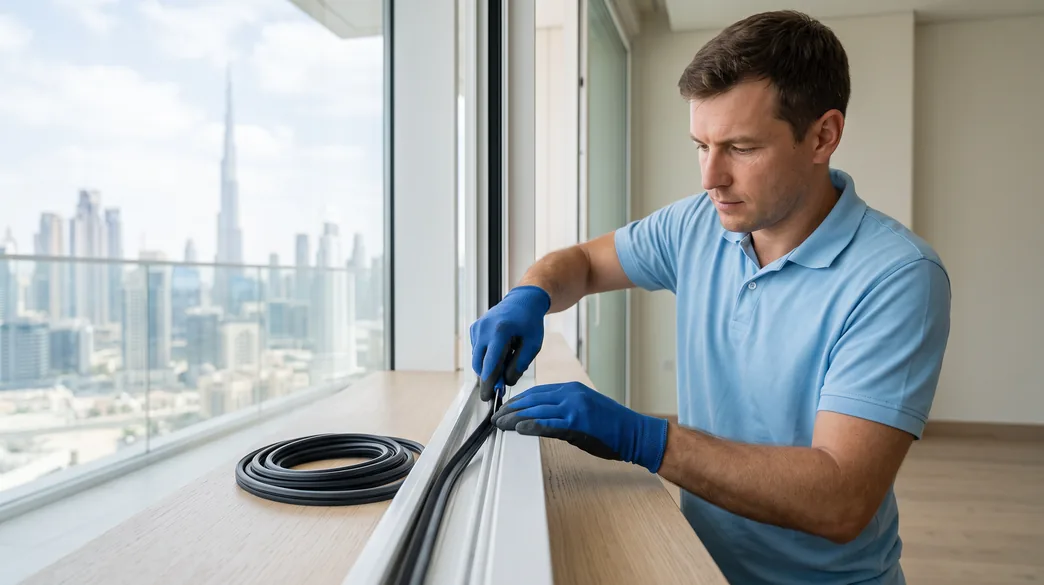
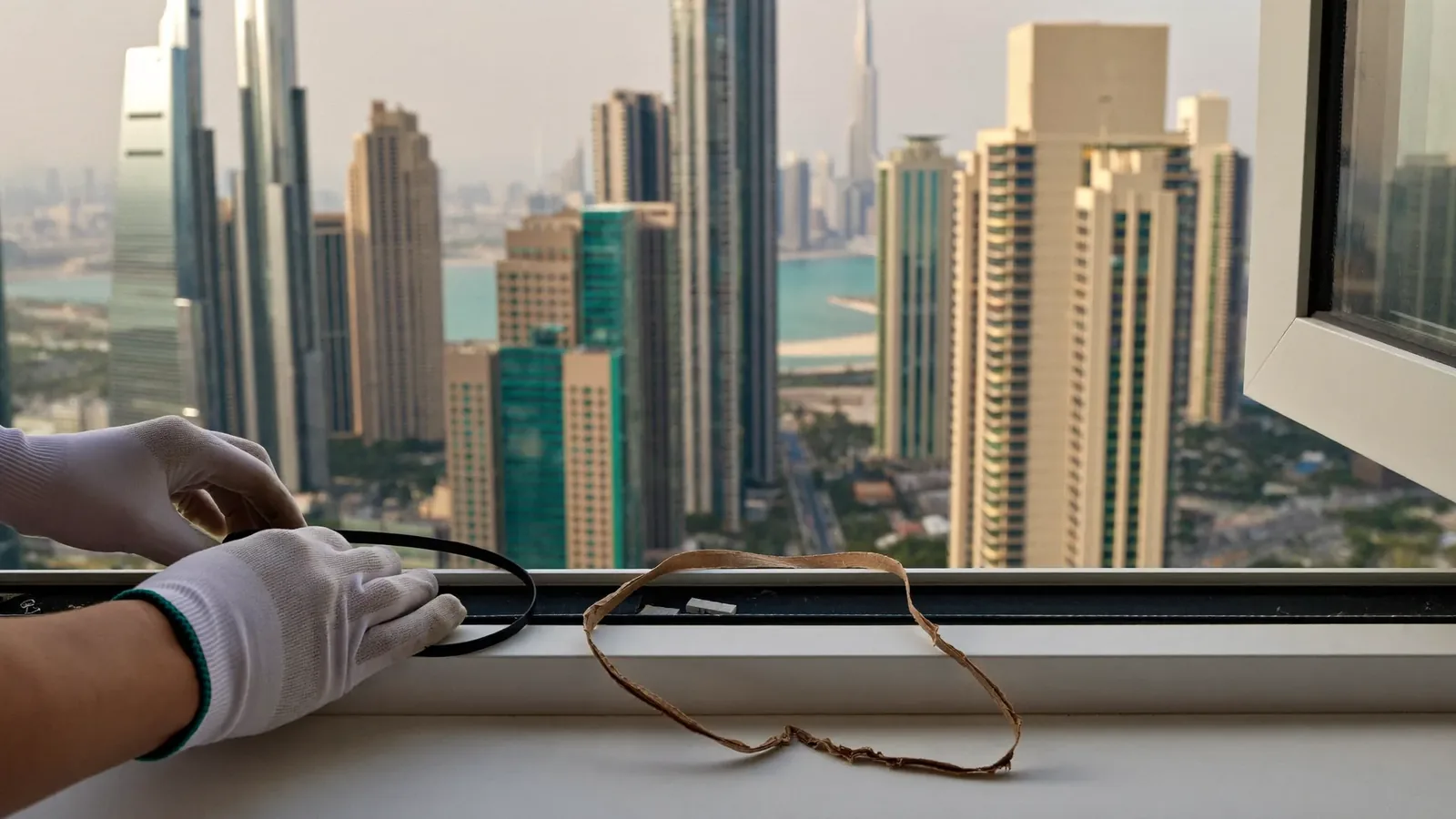
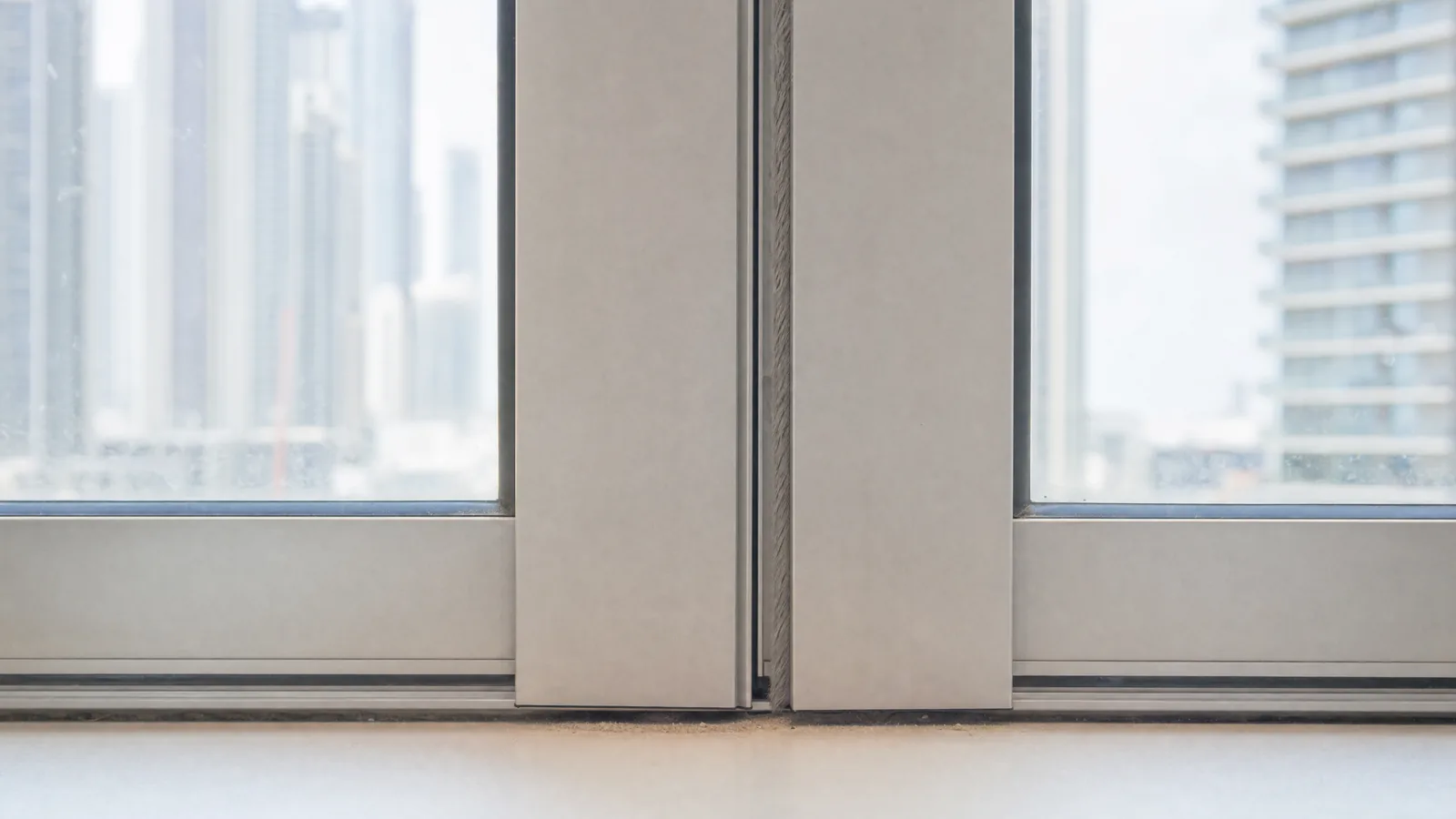
A dead threshold seal. UV and heat harden the rubber strip until it stops springing back, and the felt pile on sliding systems mats and wears until it no longer touches the track. Wind-driven rain then pushes past it. It is usually visible: a cracked, flattened or missing strip along the bottom of the panel.
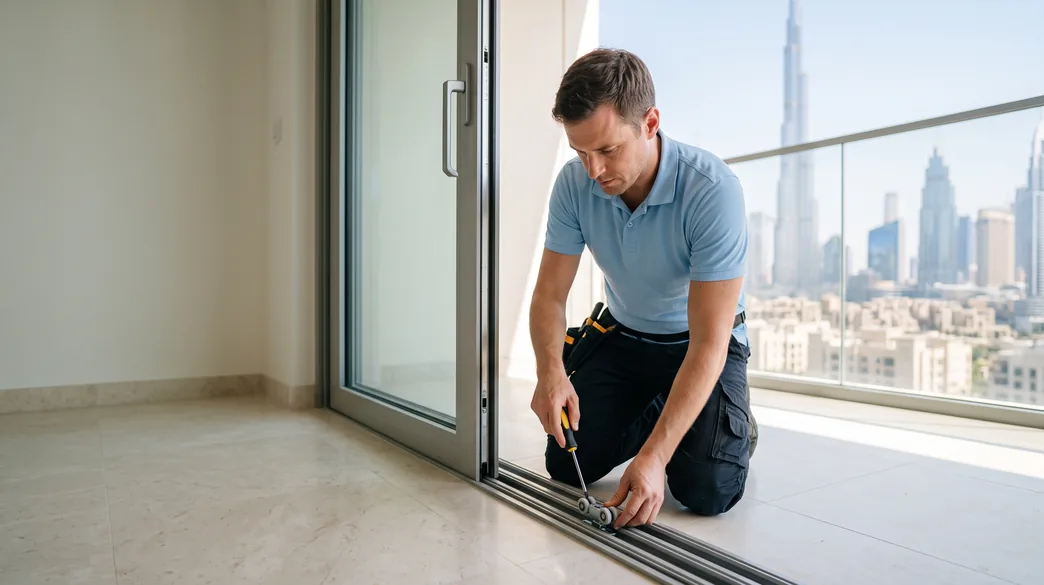
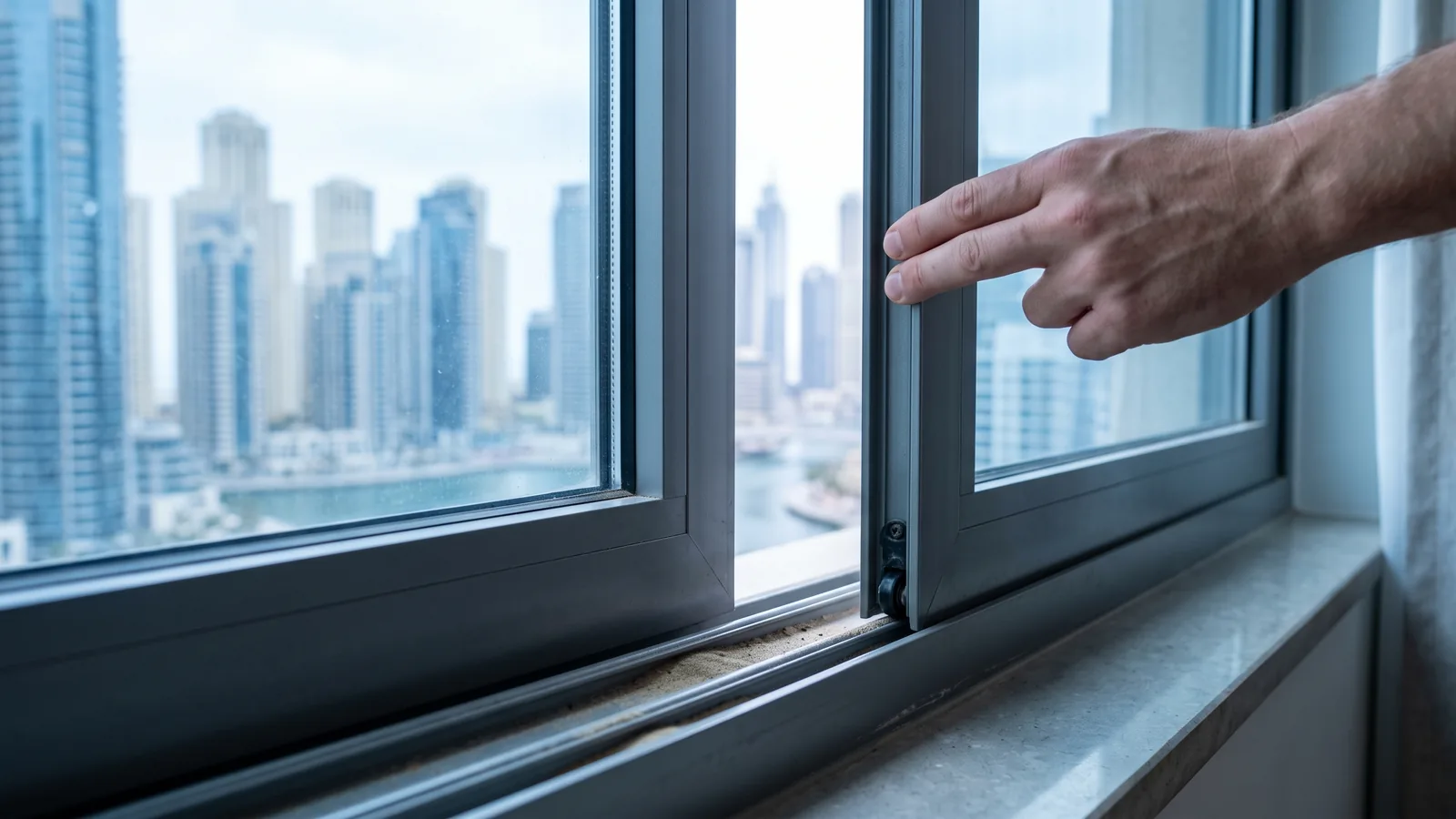
A dropped panel. A sliding panel hangs its whole weight on two small rollers. As they wear flat it sags, often more at one end, so the seal is crushed there and floats clear of the track at the other. The give-away is a bottom gap wider at one corner, light under the door, or a panel that drags on one side.
Failed external sealing. Occasionally the silicone joint between frame and floor or wall has split, and water arrives at the frame corner rather than over the lip. Suspect this only when the track is clean and dry yet water still appears.
What you can safely check yourself
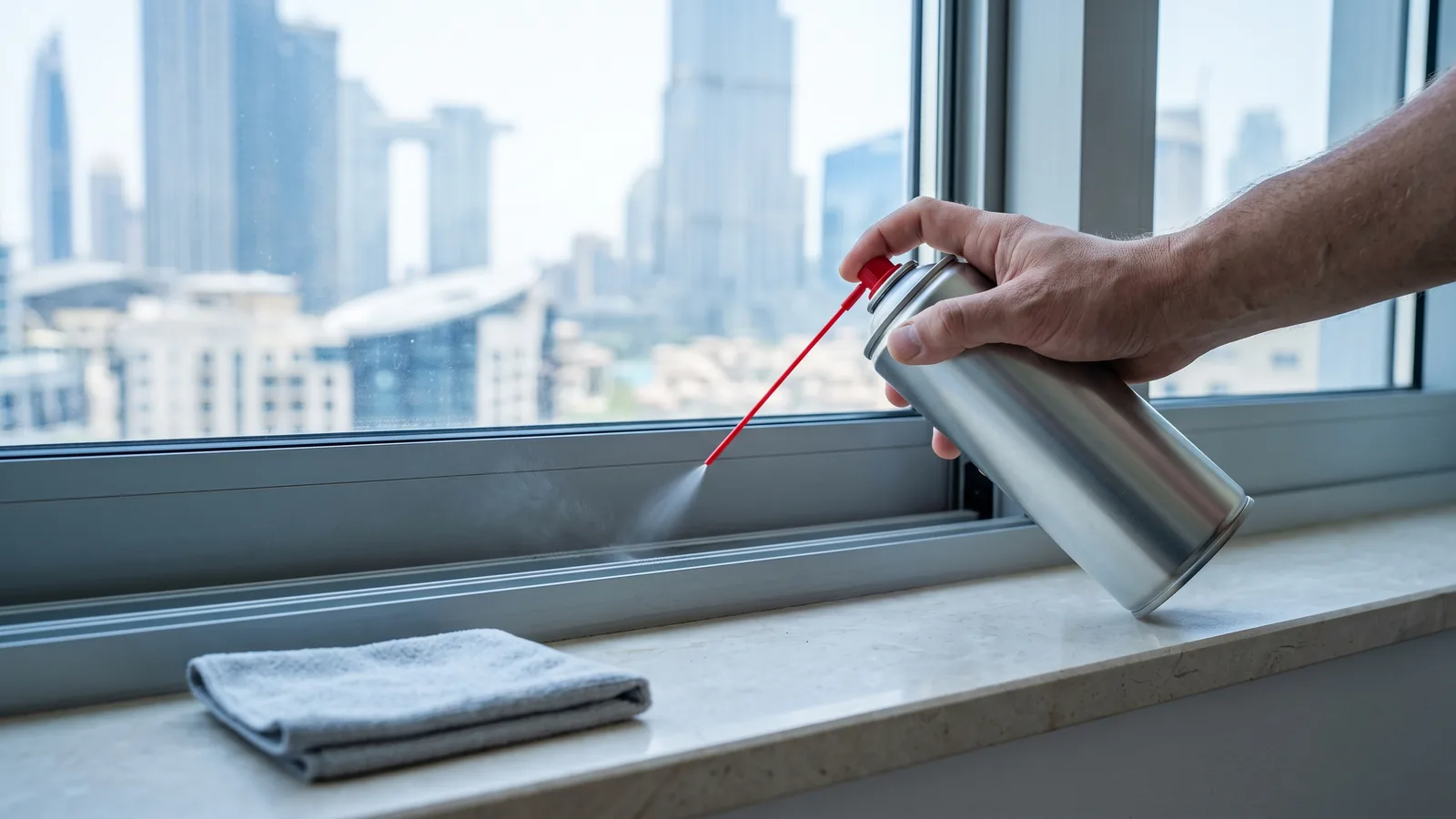
On a dry day, open the panel and vacuum the loose sand from the track. Pour a cup of water into the outer channel and watch it. If it drains through the weep holes within a minute, the fault is elsewhere. If it sits, find the slots on the outside face of the track and clear them with a plastic pick or a jet of water from outside. Avoid a metal screwdriver, which tears the slot or pushes debris deeper.
Then close the panel and look along its bottom edge. Cracked, hard or flattened rubber, or a brush worn to its backing, means the seal is finished. A gap wider at one end means the panel has dropped. Two things not to do: never silicone the weep holes, and never run a bead along the inner lip. Both trap water in the track.
What the repair involves and when to call
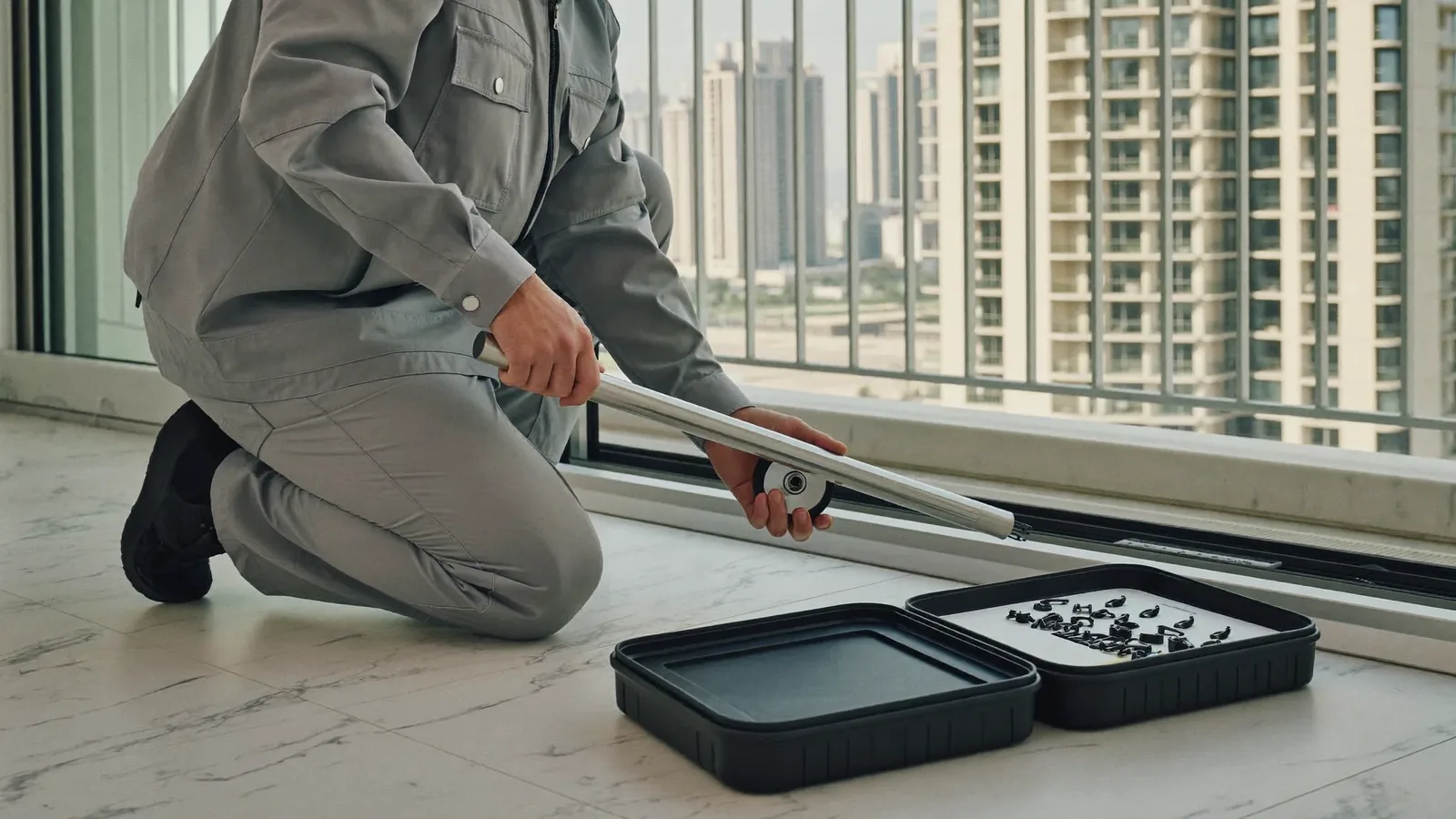
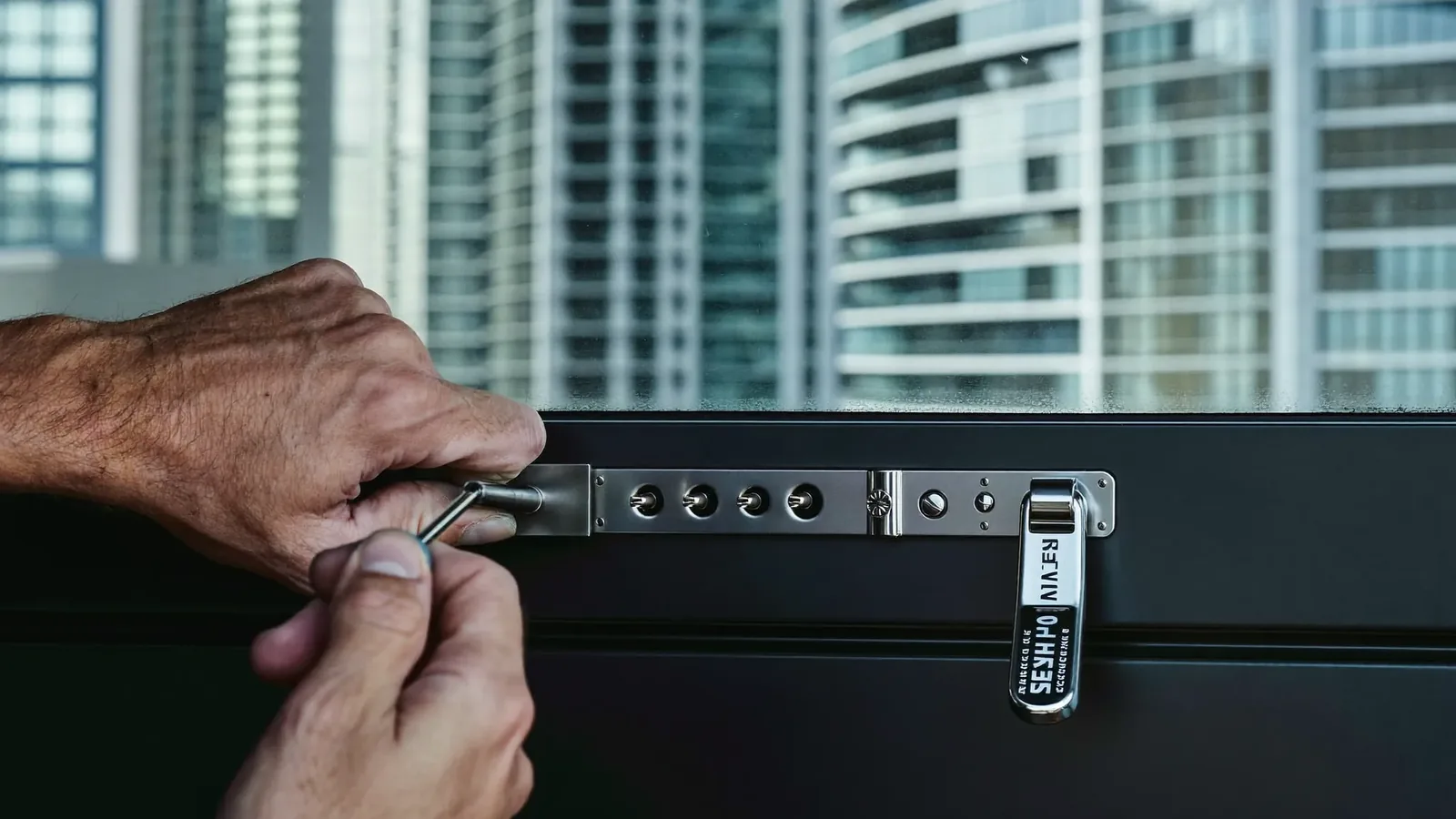
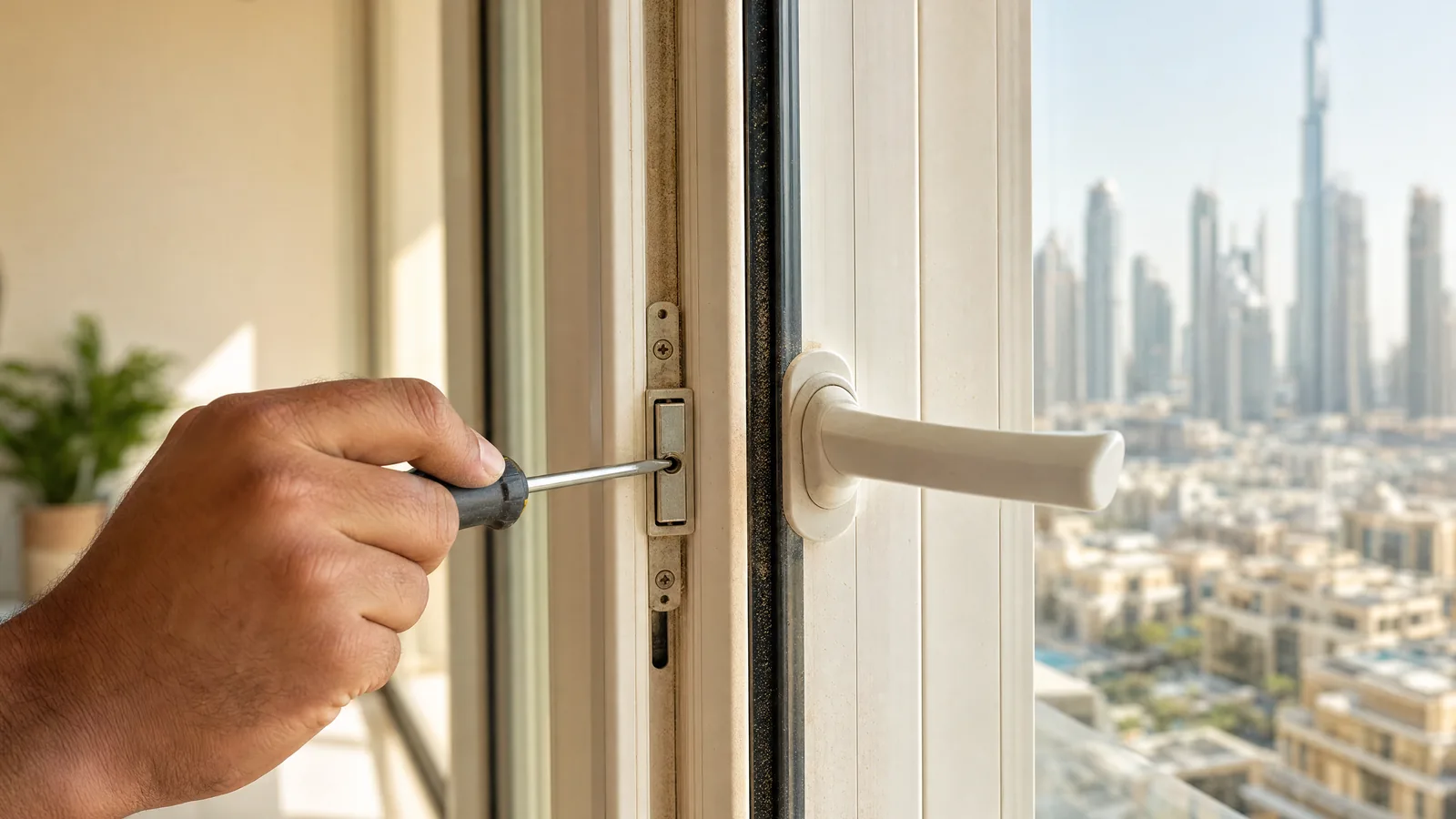
We strip the track, clear the drainage slots, fit a new threshold seal of the right profile, and if the panel has dropped we fit new rollers and re-level it so the seal compresses evenly. Where the frame-to-floor joint has failed, we cut out the old silicone and re-seal it. Drainage and seals sit with our window sealing and draught-proofing in Dubai service; rollers, tracks and realignment with sliding door and window repair in Dubai. Most threshold leaks are put right in one visit.
We have repaired sliding doors across Dubai since 2014, reach most of the city from Al Barsha in around 30 minutes, answer 24/7 on +971 50 220 6918 and back every job with a 2-year warranty. The quote is free and fixed on site before work starts. More guides are in the blog. Get a free quote.