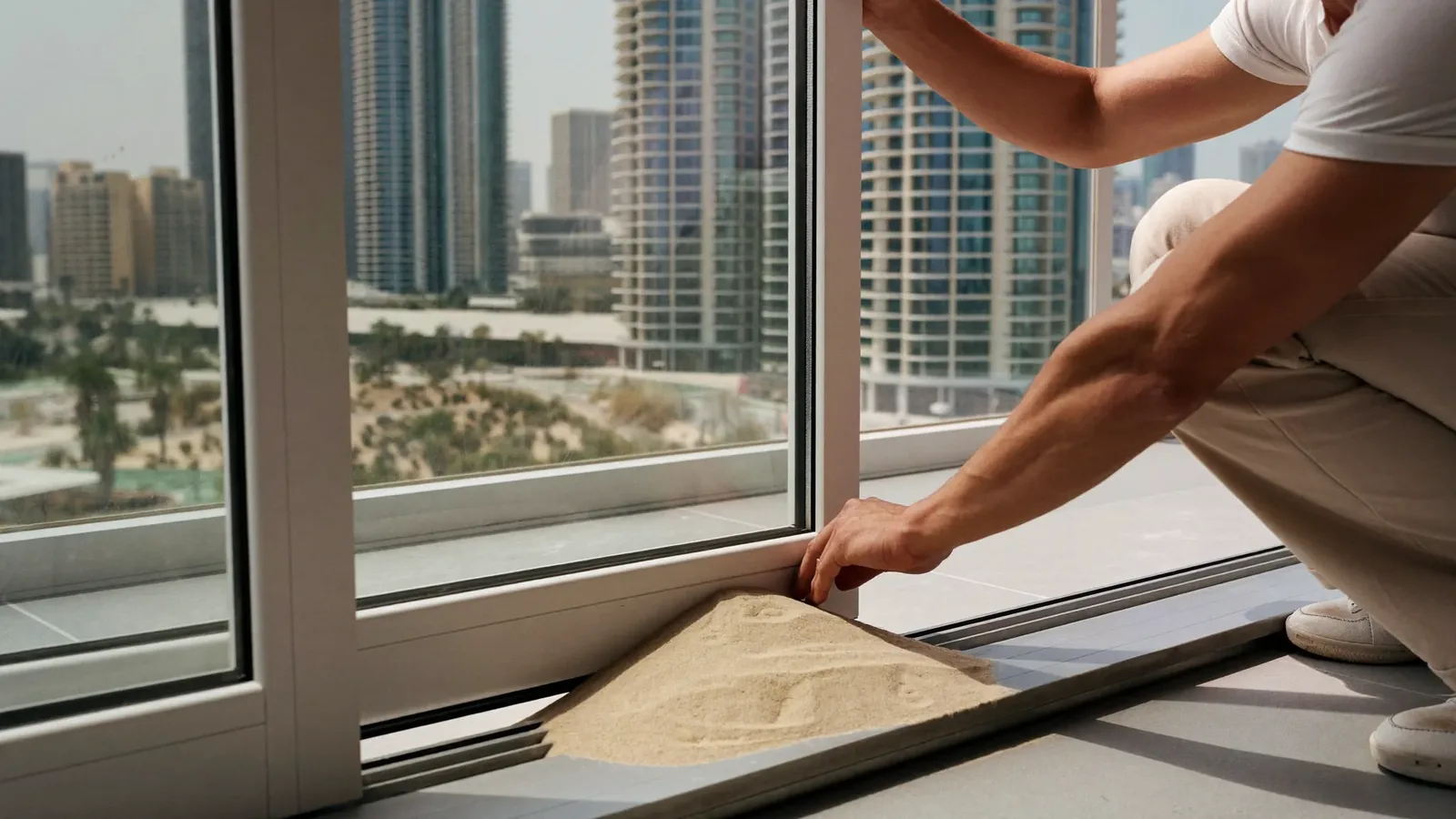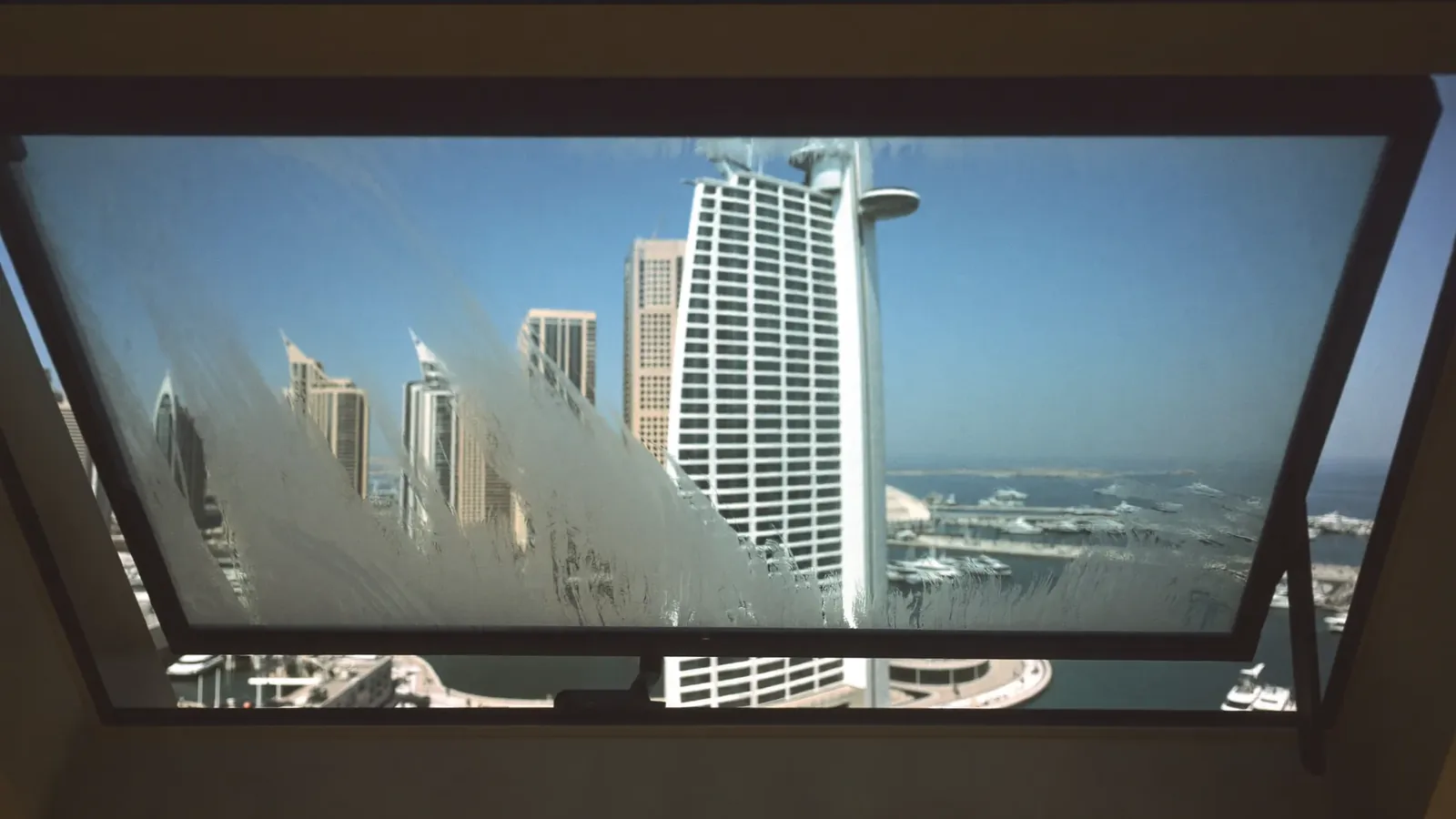





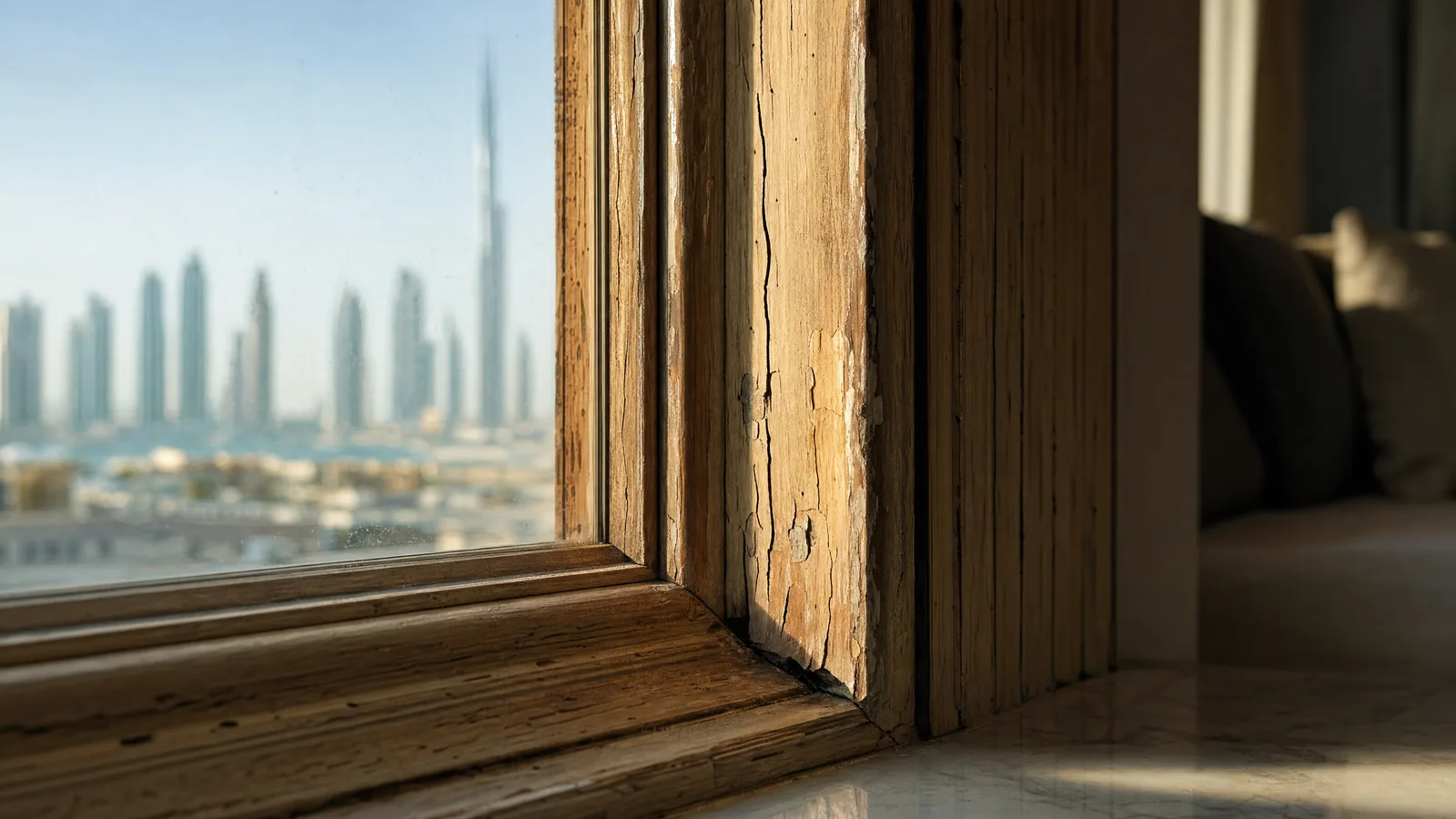
Wooden windows dry out in Dubai because the timber loses moisture from both sides at once. Desert heat and hard sun work on the frame from outside, air conditioning keeps the indoor air cool and dry, and the wood slowly gives up its moisture. As it dries it shrinks, so joints open, sashes creak, and a window that used to close sweetly starts to catch. Almost all of this is repairable with adjustment, sanding, localised restoration, new seals and a refreshed finish; full replacement is only justified when rot has gone right through the timber.
Wood keeps trading moisture with the air long after it becomes a window. Dubai puts the frame between two extremes at once, and this guide explains what that does to the timber and why ripping the window out is usually the wrong first move.
Why the Dubai climate is so hard on timber
A wooden frame here sits between scorching outdoor air on one face and chilled, dehumidified air on the other. Both sides pull water out of the timber, the fibres contract, and the frame shrinks. Ultraviolet light then breaks down the lacquer or paint, leaving bare grain exposed so the drying runs even faster.
The air conditioning does more harm than most owners expect: it does not just cool a room, it dries it, and it runs most of the year, so the indoor face of the frame sits in permanently dry air while the outdoor face bakes. Timber shrinks mostly across the grain, exactly where the joints meet, so the first gap usually appears in a corner and a sun-facing window flakes years ahead of a shaded one.
The signs your wooden windows are drying out
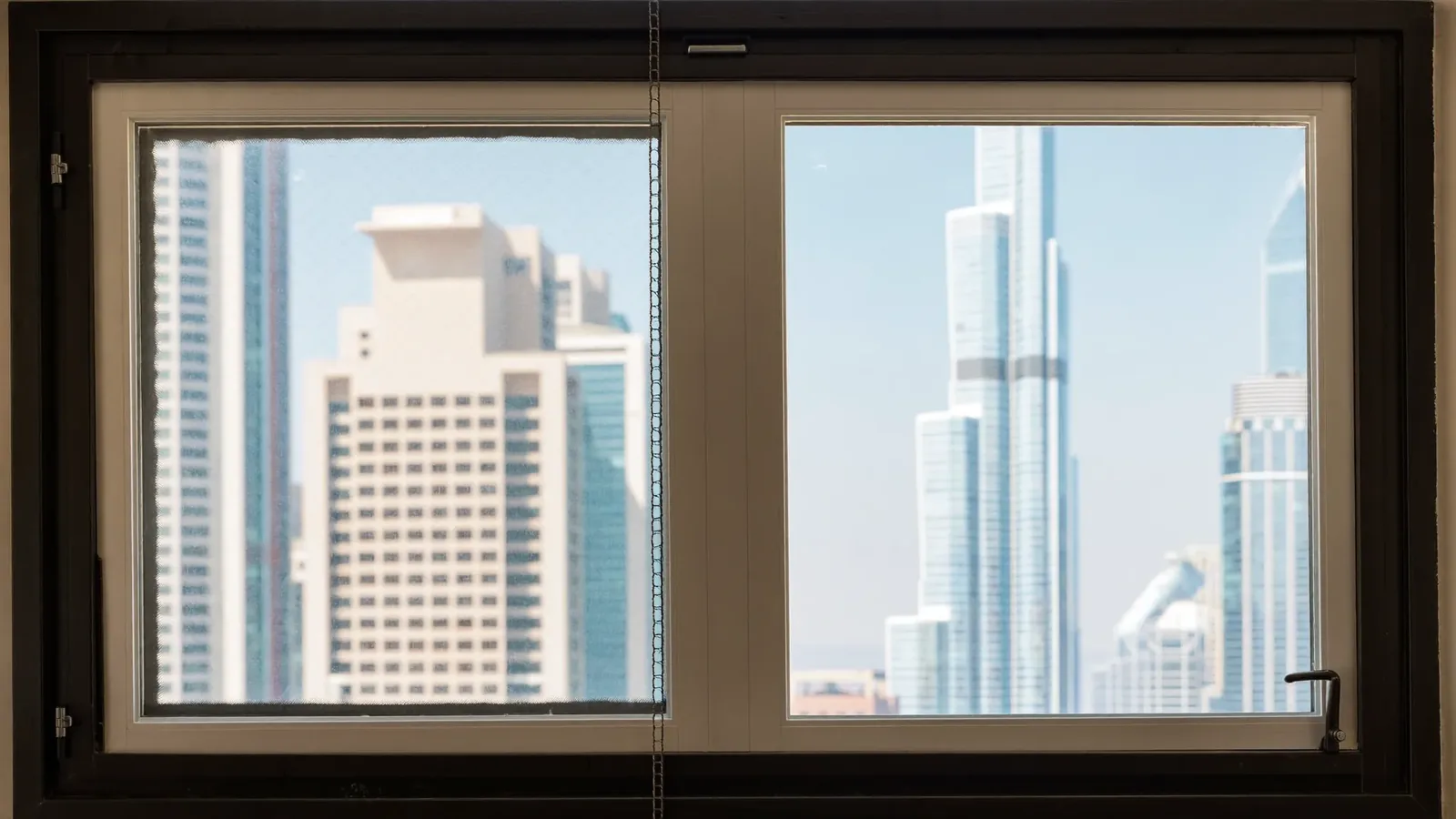
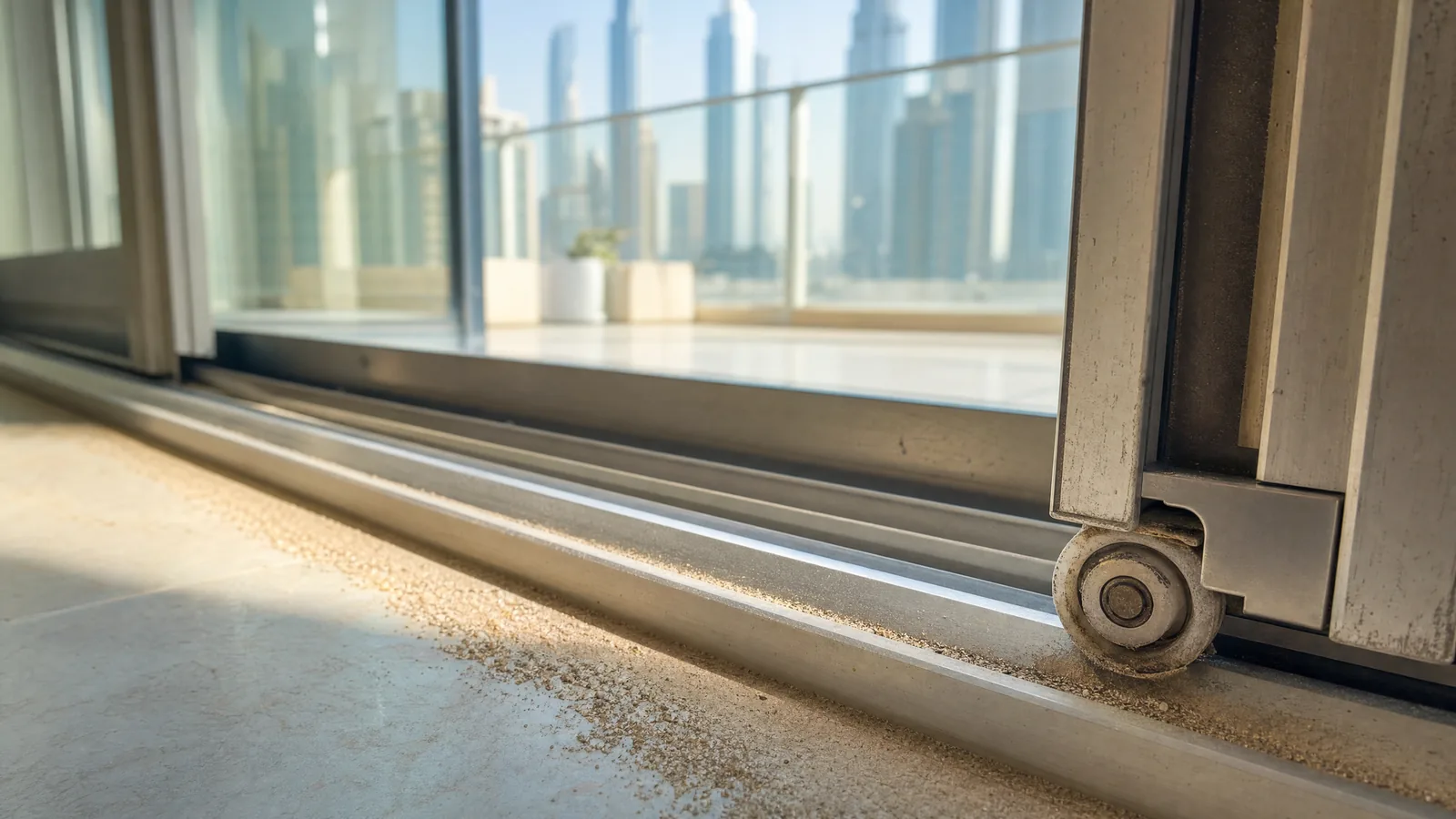
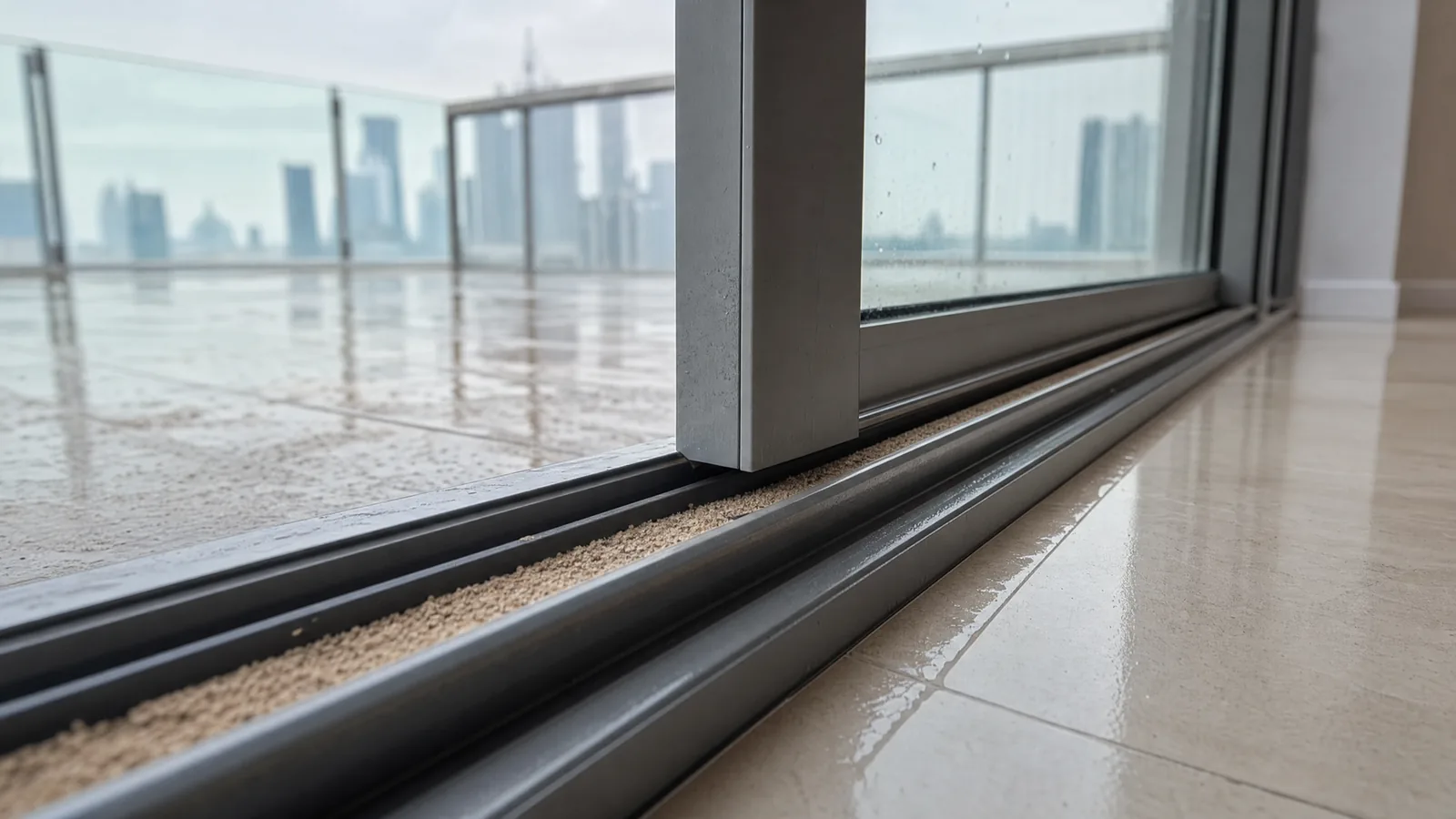
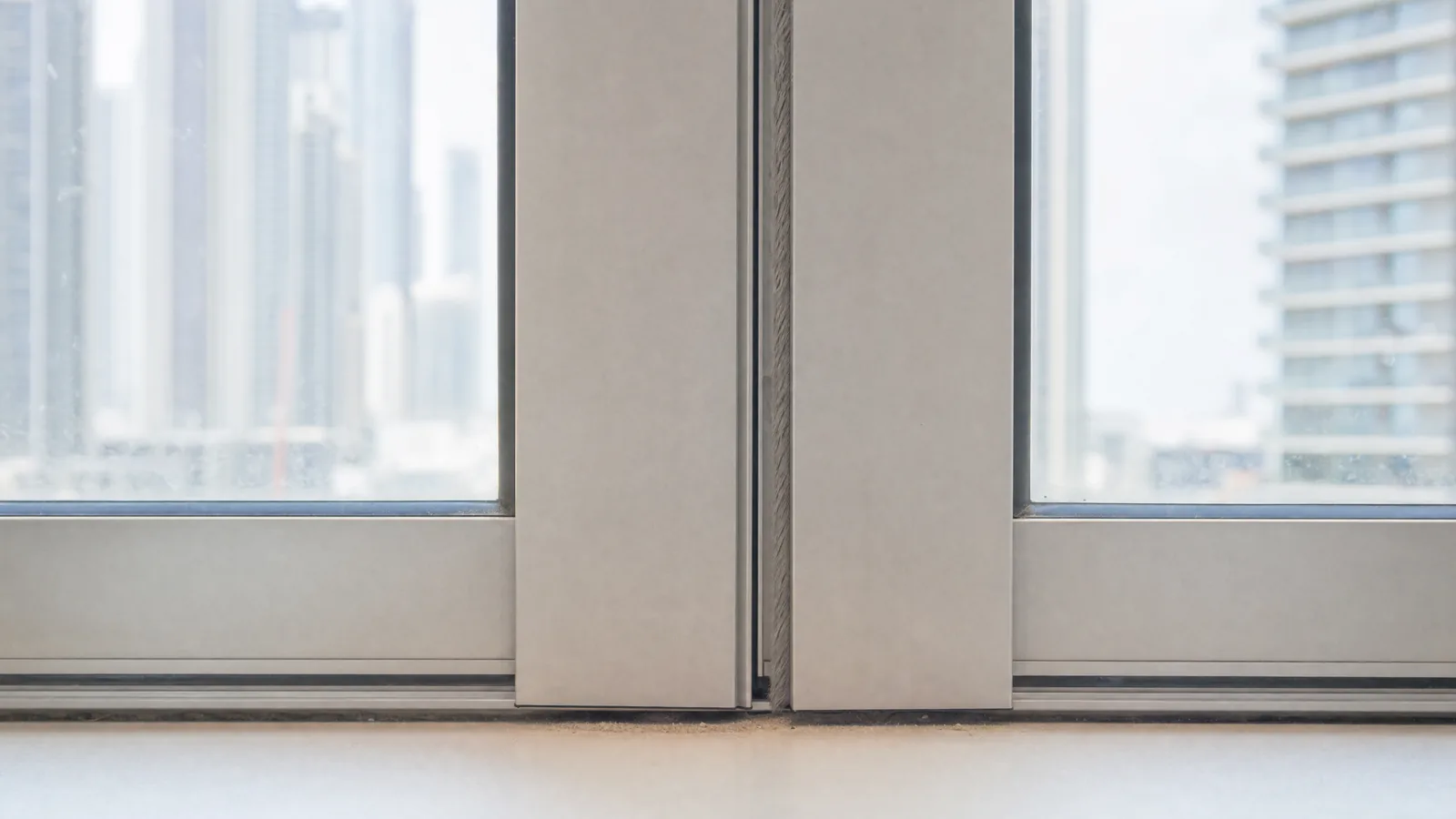
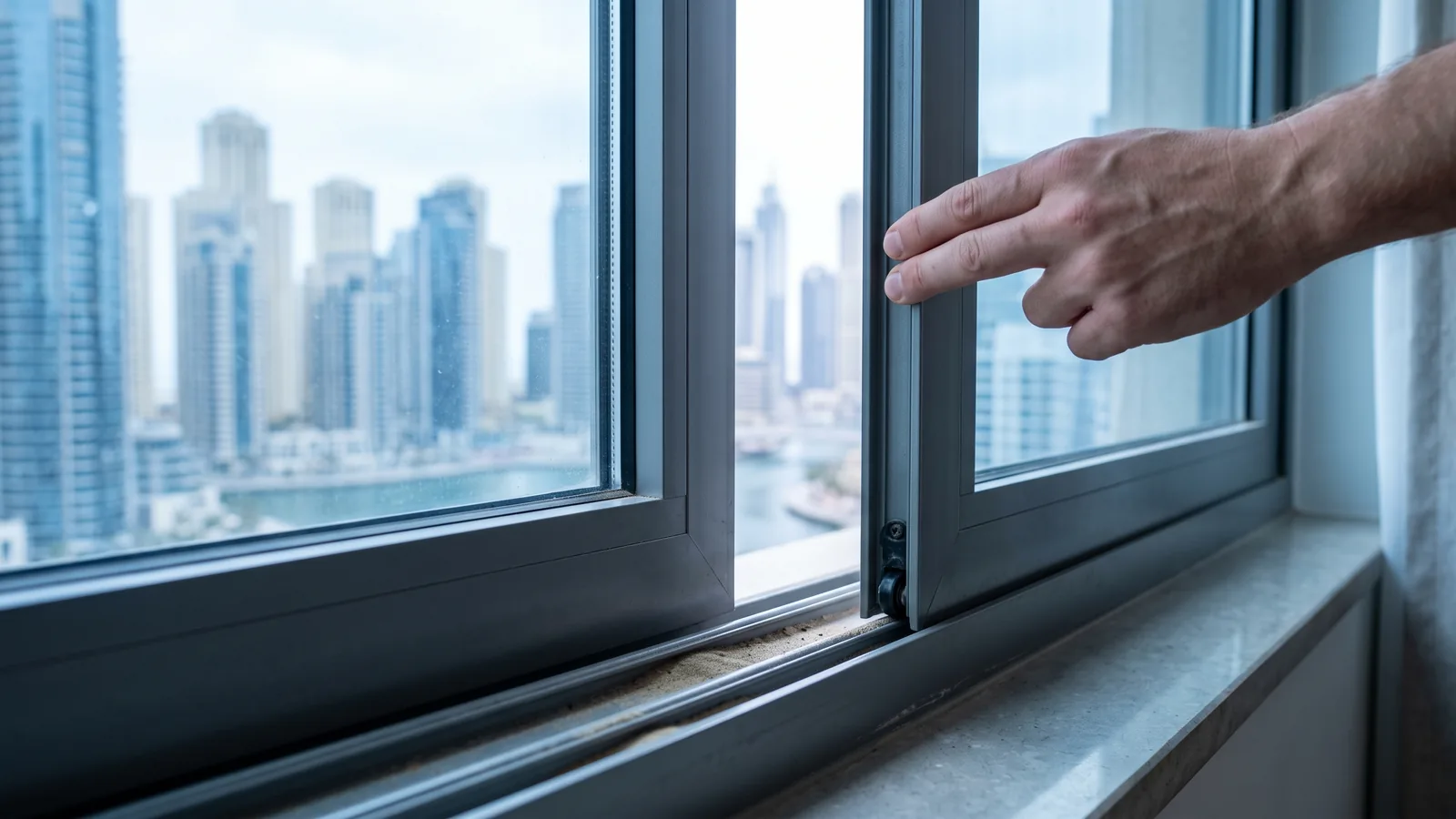
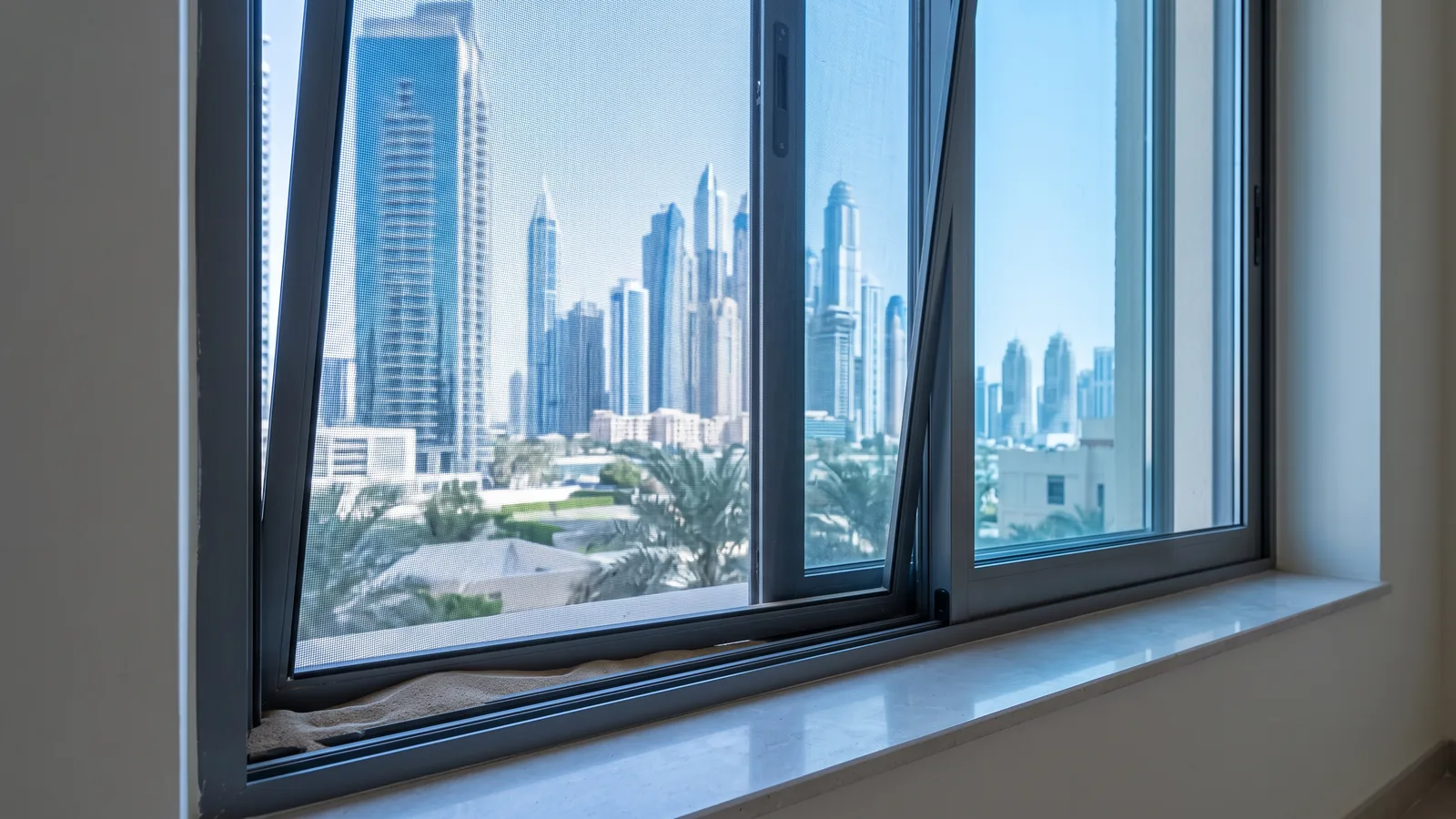
The classic signs are thin cracks along the grain, gaps at the corner joints and between sash and frame, a creak when the window swings, a sash that rubs or jams, and a dull, chalky or flaking finish. Draughts and fine dust through fresh gaps complete the picture.
Shrinkage rarely happens evenly. One rail dries faster than another, the sash twists slightly out of plane, and the window rubs at one corner while showing daylight at the opposite one. Hardware suffers too: the wood pulls back from the screws, hinges work loose, and a shrunken window starts to read as a broken one.
What can be repaired without replacing the window
Nearly everything short of deep rot. A dried-out window comes back with hardware adjustment, sanding or planing where the sash binds, localised restoration of cracks, fresh seals around the opening, and a new UV-resistant finish that closes the grain against the next round of drying.
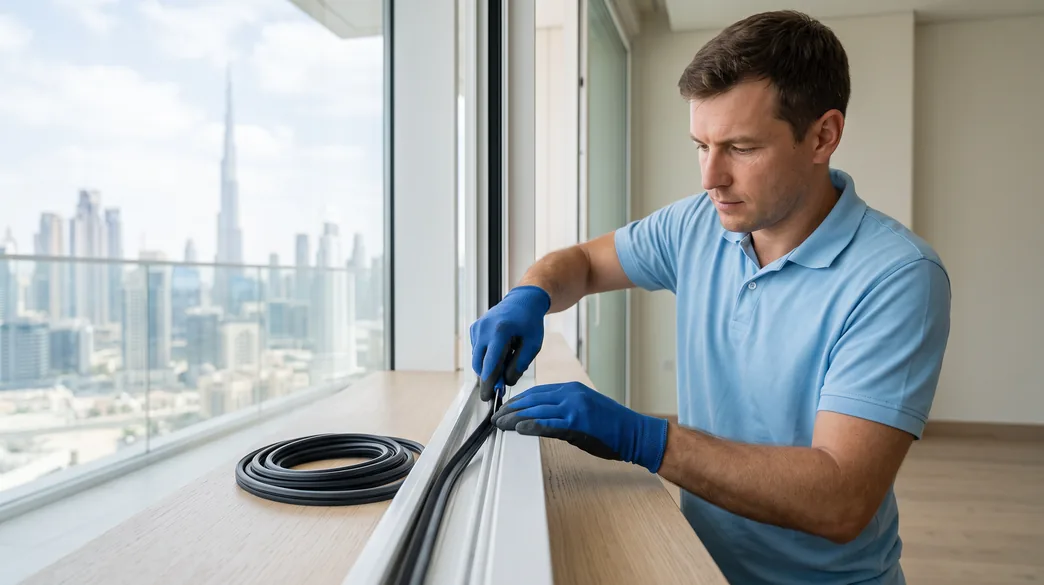
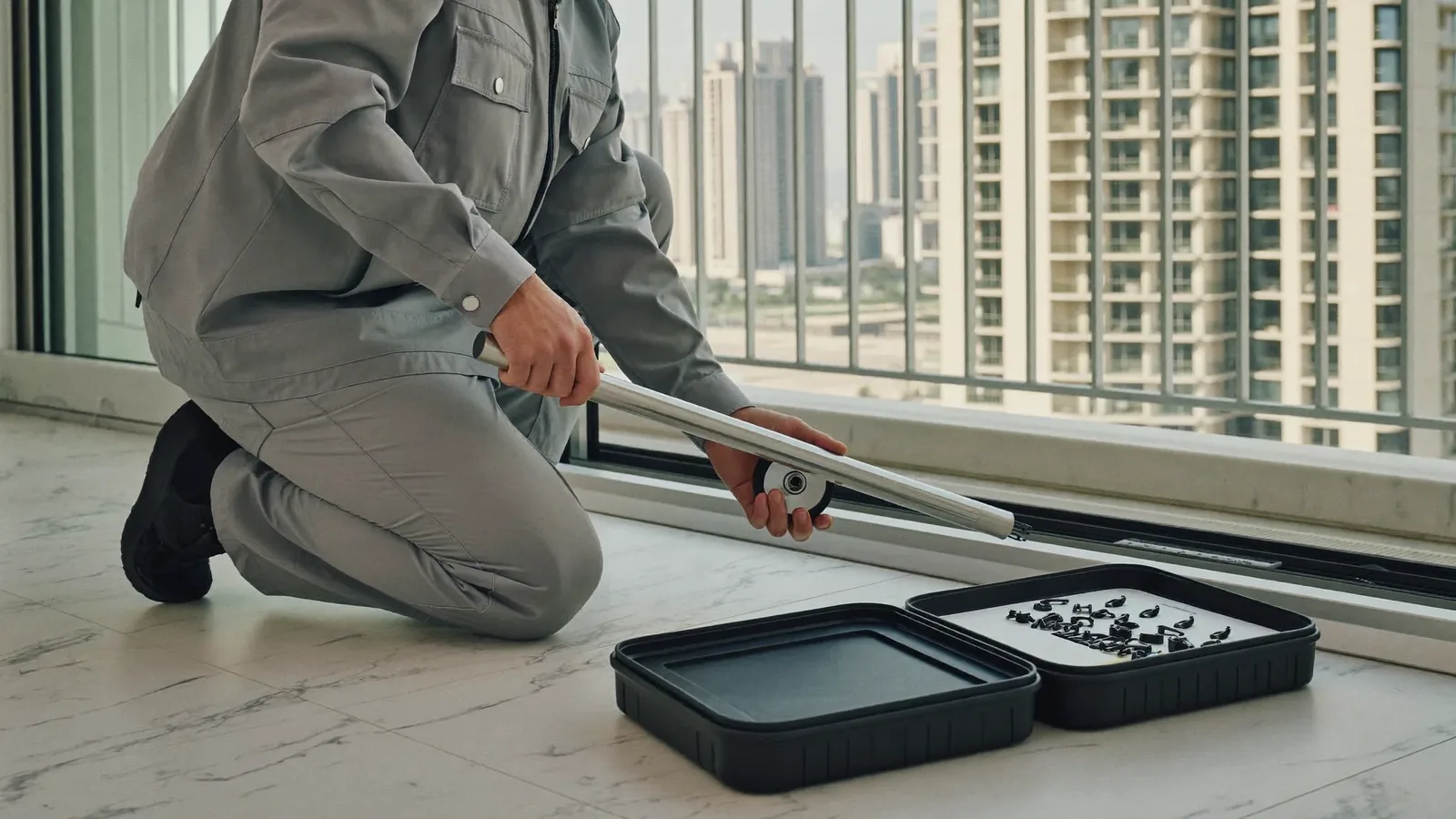
Adjustment and easing come first, because a straight, smoothly closing sash is the base for everything else. Cracks are filled with flexible filler matched to the timber, and a section that has dried too far is spliced with new wood rather than condemning the whole frame. Our wooden window repair in Dubai service covers all of this on site.
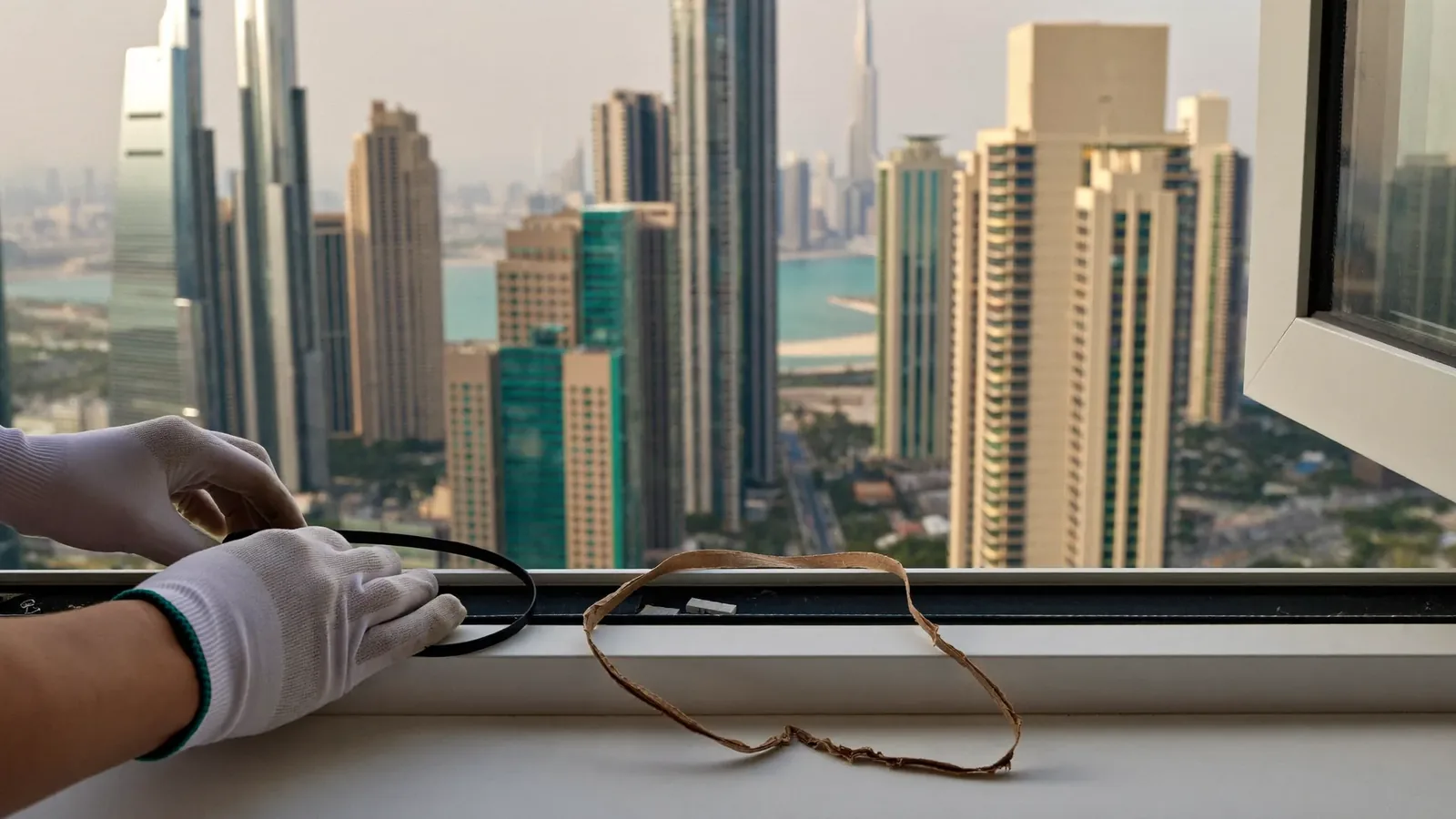
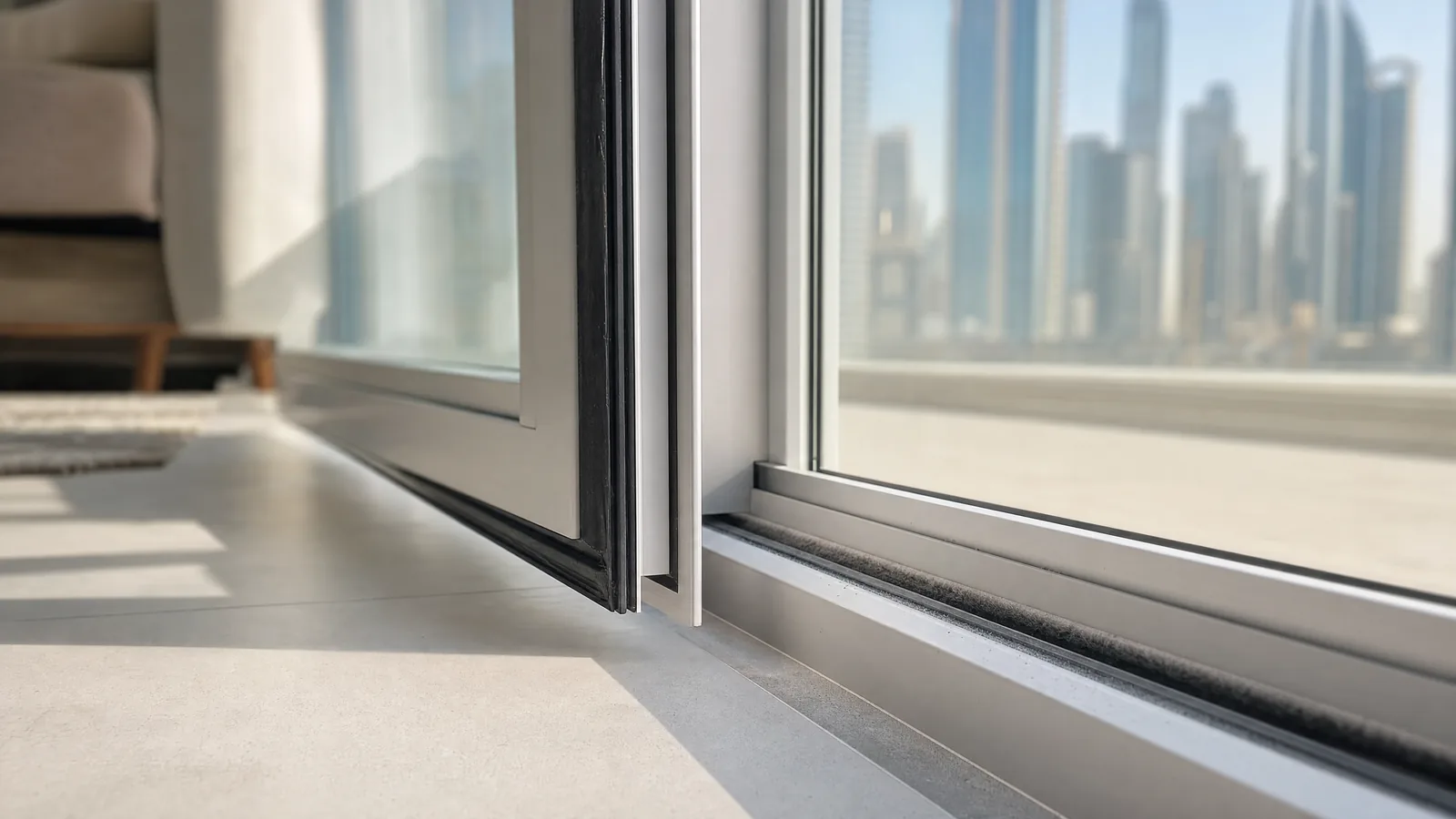
Shrinkage also leaves the frame leaking cooled air and letting dust in. New gaskets and brush seals close the perimeter, and where gaps are the main complaint, window sealing and draught-proofing in Dubai handles them as its own job. The finish comes last: the fresh coat slows the whole drying cycle down.
When replacement is the honest answer
Only when rot has gone right through the structural sections of the frame. Cracks, open joints, flaking finish and a jamming sash are all repair territory. A sill or jamb that has turned soft and spongy the whole way through is not, and at that point a new window is the sensible spend.
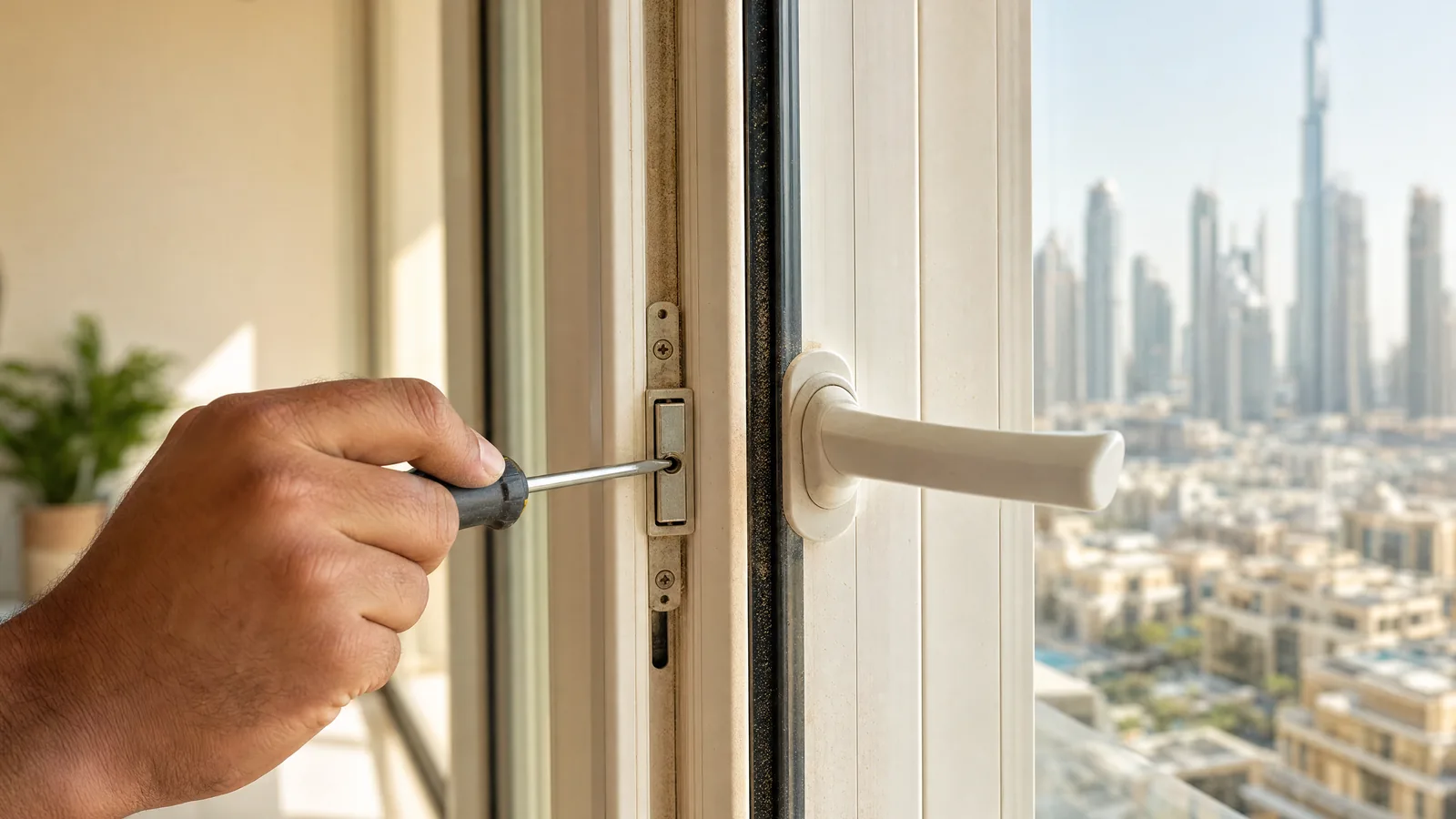
The test is simple: press a screwdriver into the suspect timber. Sound wood resists, rotten wood gives way. Even then, rot confined to one corner can often be spliced out, so be wary of a full replacement quote made without probing the frame. Most "dead" wooden windows in Dubai are dry, not rotten, and dry is fixable.
We come to you, check how far the drying has gone, and give a free fixed quote on site before any work starts. We have repaired Dubai windows since 2014, reach most of the city from Al Barsha in around 30 minutes, and back every repair with a 2-year warranty; the emergency line runs 24/7 on +971 50 220 6918. For more window guides, browse the blog, or Get a free quote to book a visit.