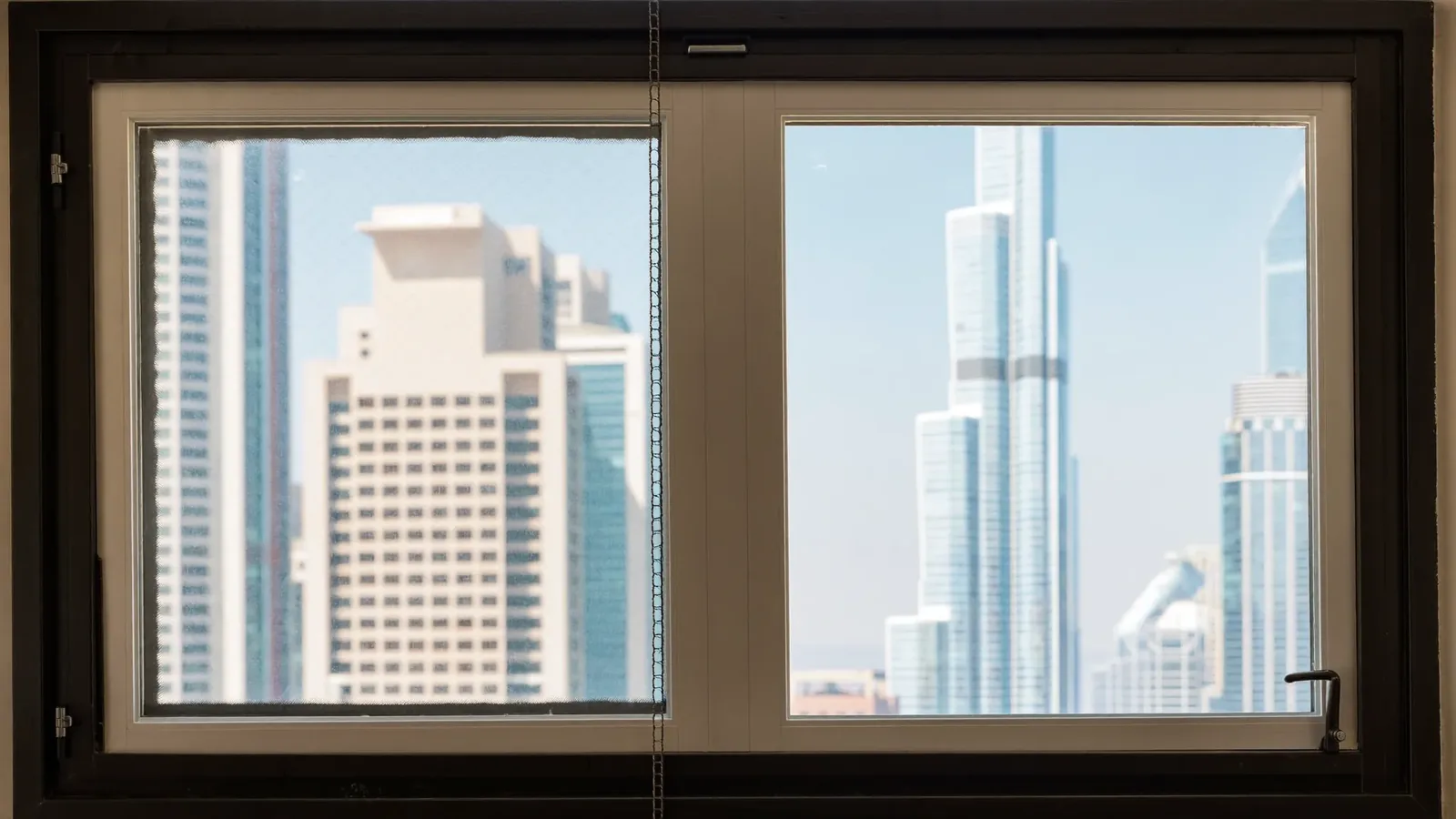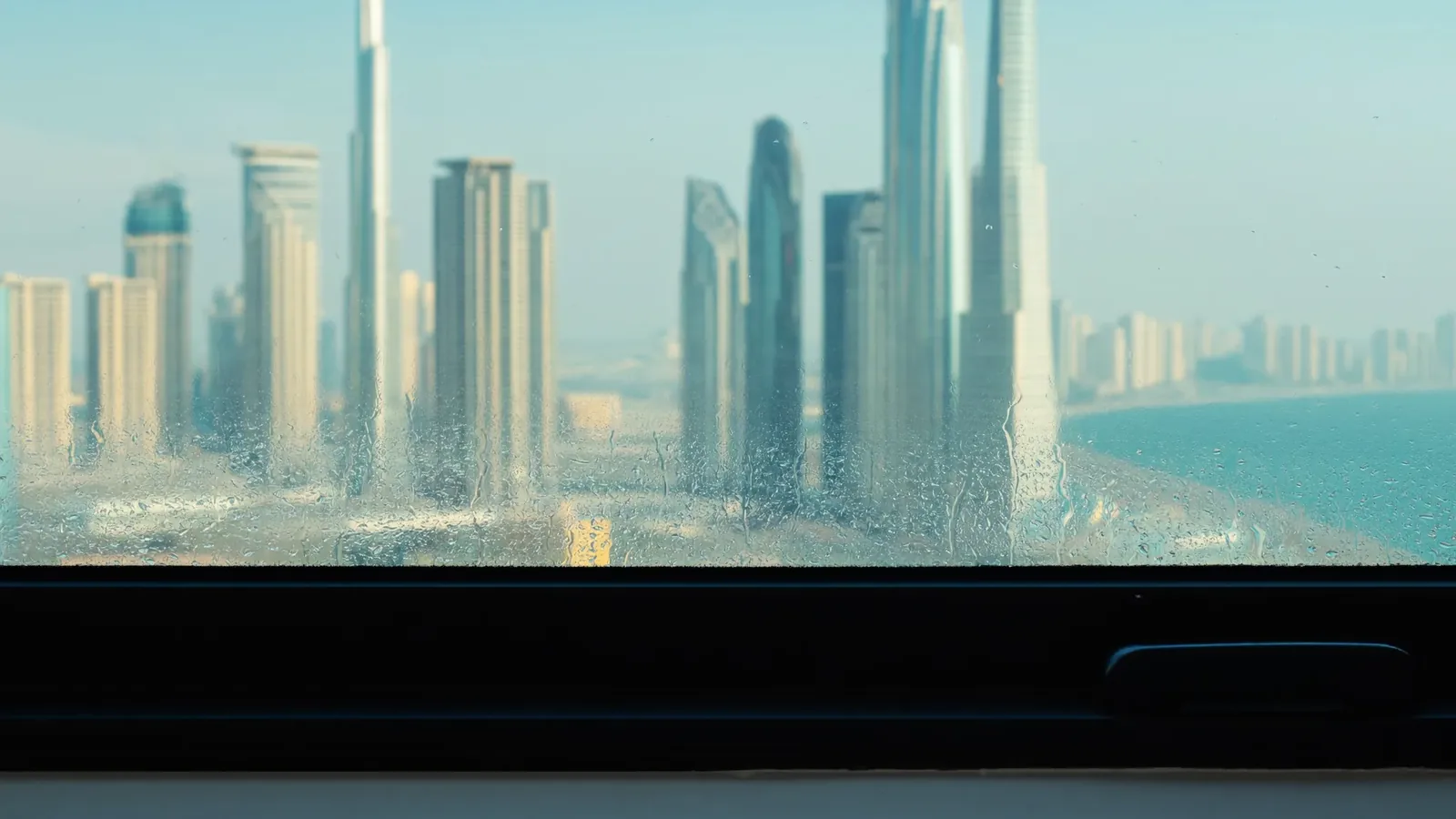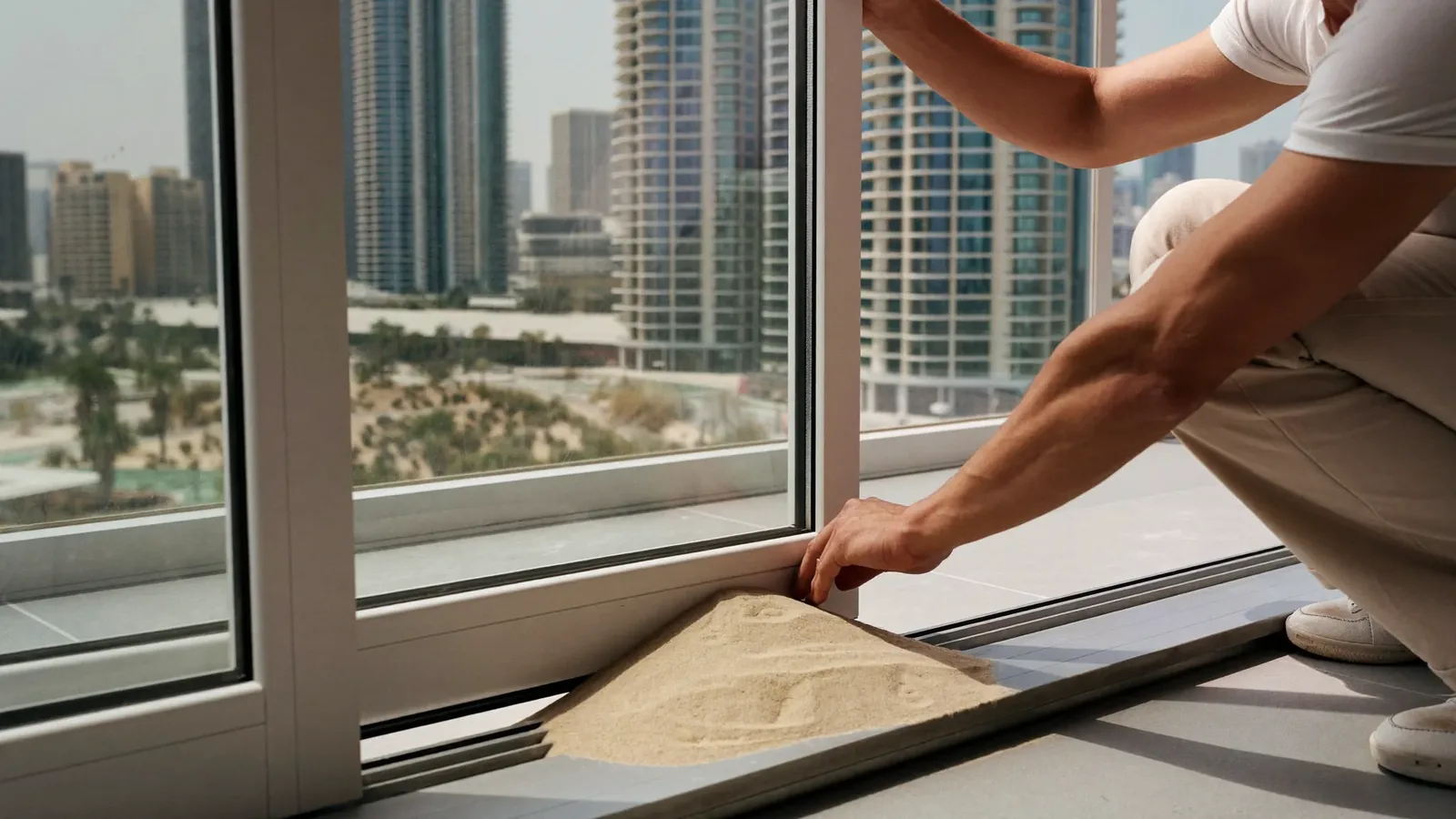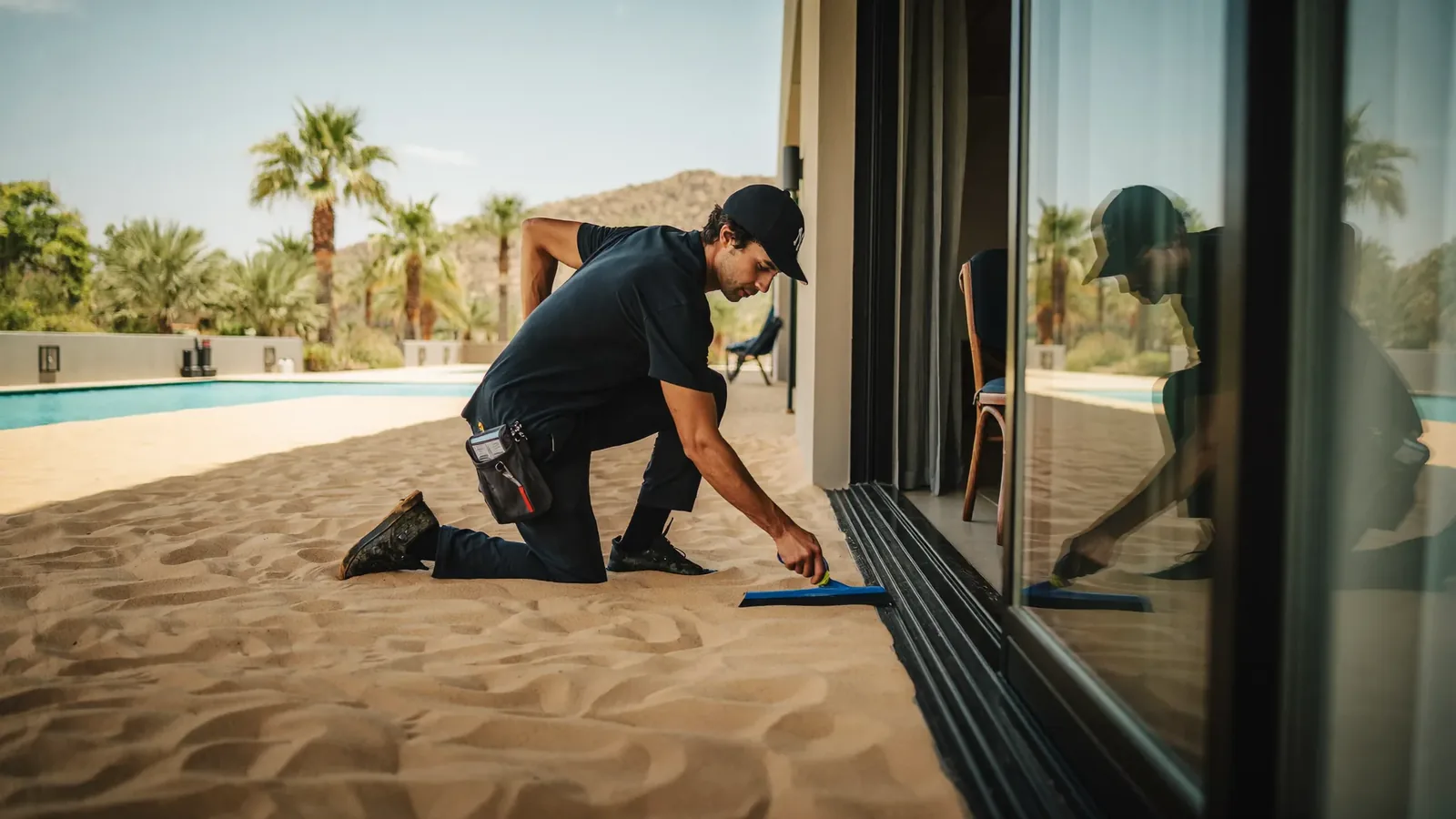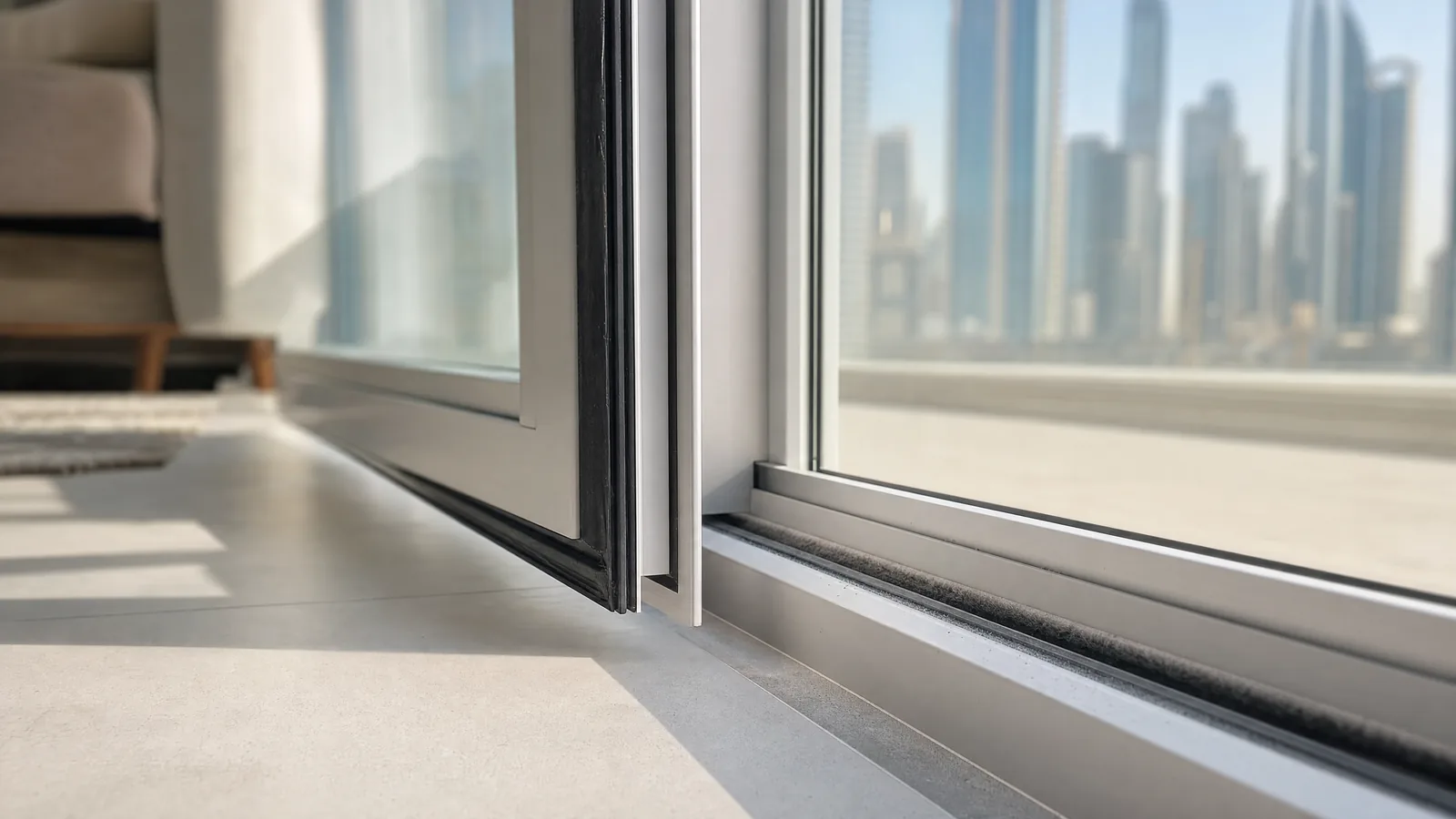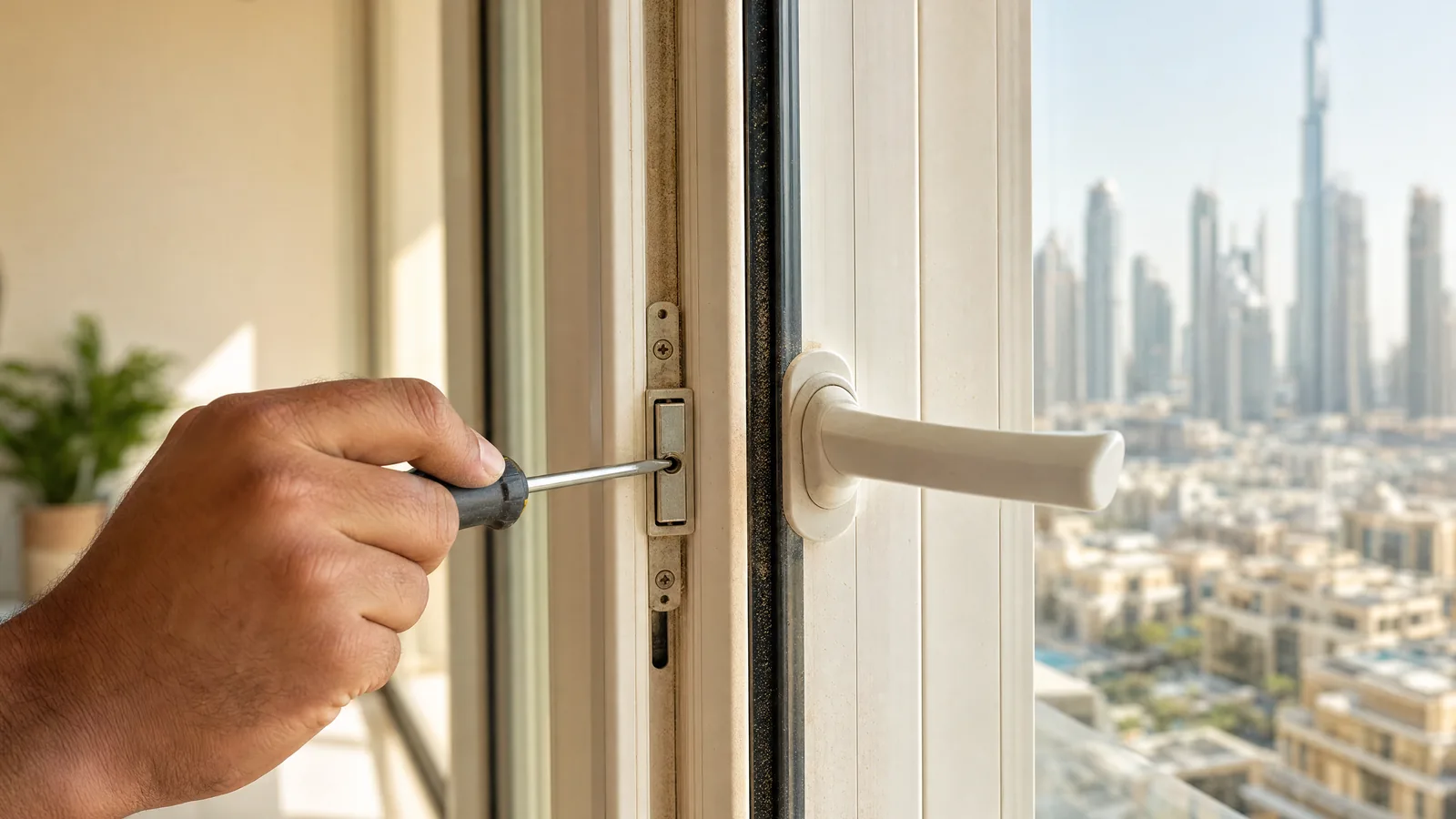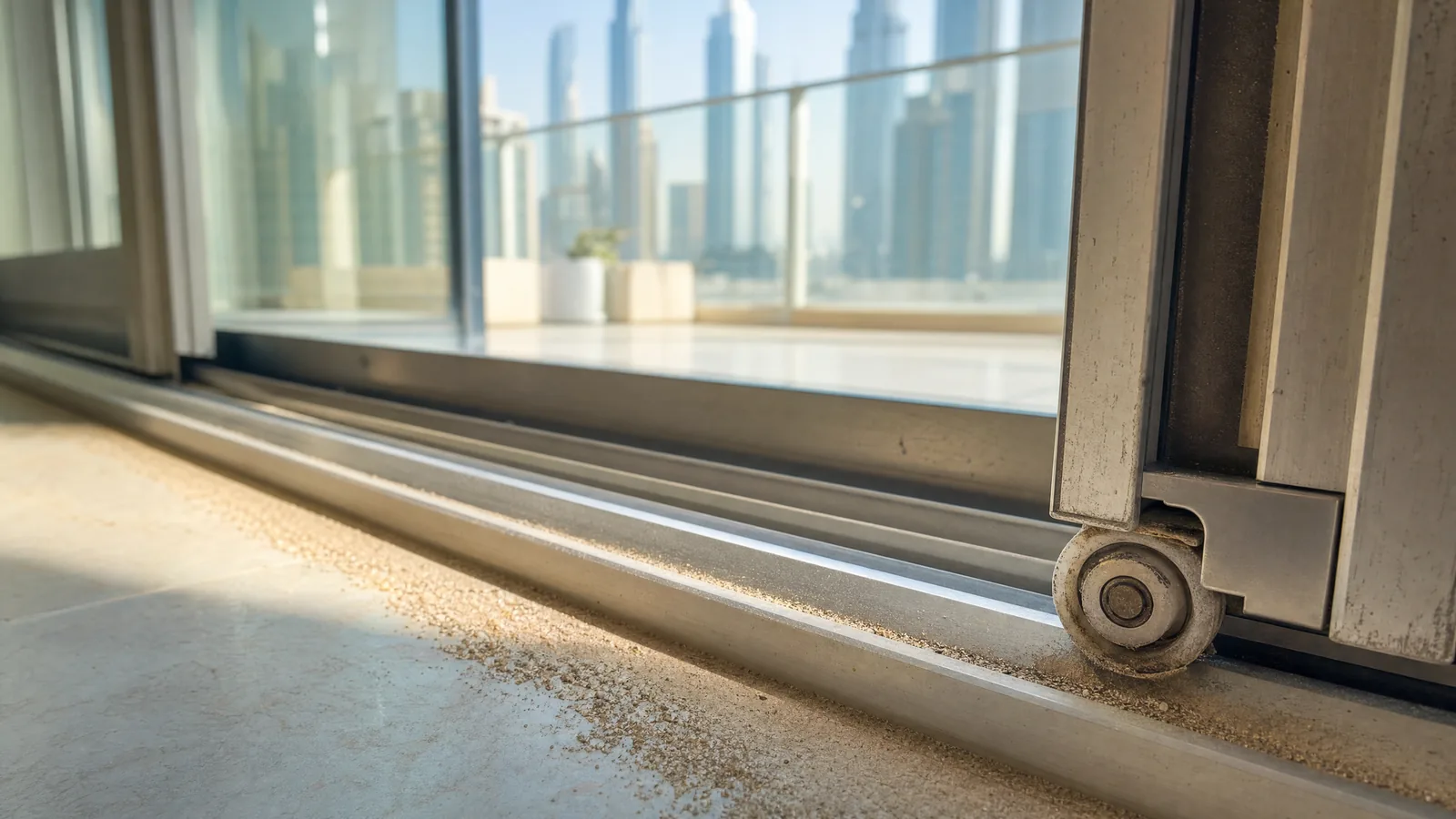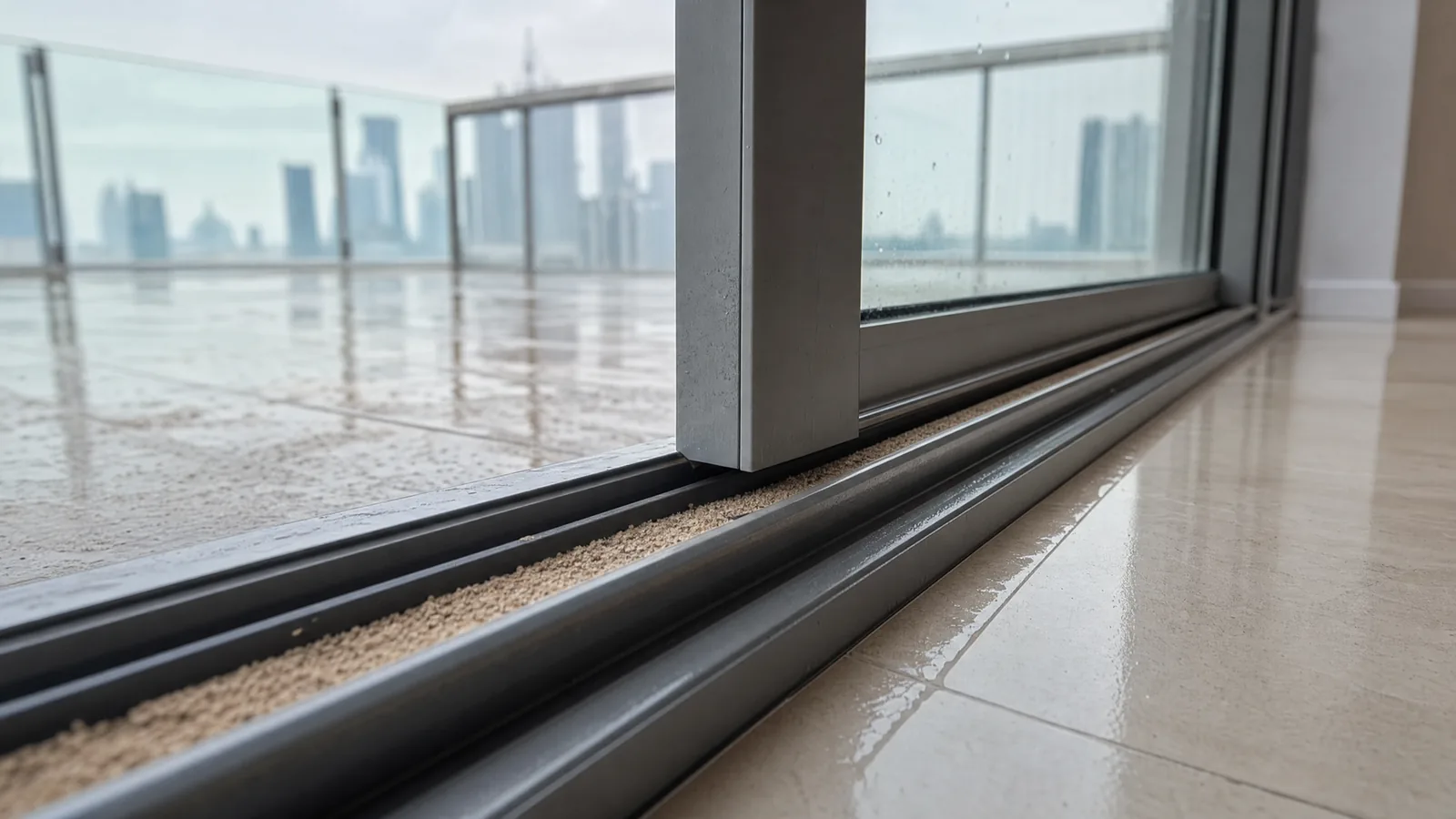





The rubber seal around a window, the gasket that presses against the frame when it closes, is what keeps dust, heat, noise, and water out. In Dubai's climate it is also the part that fails first. Constant sun and heat dry the rubber out, harden it, and shrink it until it cracks or pulls away, and once that happens the window leaks air, dust, and sound even when it is fully shut. Replacing the seal restores the tight closure and is one of the most common and worthwhile window repairs in the city.
It is easy to miss because the window still opens and closes normally. Nothing is obviously broken. But if you are wiping fine dust off the sills daily, feeling warm air near a closed window, or hearing more street noise than you used to, a failed seal is a prime suspect and a quick fix.
Why window seals fail so fast in Dubai
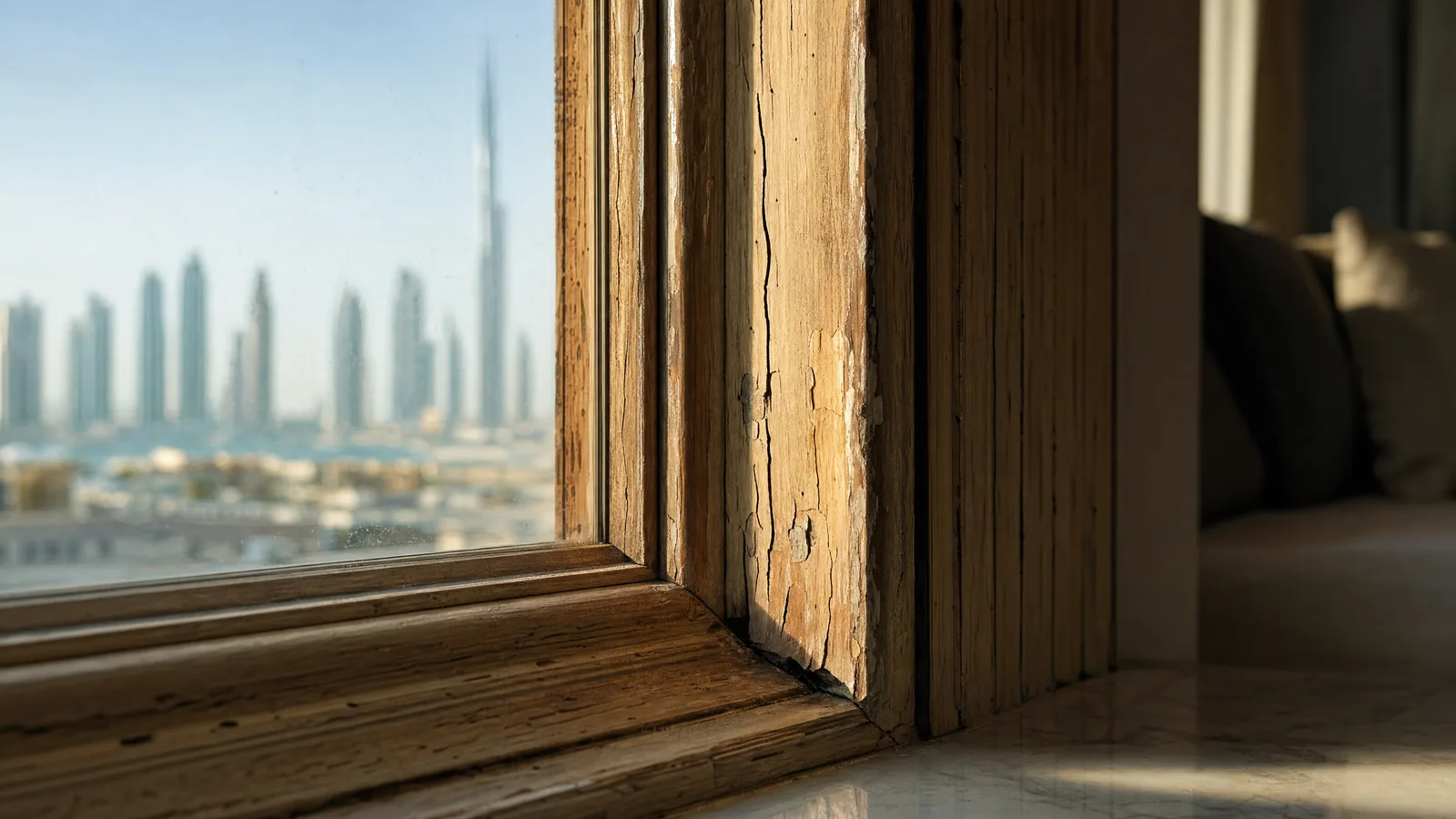
Rubber and similar gasket materials are elastic when healthy, springing back to press firmly against the frame. Heat and ultraviolet light are their enemies. Dubai delivers both at full strength for most of the year, and the daily cycle of intense daytime heat and cooler nights flexes the rubber constantly. Over time the material loses its plasticisers, goes hard and brittle, and shrinks. A hardened seal no longer springs back, so it stops sealing. A shrunken one leaves gaps at the corners. A brittle one cracks and crumbles.
This is why seals here often need attention years sooner than in cooler, shaded climates. It is not a defect in your window; it is the desert doing what it does to rubber. The upside is that the seal is a replaceable part, so you renew it rather than the window.
Signs your seals have failed
Any one of these points to a seal that has given up:
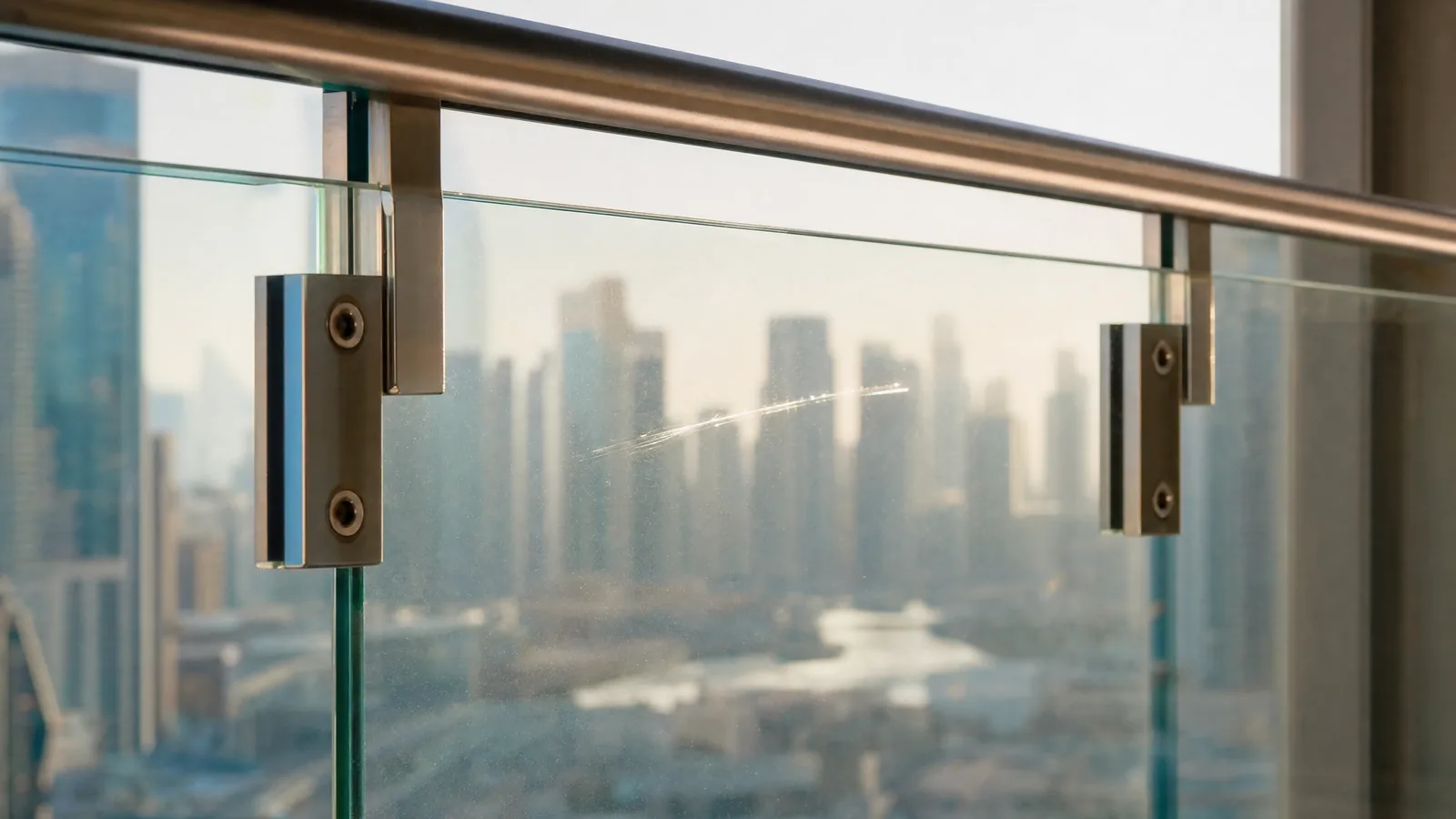
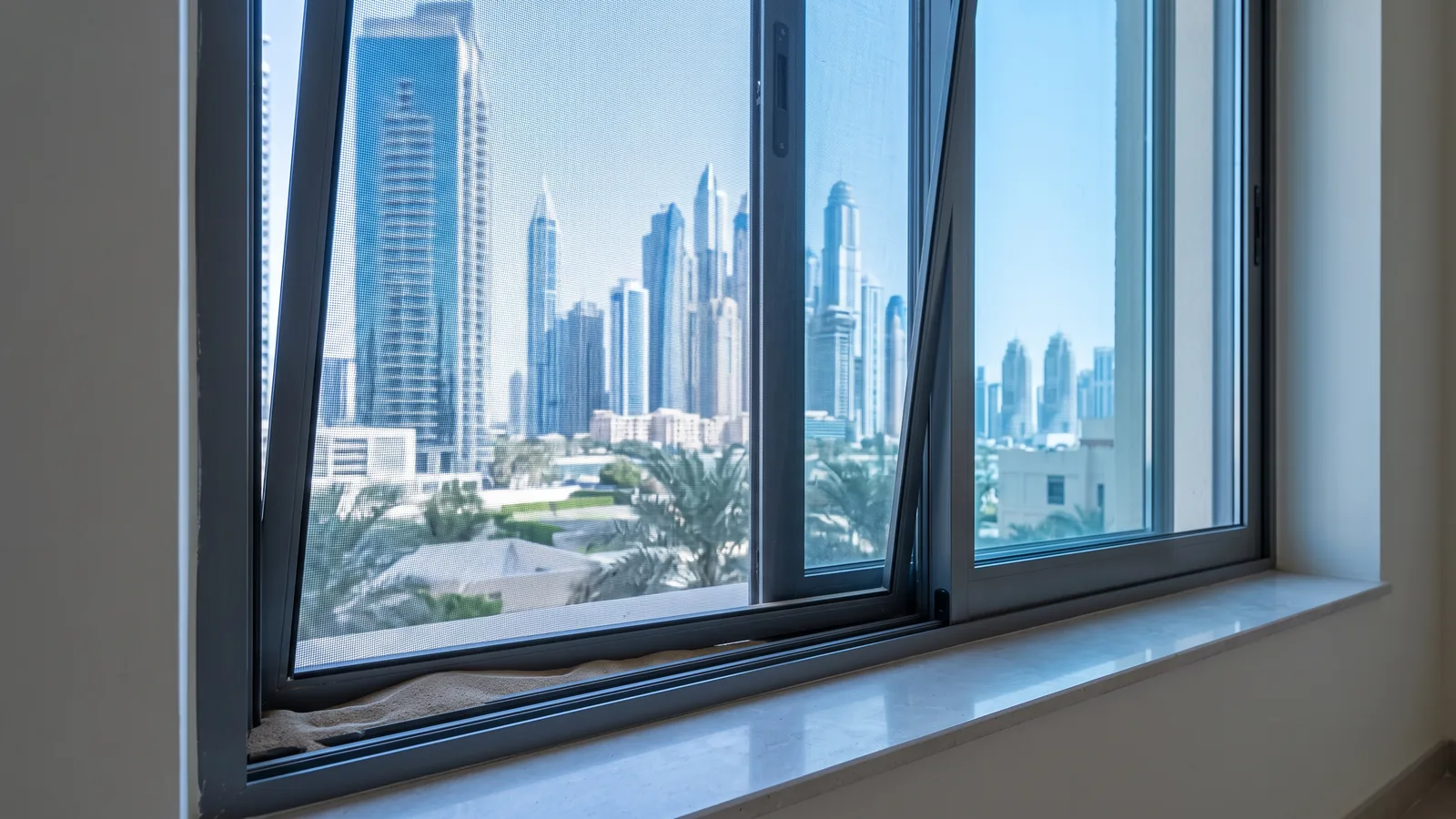
- Fine dust settling on sills and surfaces near a closed window, sometimes a thin film every day.
- A noticeable draught or a strip of warm air you can feel near the edge of a shut window.
- More outside noise than before, since the same gap that leaks air leaks sound.
- Water getting in during the rain or after a facade wash, or damp marks around the frame.
- Higher AC bills, because cooled air escapes and hot air leaks in through the gaps, making the unit work harder.
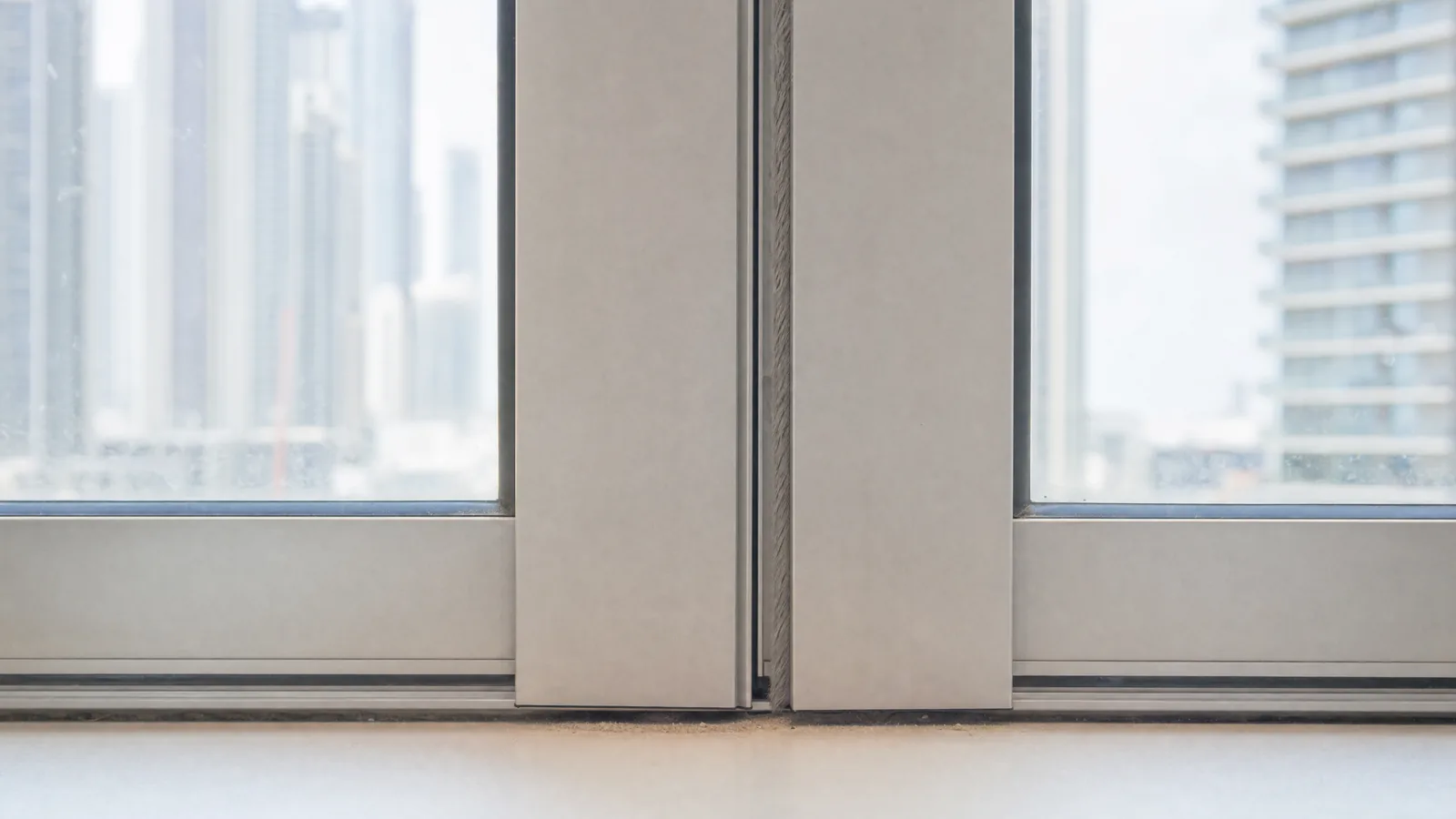
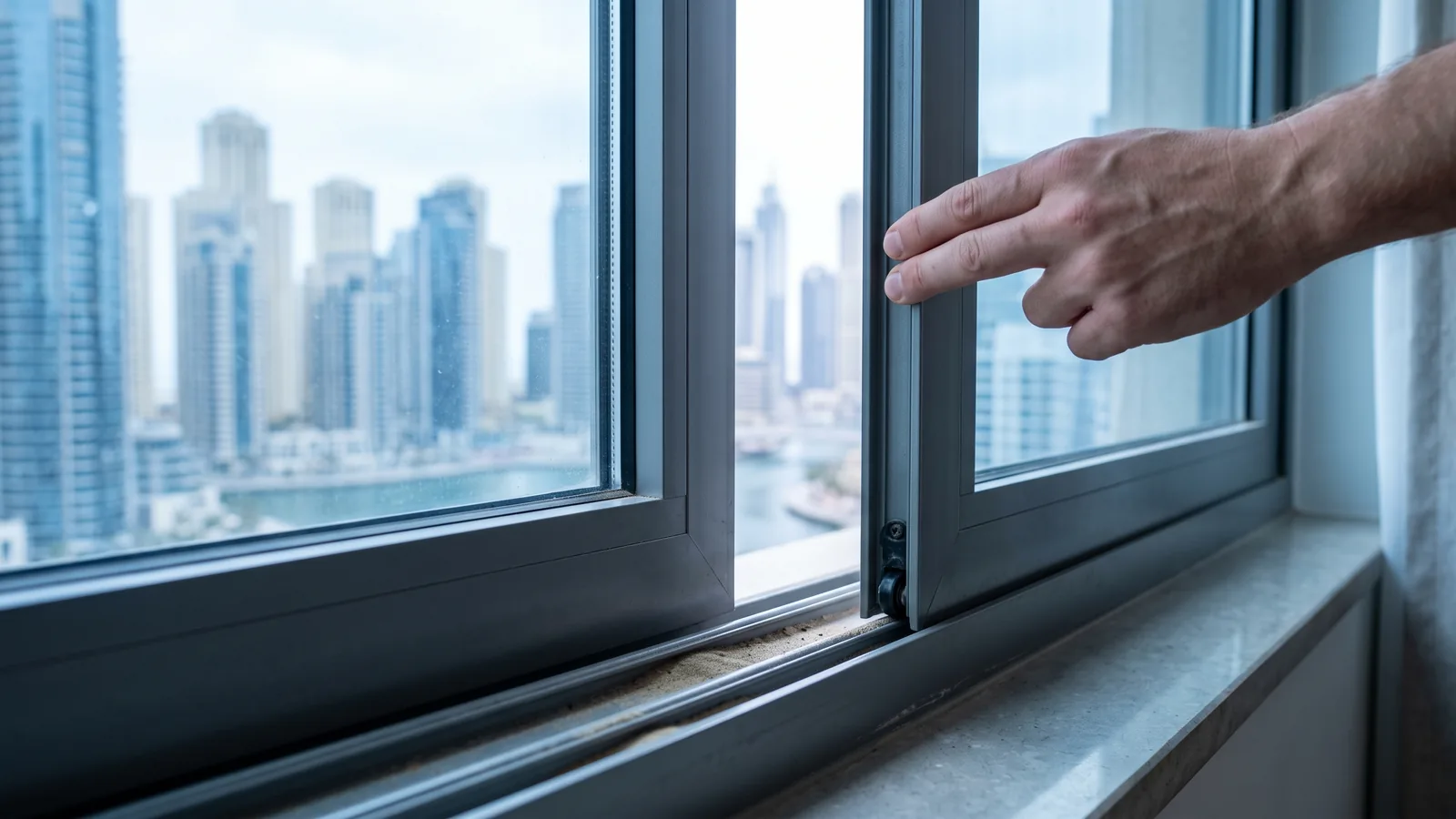
- Visible cracking, hardening, flattening, or gaps in the rubber when you inspect the seal.
The AC clue is worth noting. A leaky seal is a small, constant hole in your cooling, and in a Dubai summer that adds up on the bill. Sealing the window back up is one of the cheaper ways to take load off the AC.
What a seal replacement involves
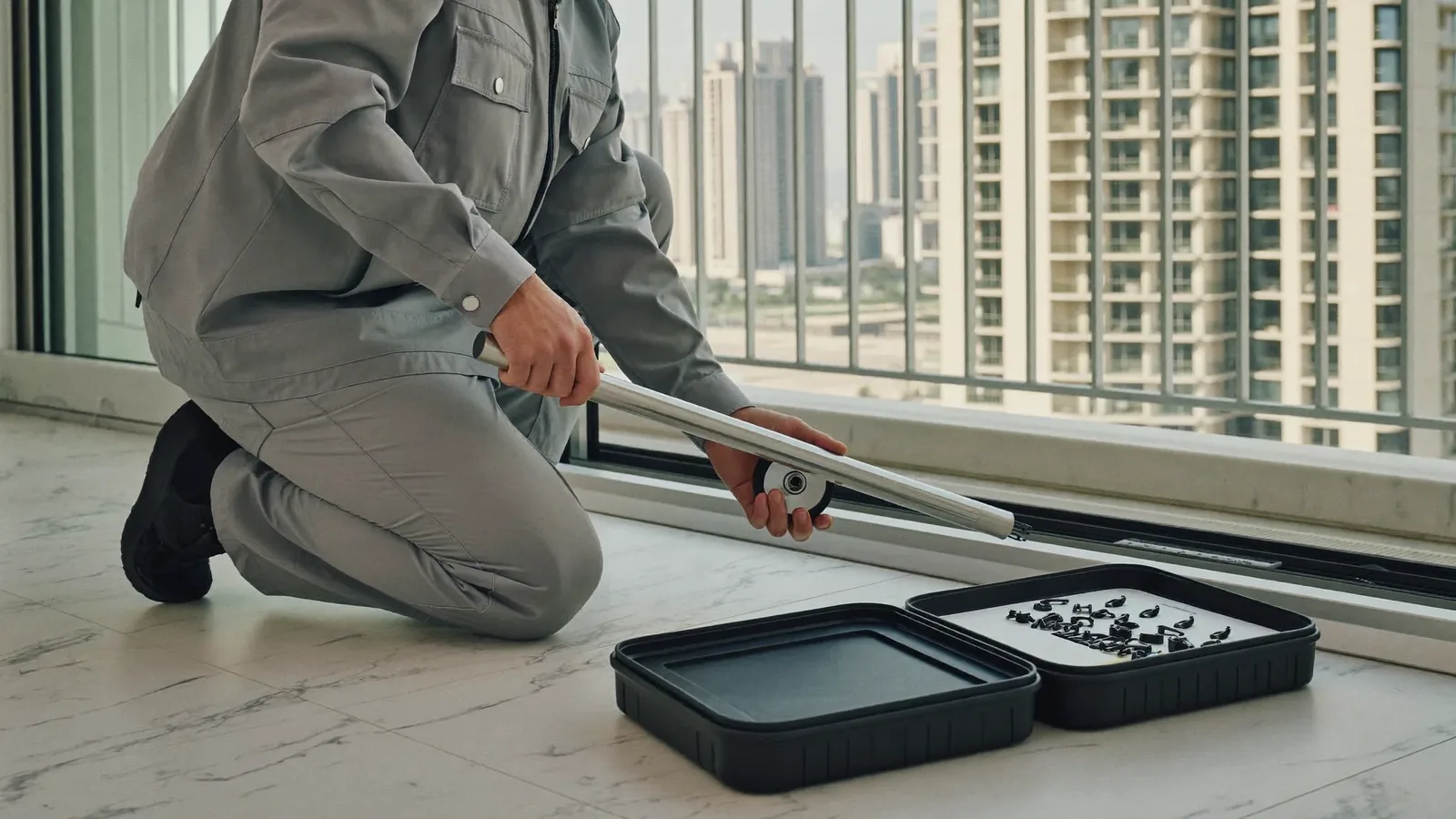
Replacing a window seal is precise work rather than heavy work. The steps in principle:
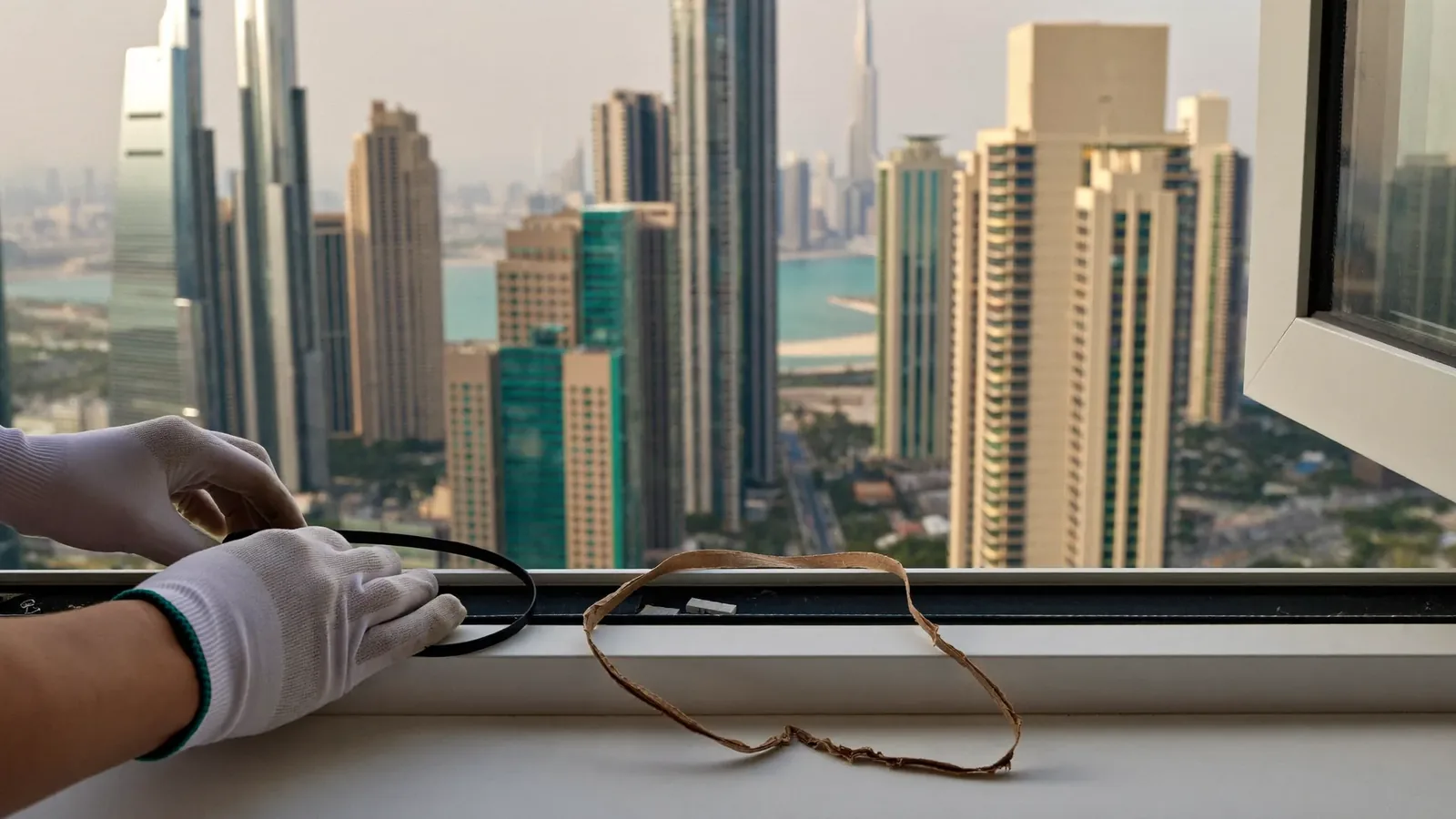
First, the failed seal is identified and its type noted, because gaskets come in many profiles and the replacement has to match the groove and the frame exactly. A seal that is slightly the wrong profile will not seat properly and will leak again.
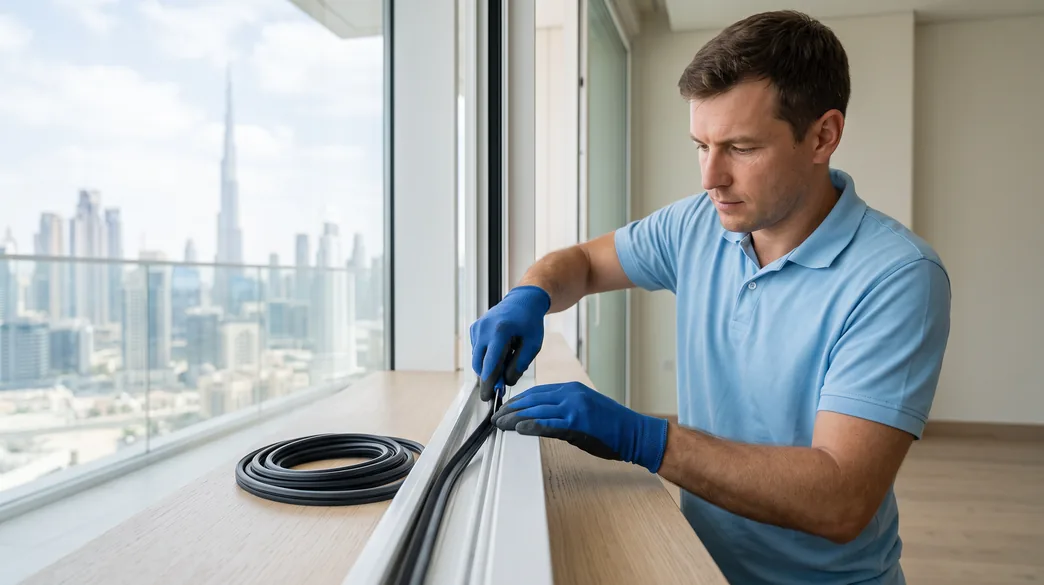
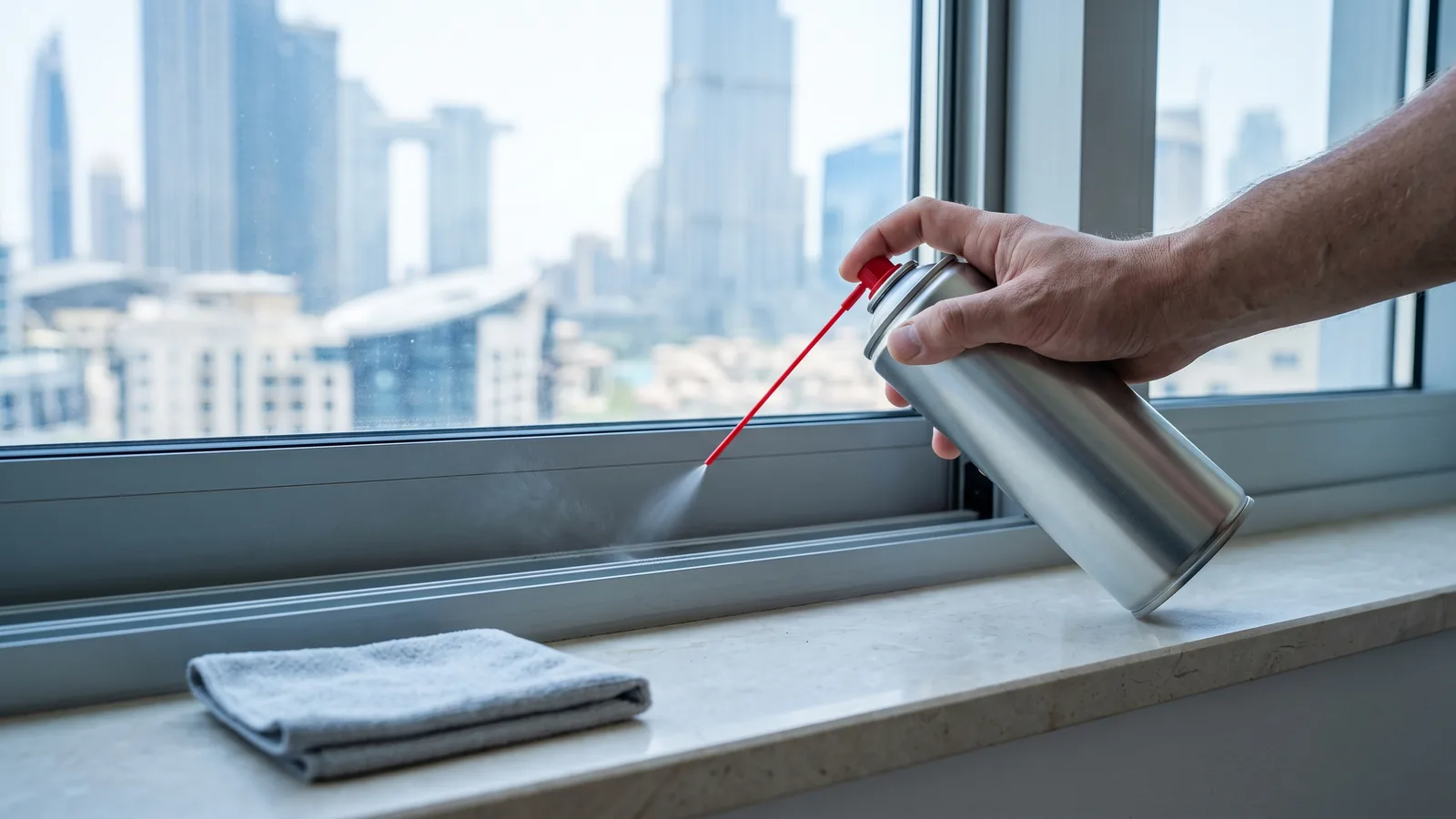
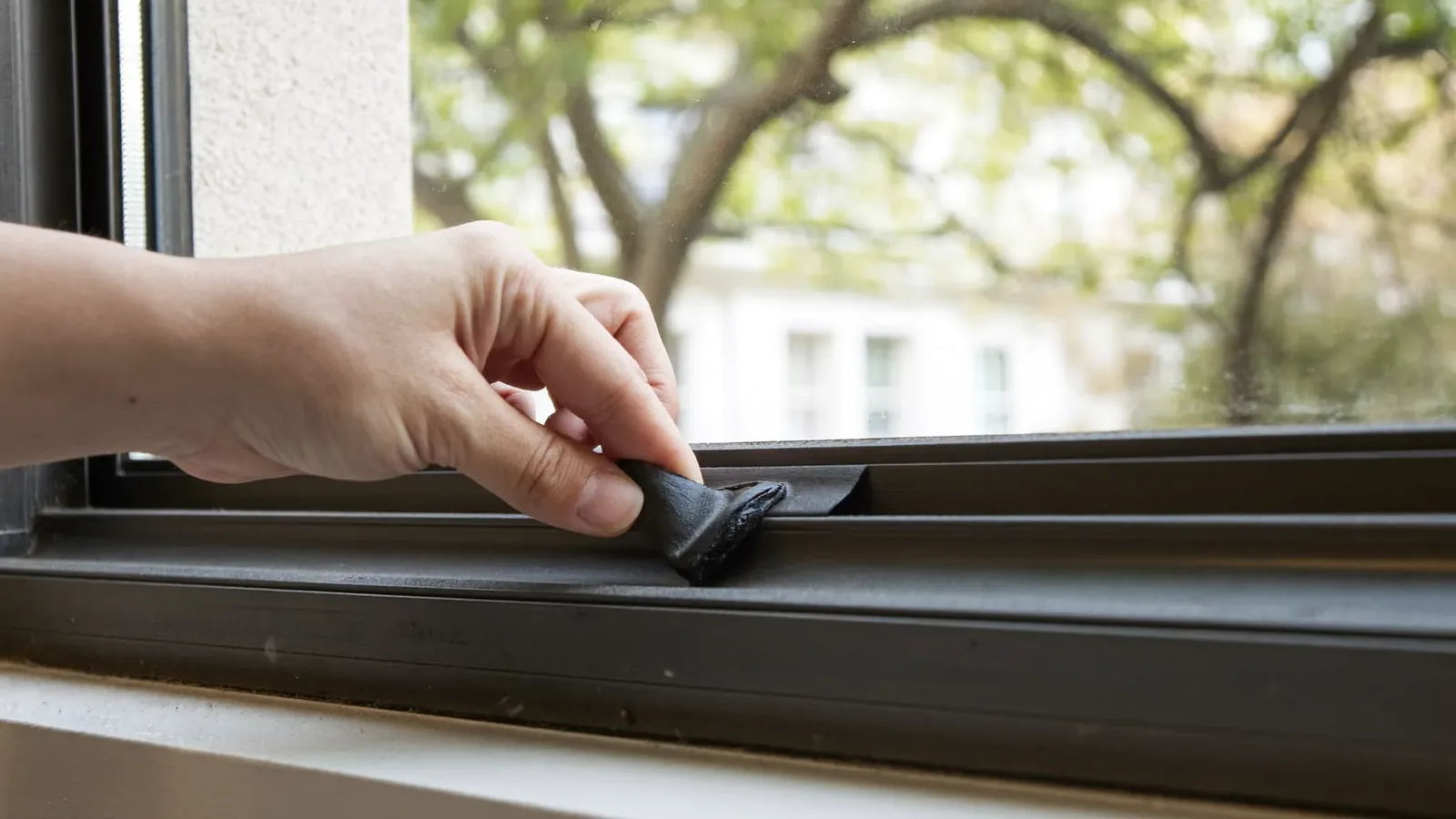
The old rubber is then removed cleanly from the channel, and the groove is cleaned out of hardened residue and dust so the new seal beds fully. The correct new gasket is fitted into the channel, sized and seated so it compresses evenly against the frame all the way around when the window closes. Corners are where seals fail first, so they get particular attention.
Finally the window is closed and checked for an even, tight seal with no gaps. Done right, the draught disappears, the dust stops, and the window feels solid when shut again. This is the core of our window sealing and draught-proofing in Dubai service. Because a good seal also blocks sound, fresh seals are usually the first step in any window soundproofing in Dubai job too.
Can you replace window seals yourself?
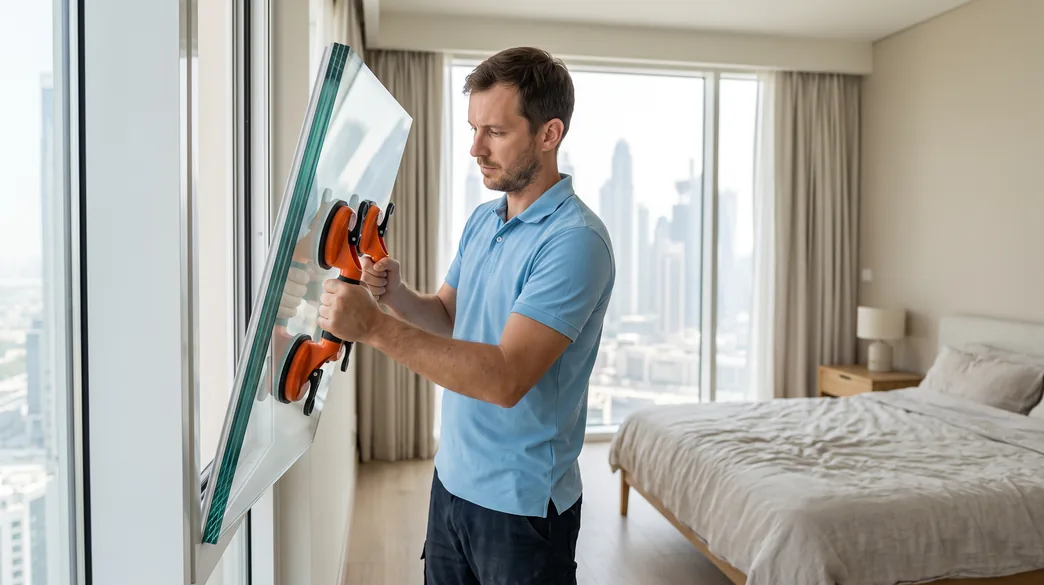
For a simple, accessible seal on a small window, a determined DIYer can sometimes manage. The catch is matching the gasket profile. There are many shapes, and buying a close-but-not-exact seal means it will not compress correctly and you are back to leaks. Getting the new seal seated evenly, especially around corners and on larger or higher windows, also takes the right technique or it bunches, gaps, or pops out.
For most people the sensible route is to have it measured and matched by someone who fits seals regularly and carries the profiles. It is a low-cost repair done professionally, and it lasts because the seal is correct and seated properly the first time.
Getting your seals sorted in Dubai
We are based in Al Barsha and reach most of Dubai in around 30 minutes to assess the seals on site, match the right gasket, and fit it. You get a free on-site fixed quote before any work, and the repair carries our 2-year warranty. The emergency line is open 24/7 on +971 50 220 6918, or reach us through the contact page. For more window care guides, see the blog.