




A sliding door that grinds or squeaks as it moves is almost never a broken door. In Dubai the noise nearly always means fine desert sand packed into the bottom track, crushed under rollers that have worn flat on dry bearings. The door still opens, which is exactly why the sound gets ignored, but what you hear is the rollers scraping along the track instead of rolling over it. A track clean, the right lubricant and new rollers cure it, normally in a single visit. It only becomes an expensive repair if you keep sliding the door until a seized roller starts eating through the track itself.
The fear that the whole door has failed is understandable, the sound is horrible, but misplaced. As our sliding door team puts it: if it slides but feels heavy or grinds, that is rollers worn or a track full of grit.
Where the noise actually comes from
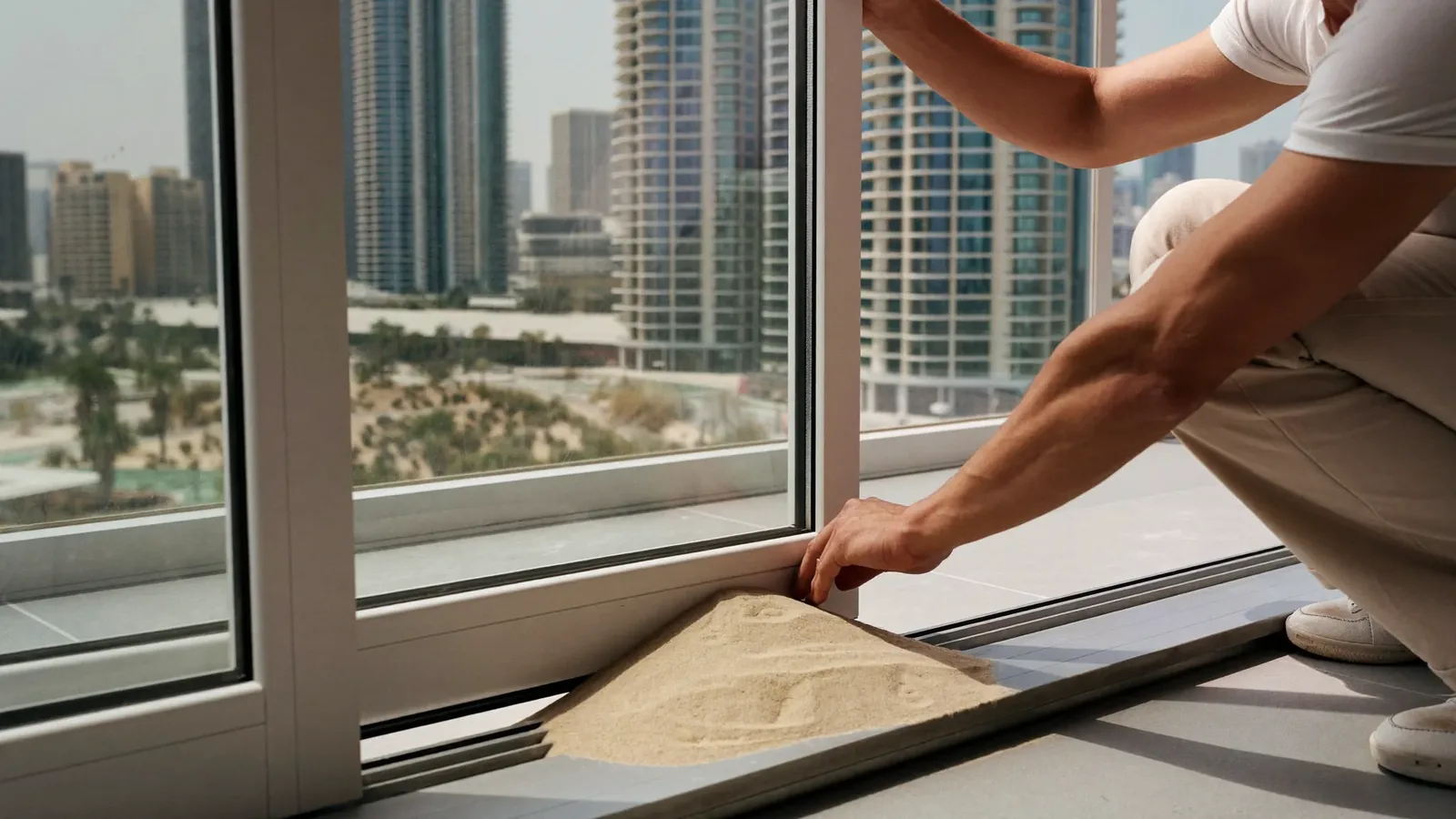
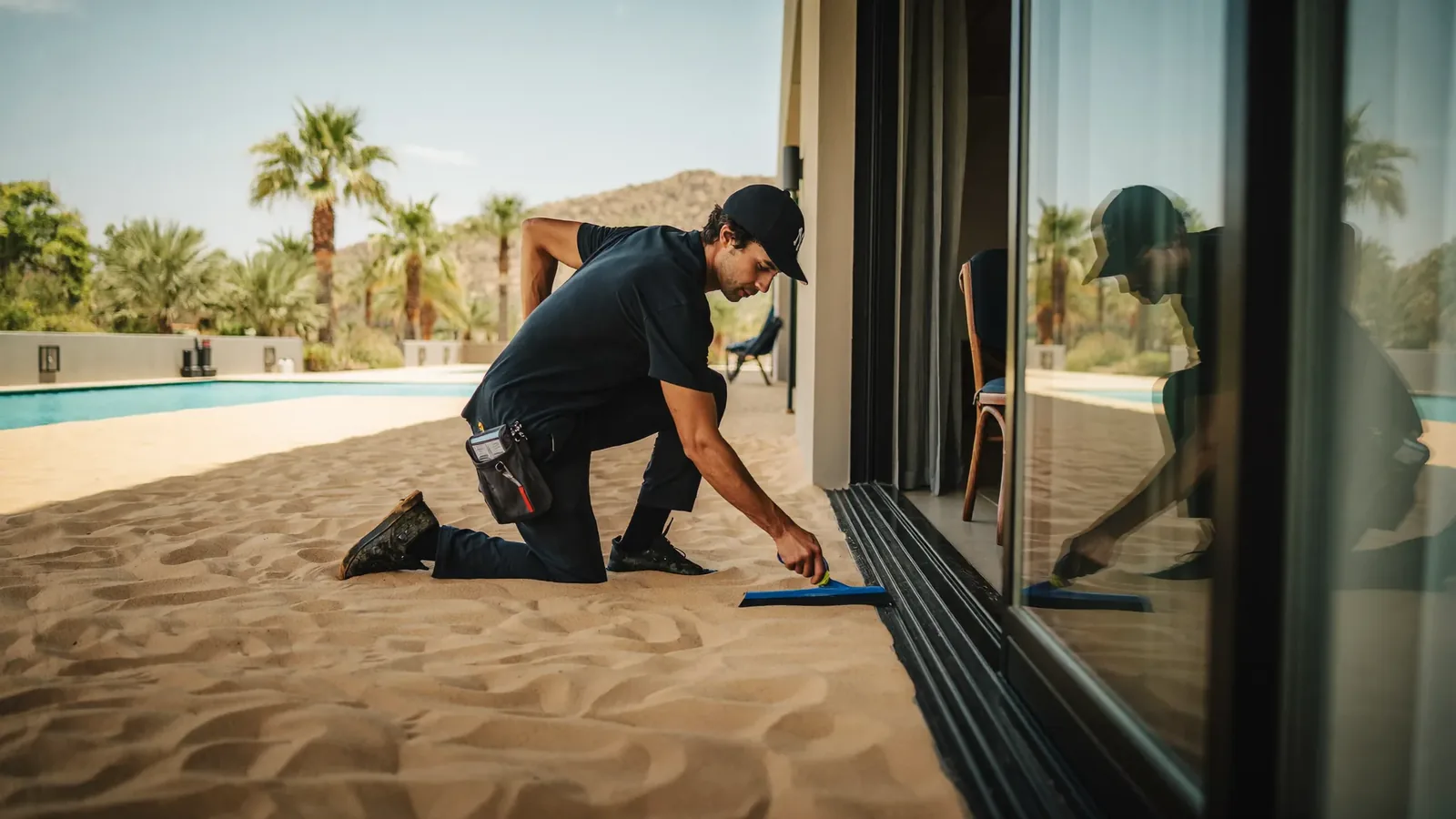
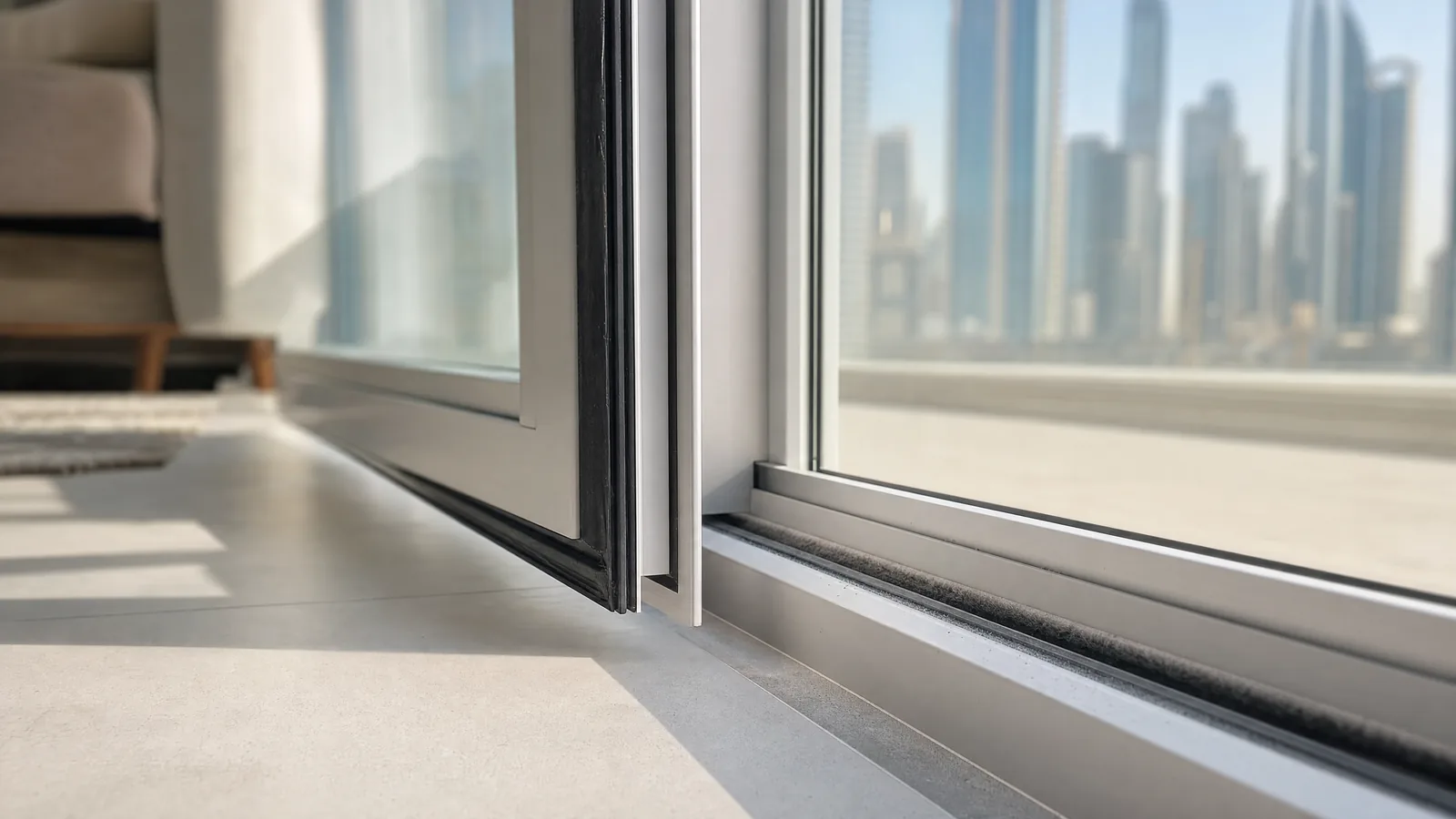
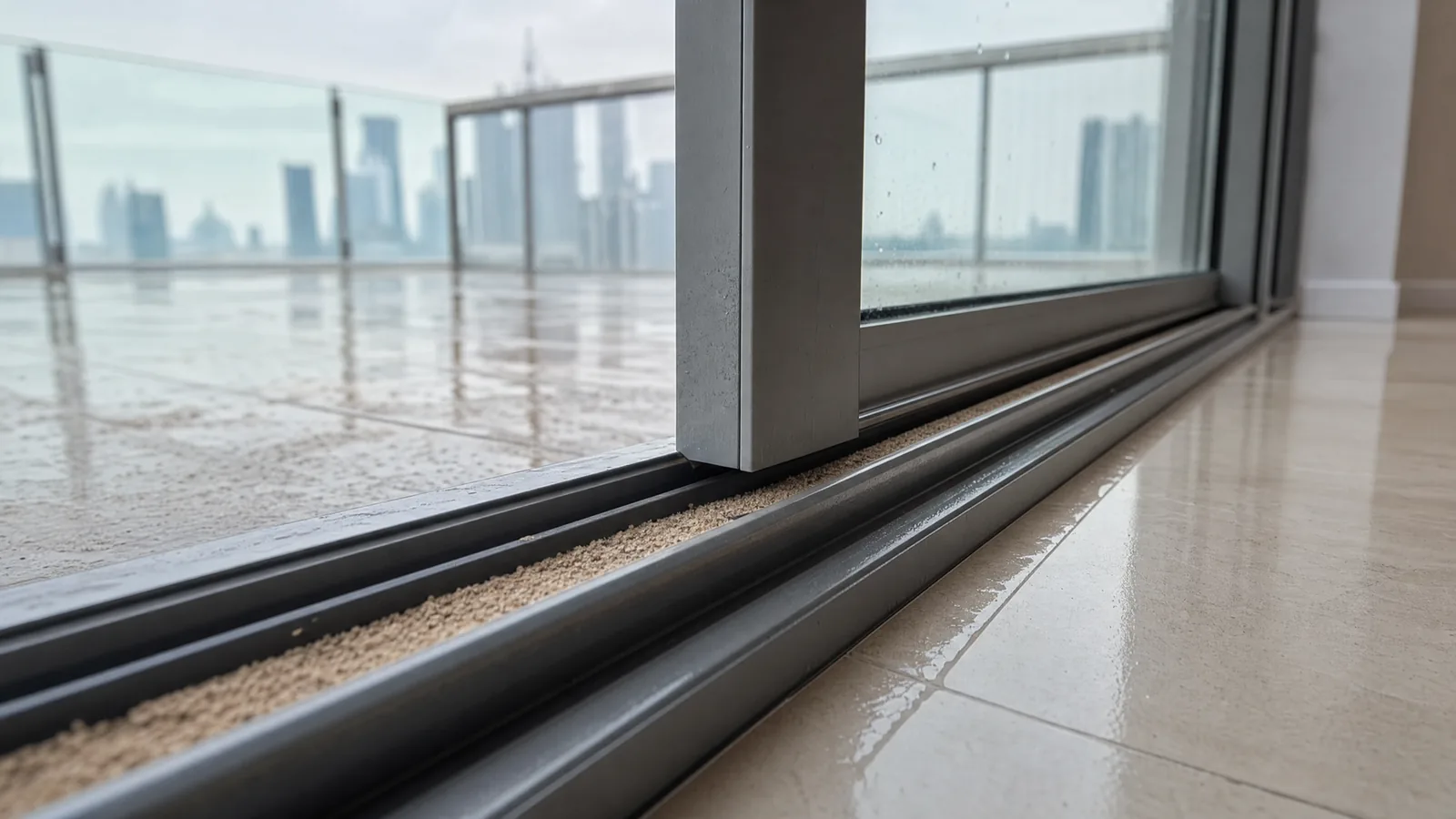
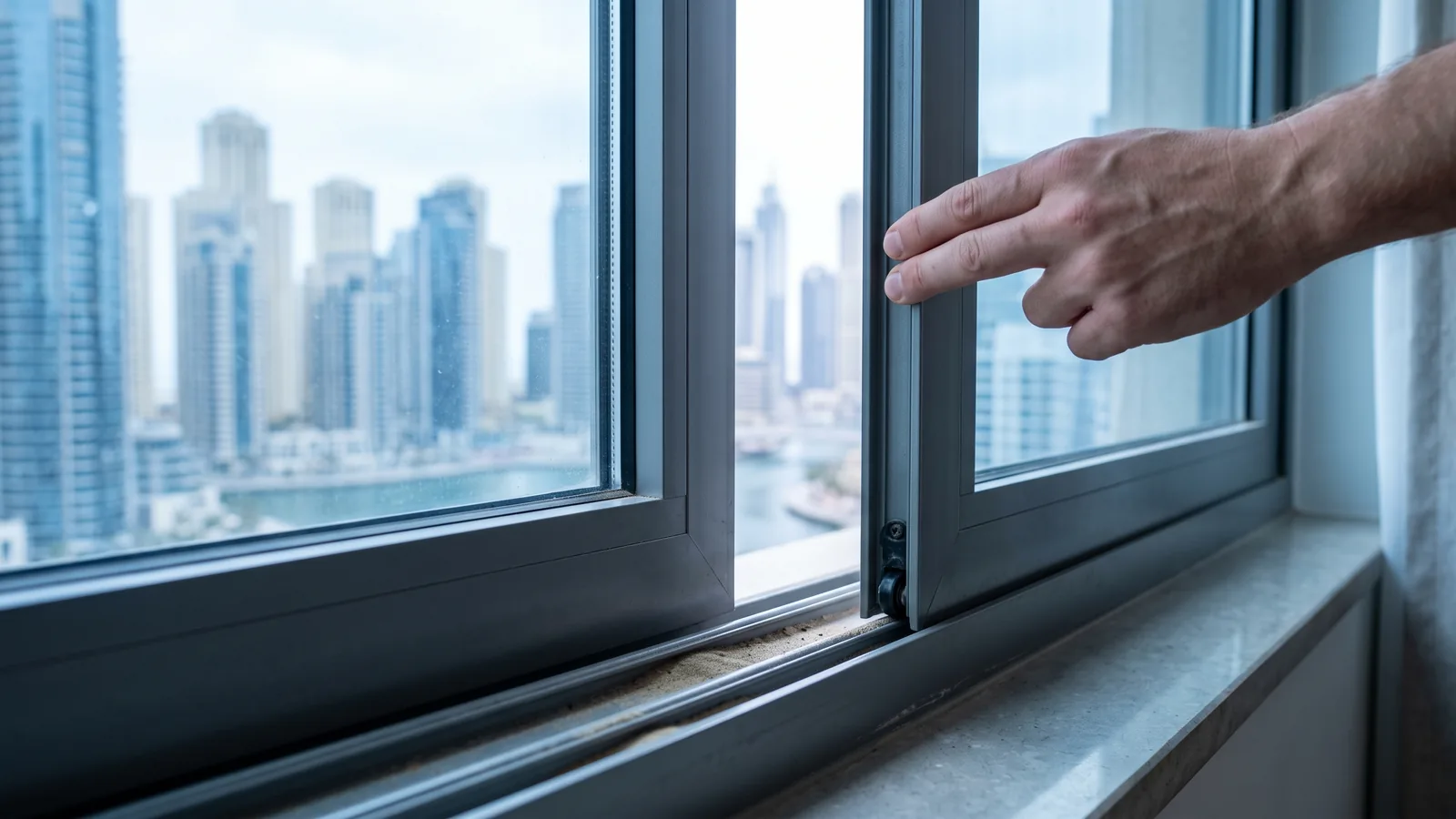
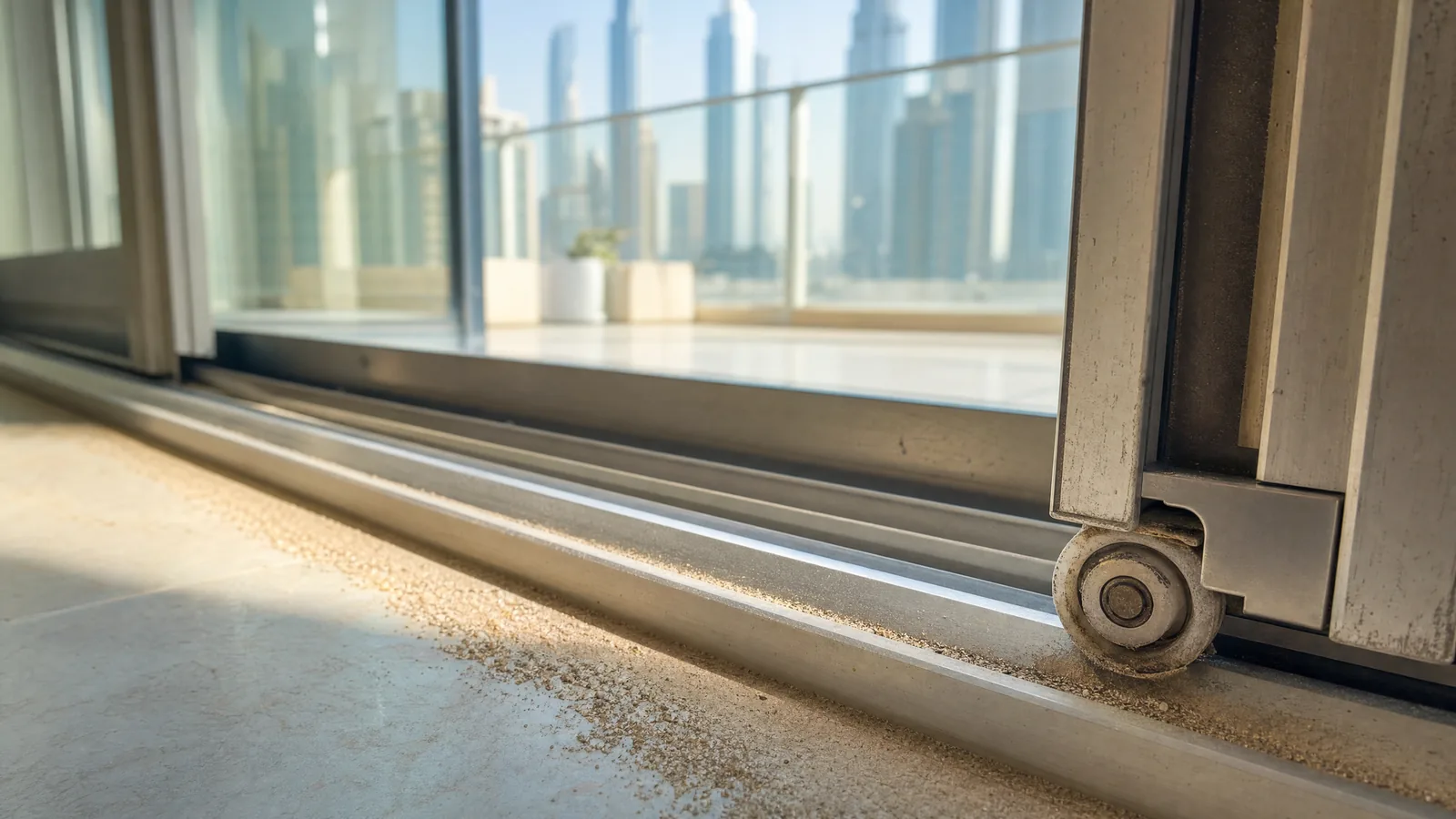
A sliding door runs on a few small rollers that carry its whole weight along an aluminium track in the floor. The bottom track is an open channel at floor level, and in Dubai it collects exactly what the city produces: fine desert sand, construction dust and grit walked in from the balcony.
That grit is harder than the nylon wheels riding over it and behaves like sandpaper. Every pass shaves the rollers a little flatter and works dust into their bearings. A squeak usually means a dry bearing that still turns; a deep, gravelly grinding means a wheel has stopped turning properly and is skidding over crushed sand. The door is not broken. Its wheels are worn and its road is dirty, and both are routine to put right.
What happens if you keep sliding it
A seized roller no longer rolls, it drags, and a dragging hardened wheel slowly saws a groove into the aluminium track underneath it. Once the track surface is chewed up, new rollers alone will not glide on it, and the damaged section has to be replaced as well.
Rollers are standard parts carried on the van, so a noisy door caught early is cleaned, re-rollered and finished the same visit. A worn-through track has to be measured, ordered to size and fitted on a return visit, so the bill grows. Meanwhile the door gets heavier as the rollers flatten, drops out of line so the lock stops catching, and eventually starts jumping off the track. The grinding stage is the cheap stage.
What you can safely do yourself
Before calling anyone, clean the track. Vacuum the channel, loosen packed grit with a stiff brush, wipe it out with a damp cloth, and slide the door to each end so you reach the whole length. If the noise softens, sand was most of it.
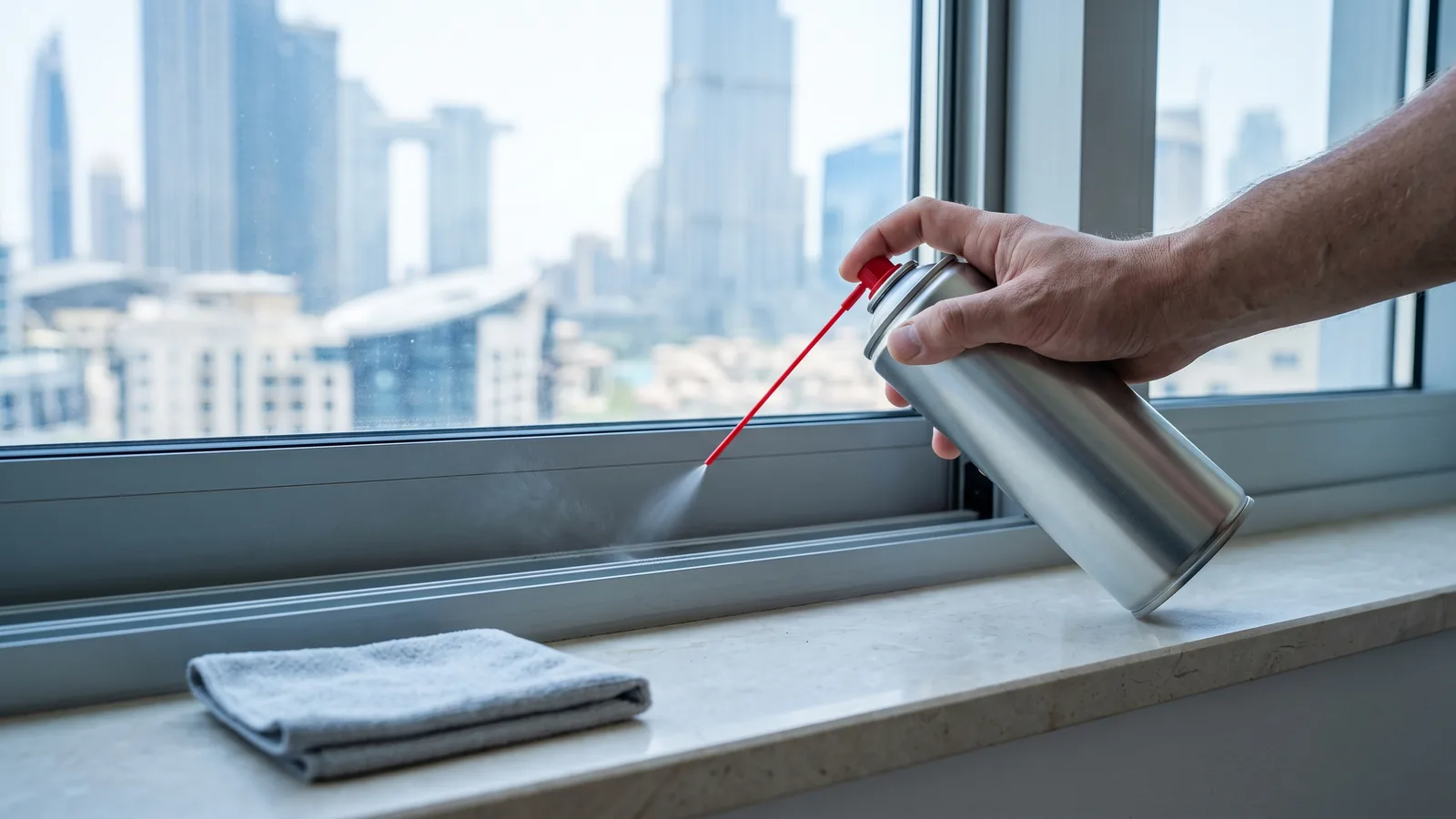
Two cautions. Avoid oil, grease and general-purpose spray lubricants: in Dubai's dust they turn into a grinding paste within weeks. A light silicone-based lubricant, used sparingly on a clean track, is the safe choice. And if the door stays heavy, squeaks again within days or has started jumping, the rollers themselves are worn, and no cleaning restores a flattened wheel. Forcing it in that state only speeds up the track damage.
How the proper repair works
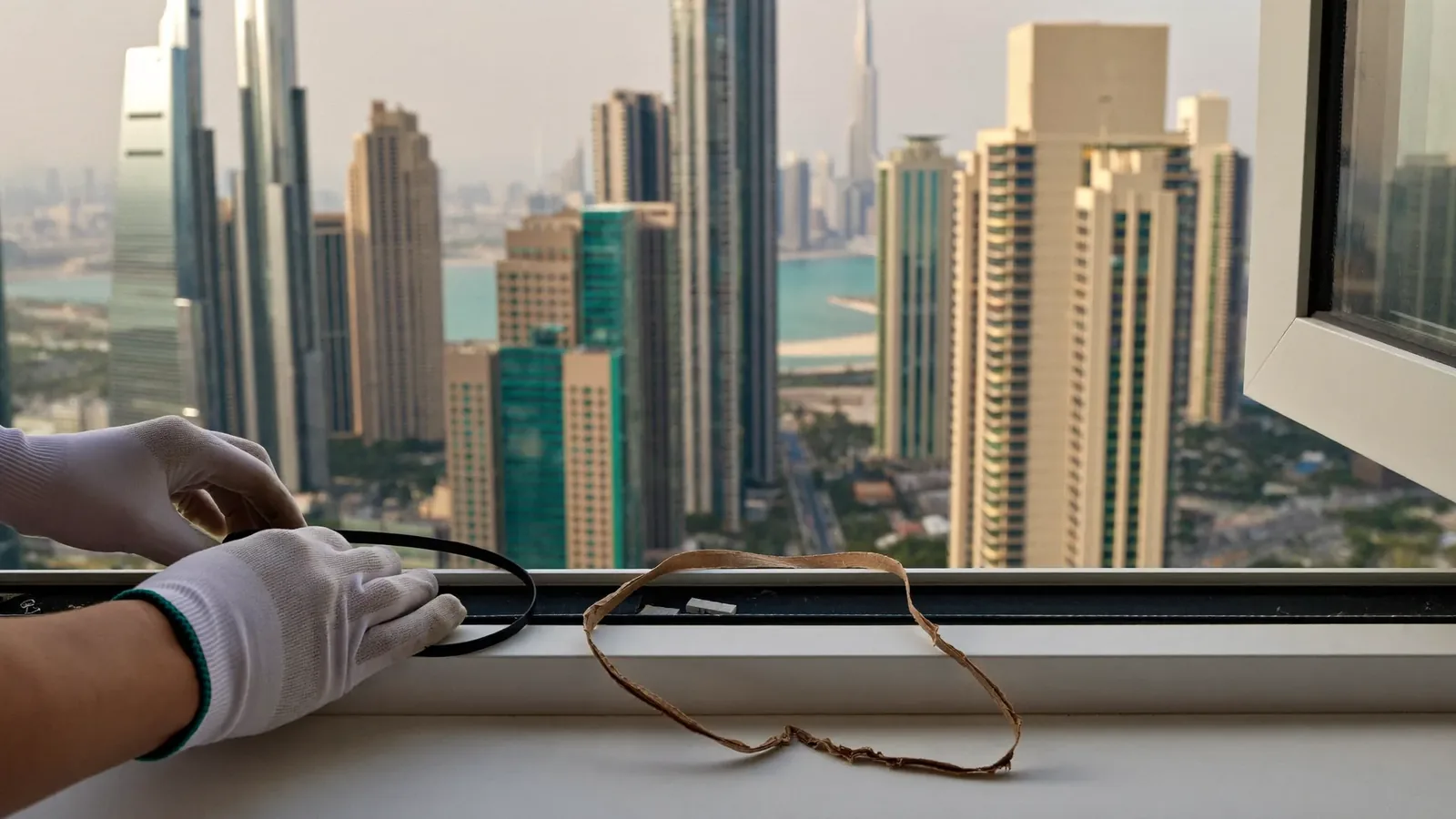
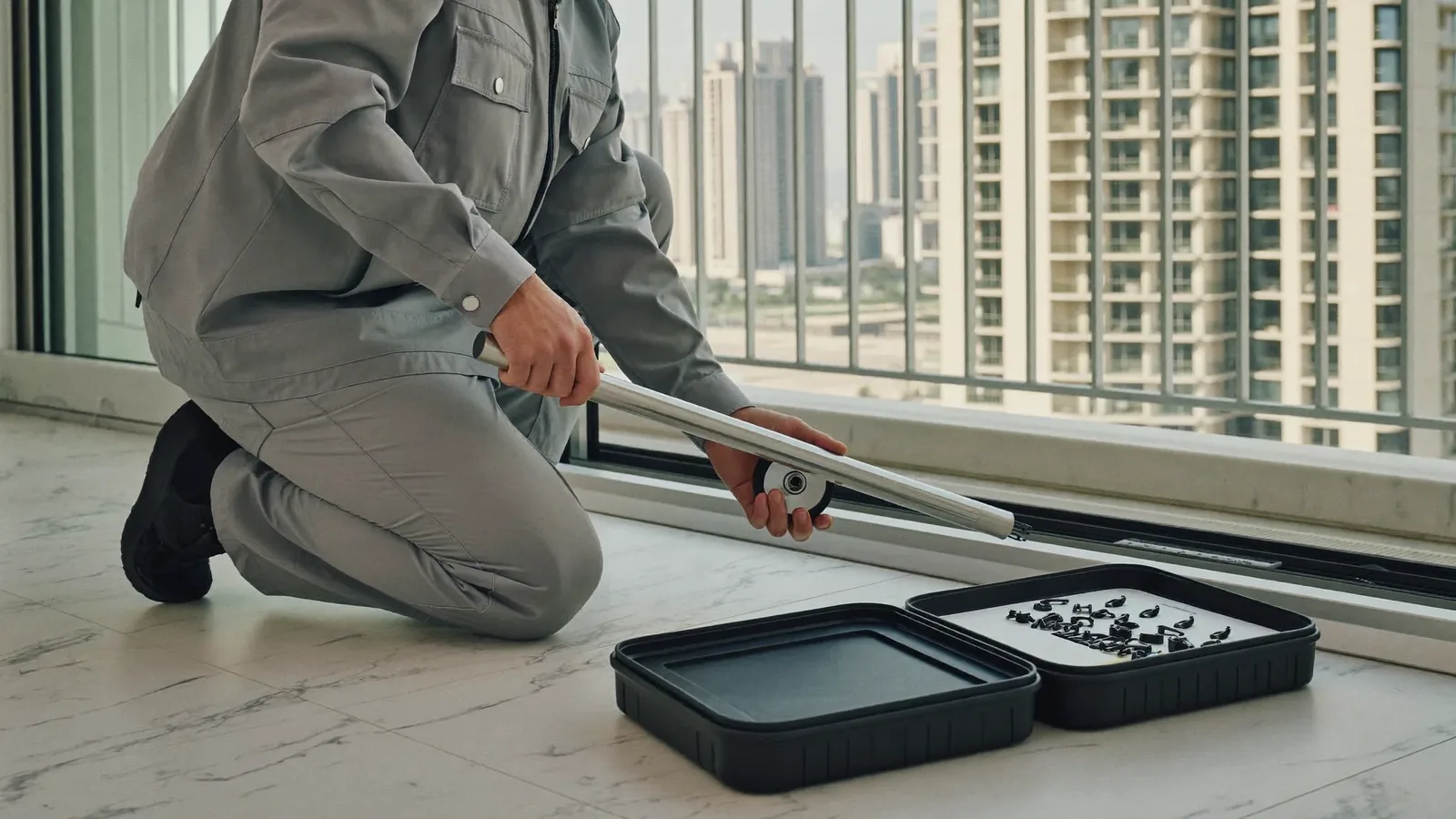
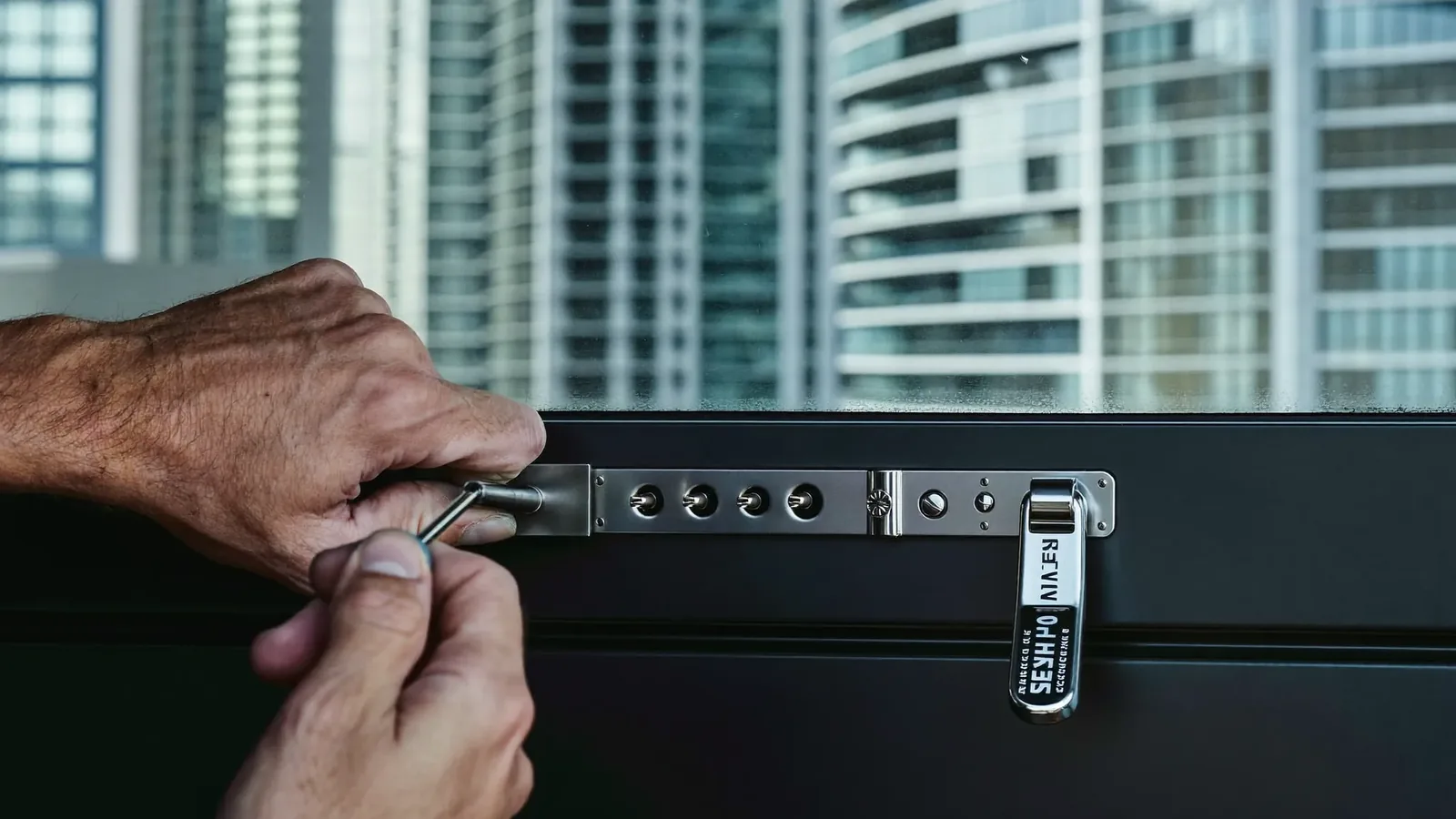
The technician tests the door, checks the rollers, track and alignment, and quotes a fixed price before touching anything. The cure matches the symptom: the track is cleaned and straightened, new heavy-duty rollers go in, the door is re-hung level so the lock lines up again, and the moving parts are lubricated correctly. Because standard rollers are carried on the van, almost every grinding-door job finishes in one visit; only a badly chewed track needs a made-to-size section on a quick return. Our sliding door and window repair in Dubai page covers the full service, including tracks, locks and glass.
We have been fixing sliding systems across Dubai since 2014, reach most of the city from Al Barsha in around 30 minutes, run a 24/7 emergency line on +971 50 220 6918, and back every repair with a 2-year warranty. If your door has started grinding, have it seen while it is still a roller job. For more window guides, browse the blog. Get a free quote.