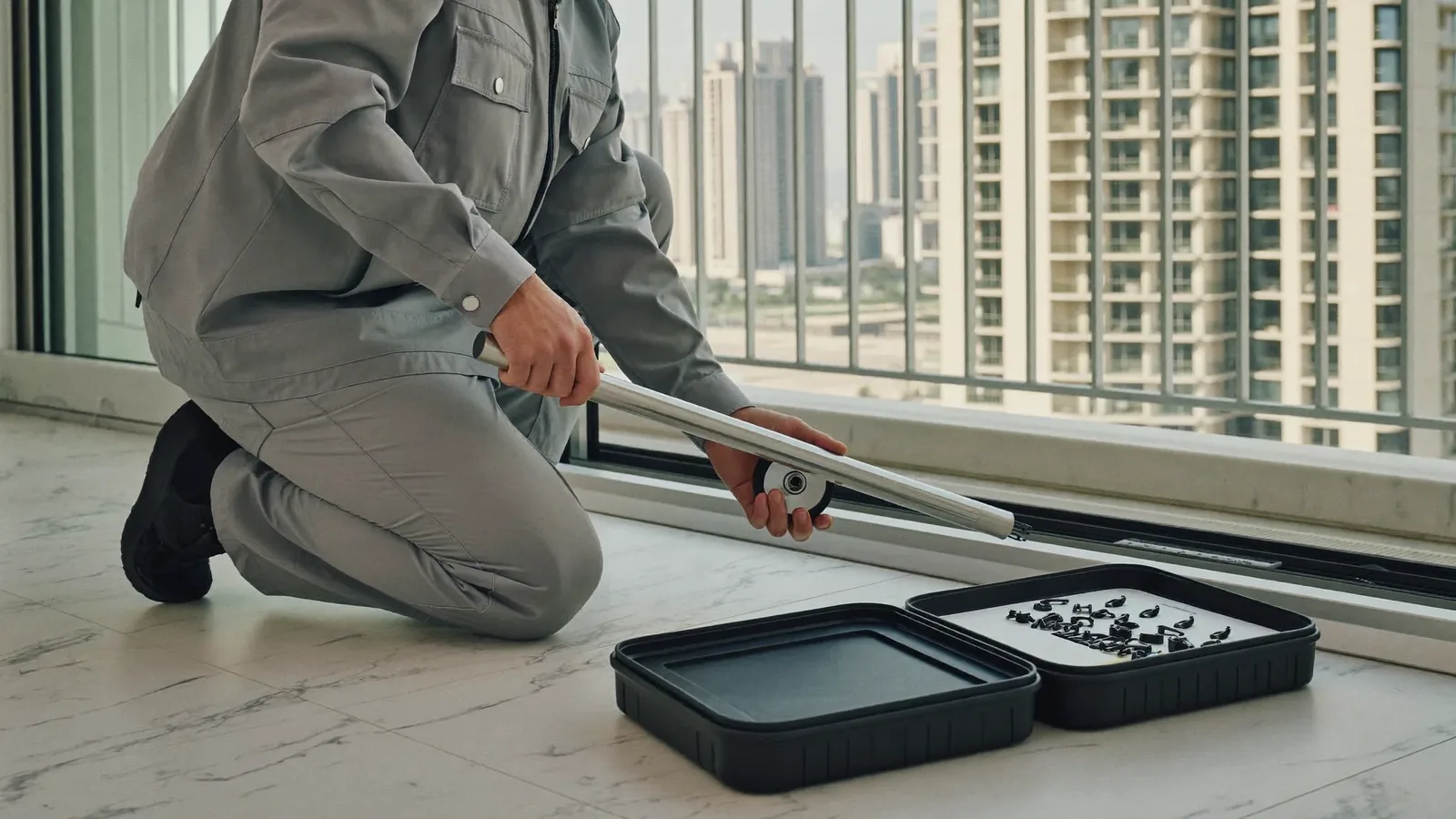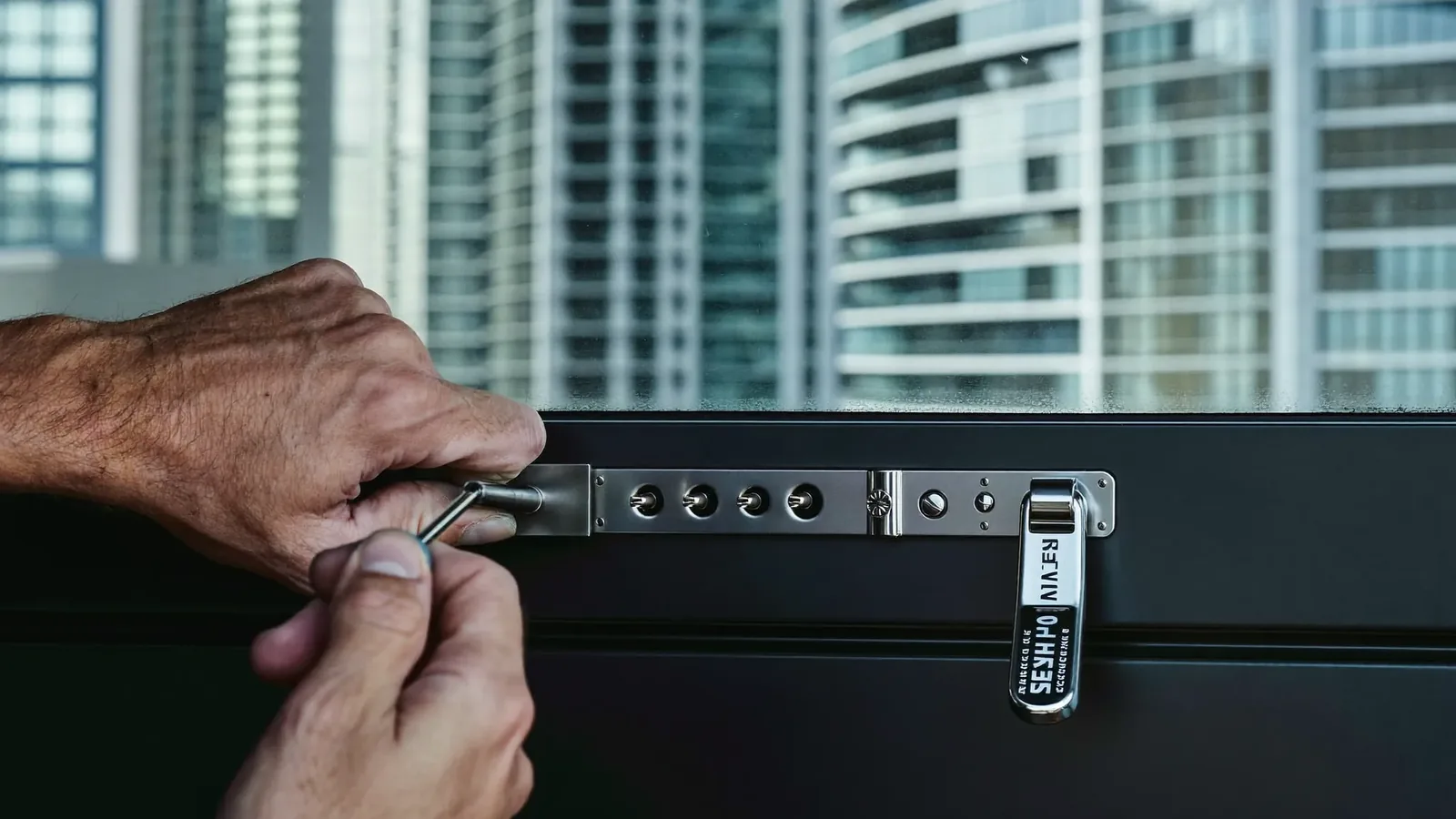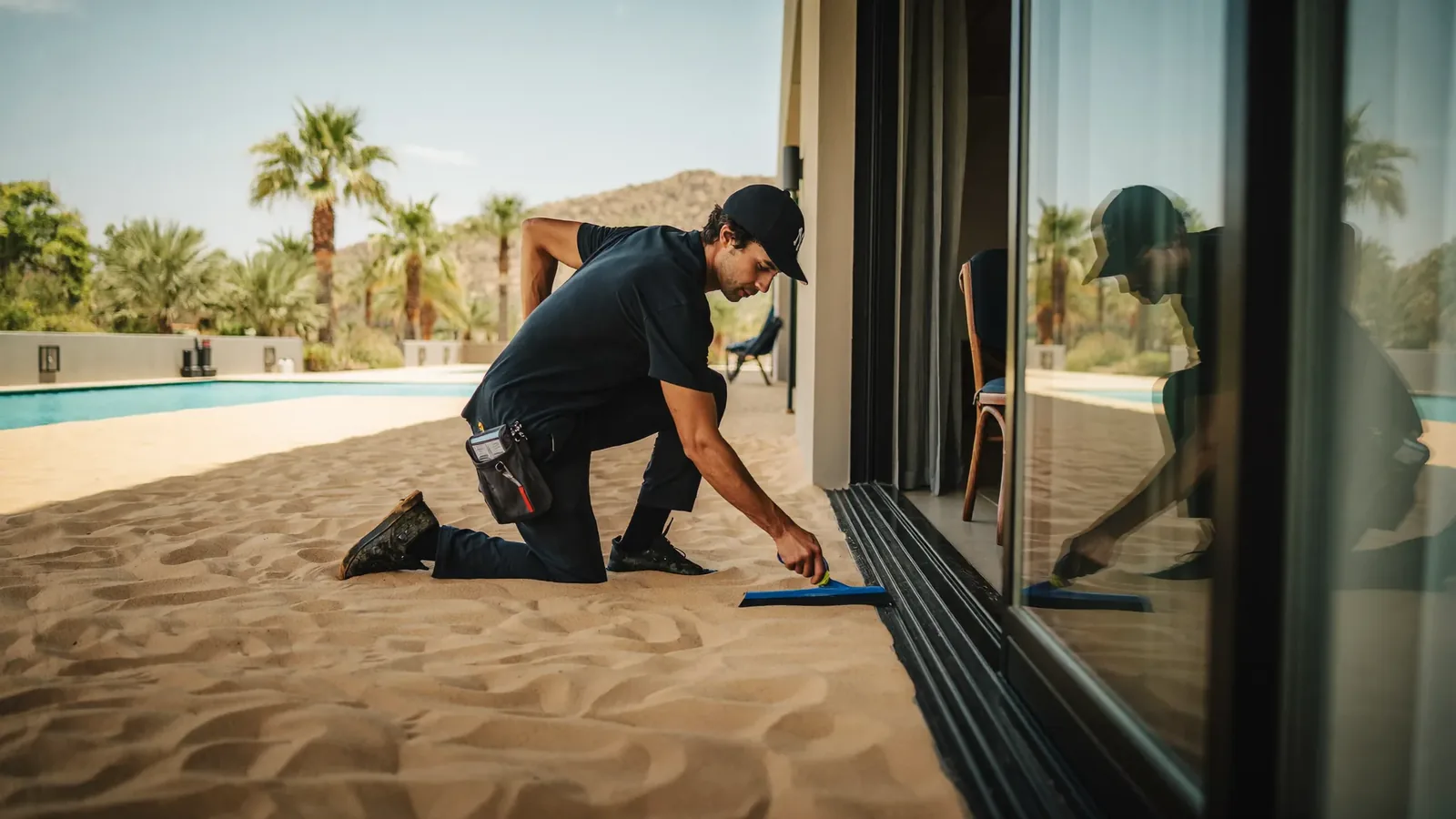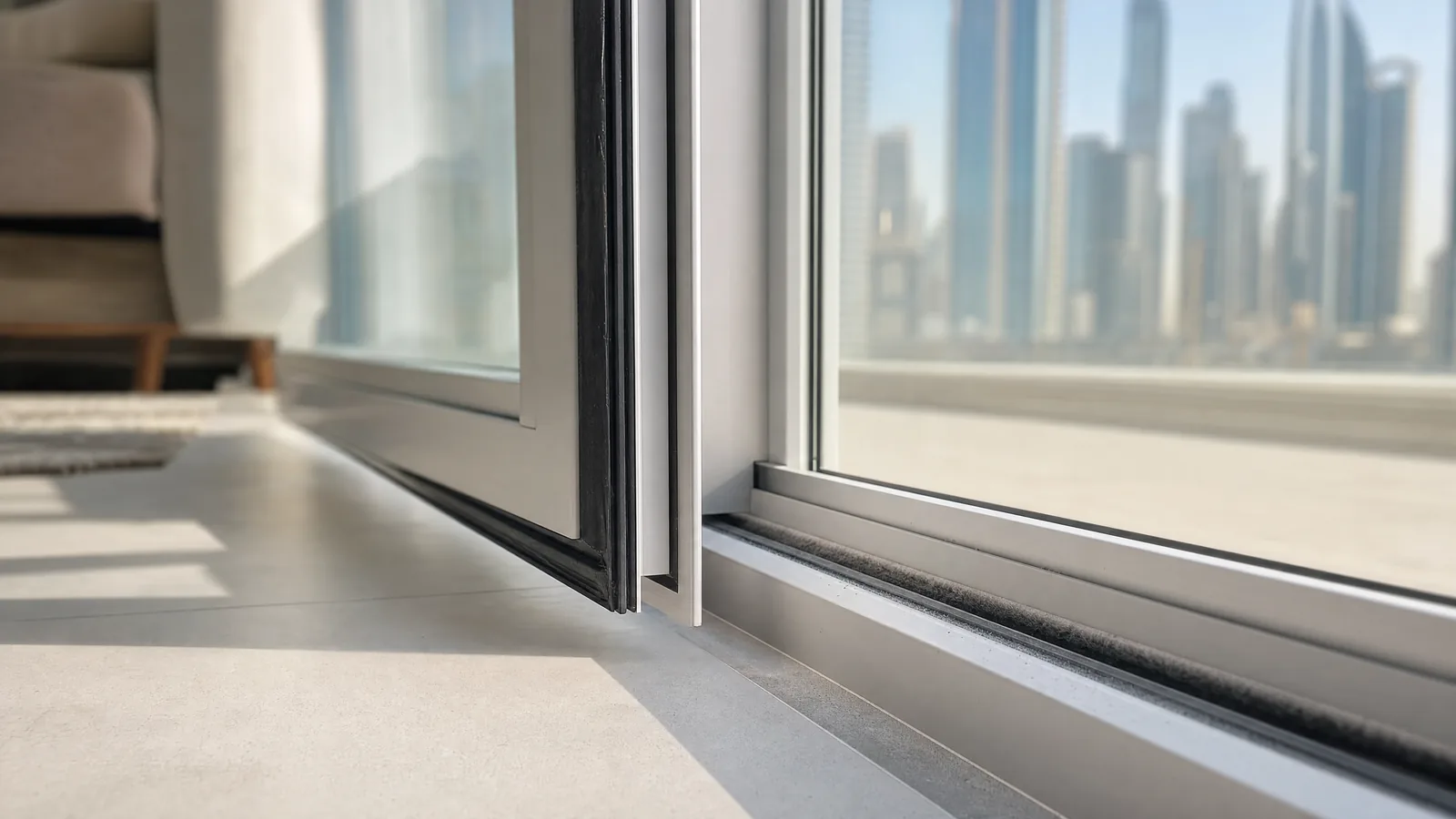





A mosquito net, the fine mesh screen fitted over a window or door, keeps insects out while you keep the glass open for air. In Dubai most nets do not fail because the mesh gives up on its own. They fail because sun, heat, blowing sand, and daily sliding wear them down faster than the mesh, the frame, or the mechanism was built to handle. The good news is that a torn or sagging net is usually a small repair, and in many cases the screen just needs re-meshing rather than replacing.
Which net you have matters, because each type fails in its own way and each has its own fix. Below are the common screens seen on Dubai apartments and villas, what goes wrong with each, and how to tell whether you re-mesh, repair the mechanism, or replace the unit. If your net is already torn or jammed, our mosquito net repair in Dubai service covers every type here.

Quick comparison of net types
| Net type | How it works | Most common failure | Usual fix |
|---|---|---|---|
| Frame (fixed) | Mesh stretched in a rigid frame | Torn or sagging mesh | Re-mesh the frame |
| Roller (roll up) | Mesh winds into a top or side cassette | Worn spring or jammed roller | Repair or swap the mechanism |
| Sliding | Mesh panel slides on a track | Off track panel, worn rollers | New rollers, track clean |
| Pleated | Folding mesh like an accordion | Snapped cords, creased mesh | Re-cord or replace panel |
| Magnetic | Mesh sheet held by magnetic strips | Loose or weak magnetic strip | New strip or fresh sheet |
| Retractable | Spring mesh pulls back into a housing | Tension loss, mesh fray | Mechanism service or re-mesh |
| Hinged | Framed net on hinges, swings open | Sagging mesh, hinge wear | Re-mesh, new hinges |
Frame (fixed) nets
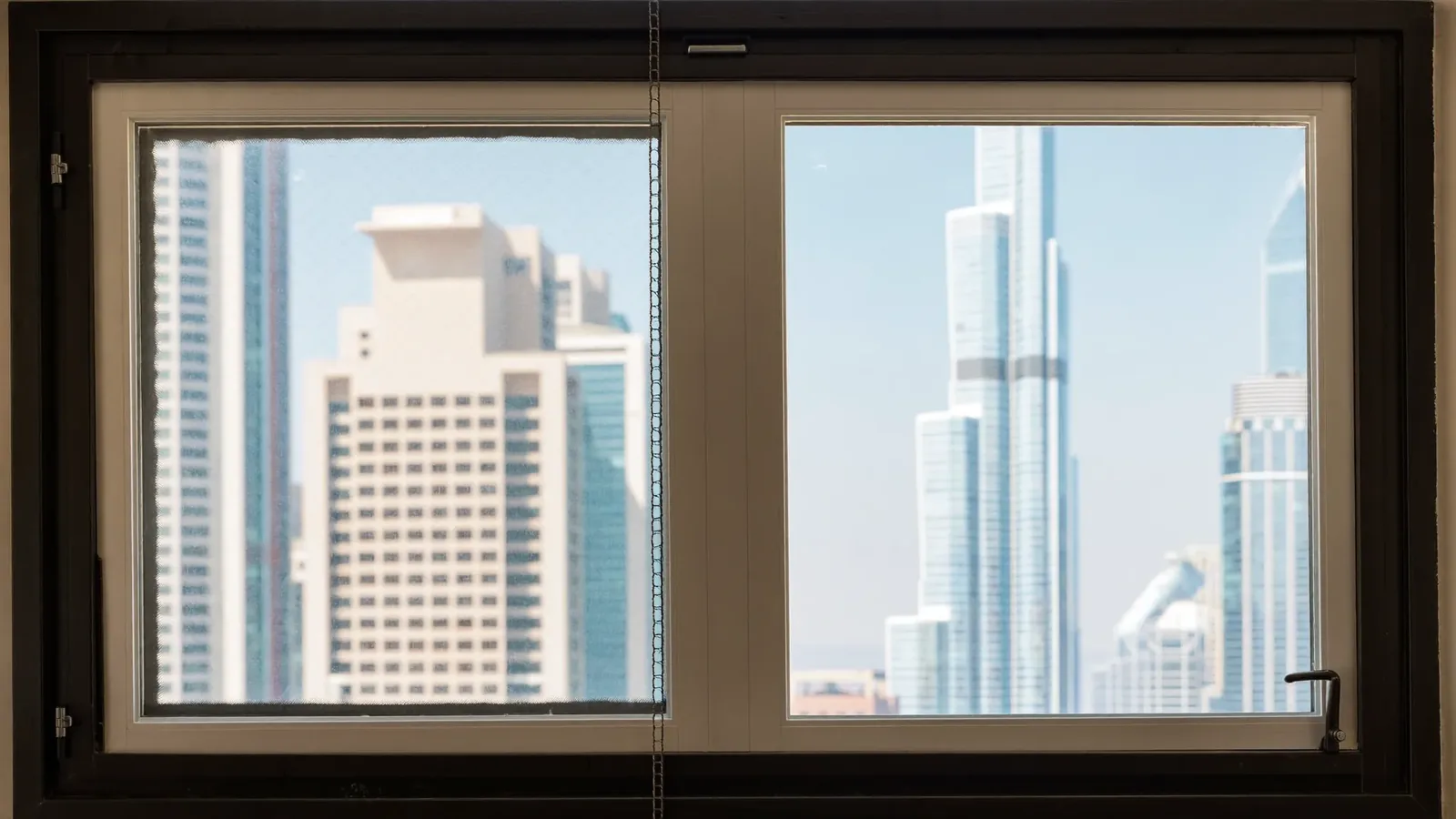
The frame net is the classic screen: a fine mesh stretched tight inside a slim aluminium frame that clips or sits into the window opening. It is simple, cheap, and common on apartment windows across Dubai. Because there are no moving parts, the only thing that really fails is the mesh itself. Years of sun make it brittle, and one gust, one curious cat, or one careless clean puts a tear or a stretched sag in it.
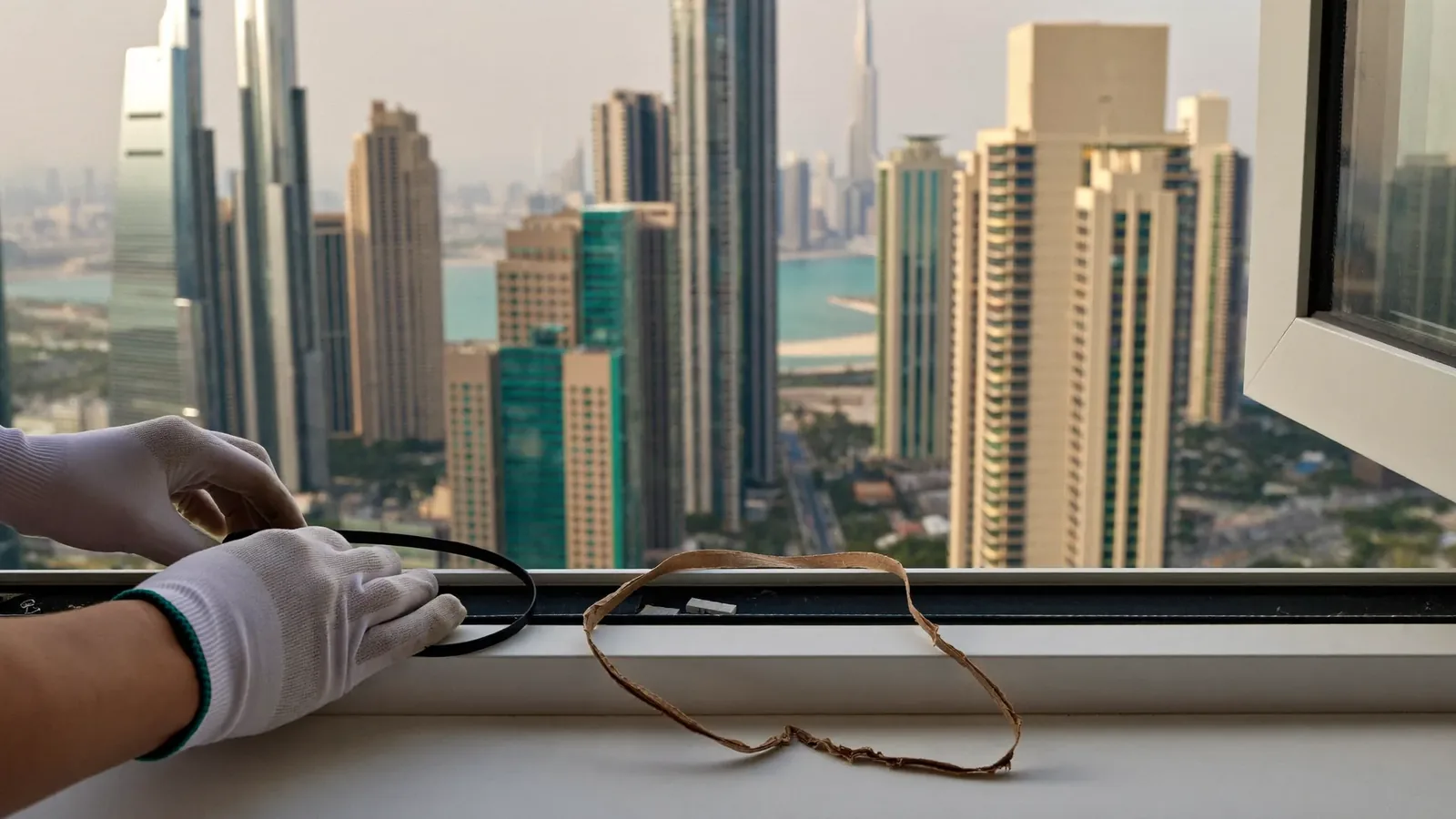
A frame net almost never needs replacing. The frame is aluminium and lasts for years, so the fix is to strip the old mesh out and stretch fresh mesh back into the same frame, held by the rubber spline that runs around the groove. Re-meshing is quick and keeps the original frame, so it is the cheapest repair of any net type. Replace the frame only if the aluminium itself is bent, corroded, or cracked at a corner.
Roller (roll up) nets
Roller nets, sometimes called roll up screens, keep the mesh wound inside a cassette at the top or side of the window. You pull the mesh across when you want it and let it wind back when you do not, so the screen is out of the sun and weather when stored. That storage is exactly why they last longer in Dubai, and also why they have more to go wrong.
The mesh on a roller can still tear, and re-meshing is possible, but the more common complaint is the mechanism. The spring inside the cassette loses tension so the mesh no longer winds back cleanly, or grit works into the guide so the screen jams or comes off its side channel. A roller that will not retract, sits crooked, or has gone slack is a mechanism repair, and often the cassette internals are serviced or swapped rather than the whole unit replaced.
Sliding nets
Sliding nets run on a track, usually paired with sliding windows and often with balcony doors. The mesh sits in its own light frame that glides sideways on small rollers along the same track family as the glass. They suit large openings well, which is why you see them on Dubai balconies and villa patios.
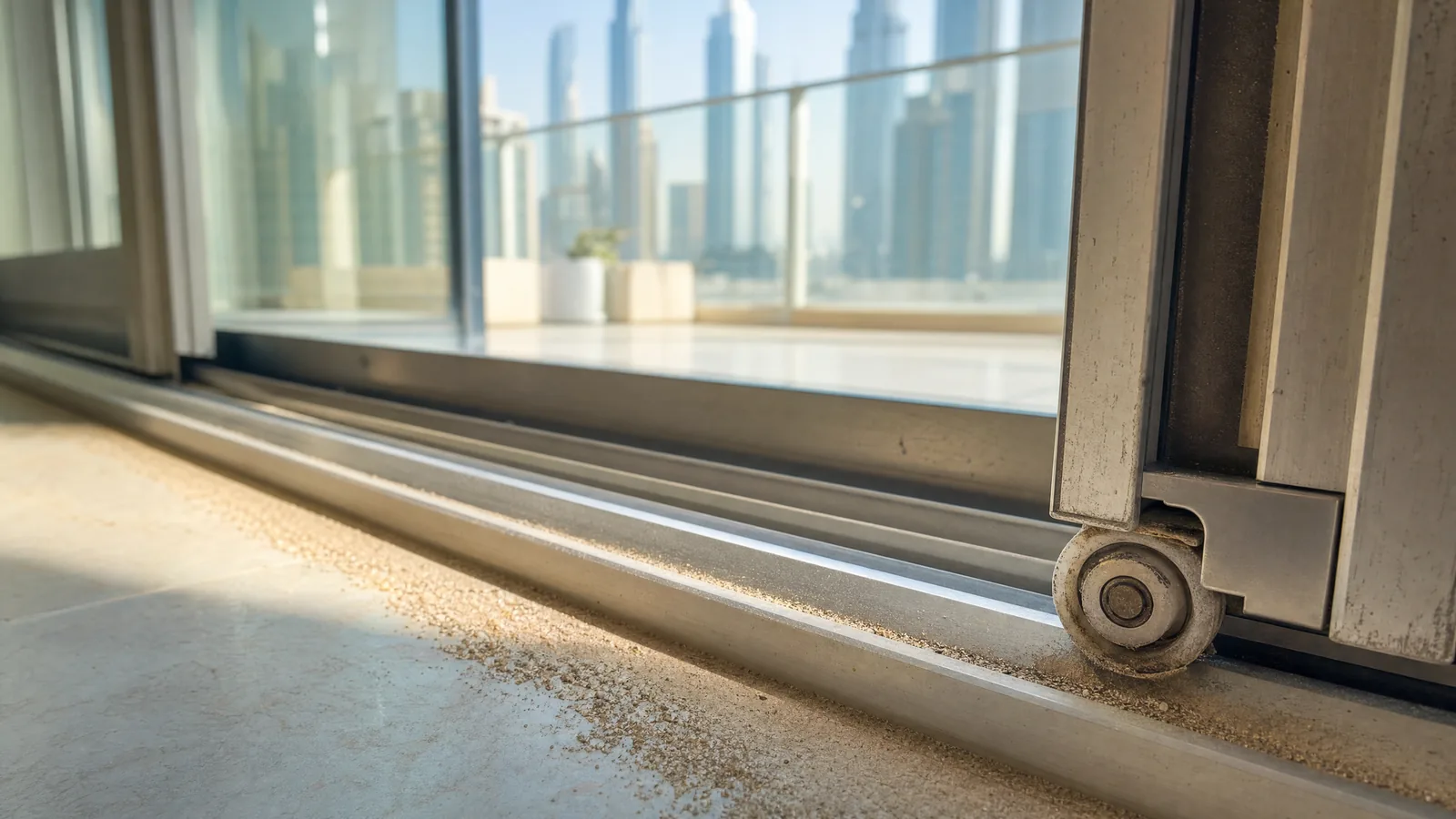
Two things fail here. The mesh tears or sags like any net and can be re-meshed in its frame. More often the panel jumps its track or drags because the little rollers underneath have worn flat or clogged with sand, so the net scrapes, sticks, or lifts out. That is a roller replacement and a track clean rather than a new screen. Because balcony openings usually combine a sliding net with a sliding glass door, a sticking net often turns up alongside a sticking door, which is covered under balcony door repair in Dubai.
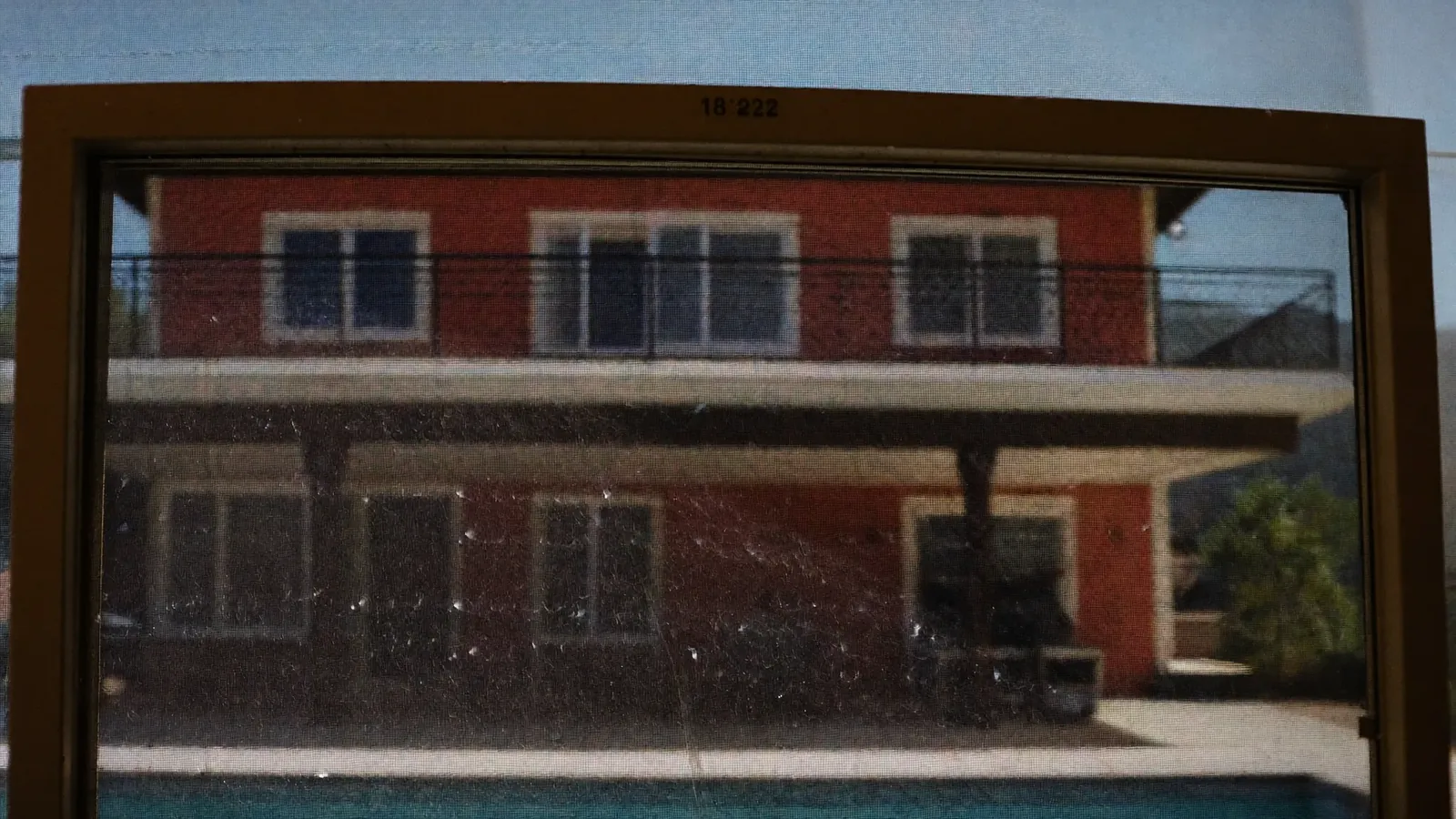
Pleated nets
Pleated nets fold like an accordion, with the mesh gathered into neat vertical pleats that concertina to one side when open. Thin cords run through the pleats to keep them even and control the fold. They look tidy, span wide openings without a heavy frame, and are popular on doors and larger windows.
The weak point is the cord system. A snapped or stretched cord lets the pleats bunch, sag, or refuse to sit flat, and the mesh itself can crease permanently along a fold if it is forced. A pleated net that will not glide evenly or hangs unevenly is usually a re-cord job, restringing the guide cords so the pleats gather cleanly again. If the mesh is badly creased or the pleats are damaged, the sliding panel gets replaced while the track stays.
Magnetic nets
Magnetic nets are the simplest of all: a sheet of mesh edged with a thin magnetic or hook strip that sticks to a metal frame or a matching strip around the opening. You push through the middle to pass and the mesh snaps shut behind you. They are cheap, easy to fit, and common as a quick door screen.
Because they are so simple, only two things fail. The magnetic strip loses its grip or peels loose at the edge, so the net no longer closes tight and insects slip through the gap. Or the mesh itself tears or frays with handling. A loose strip is replaced with a fresh magnetic edge, and a torn sheet is swapped for a new one, since the whole net is inexpensive. It is the one type where full replacement is often as sensible as repair.
Retractable nets
Retractable nets are the tidiest option: a spring loaded mesh that pulls out from a slim housing when you need it and springs back out of sight when you do not, on either a side pull or a vertical pull. Like roller nets, keeping the mesh stored protects it from Dubai sun, so the mesh lasts, but the spring mechanism does the work and takes the wear.
When a retractable net loses tension it stops pulling back fully, drifts, or sticks halfway, and the leading edge can come out of its channel. The mesh can also fray at the edge where it enters the housing. Loss of tension and sticking are mechanism faults that are serviced or re-tensioned, and a frayed or torn mesh is re-meshed inside the same housing. Full replacement is rare unless the housing is damaged.
Hinged nets
Hinged nets are framed screens on hinges that swing open like a small door or shutter, rather than sliding or rolling. They are handy where a window opens outward or where a sliding track is not practical, and you see them on some villa windows and utility openings. The build is close to a frame net, just mounted to swing.
Failures are a mix of the frame net and the mechanism world. The mesh sags or tears and is re-meshed in the frame, exactly like a fixed net. The hinges themselves wear, loosen, or seize with sand and sun, so the net drops, drags on the sill, or will not close flush. Worn hinges are replaced and the frame realigned. Because villa windows often carry hinged or fixed nets across many openings, a whole-house net refresh is common alongside villa window repair in Dubai.
Anti-dust mesh (a Dubai upgrade)
Standard insect mesh stops bugs but lets fine dust through, and in Dubai fine dust is the daily problem. Anti-dust mesh is a tighter, finer weave that traps a good share of the airborne dust and pollen while still letting air move, so less of the desert ends up on your sills and floors. It fits the same frames, rollers, sliding panels, and hinged screens as ordinary mesh.
If your nets are due for re-meshing anyway, this is the natural moment to switch. Instead of stretching plain insect mesh back into the frame, you fit anti-dust mesh at the same time, for the same labour, and get a screen that cuts dust as well as insects. It is one of the few net upgrades that genuinely earns its place in this climate.
Pet-resistant mesh
Standard mesh is thin and tears the moment a cat climbs it or a dog leans on it. Pet-resistant mesh is a heavier, stronger weave built to take claws and pushing without ripping, so households with pets stop re-meshing the same screen every few months. Like anti-dust mesh, it drops into the frames, sliding panels, and hinged nets you already have.
The decision is the same: when a net that a pet keeps destroying comes up for repair, re-mesh it with pet-resistant mesh instead of plain mesh. The screen costs a little more to re-mesh once, and then it survives the animal instead of failing on repeat.
Re-mesh or replace: how to decide
The single most useful thing to know about nets is that the mesh and the hardware are separate problems. Torn, sagging, brittle, or frayed mesh is a re-mesh, and the frame, cassette, or housing stays. That covers most net complaints in Dubai and is the cheapest outcome. It is also your chance to upgrade to anti-dust or pet-resistant mesh for the same labour.
You move toward replacing hardware, not the mesh, when the mechanism is at fault: a roller that will not wind, worn sliding rollers, snapped pleat cords, a slack retractable spring, or a loose magnetic strip. Those are mechanism repairs, and the mesh often stays. You replace the whole unit only when the frame itself is bent, corroded, or cracked, when a pleated or retractable panel is damaged beyond re-cording, or when the net is a cheap magnetic sheet where a new one costs about the same as a repair. When in doubt, an on-site look tells you in minutes, and that is what our mosquito net repair in Dubai visit is for.
Getting your nets sorted in Dubai
We are based in Al Barsha and have fitted and repaired every net type above since 2014. We reach most of Dubai in around 30 minutes to inspect the screen on site, tell you honestly whether it is a re-mesh, a mechanism fix, or a replacement, and quote it before any work. You get a free on-site fixed quote, and the repair carries our 2-year warranty. The emergency line is open 24/7 on +971 50 220 6918, or reach us through the contact page. For more window and door guides, see the blog.