




A sliding window that has gone stiff is rarely a roller problem. Its sash carries a fraction of the load a balcony door puts on its wheels, so those wheels flatten far more slowly, and the answer people bring over from door guides sends them looking in the wrong place. Three tests find the real source of the drag: lift the sash, watch where in its travel it binds, then move the mosquito screen by itself.
You can run all three because the sash is light. Nobody should be lifting a two-metre glazed door alone to test a theory, but a kitchen window in a JLT tower or a bedroom sash in Arabian Ranches will let you feel what is happening. Each test has one clear outcome, and each outcome points at a different part.
Why a window sash is not a patio door
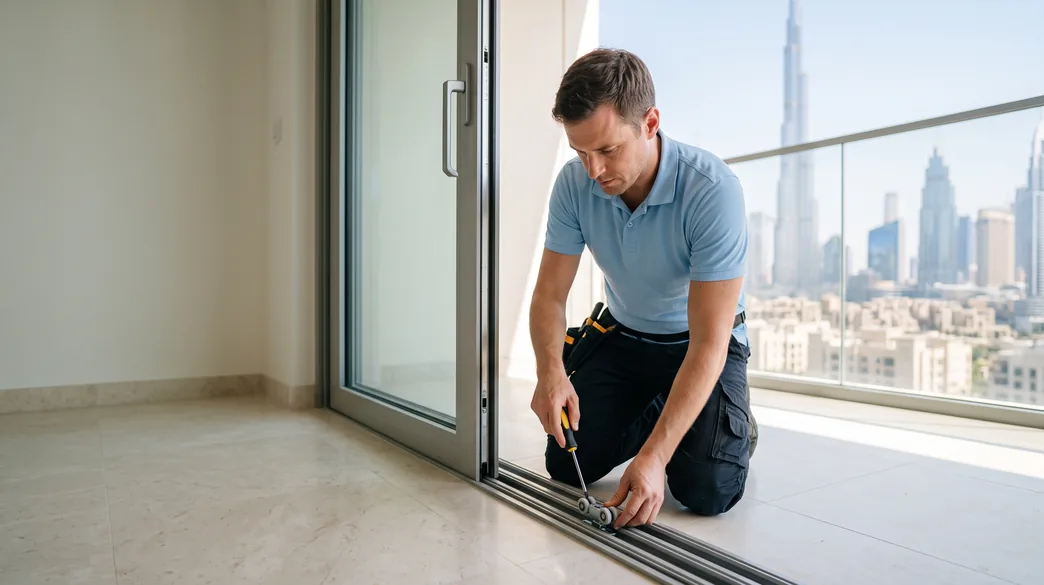
Weight decides the diagnosis. A patio door hangs a large pane on a handful of wheels that take the whole load with every push, which is why worn rollers dominate door guides, including ours on a sliding door that won't slide and on what a grinding sliding door means. Read those if the panel in question is a door. For a window, the picture moves elsewhere.
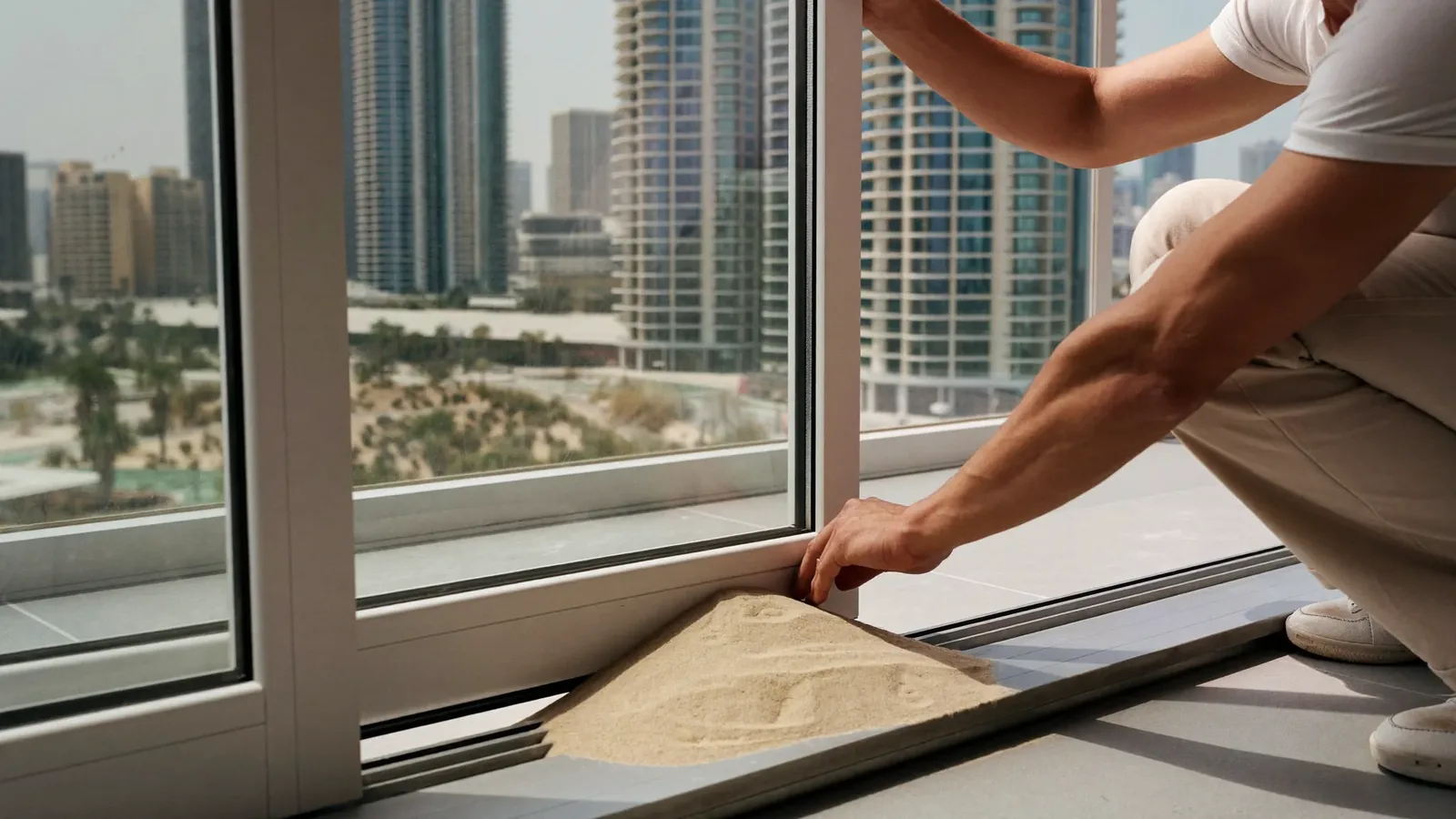
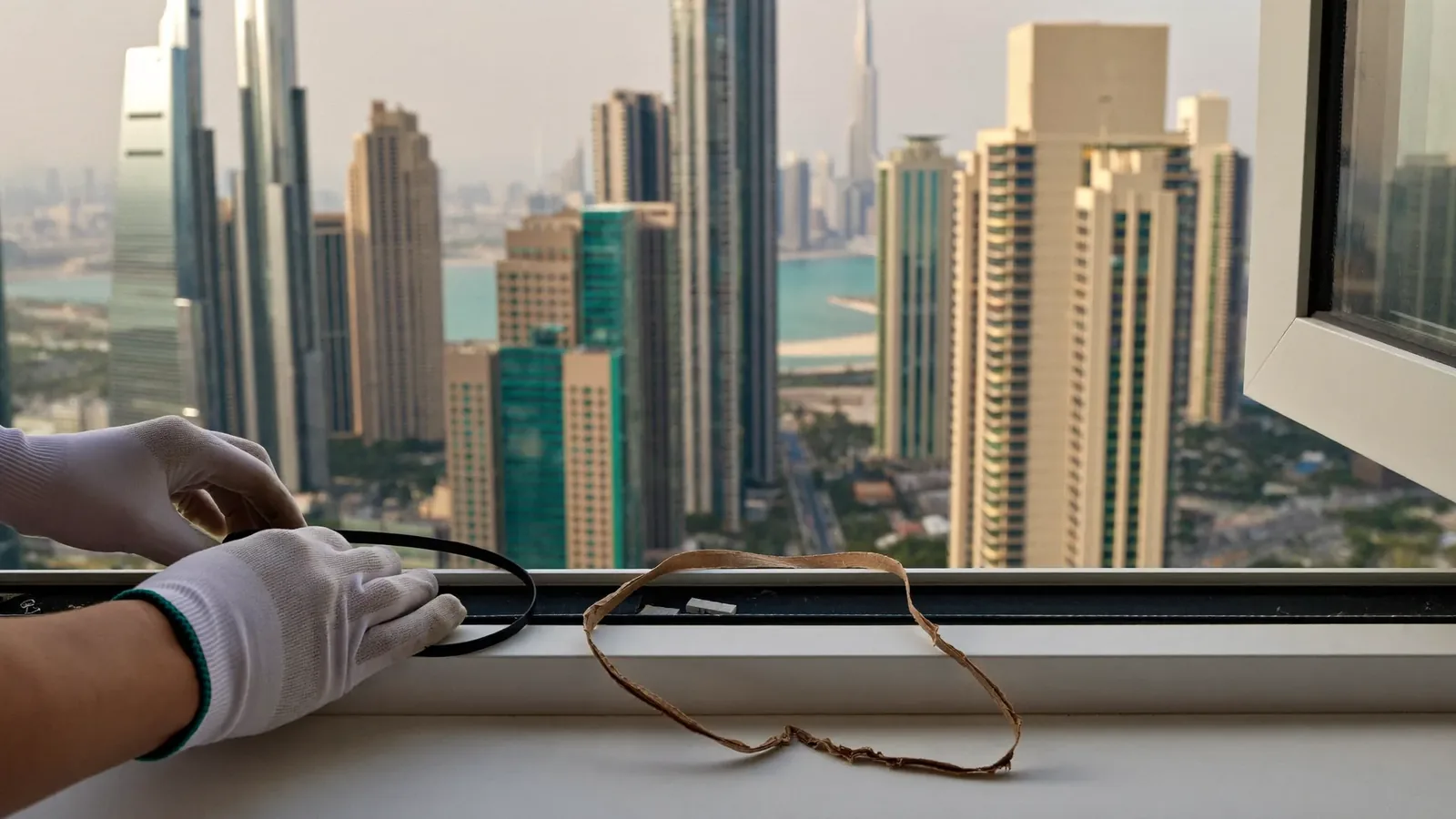
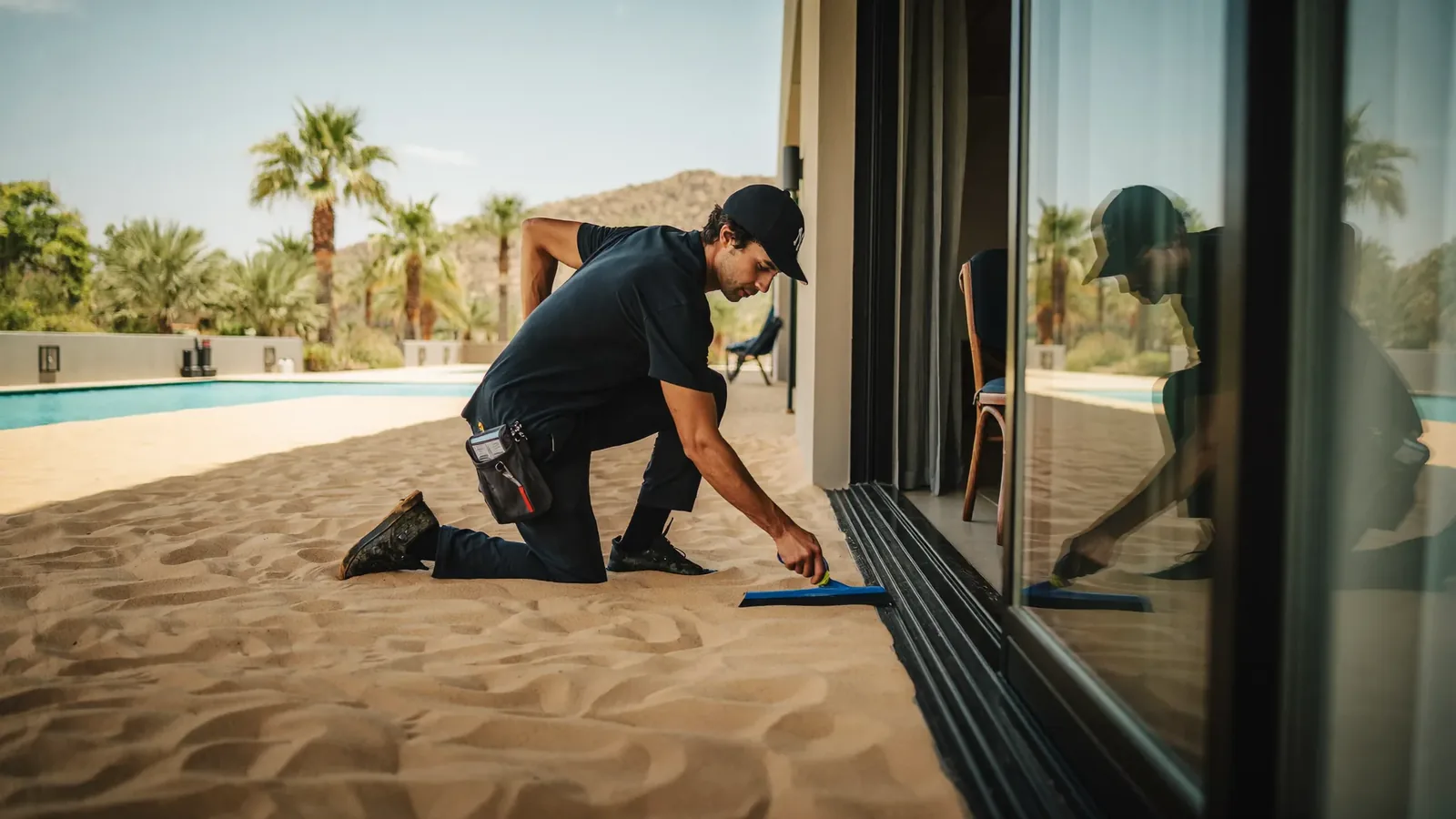
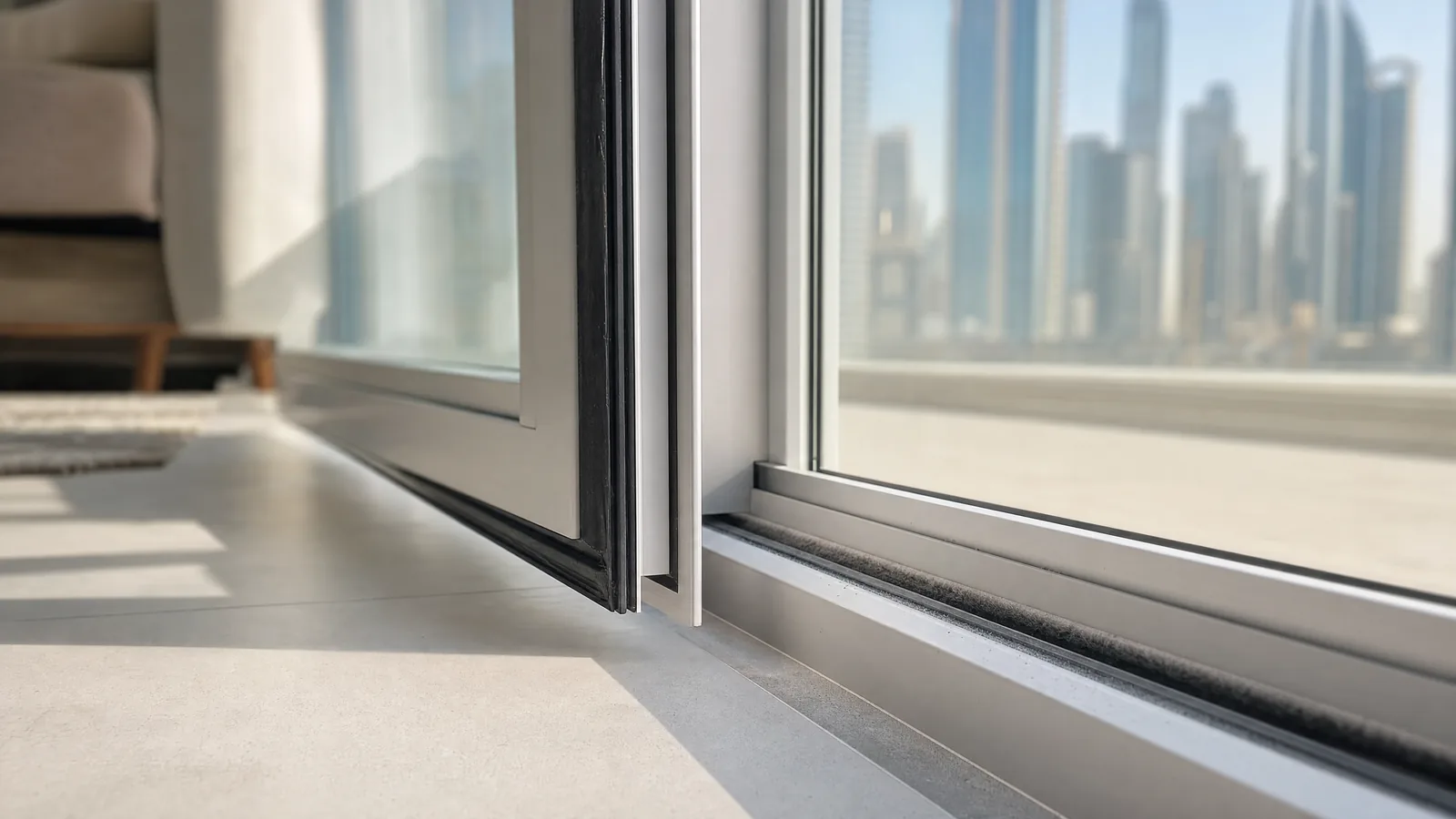
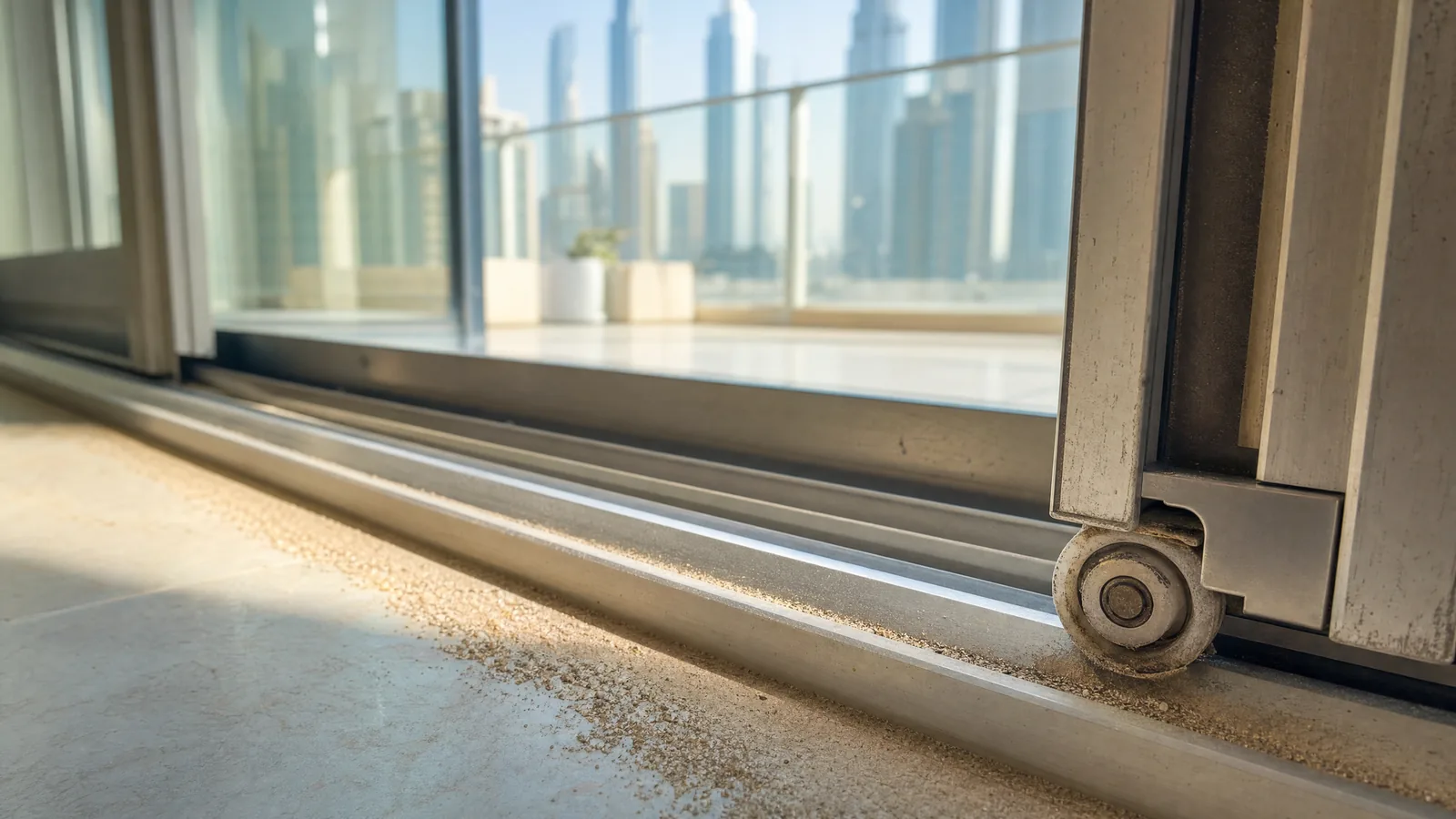
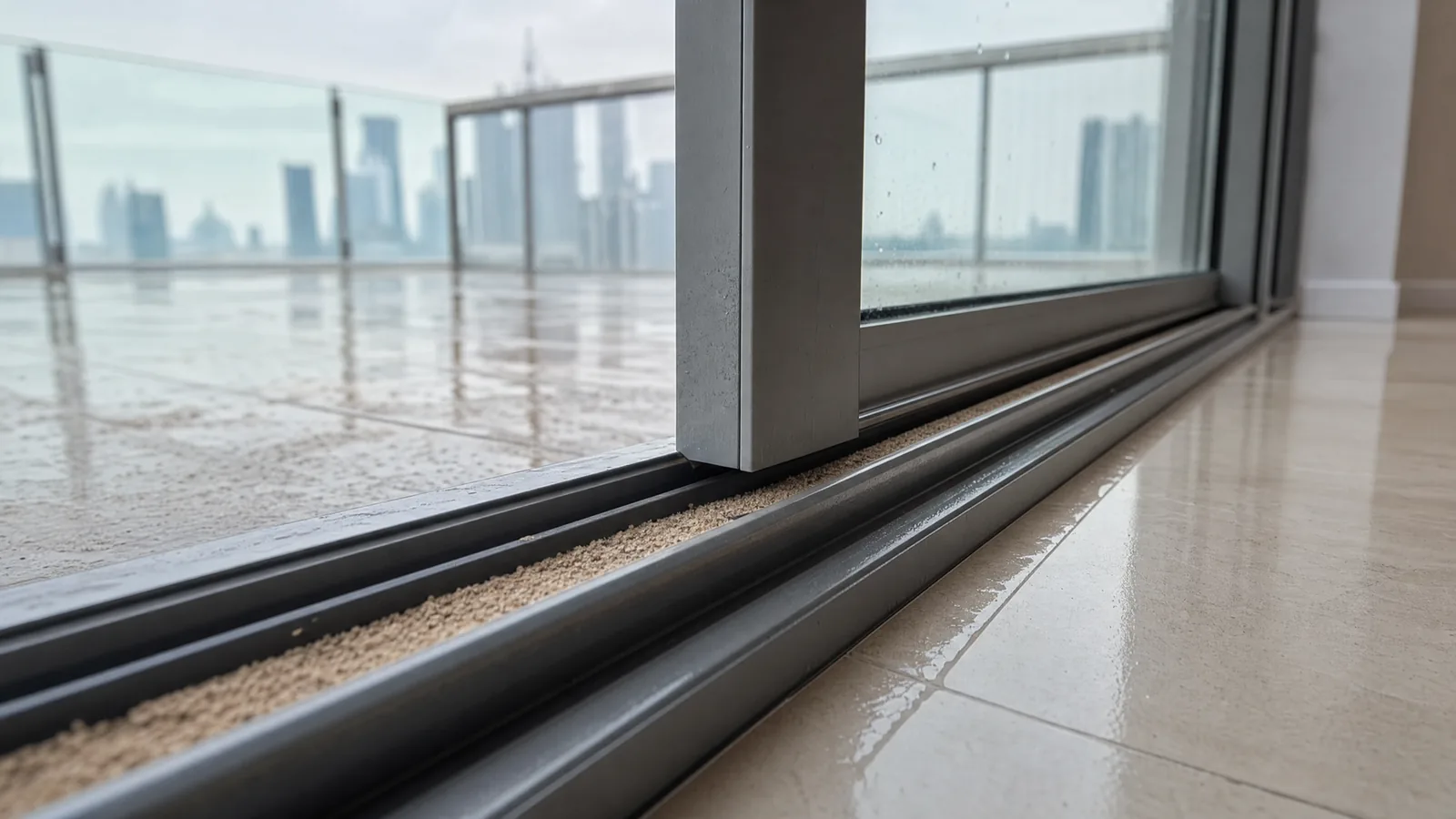
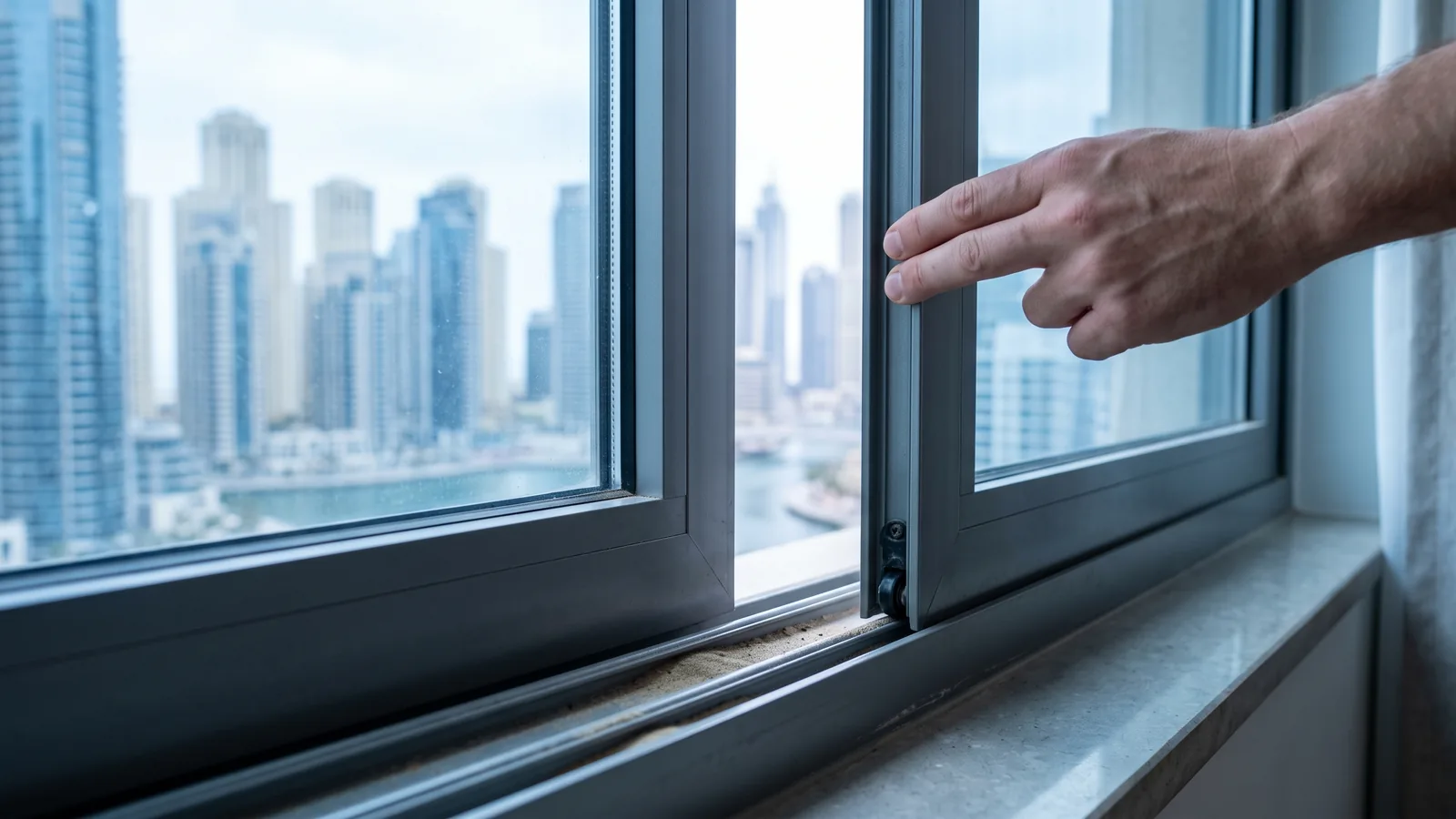
The bottom channel of a window is far narrower than a door's, too tight for a vacuum brush and too tight for a fingertip, so what blows in stays in and compacts. Most sliding windows here also run more than two channels: the outermost normally carries a mosquito screen, and a screen that has seized feels, through the handle, exactly like a window that has seized. And a light sash lifts. Shove one corner and the top edge rides up into the head channel and starts scuffing, so part of the resistance is manufactured by the way you are pushing.
Test 1: lift the sash a few millimetres
Put a hand under the bottom edge of the sash near its centre, take the weight upward — only as far as the fitting lets it move, a few millimetres — and slide it while holding it there.
If the window suddenly glides, the load was sitting in the bottom channel. Either the wheels have gone flat and the sash is dragging on its own rail, or the channel is compacted hard enough that the wheels plough through it instead of rolling over it. Cleaning settles the second case. The first one does not improve with any amount of cleaning.
If lifting changes nothing at all, stop looking at the bottom of the window. The resistance lives higher up or further along the travel, and the next two tests will place it.
Test 2: notice where in the travel it sticks
Slide the sash slowly from shut to fully open and back, twice, and mark the point where the effort changes.
- Stiff from the very first movement, then it frees up. That is the closing edge rather than the track: a gasket that has hardened and grips the frame, or a latch still half-engaged as you pull.
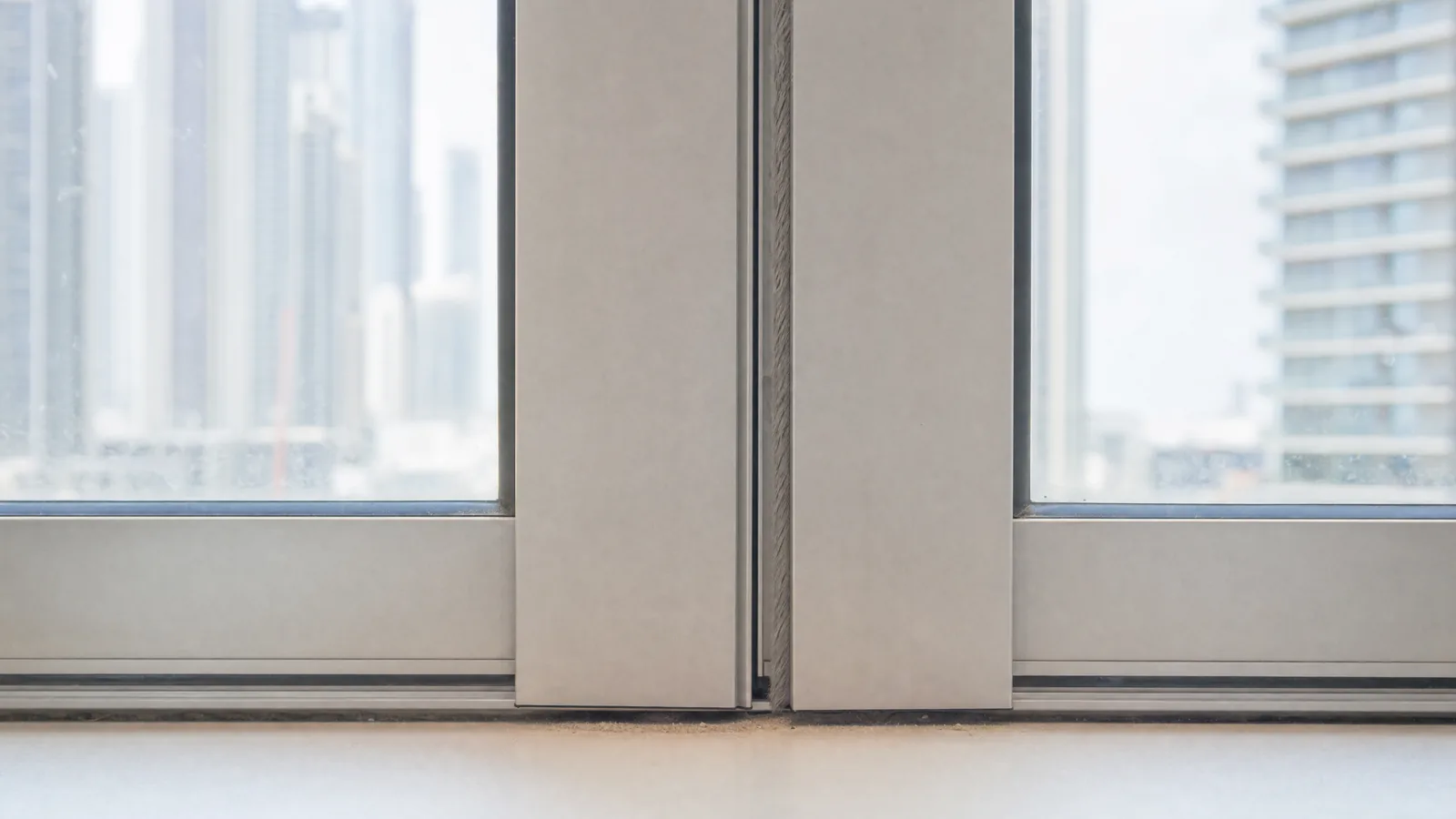
- A rough patch in the middle, in the same place every time. Something is sitting in the channel at that spot. A ridge of compacted sand, a screw, a chip of grout dropped during balcony work. Local, and usually yours to clear.
- Heavy the whole way, evenly, with no bad spot. Even drag points at the wheels or at a channel filled along its full length.
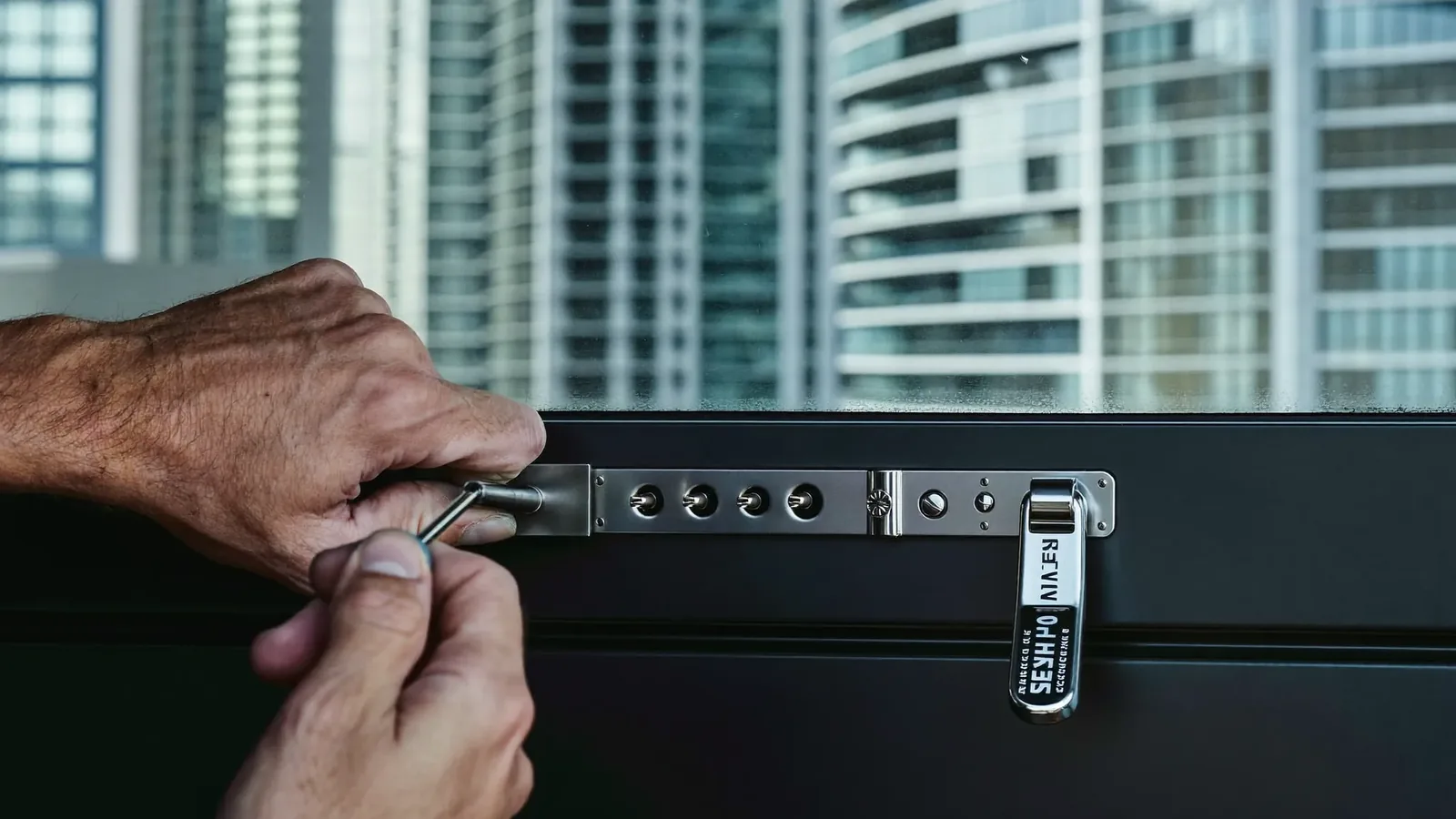
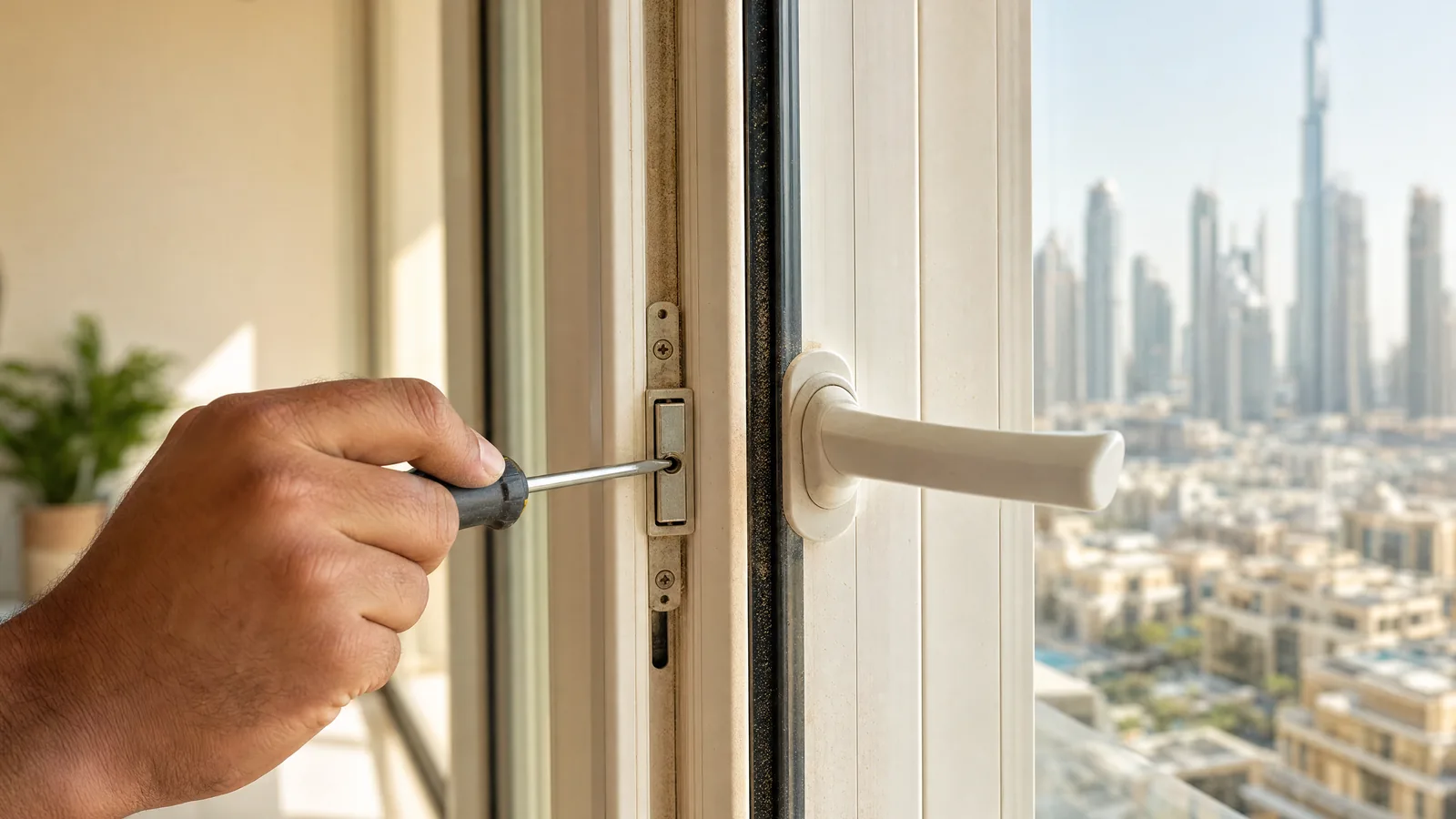
- Fine until the last stretch, then it fights you. The sash is healthy. The meeting stile, the latch or the keeper has shifted, which is the ground covered by window adjustment, hardware and lock repair.
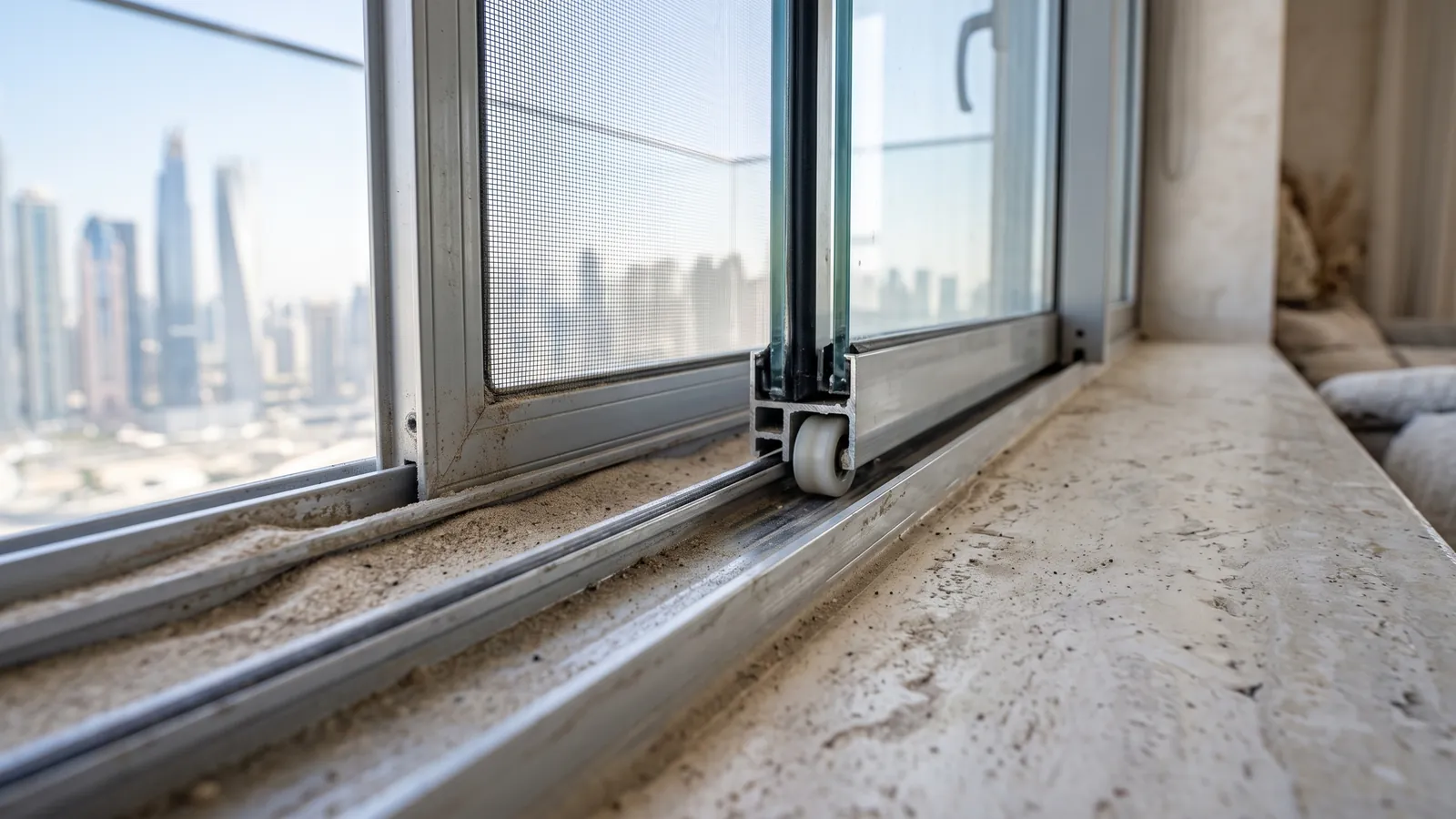
Test 3: slide the mosquito screen on its own
Open the window far enough to reach the screen, and move the screen alone, without a hand on the glass. Most people never do this, which is why the answer surprises them.
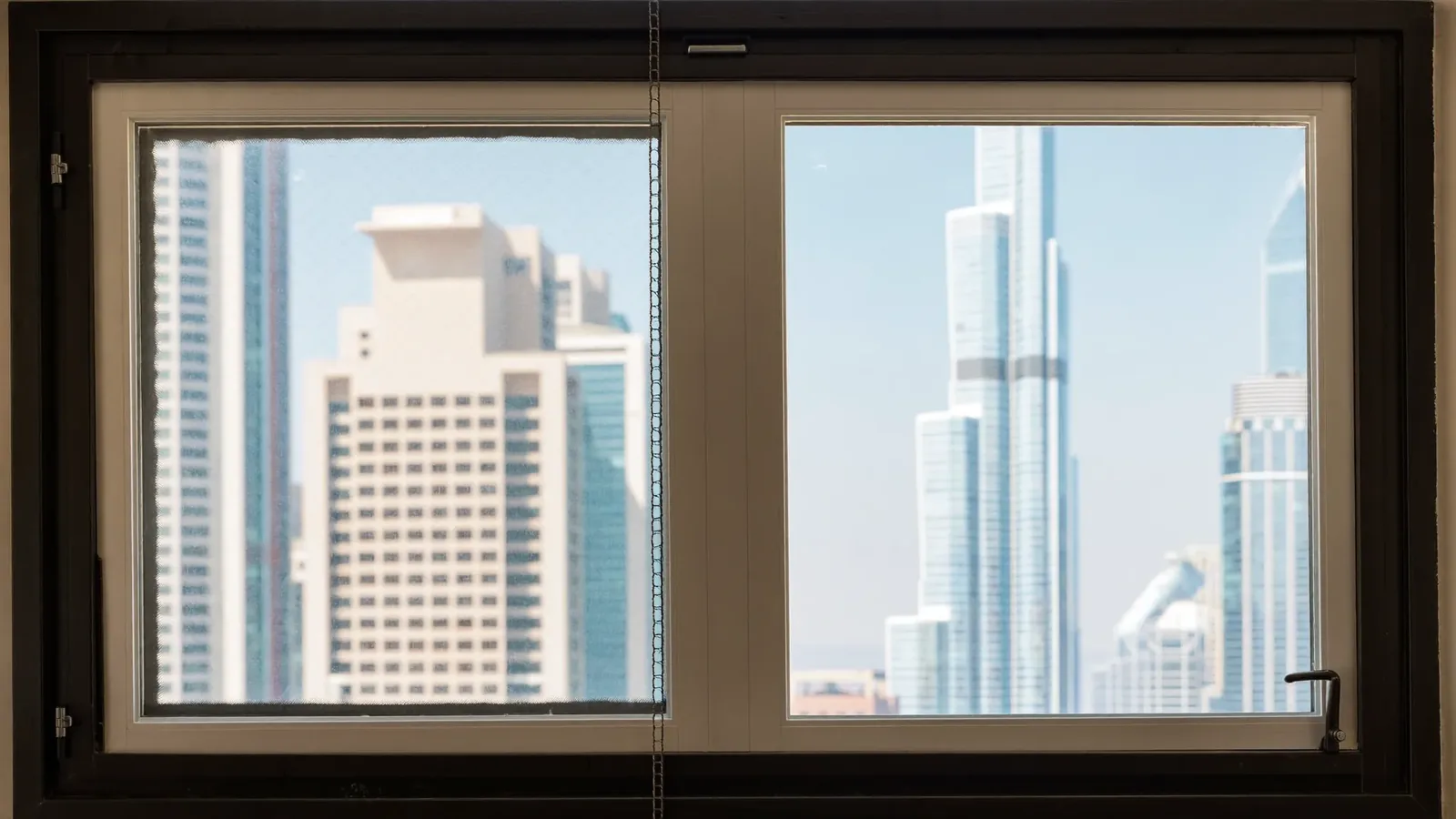
A screen frame is thin aluminium in the shallowest, most exposed channel of the set. It collects everything the wind delivers, its corner joints work loose, and its own small wheels are lighter duty than the sash wheels beside them. When it binds, it drags against the sash edge, and the window that feels broken is not the one that is broken. If the screen is the stiff part, the work belongs to mosquito net repair, and the glass sash needs nothing at all.
Cleaning the channels without lifting the sash out
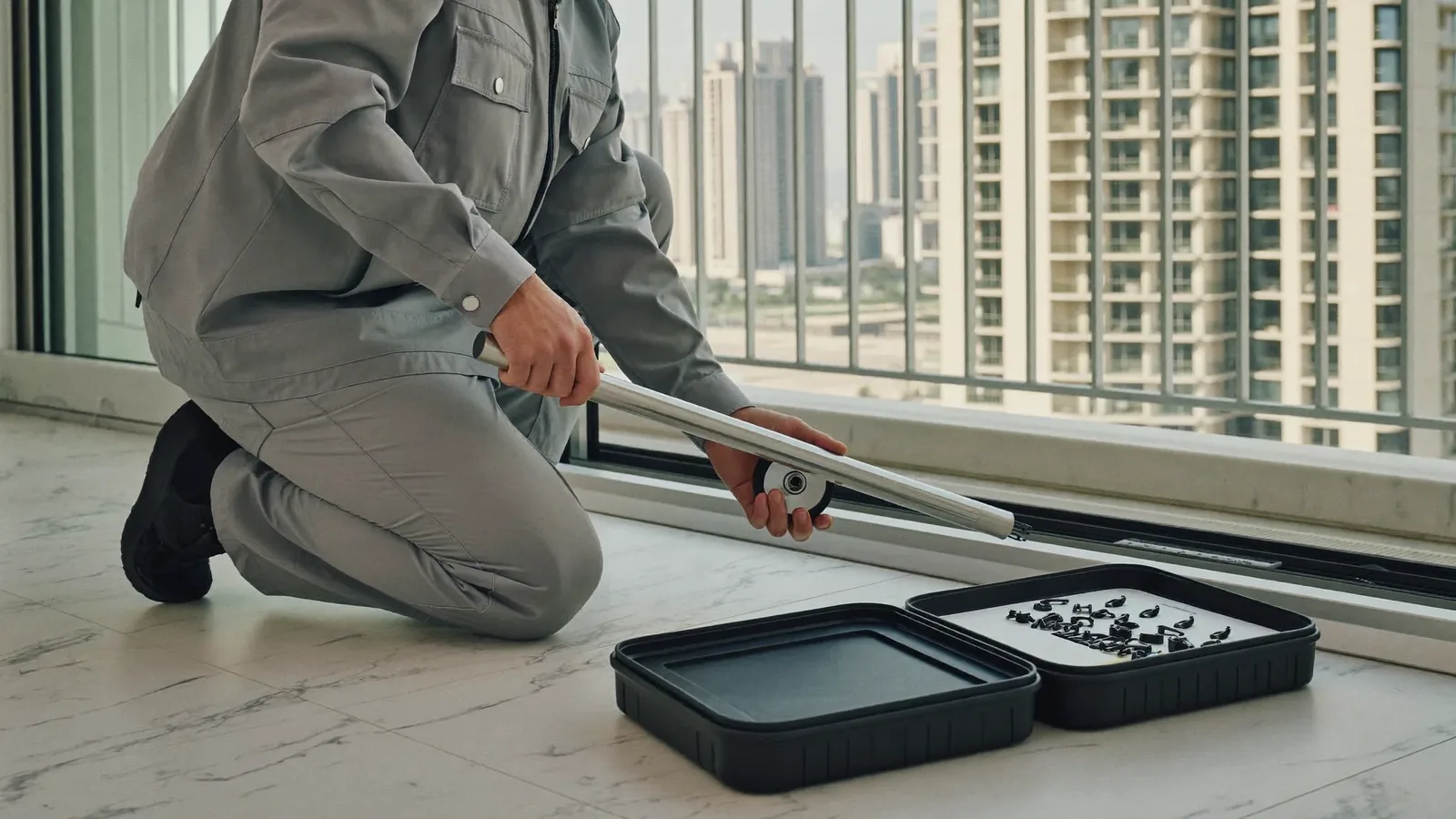
You do not need to remove the sash, and in an apartment you should not try. Everything worth doing is reachable with the window in place.
- Slide the sash fully to one end and vacuum the length you have exposed with a crevice nozzle, then swap ends and repeat. Half the channel at a time is the whole trick.
- Break the packed material loose first with a stiff narrow brush. An old toothbrush gets into a window channel where a vacuum brush simply rides over the top.
- Wipe with a barely damp cloth wrapped around something thin and blunt, a plastic spatula or a wooden stirrer. Not a screwdriver, which scores the aluminium.
- Do the head channel as well. Dust up there is what makes a light sash sit crooked.
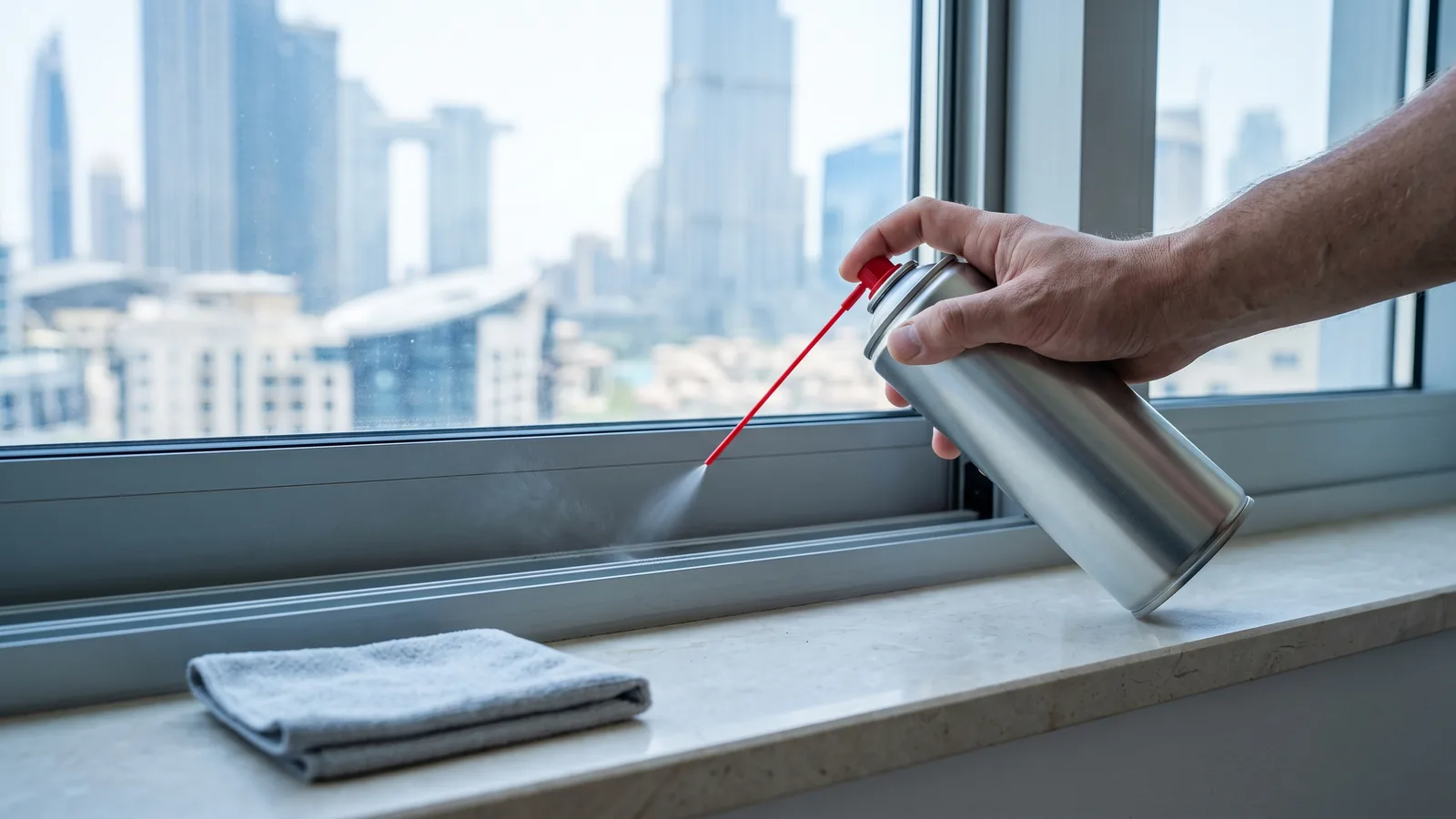
- Lubricant comes last, on a channel that is clean and dry, and only a dry silicone spray, lightly, wiped back. Oils and general-purpose penetrating sprays are a poor bargain in this city: they hold the next fortnight of dust and turn it into grinding paste.
- Leave the screen channel until the end so you are not sweeping its debris into the track you just cleaned.
If the window runs properly afterwards, dust was the entire story and you have your answer. If it is better but still not right, you have removed one variable, and the visit that follows is shorter for it.
When to call, and what never to force at height
One rule ahead of all the others. On any window above ground level, never force a sash upward or outward to free it. The outer channel of a tower window opens onto a drop, the sash is light enough to leave its guide when you lean on it, and a panel of glass falling from a Marina balcony is not a repair, it is an incident. If a sash has already lifted out of the head channel, leave the window as it is and call.
Book a technician when the drag survives a proper clean, when the sash tilts or sits unevenly in the frame, when the handle turns but the window will not pull shut, when you can see a wheel that has flattened or split, or when the channel itself is bent. On site we check the wheels, the channels, the alignment and the closing hardware together, because a window that has been forced for months usually has more than one of them out. The service page for this work is sliding door and window repair in Dubai.
We have been repairing windows across Dubai since 2014, we are based in Al Barsha and reach most of the city in around 30 minutes, and the emergency line runs 24/7 on +971 50 220 6918. The on-site quote is free and fixed before anything is touched, and the work carries our 2-year warranty. More guides are in the blog, or send the details through the contact page.